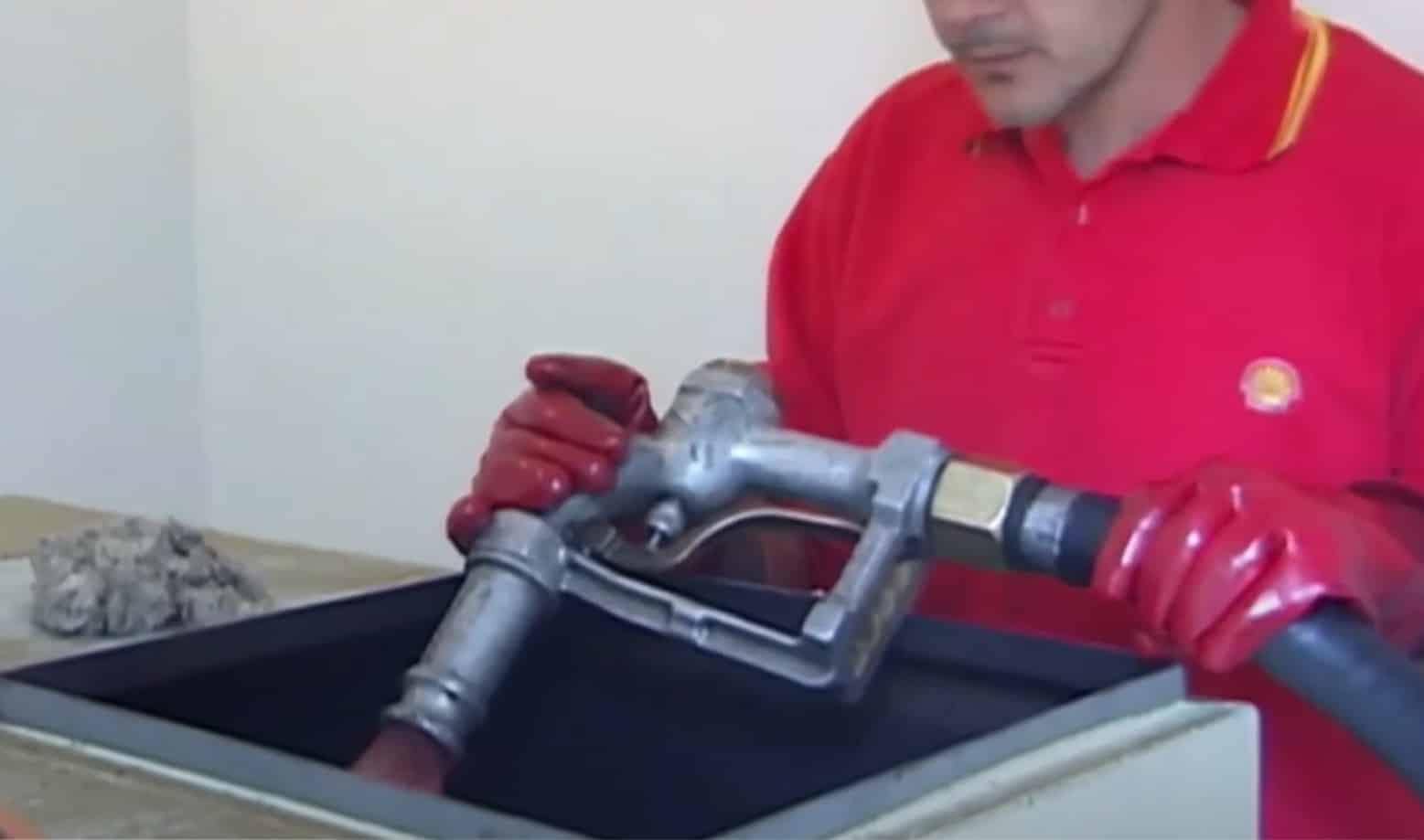
With the model followed for the compensation of “rent cuts”, i.e. with advance payments and subsequent checks of supporting documents, the amounts are expected to be distributed to beneficiaries this year for heating allowance.
Thus, in principle, the amount of €84 million is expected to be given as an advance payment to 707,000 households that were included in the measure last year. This will take place by December 10, provided, of course, that beneficiaries submit the relevant applications by the end of November.
In detail, as the Deputy Minister of Finance said yesterday, Theodoros Skylakakis, speaking on Tuesday on Ant1«s »Good Morning Greece" program, A portion of the allowance will be paid in advance, by December 10, to those who received a heating allowance last year.. Essentially, The amount will be given regardless of whether fuel has been purchased; beneficiaries will simply have to submit the relevant invoices to cover the amount of the advance payment.
As Mr. Skylakakis pointed out, they will initially receive the full amount of the subsidy they received last year, and if their bills are higher, they will receive the balance by December 30. The total subsidy will be the same as last year, at a ratio of 2 to 1. In other words, two euros of purchases correspond to approximately one euro of subsidy. .
The process for new beneficiaries
Along with the broadening of the criteria, it is estimated that this year approximately 700,000 more households will be eligible for subsidies. For those who do not have data registered from last year, the relevant processing is being carried out to finalize how they will receive the subsidy. Based on the data available so far, they may first have to submit their purchase invoices and then receive the relevant amounts from the state treasury. In any case, new beneficiaries will receive the allowance by November 30.
The schedule
Applications will begin to be submitted when the platform opens until November 10 on the website of the Independent Authority for Public Revenue (IAPR).. They may also be submitted until November 30.
This is the first stage, during which expressions of interest will be registered, followed by the documentation of the application, with the submission of the relevant supporting documents and, of course, the electronic verification of income and asset criteria.
Those who do not submit invoices or do not meet the criteria will, of course, be asked to return the amount of the advance payment that they did not cover with fuel purchases.
Those who, with the broadening of the criteria, see that they fall within the «protection perimeter» should submit their applications by November 30. They should then submit their purchase invoices to the platform and wait for the allowance to be paid out by the end of the year.
It should be noted that following the changes to the eligibility criteria, the total number of households receiving the allowance will more than double: from 707,328 in the period 2020-2021, it will reach 1,450,000 in the period 2021-2022.
The total budget for the allowance will reach €168 million. If this amount is exhausted by the end of the year, then, as the Ministry of Finance has stated, it is not ruled out that additional funds will be provided in the new year, especially if the upward price rally continues.
The new criteria
It should be noted that, based on the changes that will apply to the heating allowance for the period 2021-2022, the following applies:
- The amount of the allowance increases for an average family with two children 59%. The increase ranges from 36% for households without children to 68% for households with three children. In detail:
- The basis for calculating the allowance is increased from €220 to €300. (This amount is multiplied by the degree days, which are a coefficient ranging from 0.12 to 1.62 depending on the coldness of the region).
- The allowance for each child will be increased by 20%, instead of 10%., which was in effect until today.
- The minimum allowance increases to €100, from €80.
- The maximum allowance increases to €750, from €650.
Examples
- In central Athens (with a degree day coefficient of 0.43) for a family with two children, the allowance will rise from €114 last year to €181 this year.
- In the center of Thessaloniki (with a coefficient of 0.71), for a family with two children, the allowance will increase from €188 last year to €299 this year.
- In Kozani (with a coefficient of 1.12), for a family with two children, the allowance will rise from €295 last year to €469 this year.
- In Florina (with a degree day coefficient of 1.18), for a family with two children, the allowance will rise from €312 last year to €496 this year.
Broadening of eligibility criteria
- At the same time, income criteria are increased:
- From €12,000 for unmarried persons to €14,000.
- In the case of families, the income threshold is €20,000, which will be increased by €3,000 for each child, instead of €2,000 as was the case until now. Consequently, the income threshold is increased:
- From €24,000 for a family with two children to €26,000,
- From €26,000 for a family with three children to €29,000.
Also, the asset criteria are increased:
- From €130,000 in real estate value for unmarried persons to €180,000.
- From €250,000 in real estate value for married couples to €300,000.
According to Mr. Skylakakis, «based on the above, 80% of households that consume subsidized forms of fuel (internal combustion heating oil (DIESEL), natural gas, LPG, firewood, and biomass (pellets).
It is estimated that around 1.8 million households consume these types of fuel, of which around 1.45 million households are eligible for this allowance.»
Specifically for the granting of heating allowances to consumers of firewood and biomass (pellets), an additional condition is that the main residence must be located in a settlement with a population of 2,500 or less and the corresponding subsidy rate must be equal to or greater than 0.8.
The prices
However, in many areas, namely in 10 prefectures, heating oil prices have already broken the €1.20 barrier.
It should be noted that, at this time last year, the average price was €0.798, meaning that this year's surcharge per ton exceeds €360 on average. Based on yesterday's data from the Observatory, which changes daily, record prices are recorded in the following areas:
- Dodecanese: €1,269
- Evrytania: €1,202
- Heraklion: €1,225
- Corfu: €1,203
- Cyclades: €1,279
- Lesbos: €1,220
- Magnesia: €1,200
- Rethymno: €1,217
- Samos: €1,275
- Fokida: €1,211
It should be noted that these are average prices, which means that for individual areas or for smaller quantities, prices are higher.
However, despite inflated prices and calls from the trade sector and the official opposition for tax cuts, the government reiterates that this is not an option. Instead, it stresses that the means of combating energy poverty is to subsidize those who meet income and asset criteria, which, after their expansion, includes 80% of households.