If these things had happened in France, Germany, or New York, the Western media would have been up in arms. But they happened in Asia and Africa. A third of Pakistan was under water, more than 1,200 people lost their lives, and the country, already groaning under the weight of its debt, like many others in the Global South, now faces $10 billion in damages, compounded by the effects of the pandemic.
Throughout West and Central Africa, from Chad to Senegal, heavy rainfall above normal in several countries has left large areas submerged. The worst floods in 30 years, caused by heavy rainfall, have thrown the capital of Chad, N'Djamena, into chaos. N'Djamena, with large areas inaccessible for over a month except by boat and thousands of residents forced to abandon their flooded homes, according to aid groups and the state meteorological service, to find refuge in makeshift camps, where they are threatened by swarms of mosquitoes and malaria.
Not that the «civilized West» is in much better shape, although it certainly has more resources to deal with the increasingly serious effects of man-made climate change. Last year, among other things, we had deadly floods in Germany and prolonged heatwaves and large, destructive fires in Greece, while huge fires ravaged California, Canada, and Siberia. The year before last, the whole of Australia was on fire. This year, 60% of EU territory was affected by major fires, severe heatwaves, and intense droughts.
It should be noted that this is happening while we are 1.1 degrees Celsius above the Earth's temperature in the pre-industrial era. The Paris Agreement has set a target of not allowing the temperature to rise above 1.5-2 degrees, a target that seems completely unattainable with current policies.
Meanwhile, scientific reports warning of the speed at which anthropogenic climate change is occurring and its consequences are multiplying.
The climate crisis has brought the world to the brink of multiple catastrophic «tipping points,» according to a major study published in Science, considered one of the world's most authoritative scientific journals (https://www.science.org/doi/10.1126/science.abn7950).
In five cases, dangerous tipping points appear to have already been exceeded, even though, as already mentioned, the global temperature has risen by only 1.1°C compared to the pre-industrial era due to anthropogenic climate change.
The ice caps covering Greenland are melting, threatening to raise sea levels and slow or even halt the Gulf Stream, which in turn will affect rainfall in North America and monsoons in the Indian Ocean. A sea level rise of 27 centimeters is already considered inevitable, while if all the ice in Greenland alone melts, the sea level will rise by one to two meters.
The system that ensures warm and mild weather in Europe is the Gulf Stream in the North Atlantic, which has now reached its weakest point in a thousand years, possibly due to climate change. Further weakening of the current will lead to more storms in Britain, harsher winters, and an increase in devastating heatwaves in Europe. A further reduction in the Gulf Stream will cause a decrease in rainfall and food production for millions of people and raise sea levels with devastating consequences for the east coast of the US.
A scientific mission from the University of Fairbanks in Alaska found that permafrost is melting seventy years earlier than scientists had predicted. Permafrost is the permanently frozen subsoil that covers 25% of the northern hemisphere and where frozen quantities of various organic and other materials are «locked up.» Its melting will cause large carbon emissions, with the risk of a vicious cycle of accelerating climate change. (At the same time, microbes and viruses that have been frozen for thousands of years will be released.)
At a 1.5 degree temperature increase, four of the planet's five «tipping points» are likely to be exceeded, while another five could also be exceeded. These include the loss of large numbers of trees through major fires, which will also emit carbon dioxide into the atmosphere, establishing a new vicious cycle.
Another threshold for qualitative change concerns the melting of glaciers in the mountains. Even if the best target of the Paris Agreement (limiting the increase to 1.5 degrees) is achieved, 10% of glaciers will be lost by 2050. One of the possible consequences of glacier melt is the threat to water access for 1.9 billion people, mainly in India and China.
The Amazon, also known as the «lungs of the planet,» is probably on the verge of irreversible change from forest to savanna with sparse vegetation.
The researchers conclude that Earth is leaving the safe climate zone as it crosses the 1% temperature increase threshold.
Where is it headed? No scientist believes that the Paris targets will be achieved. The majority of them expect an increase of 2 to 3 degrees. However, every tenth of a degree of increase from now on poses terrifying risks for humanity.
It should be noted that the aforementioned study examines each of the changes separately, i.e., it does not take into account the serious possibility of causing domino-type chain reactions. (https://www.theguardian.com/environment/2021/jun/03/climate-tipping-points-could-topple-like-dominoes-warn-scientists).
Never before has the threat of total collapse of industrial civilization in the North and total collapse of societies in the South of the planet been so clear.
For thirty years now, governments around the world have recognized the problem, since the first international conference in Rio in 1992. However, the measures taken to curb it have been minimal and completely inadequate, with the result that the costly international conferences convened each year (the last one was held in Scotland in November last year and the next one will be held in Egypt in November this year).
Even worse. Not only has Ukraine pushed the (already downgraded) issue out of the headlines, even though it is one of the main threats to human survival. Not only has it made international cooperation on this and all other issues, which is essential to addressing the problem, almost impossible, but it has also done something worse.
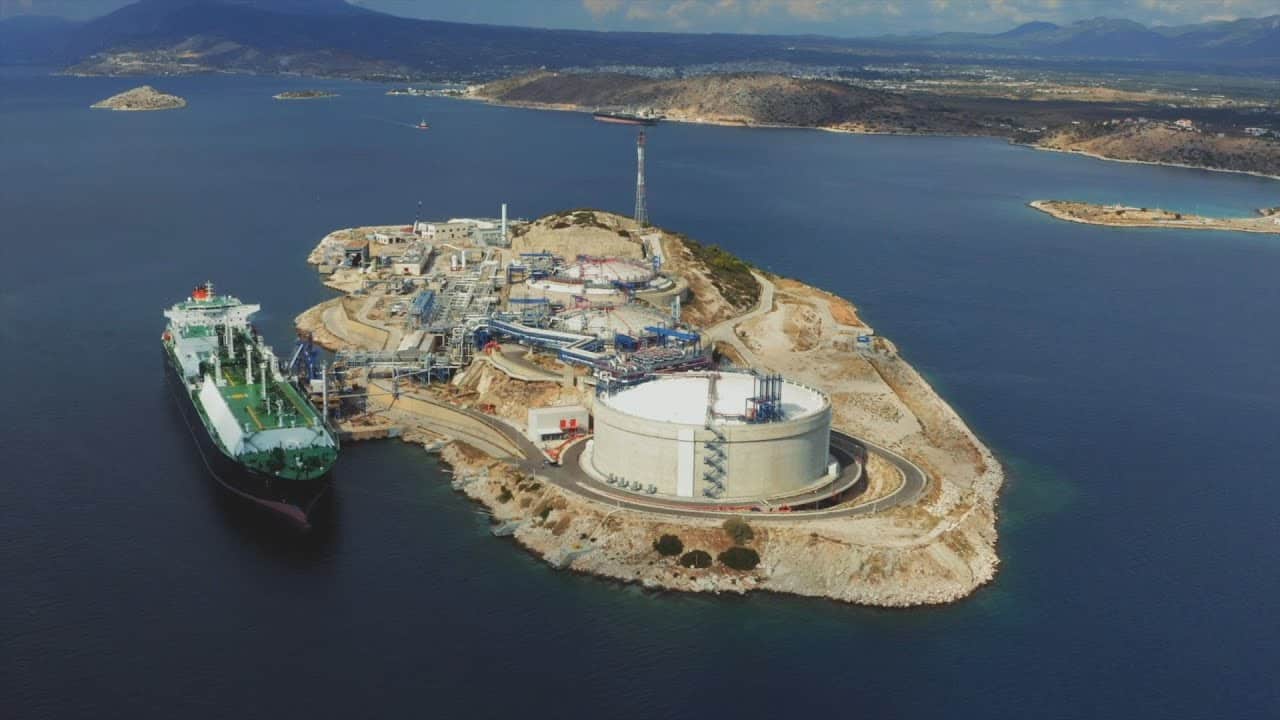
To address the energy crisis caused by the war in Ukraine and the sanctions and counter-sanctions imposed, there has been a significant global shift towards fossil fuels, particularly liquefied natural gas, which some studies estimate produces four times more greenhouse gases than gas transported through pipelines. At the same time, since they have nothing substantial to say about how to stop climate change, some leaders are beginning to prepare the ground for accepting it, saying that we must focus on preventing its consequences. At the same time, enormous resources that could be used for the green transition are being squandered on terrifying weapons.
The human race is facing the most terrifying threat (along with nuclear weapons) in its history. Only a global uprising of the people could perhaps pressure states and governments to take action.
(*) Dimitris Konstantakopoulos is a journalist.
The texts hosted in the «Ideas and Opinions» column of the Athens-Macedonian News Agency (ANA-MPA) are published as is and reflect the views of the authors and not those of the agency.