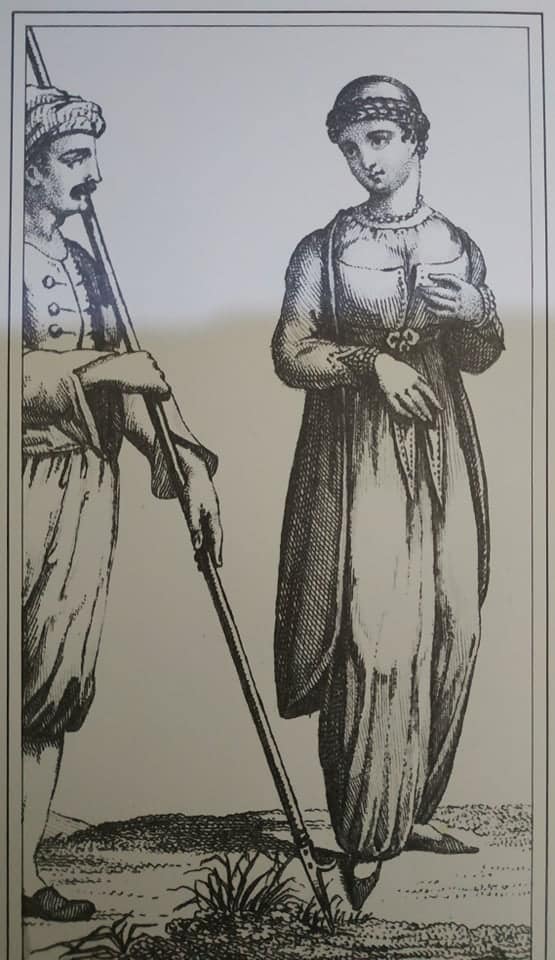
From Eleni Charou's electronic diary, we have another valuable reference to the traditions of Kythira.
Here is the post:
…a bag full of
Large headboards, two
Three headbands with cold compresses
Two silk blankets
Another quilt, Indiana.
Four pairs of sheets, two made of silk and the other two with merla.
A carpet
A dress with a damask red sash.
Another dress with damask ribbon, green plain fabric, and black lace.
Silk dresses, four-cornered
Four white cotton dresses and one boukaci. .
Two tablecloths
Twenty-four petzopoules, twelve with merlas and the rest plain.
Silk shirts eight
Twenty-two linen shirts, eight embroidered with gold and the rest with silk.
Six demeles with crowns and large grooves
Five sponges
Loutrompolia one
Six pieces, three capes and three aprons
Aprons, velo venetico three
Two Venetian gold-embroidered jebbers
Two white Venetian sandals
Three white collars, one embroidered with gold and two plain
Three small handkerchiefs
Five collars, two silk-embroidered
Twelve tin plates
Six Bulgarian coins
Copper pots one
Kakavopoulos one
Baking pan one……………………..
VOCABULARY
The headboard = long bed headboard.
Damask = heavy fabric with embossed embroidery, usually purple in color.
Tablecloths = table covers
Sponge cloths = towels for wiping
Bath towel = bath towel
Pezza = headscarf, headband
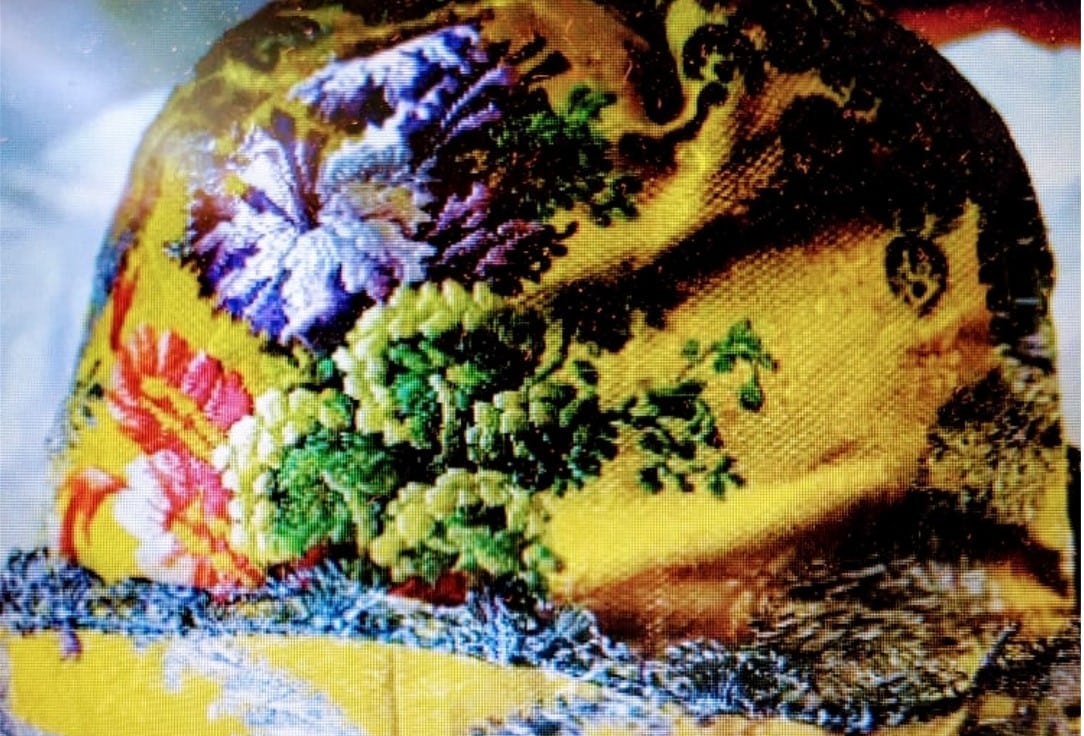
Indiana = stamped fabric. The decoration technique was of Indian origin and arrived in Europe via English trade.
Silk dresses from Koroni = from Koroni in Messinia, where trade flourished during the Ottoman occupation with French trading houses.
Collarines = additional collars that cover the entire female neck
Kakavopoulo = small bronze cooking pot
Stanino = tin pot
Demela = pillowcase
Boukasi = deep red dyed fabric