The genus includes seventeen species of perennial plants native to western, central and southern Europe. Many of these have spread throughout the world as epiphytes.
The healing properties of the plant have been praised since antiquity. From the time of Hippocrates to the present day, folk medicine considers that preparations of the roots and leaves of the plant have diuretic, expectorant, cardiotonic and emetic action, while as an ointment or poultice it is considered to treat inflammations and ulcers of the skin and the veins, hair loss, ear and eye pains. Asphodel is particularly appreciated by Dioscorides, who considers it a literal panacea for all diseases.
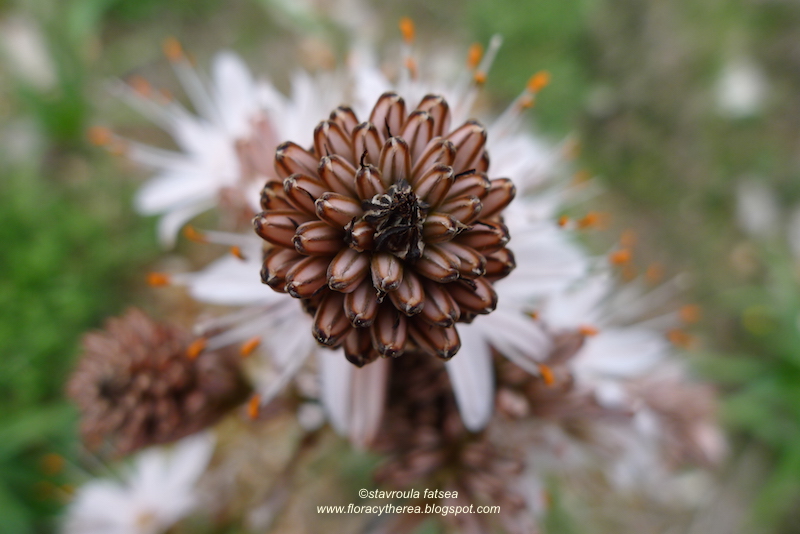
Οι κόνδυλοι του φυτού αφού κορνιοτοποιηθούν και αναμειχθούν με κρύο νερό δίνουν ισχυρή κόλλα που χρησιμοποιείται στη βιβλιοδεσία και την υποδηματοποιία (Grieve, A Modern Herbal, Penguin, 1984) καθώς επίσης και κίτρινη βαφή.(Upholf.J.C.Th. Dictionary of Economic Plants, Weinheim, 1959)
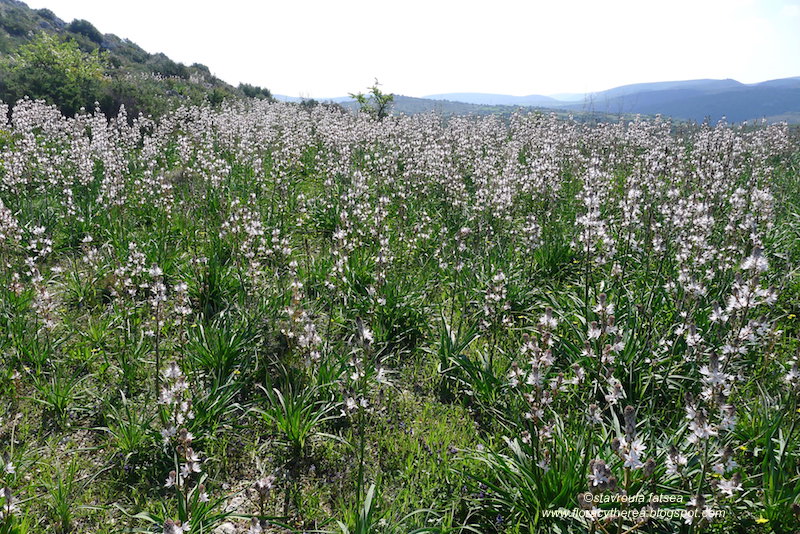
The Ancient Greeks associated the plant with Hades and the dead. Perhaps the fact that the underground part of the plant, the tuberous roots, which are edible (due to their high starch content) but considered second-rate food, suitable for the poor or a minimal offering to the dead, led the ancient Greeks to plant asphodels near the tombs. Persephone is shown with a wreath of asphodels in her hair and the plant in many cases symbolizes oblivion of death.
In Homer it is mentioned..., “Asphodelos Limon” the meadow with the asphodels as the final refuge of the souls of common mortals.
They passed the Ocean Stream and the White Stone,
passed through the gates of the sun and the world of dreams, and saved
quickly to the Asphodel Meadow, where the souls dwell...
Homer's Odyssey O
Translation by George Seferis
It is considered a great beekeeping plant since its early flowering helps bees to get stronger until the big blooms of spring. The pollen produced during the asphodel's flowering season is bright orange-red in colour.
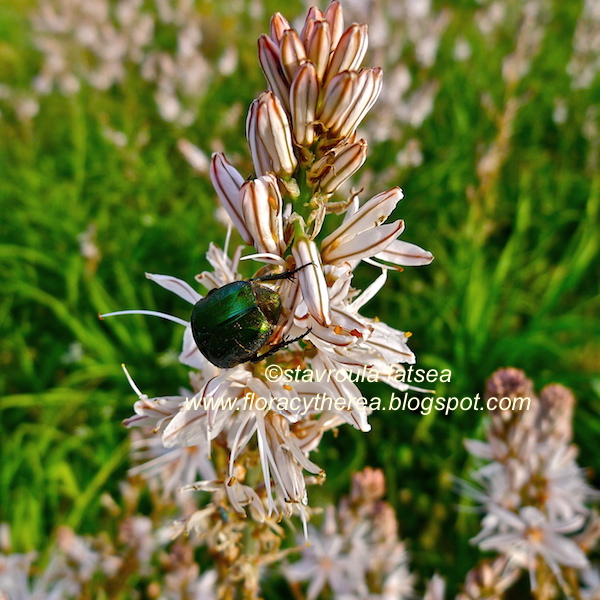
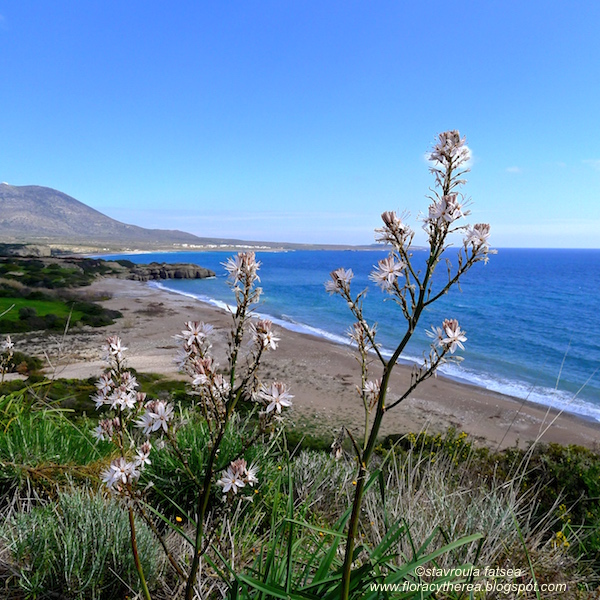
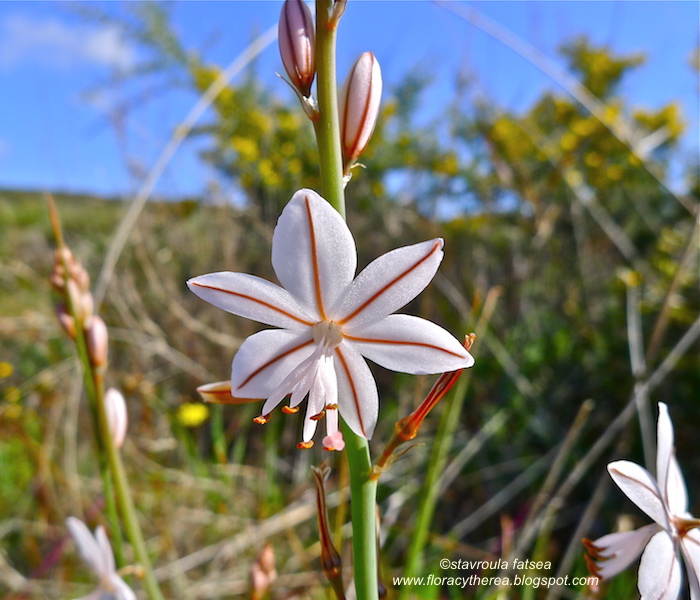
From an aesthetic point of view, while the flower of the plant is lovely up close, the overall impression given by the plant with its vaguely pale, pale white to brownish colour and stems that stand up like boneless hands, is not particularly pleasing.
let them not forget us, the weak souls in the asphodels,
let the heads of the victims turn to the fire:
We who had nothing will teach them peace.
December 1933 - December 1934
GIORGOS SEFERIS Novel
Στα Κύθηρα έχω συναντήσει τρία είδη:Το είδος Asphodelus ramosus L., (ασπέρδουκλας), το είδος asphodelus fistulosus και τέλος το είδος asphodelus luteus (asphdodeline lutea). Το τελευταίο είναι αρκετά σπάνιο στα Κύθηρα. Έως σήμερα έχω συναντήσει ένα πληθυσμό στο βόρειο μέρος του νησιού).
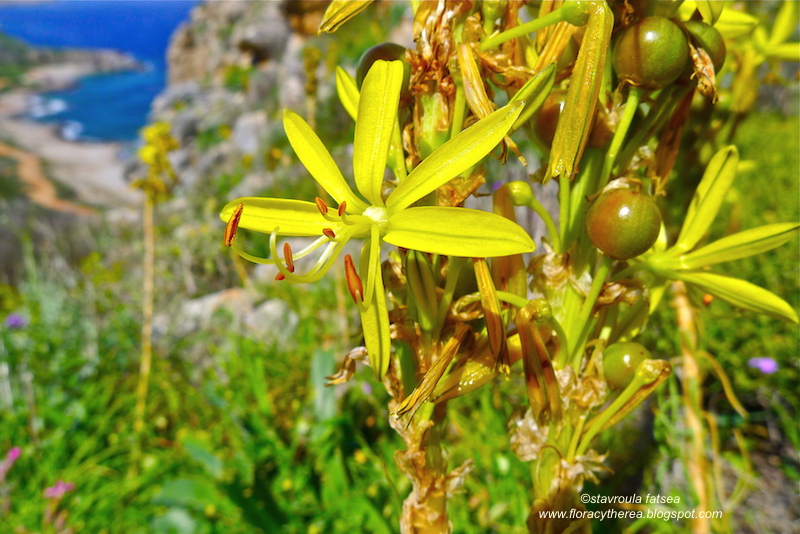
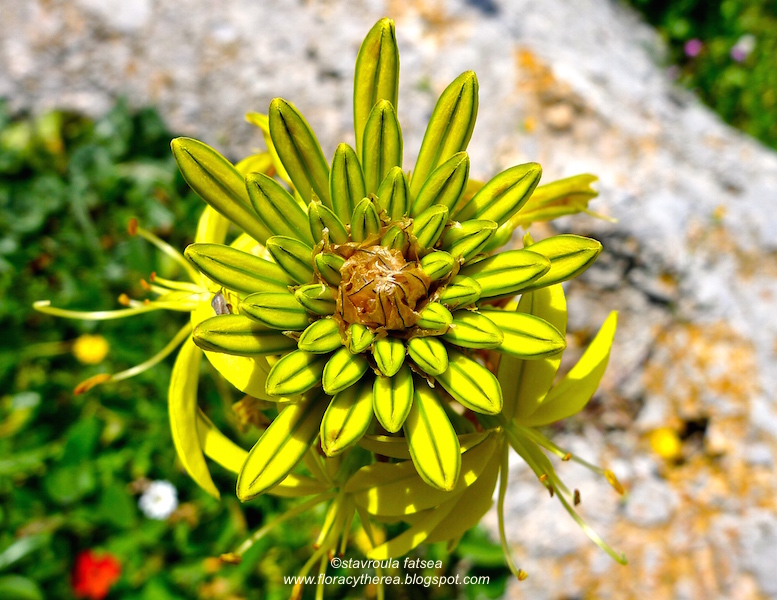
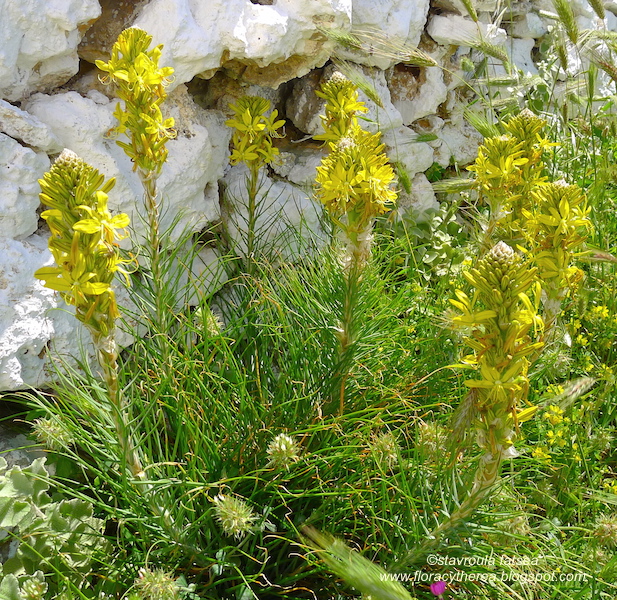
Κοινές ονομασίες του φυτού asphodelus aestivus στα Κύθηρα* και σε άλλα μέρη της Ελλάδας είναι: ασπέρδουκλας, και ασπέρδουγκλας (Ιόνια Νησιά), σποδρίλι (Χίος), ασφέλταρος (Τήνος), σπερδούκλα (Λακωνία), σφεντιλιά (Κρήτη), σφούρδουκλας (Ρόδος) κ.α.
*Η πληροφορία ότι κοινή ονομασία του είναι άρβυκας ή άρθηκας προφανώς οφείλεται σε σύγχυση με το φυτό ferula communis το οποίο ονομάζεται έτσι στα Κύθηρα και αλλού.
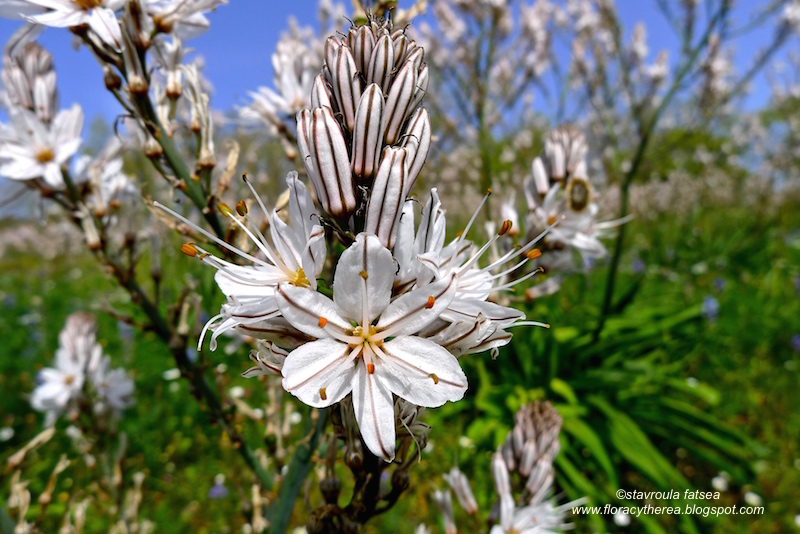
The old farmers of the island of Kythera used to predict the weather of the next winter by observing the stem of the aspergillus. Straight and tall meant “benachrone” i.e. mild weather and abundant production. A crooked and not tall enough stem meant bad weather and poor fruiting.
As regards the etymology of the Homeric adjective asphodelos and the noun asphodelos, experts' opinions differ. One version is that it is a pre-Hellenic word. ( N.P.Andriotis, 1953)
Interesting is the view that the word comes from the ancient Greek spodos = ash, ash, with the addition of the initial a- and the suffix -elos. (www. heterophoton.blogspot.gr )
Stavroula Fatsa