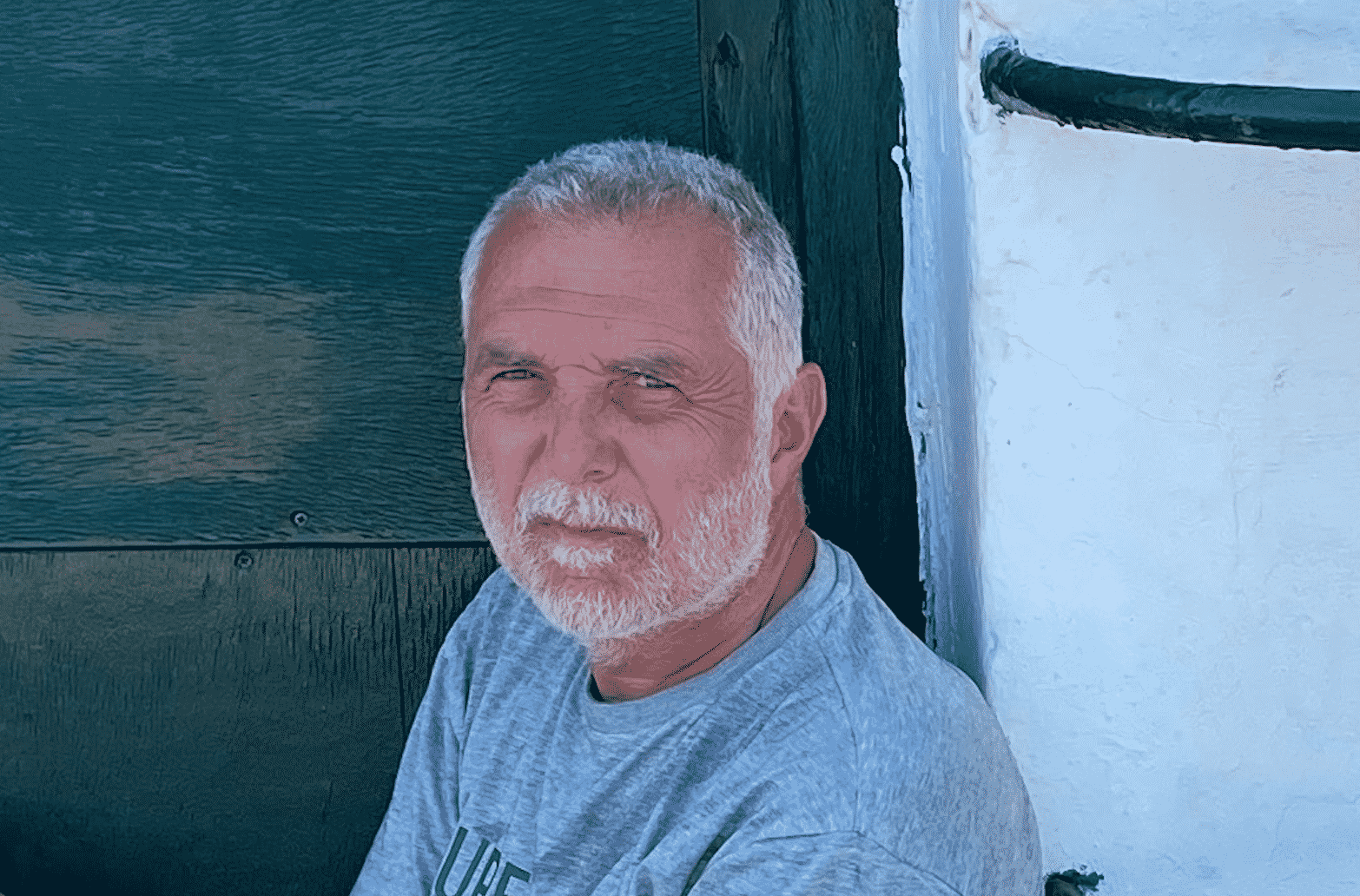
Kythera.News had the pleasure to speak with architect Dimitris Leventis, Vice President of the Architectural Heritage Council of the Hellenic Society for Environment and Culture, a few days after the announcement of the 7 Monuments in Danger - Sites for 2021 by Europa Nostra. On 8 April 2021, Europa Nostra - the European voice of civil society and its partner, the European Investment Bank Institute, announced the List of 7 Most Endangered Monuments and Heritage Sites in Europe for 2021 (7 MOST ENDANGERED).
These islands are in serious danger as the Greek government is encouraging their conversion into an industrial zone with wind farms. The plan is to install wind turbines in various locations on each island, often next to archaeological sites, Natura 2000 protected areas and as a backdrop-around the perimeter of traditional villages. The proposed wind turbines far exceed the actual energy needs of the islands and are to provide energy to other parts of Greece. The wind turbines will not only have a visual impact on the landscape of the islands, but will also affect their morphological and climatic features, endangering both their flora and fauna and their agricultural, livestock and tourism sectors. This will undoubtedly reduce the environmental and cultural value of the landscape and jeopardise the survival of local communities.
On the occasion of his visit to Kythera and with this in mind, we asked Mr.Leventis to talk to us about the importance of this qualification.
Mr Leventis, what does this news mean for our islands, what is the Europe Nostra and what is this qualification achieving?;
Europa Nostra is a European company that takes care of cultural and environmental issues and one of the very important projects it supports is the «7 under threat». Every year, Member States submit nominations for monuments, sites and cultural heritage in general which are under real threat, either from man-made or other factors, and which either the state or the owners are unable to look after. They therefore need the support of the international community. It is therefore a tool for promoting and highlighting a negative event. That is why it is paradoxical to use the word ’awarded« as one of the 7. It is correct to say that it is included in this list, so that it is not implied that something negative is being rewarded.
There are so many nominations submitted every year. Each country can submit more than one nomination. There is a committee of experts, the expert advisory group, which examines these issues in great detail, all the parameters, political, economic and technical, so that we initially come up with a list of twelve candidates. There may be thirty or fifty nominations in a given year. This group of experts selects the twelve candidates from the total number of candidates. This announcement this year included the five islands of the South Aegean. I should note here that the original intention was for the Cycladic islands. But fortunately we managed to include Kythera, given the situation that is currently taking shape with the wind turbine installations that have already been approved, and we also had very serious support from the local area. So the nomination was renamed from Cyclades to South Aegean and we went ahead. We went into the list of twelve and after the announcement, the Europa Nostra board looked at those twelve cases so that it came down to seven.
There, each country argued its candidacy very carefully, not only by saying why they are under threat, but also by proposing alternatives. So there is an alternative? What are we proposing? What is the immediate danger? What is the environment that will be created? What will be the help of qualifying the 7 Under Threat? How will Europa Nostra help? Qualifying for the 7 At Risk gives the issue international support and it is important that it gets support, political and financial, from Europe. Europa Nostra has institutional support such as its partner, the European Investment Bank Institute together with the European Investment Fund. Both Europa Nostra and the European Investment Bank recognise the problematic, recognise the risk and are willing to participate, assist, support and promote the project.
As reported by ΕGreek ΕDepartment of the Environment and Πclimateism has been fighting for a sustainable lifestyle with renewable energy since 1972. Η organise demand for alternative and balanced clean energy solutions instead of massive wind farms combined with a thorough consultation process with people, citizens and stakeholders. Explain. the approach to the company and the relationship with these five islands which were selected.
First of all, one would have to be a fool not to be in favour of renewable energy. It has now been proven that there is an urgent need to use renewables. However, the use of these sources must not be a risk to the environment and to so many other social and economic sectors, which are not national in scope but are very important for each place. All of this must be combined in a sustainable plan and not aimed at a monoculture. In other words, to say that it is turning a country into an energy producer but will deprive it of the right to have agriculture, livestock farming and tourism. The Hellenic Society for the Environment and Culture brings all this together as an opinion, saying yes to renewable energy sources, but under a very well documented spatial plan, which will start from a very clear and unambiguous statement of needs and intentions. Unless the national goal is really to become an energy powerhouse! But there the state will have to say so: Yes I want, I aim as a government, as a state to become a power plant, not to cultivate, not to sow, not to harvest, not to have tourism, but to produce energy. And that's where each of us will decide whether we want it or not. But be honest and clean. We disagree with that. We believe that renewable energy should be quantitatively and qualitatively dependent on the needs of each place, without altering its characteristics. Above all the social and cultural characteristics. It is also the relationship with NATURA areas, with traditional settlements, the protection of biodiversity. You know that the Ornithological Society has already expressed its support for the installation of wind turbines in Kythera, which is the last stop for birds before the long journey to Africa. The President of the National Observatory, Mr Plionis, has also expressed himself very clearly, taking into account the already active investment in Antikythera of the Climate Change Monitoring Centre.
Why did the Company choose these 5 islands?;
I want to stress that the success is not the success of the Hellenic Society for Environment and Culture. The success is collective. What we need to stress and clarify is this. We have been asked by very many people. When Mr Karras and I and the Hellenic Society for the Environment and Culture supported our candidacy, the first question we always received from everyone was: why these five islands? Why? The reason is very clear. These are examples of the problem of the Greek territory. It is not just these islands that are in danger. It is a sample that primarily proves that the only parameter of siting is wind potential. Wind power is the only parameter that the RAE looks at to grant permits and nothing else.
The Company states that the islands findonis at serious risk, as the Greek government encourages its conversion into an industrial zone with wind farms, next to archaeological sites, Natura areas,traditional villages. How do you think you can with this action of yours to convince the government change policy on this; Πhow to do it;
The first step is to identify the problem. Each problem starts with its data. The problem is not only identified by Greeks but Europe-wide and this is a very important fact. The people of Europa Nostra who, as we said before, are not only architects or archaeologists, they are also technocrats, scientists, economists, bankers, and they understand that this is a one-dimensional policy in one direction only. A policy that affects the development characteristics of each place. And they will have to prove to the government, to any government, that it is a wrong practice. It is not only the man from Kythera or the man from Sikinos, Amorgos, who recognises the mistake.
It is recognised by a large scientific community across Europe. The fact that islands are recognised as cultural assets in Europe is very important. It is not just about communicating the problem, that is, going out and shouting «I have a problem». It is the recognition, the acknowledgement of the problem by the international community as well.
Εhere another question arises, that either the government or the local governments when they decide make interventions, a development project, there are social groups and bodies such as the Εταιρεία where react and unfortunately often misunderstood. Έyou have felt on its way Εof this conflict;
This problem is always there. There will always be reason and counter-reason, there will always be action and reaction. The Greek State clearly has much more power than any organisation such as the Hellenic Society for Environment and Culture or a local organisation. A simple, very recent example is that in last year's nominations, the preservation of the Venizelos monuments in the Thessaloniki metro was qualified as one of the 7 Under Threat. So there too the international community had expressed itself and said that the monuments should not be moved. Nevertheless, the government decided to remove them. So it does not mean that the landscape of the five islands that was distinguished in the 7 Under Threat will be saved. It is the effort of civil society and those people who think rationally and recognize other characteristics beyond economics, short-sighted economics and not sustainable economics, to solve this problem.
How Kythera came to be in the Process with the five islands?; Πuntil we got on a list with Cycladic islands given that we have no direct geographical connection?;
In the Hellenic Society for Environment and Culture, seeing that the problem of wind turbines and the alteration of the landscape by RES is spreading all over Greece, in Arcadia, Agrafa, Evia, we did not want to limit ourselves to the geographical location of the Cyclades. But we did not want to «spread» the problem to the islands and mainland Greece. There, as a member of the Hellenic Society, knowing the problem of Kythera, I suggested that the island be included to show that the problem is everywhere, and so we renamed the nomination from Cyclades to South Aegean. Nothing could have been done if we had not received «tremendous» support from Kythera. Indeed, the organisation of the data, the data, the documents we had, the research, the publicity of the problem, the archive made available to us, the support from Manos Vassilakis and the Kythera Citizens' Movement - Dynamo, were all extremely important. I have to admit that in relation to the other four islands, the data we got from Kythera supported the general candidacy to a very great extent.
What happens from now on?;
The Hellenic Society for the Environment and Culture, as soon as our participation in 7 Under Threat was announced, has already started to organize the actions for the next day. That is, what we will do as a central organization, what we will do with the State, in each place. The Hellenic Society will be in contact with all those who supported the programme in order to draw up a very serious plan of action on two levels. The first one is unified, all together for all, and the other one is local and has to do with each island. Also very important is the organisation of a network of mutual support. In other words, what an island like Kythera gains and what it loses should be directly communicated to the other islands and vice versa. So that what happens to one can be prevented by the other. Let us share the experience. So there has to be action at national, group of five and local level.
What else will do η Europe Nostra now that we're on this list. It will have some interventions in the European Parliament, to the European Commission; Μwhat you told us about the Greek company ΠCivilisation and Environment roadmap
There is no general Europa Nostra strategy on how to deal with the problems, because of their specificity. Each problem is dealt with individually. An action plan is drawn up for each site proposed to Europa Nostra. If the plan includes interventions in the European Parliament, it is also co-decided. There is no rule that defines it. The strategy will now be submitted. What must be particularly emphasised is that monuments in everyone's consciousness have always been some man-made constructions, i.e. buildings, bridges, gardens... At the moment the Hellenic Society has faced a very big problem, the scale and type of what it has called a monument. That is, the fact that the natural landscape is a monument was already a very important achievement. Because until now the natural landscape had not been so clearly in one's consciousness that it was a monument. And yet it is. And it is a monument that is constantly changing, constantly under attack and constantly being affected. We know a Byzantine temple, we know it, we know what happens to it, the actions are punctual. Here we are talking about a large landscape and indeed five huge landscapes, five islands. And we are talking inductively about the whole country. The fact that this passes into people's consciousness as a monument, that people, hearing all this, will turn around and look at a mountain top and treat it as a monument is something very important, it is already a gain.
To talk a little bit about you and Kythera. Τyourslet Relation with the island. How it came about and you are often here;
I am a stranger. I came to the island about 30 years ago for the first time. Since then my presence on the island has been uninterrupted. I am always on the island, I have found characteristics that suit my character and temperament very much and what I think about Kythera is that it is an island that has a very big disadvantage and advantage at the same time. Developmentally it is at a point where a new future is opening up in front of it which is not purely determined by its agricultural economy, nor by the money coming in from the families that have emigrated. A new landscape is taking shape. This landscape, therefore, no one can guarantee where the island will lead. We should all make sure that it is a road that can only lead to good.
I understand that this view the Expressionε driven by the love that haste for the place. Σcakeste bete active in such a dialogue for the future of the island?;
Of course, of course!
Thank you
And I thank you