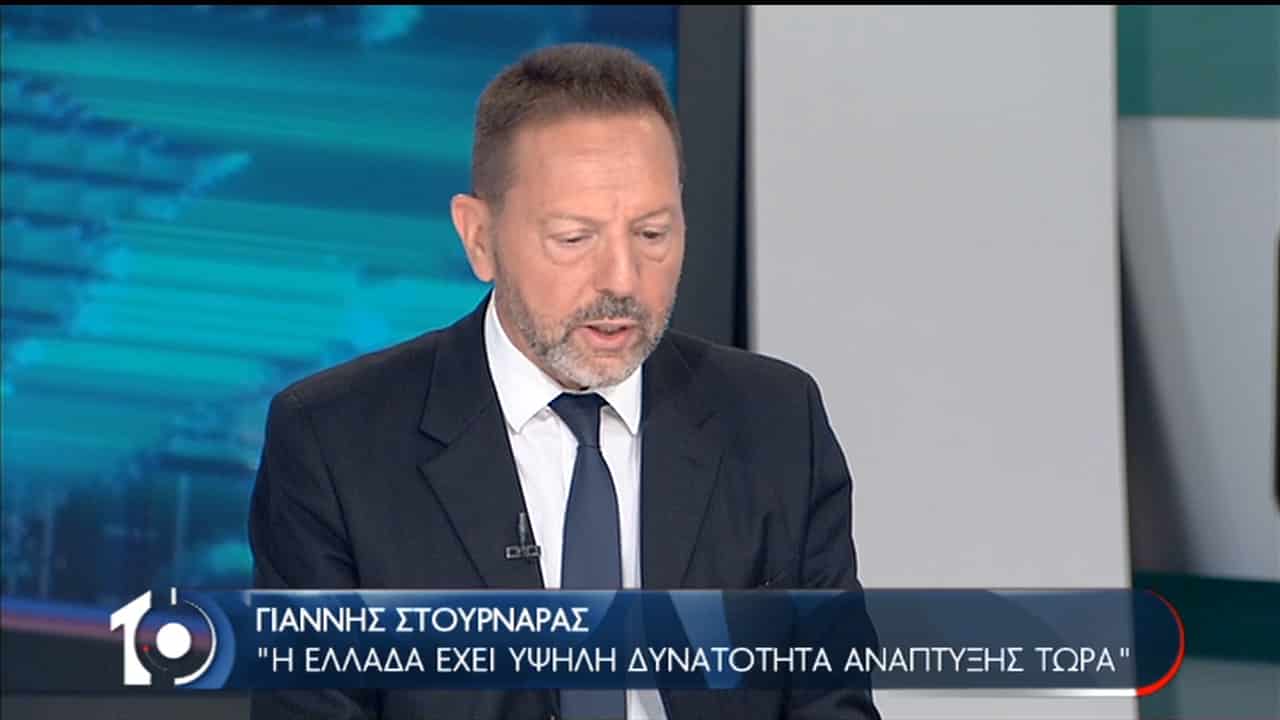
The Governor of the BoE asked insurance companies to review their business models Yannis Stournaras, in order to maintain their profitability and to offer innovative products that meet the ever-evolving needs.
As he told the Annual General Meeting of the Association of Insurance Companies, the crisis of pandemic will affect the insurance market in both the medium and medium-term horizon. The suspension of employment contracts, the reduction of disposable income and the freezing of business in certain sectors of the economy, such as catering and tourism, are expected to affect the overall behaviour of consumers.
Stournaras stressed that in this environment, it is necessary to maintain sufficient solvency margins. Insurance companies are called upon to reassess their policies for managing their capital and, in particular, the distribution of dividends and the payment of variable remuneration to their executives.
At the same time, the focus on the impact of the pandemic, should not be distracted from the impact of low or even negative interest rates and emerging risks, such as those related to the climate change. The proactive approach to assessing these risks should be adequately reflected in the Institutional Risk and Solvency Assessment (ORSA), which is the key tool for developing sustainable business models.
Mr Stournaras said that changes in legislation are expected in the near future, as it has already been launched by the institutions of the European Union the process of reviewing the Solvency II Directive with a view to adapting it to the current economic environment and to the general conditions that are emerging.
At the same time, he called on insurance companies to embrace the new regulation on pan-European personal pension products, offering such products, promoting their existing experience in pension schemes and, in this way, to contribute, for the benefit of the consumer, to the prevalence of the institution and the consequent increase in savings in Greece.
Incentives for property insurance policies against natural disasters in the housing sector, as soon as conditions allow after the pandemic
The intention to launch a dialogue on the creation of incentives for property insurance, was made at the online event of the Association of Insurance Companies of Greece at its general meeting.
The Minister of Labour and Social Affairs, Kostis Hadjidakis, noted that it remains a priority for the government to introduce appropriate tax incentives for the cost of insurance premiums covering buildings against natural hazards, but the particular circumstances facing society, due to the coronavirus, inevitably led the government to adjust its planning. He added that, due to the adoption of extraordinary measures over the past year, the government's direction is not to announce permanent measures until the pandemic issue is resolved but the issue of property insurance remains on the agenda and in cooperation with the Ministry of Finance, as soon as conditions allow, it will be taken forward.
As he stressed, in an earthquake-prone country like Greece that owner-occupation is among the highest in Europe, it is inconceivable that the insurance cover should only amount to 15% of the dwellings. «We see», he added, «the private insurance sector as an ally, as a dynamically growing sector that can create new jobs. We have no prejudice against the private sector. In the immediate aftermath of the pandemic, there will be all the conditions to move forward on a path of growth and progress.».
For his part, the Governor of the Bank of Greece Yannis Stournaras stressed that the Greek insurance market has responded well to the challenges of the current situation, but underlined that the pandemic is reducing the incomes of many workers and called on insurance companies to adapt their products to the reduced incomes of consumers.
He noted that it is «imperative that all insurance companies invest urgently their digital operational resilience and develop an integrated risk management system to ensure that they are resilient to all types of disruptions and threats associated with information and communication technologies.
«It goes without saying», he stressed, «that in this environment it is necessary to maintain adequate solvency margins. Insurance undertakings are called upon to reassess their policies for managing their capital and, in particular, the distribution of dividends and the payment of variable remuneration to their executives.».
The Minister of Development and Investments of SYRIZA, Alexis Haritsis, stressed the opposition's intention to sit at the table and discuss the plan to create incentives in property insurance as, he said, the conditions are ripe.
Mr Haritsis acknowledged the usefulness of private insurance in this area, stating that they are ready to make their own proposals in this direction, while he directly accused the government of being negligent on this issue. That is delaying and using the pandemic outbreak as an excuse as it has been legislating normally, on other issues, throughout this period. He even referred to the so-called «disincentives» that the government is promoting with regard to business compensation for natural disasters and giving the public sector a role as an informal insurance company.
The President of the Union of Insurance Companies of Greece, Alexander Sarriegeorgiou stressed that in the pandemic the insurance market has shown resilience and demonstrated reflexes both in terms of its social role and its business responsibility.
He underlined the role of insurance companies as a key investor in the country and added that most of the investments of insurance companies are invested in foreign securities but the conditions can be created to increase their participation in Greek products. He said that out of the 17 billion euros only 7 billion euros are invested in Greece and these 10 billion euros that are invested outside Greece can be returned in infrastructure bonds or other investments and the association is planning a conference on this issue.
He reiterated that Greeks pay out of pocket many times more than other European citizens for their health care, that Greece as a society and state has chosen a different approach to demographics, natural disasters, inadequate health coverage, than the vast majority of other countries.
«Understanding the problems that the government is facing, what I mentioned before are not issues of private insurance, they are issues of the average Greek, the average household, just part of the solution is in private insurance,» the president said.