Under pressure from rising food prices and soaring energy costs, the economic team is reviewing a series of proposals to support households. Among the proposals being «scanned» to determine the exact fiscal cost, a scenario has been added to provide relief to low-income pensioners, who constitute one of the most vulnerable groups in the population.
According to the proposal currently being drafted by the Ministry of Finance, a Emergency aid to at least 300,000 low-income pensioners as immediate income support. The government aid would go directly into their bank accounts and give them some breathing room to cope with some of the consequences of the unprecedented tsunami of rising prices.
The drawback of this measure is that It entails a significant financial cost, amounting to approximately 400 to 500 million euros, although it applies only to a portion of the population among those who are tested.
Alternatively, other groups of vulnerable individuals are also being considered, such as the long-term unemployed, who could benefit from some form of assistance.
The government is considering targeted measures to support our most vulnerable fellow citizens, said Adonis Georgiadis when asked about inflation and the energy crisis, while the Minister of Finance Christos Staikouras said that all options are on the table for a reduction in the VAT on food, depending on how the situation unfolds.
There are three criteria on the basis of which the final decisions will be made: the fiscal leeway available in the budget following the significant reduction in the ENFIA property tax, ensuring relief for citizens so that any measures do not get lost in the supply chain, and targeting middle- and low-income earners.
Tax cuts
Meanwhile, at the Ministry of Finance, officials have taken out paper and pencil and are calculating the revenue generated by taxes imposed on basic necessities and the cost to the state budget.
The main concern is which measure would have an immediate impact on consumers' wallets.
VAT on Food
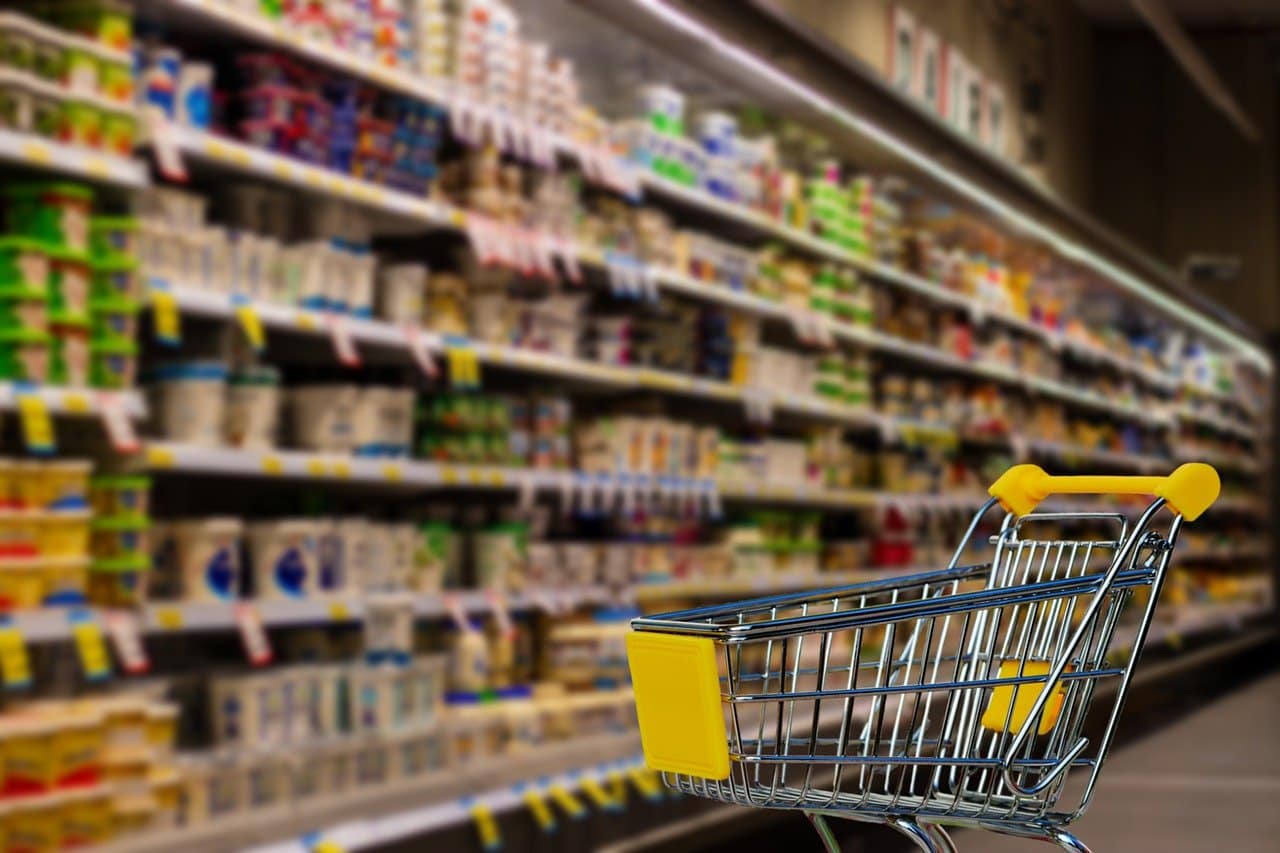
The economic team has dusted off the plan once again and is working on a proposal to reduce VAT rates on mass-market consumer goods under pressure from rising prices andcost pressures. With prices on supermarket shelves skyrocketing and inflation breaking one record after another, the Ministry of Finance is once again considering reducing VAT rates as a bulwark against the constant price hikes that are eroding household budgets.
Given that food accounts for 23% of total consumer spending, it is clear how much this affects incomes. The economic team is considering a temporary reduction in the VAT rate from 13% to 6% for approximately 15 products the kinds of things that fill a housewife's shopping basket.
What it takes into account is, on the one hand, the significant fiscal cost, which amounts to 1.5 billion euros annually, and, on the other hand, how the price reduction will make its way from supermarket shelves to consumers’ pockets. The goal of the price cut is to ensure relief for consumers, according to the economic team.
Any intervention that is decided upon will be temporary, while the cost will be proportional to the number of months during which it is applied.
Greece has one of the highest VAT rates on food in the European Union. For example, in Denmark, food is subject to a VAT rate of 25%, followed by Lithuania at 21%, Bulgaria at 20%, as well as Estonia, and Finland at 14%. In Germany, the VAT rate is 7% and 19%, and in France, it is 5.5%. .
VAT and Excise Tax on Fuel
Reductions in indirect taxes, such as VAT or the Special Consumption Tax, provide the same benefit to all consumers regardless of income level, while the economic team’s goal is to benefit households that are most in need.
At the same time, these taxes fill the public coffers. The government collects 2.1 billion euros annually from the excise tax on gasoline, from the excise tax on diesel fuel, it collects 1.4 billion euros, and from heating oil, approximately 350 million euros.
The measures taken so far by certain EU countries regarding high energy prices are as follows:
- Bulgaria has proposed a 0% rate for electricity effective April 1, 2022.
- Belgium is set to reduce electricity consumption to 6% from March through May 2022.
- Spain has reduced the VAT rate on heating fuel from 21% to 10% through April 30, 2022
- Cyprus reduced the VAT rate on electricity from 19% to 9% for three months
- Poland is reducing the VAT rate on electricity and natural gas from 23% to 8% between February and July 2022.