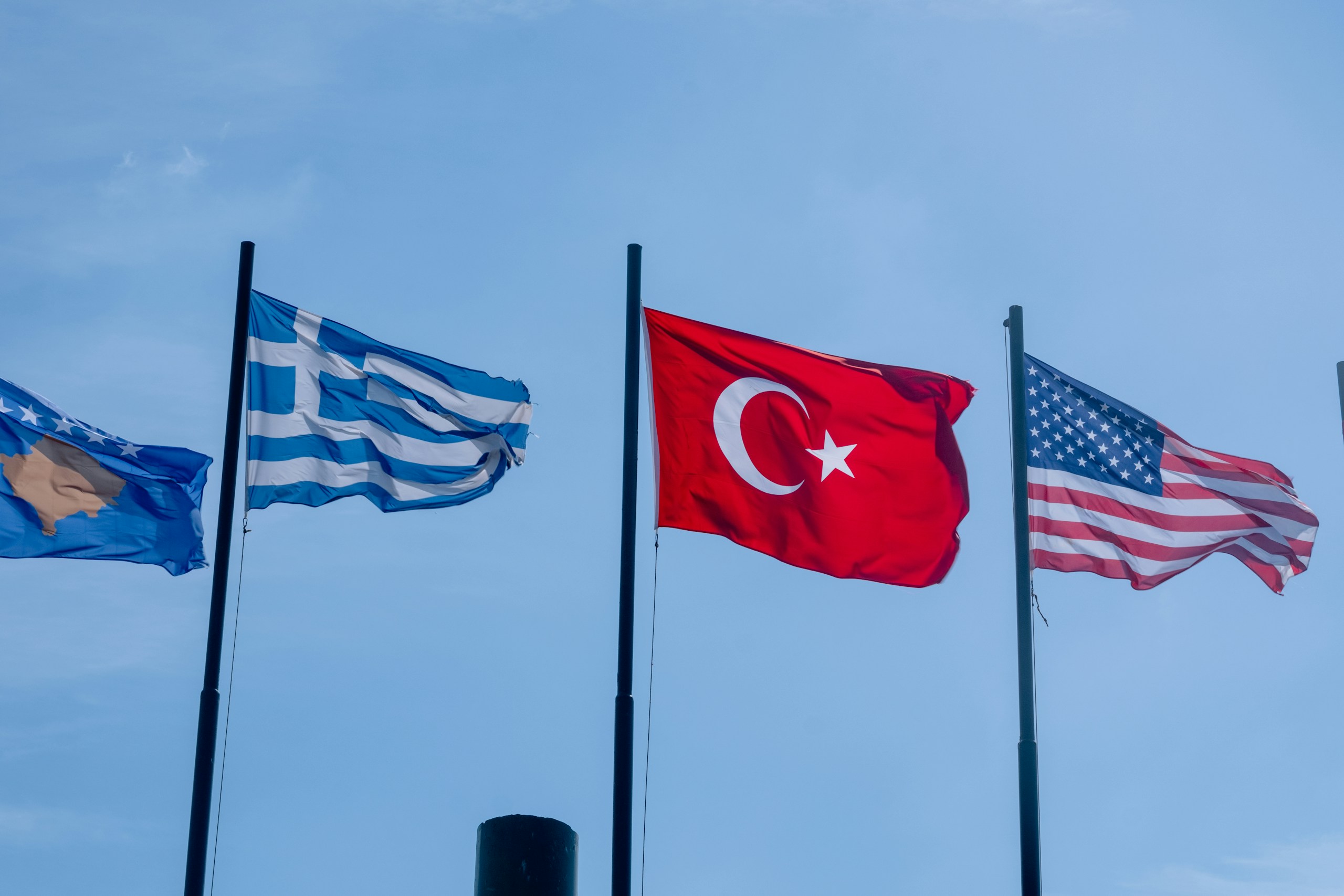
Greek-Turkish relations constitute over time one of the most complex and critical areas of Greek foreign and defence policy.
They are not a conventional bilateral dispute, but a long-standing and multi-layered confrontation, which is characterised by alternating periods of recession and tension, which at times has led to serious crises and hot spells, even reaching the brink of armed conflict.
In international relations theory, such confrontations are described as prolonged conflicts.
These are situations of hostile interaction between states over a long time horizon, characterised by periodic bursts of tension and accompanied by high strategic stakes.
These conflicts are not isolated events or fragmentary crises, but evolve as continuous processes, which are sustained even when there is no open violence, without a clear point of definitive end.
In the context of a protracted conflict, international crises are focal points of escalation.
These crises occur when a series of events, actions or geopolitical changes create the perception in the states involved that there is an increased likelihood of military conflict.
They often act as phases of intense confrontation that can either lead to a negotiated de-escalation or develop into a military conflict.
The culmination of such a process is war, which can manifest itself either as the culmination of a long-term confrontation or as the result of a sudden escalation.
However, in most cases of protracted conflict, war is not a permanent situation but an episode in a wider cycle of tension, dialogue and recurrent crises.
In the above perspective, Greek-Turkish relations present all the characteristics of such a protracted conflict.
From the Turkish invasion of Cyprus, the enduring tensions in the Aegean and the recurrent periods of military confrontation, to the phases of diplomatic rapprochement and de-escalation, the two countries are in a constant state of strategic competition.
This confrontation is not limited to sovereignty or maritime zones, but extends to broader geopolitical, energy and regional power balances., especially in the current period of intense geopolitical upheaval.
In particular, developments in Ukraine and the Middle East, regional rivalries for the control of energy resources, Turkey's strategic repositioning and the search for European strategic autonomy are shaping a new environment that directly affects Greek-Turkish relations.
The Eastern Mediterranean has in recent years become one of the most important geopolitical hubs of the world.
The discovery of energy resources, migratory flows and regional conflicts have enhanced the geostrategic importance of the region.
In this environment, Greece and Turkey are not only bilateral adversaries, but also crucial actors of regional balance and security.
Specifically, Turkey seeks to become a regional power with an autonomous role between the West and the East. This strategy is expressed through Ankara's multidimensional foreign policy, which maintains relations with both the US and NATO countries and Russia, while at the same time attempting to play a mediating role in regional crises.
Turkey is also using its geographical position and military power to strengthen its negotiating role vis-à-vis international partners.
In this context, the «Blue Homeland» theory is at the core of Turkish national strategy.
This theory puts forward an expansionist geopolitical and naval doctrine of Turkey that claims the extension of Turkish influence and control of extensive maritime zones in the Aegean, the Eastern Mediterranean, the Balkans and the Black Sea, challenging existing legal and geopolitical facts.
This strategy is not limited to rhetoric, but is accompanied by a systematic development of naval and air capabilities and an increase in Turkey's operational presence in critical maritime areas.
At the same time, it is also manifested in a broader effort of strategic power projection, through maintaining a military presence on regional fronts, concluding defence agreements with third states and exploiting hybrid means of influence.
In this way, Ankara seeks not only to strengthen its claims in these maritime zones, but also to shape new power relations that favour its strategic autonomy and the upgrading of its international role.
From her point of view, Greece has chosen to strengthen its deterrence capability through extensive armament programmes and the strengthening of its international alliances, seeking to form a security matrix that goes beyond the narrow limits of national defence and is part of a broader strategic framework of regional stability.
In particular, the strategic cooperation with France and Israel, the deepening of relations with the United States and the development of trilateral and multilateral alliances with countries of the Eastern Mediterranean strengthen Greece's geopolitical position and make it a critical hub of security, energy and geostrategic networks.
In this context, Greek strategy in recent years has not been limited to the traditional concept of deterrence, but has evolved into a a multi-layered power policy combining military preparedness, diplomatic engagement and geo-economic exploitation of the country's geographical position.
Through this approach, Greece seeks to strengthen its international footprint, increase its strategic weight and create more favourable conditions for security and stability in the highly volatile environment of the Eastern Mediterranean.
Under these circumstances, understanding the nature of Greek-Turkish relations becomes crucial for the design of an effective national strategy.
When a confrontation is not just a bilateral issue, but a factor that affects the overall security architecture of the South-Eastern Mediterranean and displays characteristics of a protracted conflict, it cannot be dealt with piecemeal policy options, ad hoc diplomatic initiatives or anarchic rhetorical outbursts and nationalist rhetoric.
Every choice concerning its management has wider geopolitical implications, which go beyond the narrow limits of diplomacy and touch the core of national strategy.
For this reason, requires long-term strategic planning, a combination of power tools and effective management of the intensity and decoupling cycles.
At the present juncture, where the international system is entering a period of increased volatility, intensifying geopolitical antagonisms and questioning of the hitherto rule-based international order, Greece is faced with a fundamental strategic dilemma: will follow a Responsibility Strategy, which seeks stability through a combination of dialogue and deterrence, ή will be drawn into a strategy of tension, which invests in the rhetoric of confrontation and conflict and traps the country in a vicious cycle of uncontrolled escalation and instability?;
In recent years, Greece seems to have developed a modern model for managing this complex and constant confrontation.
A model based on substantive diplomatic dialogue and the maintenance of open channels of communication, combined with the existence of a credible deterrent force with the aim not of the illusion of an immediate solution to the Greek-Turkish disputes, but of safeguarding national sovereignty, maintaining stability, limiting the risks of escalation and creating conditions of strategic balance.
This is a liability strategy which does not see dialogue as a sign of weakness or retreat, but as a tool for crisis management, reducing tension and creating conditions of stability.
This choice has been the subject of intense public debate and political controversy, reflecting diametrically opposed views on how to conduct foreign policy and implement national strategy.
However, the real question is not whether Greece should talk to Turkey.
The substantial stakes is whether the dialogue is part of a coherent national strategy that strengthens the country's negotiating position or whether it is abandoned to a logic of uncritical confrontation that increases the risk of crises and destabilisation.
At the present juncture, the responsibility strategy is not a choice of political expediency.
It is a national necessity which is called upon to ensure the country's stability, security and long-term strategic position in a particularly challenging international environment.
In this context, Greece through the new model of managing Greek-Turkish relations that combines active dialogue, credible deterrence and a strategy of responsibility, seeks to ensure that it enters any negotiations with Turkey from a position of strength and strategic confidence.
Bearing in mind that Turkey approaches international relations in terms of power and treats a strong player differently from a weak player, the effectiveness of the Responsibility Strategy has already been judged in the field.
Specifically, Turkey's long-standing pursuit of a limited-scale warm incident in the Aegean was aimed at dragging Greece to the negotiating table from a position of strength.
Through such a development, Ankara would attempt to impose a fait accompli and promote the objective (ANSF) of its high strategy: the a review of the legal regime in the Aegean and the change of the existing status quo.
The implementation of this strategy, however, seems to have been cancelled on the ground (e.g. crisis in Evros in 2020, tension in the Aegean Sea with surveys by the Turkish seismographic ship Oruc Reis).
This development is not a conjunctural choice of foreign policy, but a reflection of a broader strategic perception of the management of Greek-Turkish relations.
The model that combines dialogue and deterrence functions as a framework of stability, within which Greece attempts to control tension, limit the chances of crises and strengthen its negotiating power.
However, the importance of this strategy is not only reflected in its theoretical conception, but mainly in the results it produces in the field of security, diplomacy and the country's international presence.
In this context, the liability strategy does not guarantee the immediate resolution of disputes.
However, creates the conditions for avoiding crises, reduces the risk of hot incidents and lays the foundations for a gradual improvement in Greek-Turkish relations.
Greece appears as a responsible power and respecting international institutional rules, which strengthens its position in international negotiations and facilitates the creation of alliances with states seeking stability in the region.
Greek decisions are no longer the product of sentimentality or ephemeral political expediency, nor are they dictated by the need for internal political consumption or by pressures of a national-populist nature.
Instead, they are based on sound strategic analysis, institutional continuity and a realistic assessment of the international environment, combined with a strong deterrence capability and active diplomacy, aimed at promoting international law and peaceful coexistence in the Eastern Mediterranean.
The implementation of the responsibility strategy has already yielded tangible results in the management of Greek-Turkish relations.
In recent years, the frequency of serious crises in the Aegean has been significantly reduced, while stable channels of communication between the two countries have been re-established.
At the same time, Greek deterrence has taken on new dimensions. The combination of a strong deterrent capability through the strengthening of the Armed Forces and open dialogue has acted as a multiplier of stability, limiting Turkey's ability to impose a fait accompli and discouraging unilateral moves.
One A typical example is the case of the European SAFE programme.
Despite Ankara's efforts to join the European Defence, Greece, using diplomatic tools and its strategic power, helped Turkey to remain outside the SAFE mechanism.
This result is not only a diplomatic success, but also a clear indication that the Greek strategy of force and dialogue is working as a deterrent, making it clear that membership in European defence schemes cannot be taken for granted, but depends on compliance with international law and good neighbourly principles.
At the same time, the responsibility strategy also includes the political dimension of impression management and public diplomacy.
Greece has managed to present its positions clearly at the international level, demonstrating that dialogue does not imply compliance or weakness.
Raising issues such as the defence of island sovereignty, the international law of the sea and the prevention of unilateral moves by Turkey has been done in a way that combines political symbolism, legal documentation and strategic power.
The effectiveness of strategic responsibility is confirmed by the image of Greece in international organisations.
The country now appears as a factor of stability and responsibility in the Eastern Mediterranean, which strengthens its diplomatic influence in the framework of the European Union, NATO and the UN.
This role makes Greek participation in security and cooperation initiatives more dynamic, while limiting Turkey's ability to make unilateral claims.
Moreover, the responsibility strategy is not limited to the bilateral level. Greece has raised the issue of Greek-Turkish relations in the context of multilateral dialogue, linking it to international legitimacy, stability in the region and the preservation of the rules of international law..
In this way, the country is strengthening its position at both the strategic and institutional levels, proving that the responsibility strategy works not only as a deterrent but also diplomatically.
Finally, in the field of Greek-Turkish relations, Greece has also managed to move the debate to the level of institutional management of the disputes, avoiding the trap of the unilateral confrontation of power that Turkey often seeks.
The conclusion is that Greece's responsibility strategy -combining dialogue and deterrence- has transformed the Greek-Turkish dialogue from a tool of sensationalism or communication diplomacy to a key mechanism of stability and crisis management.
In conclusion, at a time when international relations are being redefined by the return of geopolitical power and the intensifying competition between regional powers, Greece is called upon to manage a complex and enduring strategic challenge.
The choice of the liability strategy is not just an alternative approach to the management of Greek-Turkish relations, but an a conscious national choice aimed at maintaining stability, preventing crises and strengthening the country's international position.
In an environment where power and credibility determine the terms of dialogue, Greece must continue to invest in a strategy that combines sobriety, deterrence and diplomatic maturity.
Because, after all, real national strength is not only reflected in the ability to respond to crises, but above all in the ability to create conditions of stability and strategic balance in one of the most geopolitically unstable regions of the world.