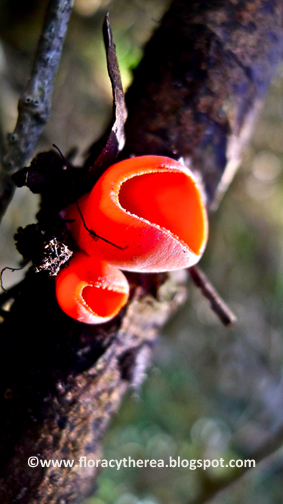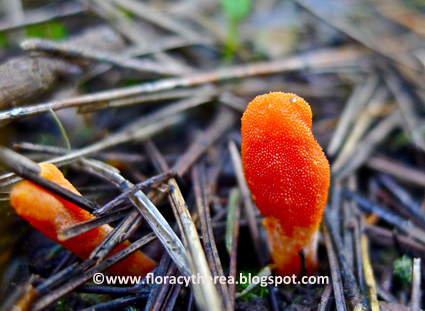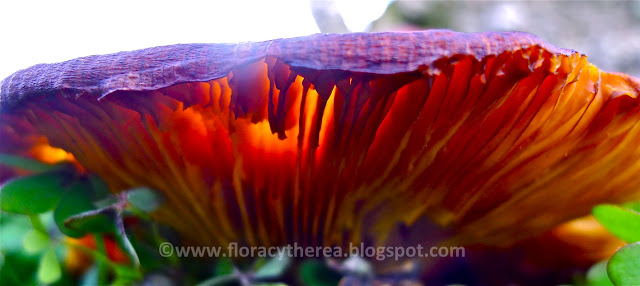
Omphalotus olearius (DC. ex Fr.) Singer 1946
Syn. Clirocybe olearia (DC.) Maire
It grows in groups, at the roots or at the base of the trunk of the olive tree (hence the name) although it is not uncommon near oaks, chestnuts or maples. In the Mediterranean the mushroom fruits in late autumn and early winter.
Its shoots are said to glow slightly in the dark when the spores are ripe. The mushroom is not deadly but is toxic enough that eating it causes serious gastrointestinal problems, diarrhea and vomiting. The pleasant smell of the navelwort and its similarity to the cantharisk (chanterelle cibarius) which is a sought-after edible mushroom, lure the novice mushroom picker, resulting in frequent poisonings.
In Kythera the mushroom is quite widespread and along with most non-edible species it is referred to as copromanita.
Enough of his external beauty!