The village of Mylopotamos, along with the surrounding settlements, was historically one of the most populous areas of Kythera. It has been characterized as a traditional settlement by the Ministry of Environment, Spatial Planning and Public Works (Government Gazette 594/ t D/19-10-78 YPEXODE, Government Gazette 672/ t B/79 YΠPO) and has been a feeder of migratory flows to Asia Minor, Egypt, Australia and America for two hundred years. In 1829 the census gave 1,900 inhabitants in Mylopotamos, out of a total of 11,200 inhabitants of Kythera. Today, Mylopotamos has a small population, while its «vitality» is limited to the tourist season and the arrival of Mylopotamoi who live outside Kythera to spend a few days in their ancestral homes.
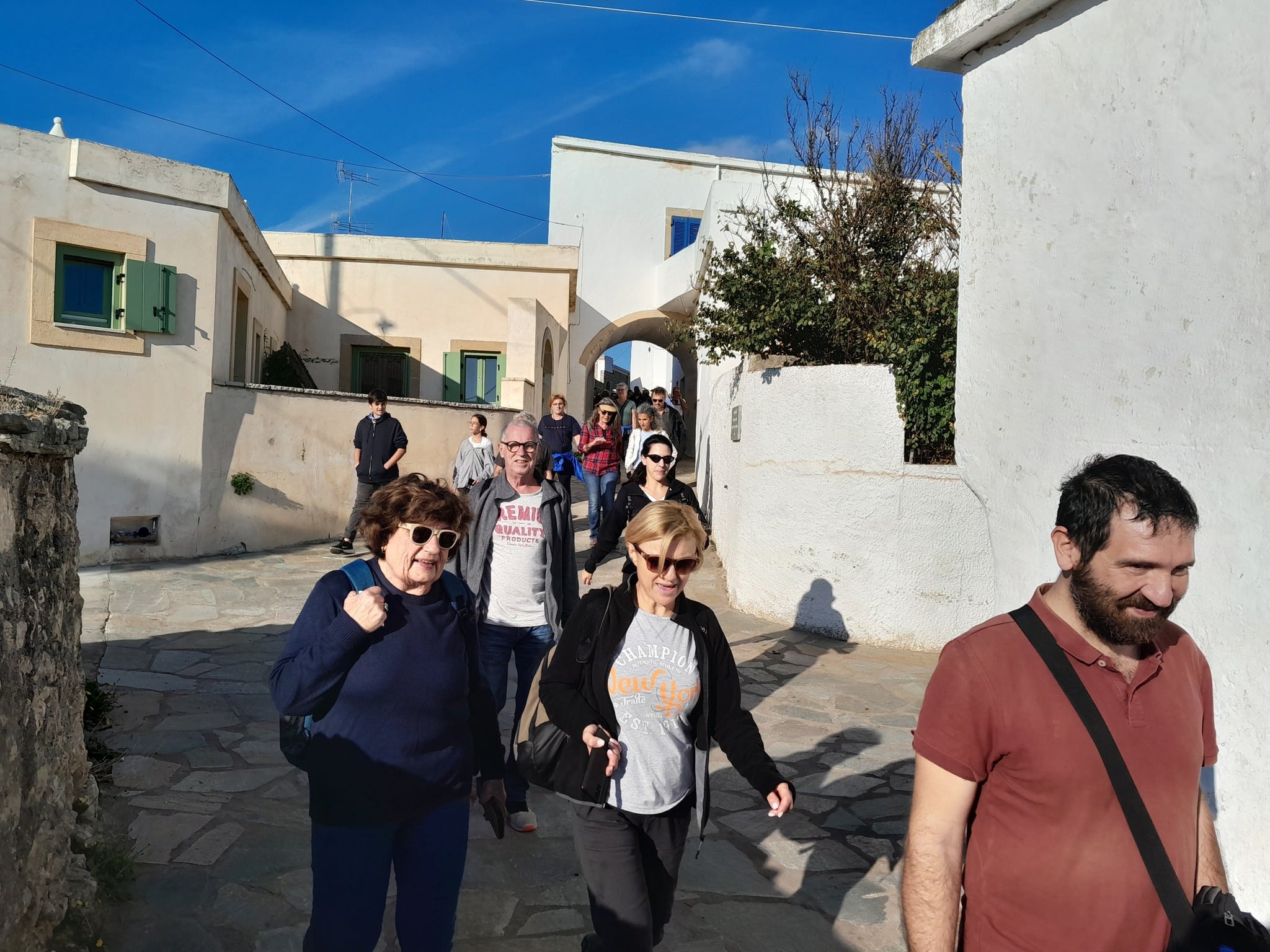
Mylopotamos has been described by many as a tourist destination in its own right. The settlements of the village, Agios Sostis, Areioi, Kato Chora, Piso πηγadi, retain the traditional architecture. The waterfalls with the watermills, the churches, the cave of Agia Sophia and the beach of Limniona are the main attractions of the village, which together with the natural beauty make up images not often encountered by the traveller.
However, time seems to have stopped for the historic village. Mylopotamos is looking for a kiss of rebirth to come alive again, all months, with human activity in every corner.
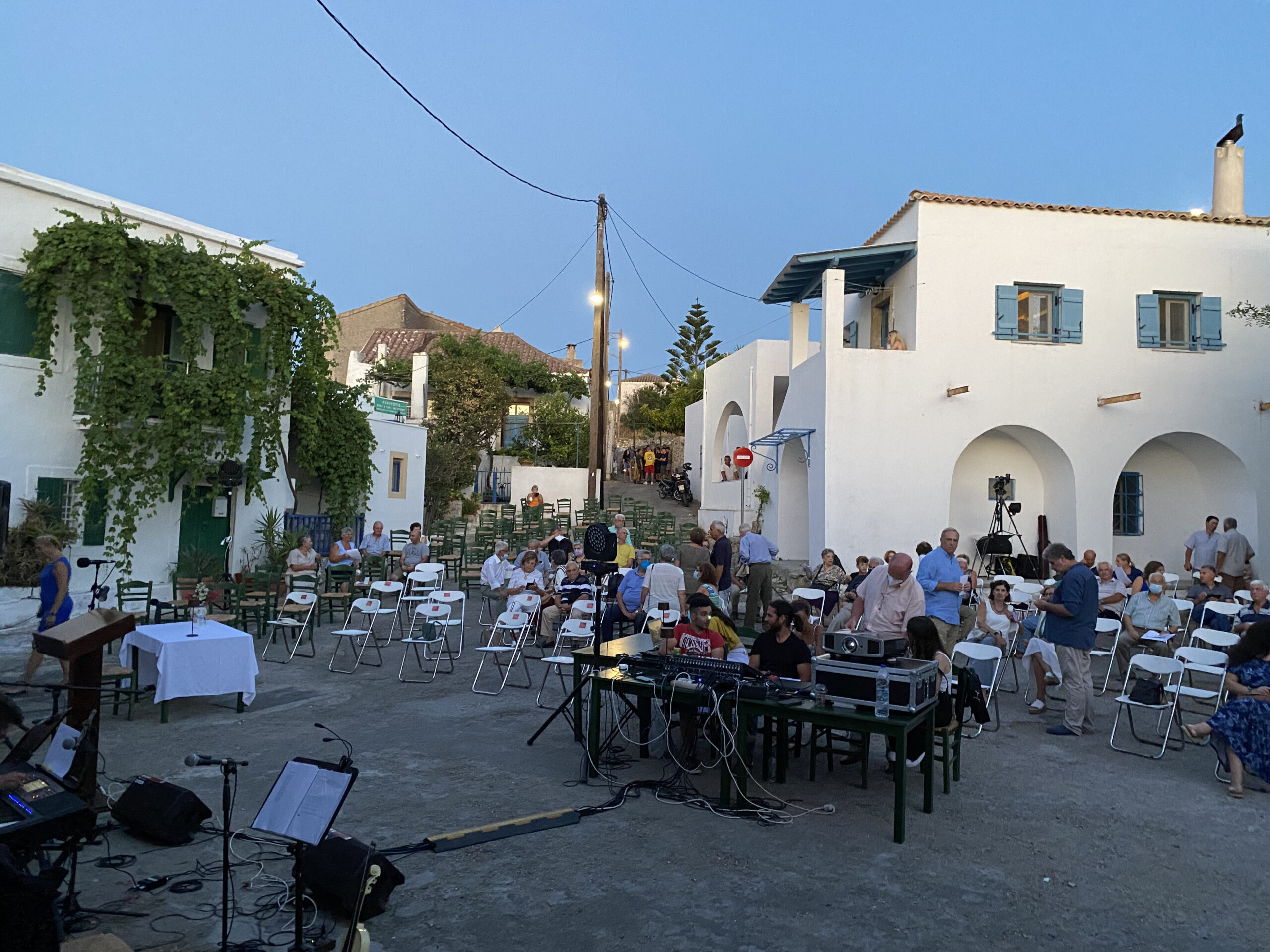
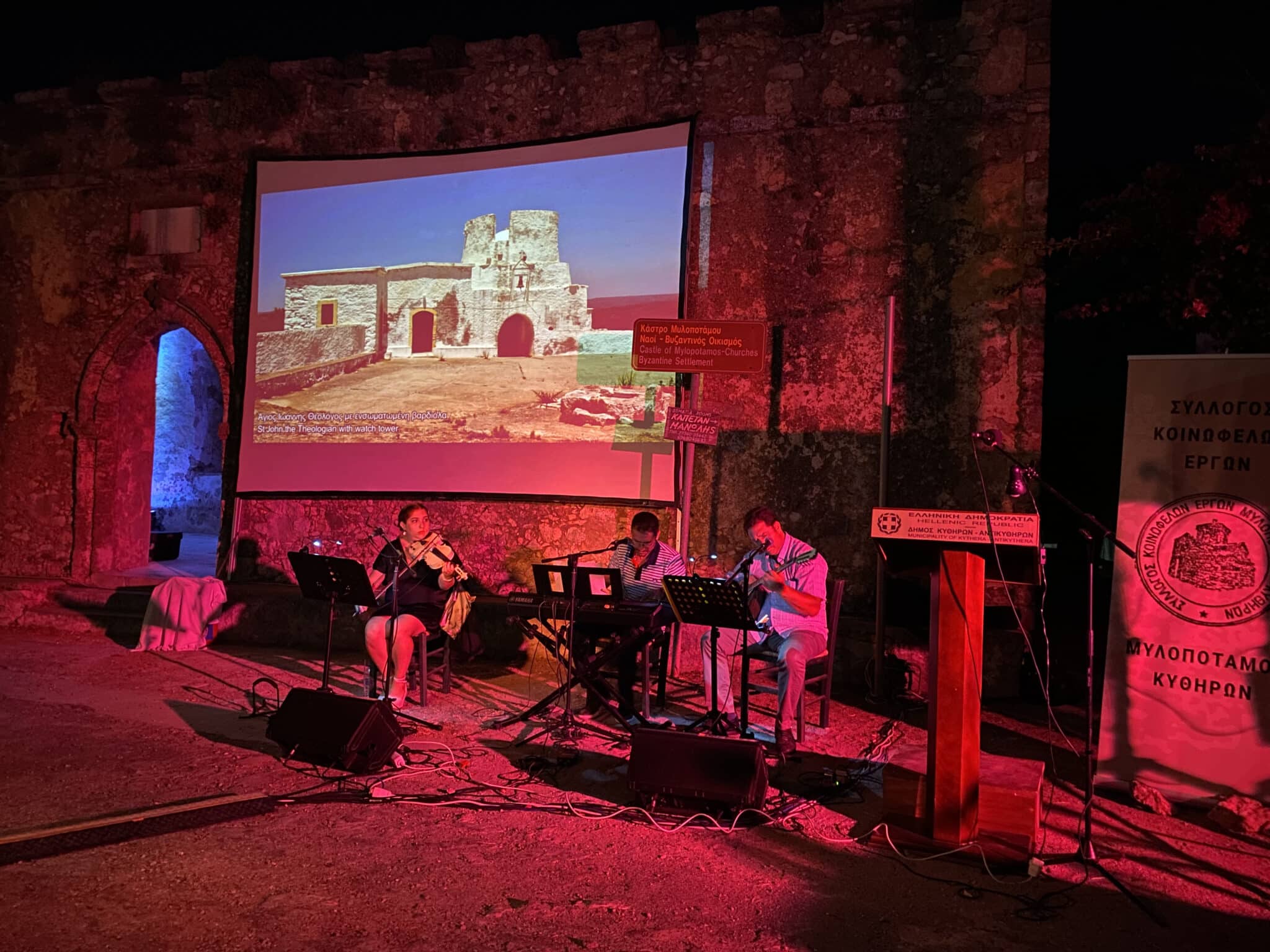
Last August, I had the honour to be invited by the Association of Public Benefit Projects of Mylopotamos Kythera to the cultural evening organized by the Association in the square of Kato Chora. This event was very moving, many interesting things were said about its history, while the chairman of the association's council informed about the efforts made in recent years to revitalise the village.
What struck me was that in the square, a little further up, a bunch of young people, girls and boys, were participating in the festive evening, helping the club and enjoying the moments. The village, as deserted as it seems to us in winter, seems to have a hidden strength. The strength of these young children. The children who can't wait for summer to come and be in the beautiful Mylopotamos and Tsirigo. It's exactly what we, the little squeakers of Athens and abroad, have always experienced when June came and schools closed. And we couldn't wait to go down to the island and «hide» in the arms of our grandparents.
These young people of the village show their love for the place and are its natural heirs. But apart from heirs, they are perhaps the only hope that in the next 20 or 30 years Milopotamos, keeping its colour and heavy historical heritage, will be reborn. So with these young people we can all work towards that goal.
The effort of the Mylopotamites to rebuild the historic Public Works Association is to be congratulated and is very promising for the future. This effort of the last 2-3 years should not go unused. Both the citizens, the associations, the professionals of the historic village, as well as the municipality and the state can create the conditions for the regeneration of Milopotamos. And this should be done with priority to the people. That is, young people. How will this be done? Let us not wait for solutions with wishes. We will find the solutions if we trust the young people of the village. To answer their questions and needs, to create their space for action, to give them the initiative to write their own pages of history in their beloved village. I am optimistic that much can be done.
I would like to thank the Board of the S.K.E.M. for the honour of being with them that night and I hope to see them again soon.