How much more will we pay for heating in an average Greek household this year? Personally, I would not venture an answer, because no journalist has received a straight answer from any political or economic analyst so far. There is a reason for this: those who have in-depth knowledge of the energy market understand that forecasts are, at best, risky when you are walking on quicksand.
However, a journalist friend of mine told me yesterday about the estimate he had received regarding the heating costs that the average household in Belgium in the coming winter.
From €200 per month in 2020, it is estimated that the monthly cost per household will skyrocket to €320 per month.
The prediction seems unrealistic, but it is not.
Twenty-four hours earlier, the Athens News Agency reported in a telegram:
«According to the latest estimates by the Italian Regulatory Authority for Energy, Networks and Environment (ARERA), Italian households will face an increase of 29.8% in electricity and 14.4% in natural gas. All this despite the fact that last week the government in Rome announced that taxes related to renewable energy sources would be removed from bills and that 5.5 million families would receive financial support. In its announcement, Arera again refers to the dramatic increase in the cost of raw materials and carbon dioxide (CO2) emission permits. «Without government intervention, increases would reach 45% for electricity bills and 30% for natural gas bills.», according to estimates by the Italian Regulatory Authority for Energy.»
KNEMA
«Wear a sweater too.»
In an extremely insightful analysis and presentation of the new reality, Bloomberg, Stephen Stapzynski emphasizes in his foreword:
«This winter, people will fight for something that is invisible, but rarely so vital – and in alarmingly short supply.
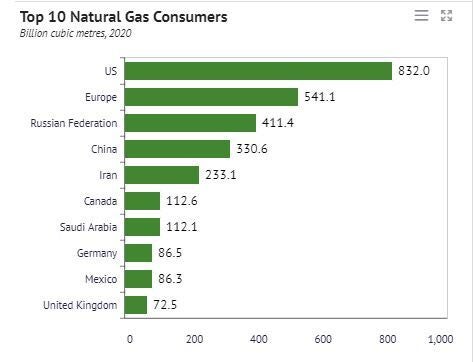
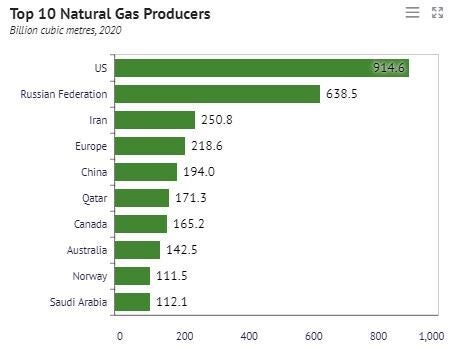
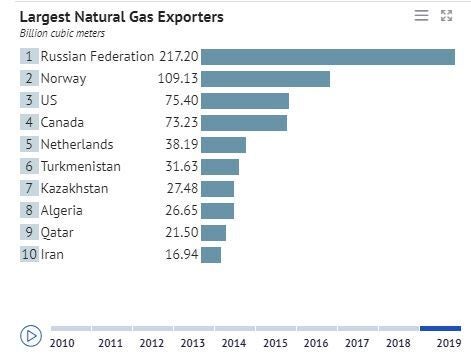
Nations rely more than ever on natural gas for heating residential and industrial energy sectors, amid efforts to phase out coal and increase the use of cleaner energy sources. But there is not enough gas to fuel the post-pandemic recovery and replenish reserves, which were depleted before the cold months. Countries are trying to pay exorbitant prices (for gas) to each other, as exporters such as Russia look to keep more natural gas for domestic consumption. The crisis will get much worse when temperatures drop.
For the average household, the problem is twofold: our first thought will be to reduce our consumption of natural gas or oil.
«Wear a sweater,» is the advice a Greek woman recently heard in Brussels from an employee of an electricity provider. In Belgium, this is what happens: providers call consumers to remind them to be careful not to consume too much.
Here in Greece, until now, it was completely unthinkable to hear something like this.
More expensive food and industrial products
However, even wearing the thickest sweater, it is impossible to avoid collateral damage from the dramatic increases in energy costs at the international level.
Energy prices are already putting pressure on industries in Europe, which in turn supply the rest of the world with exports of essential goods, from small everyday items to cars.
Bloomberg notes in its report:
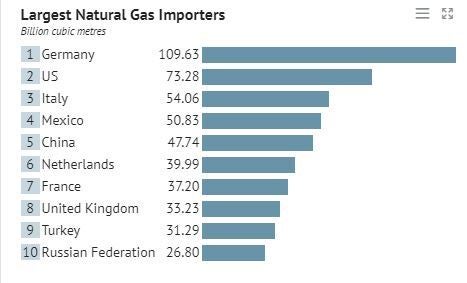
«Stocks in European storage facilities (natural gas) are at historically low levels for this time of year. Pipeline flows from Russia and Norway are limited. This is worrying, as Calmer weather (in summer) has reduced energy production from wind turbines, while Europe's aging nuclear plants are being phased out or are more prone to outages—making gas even more essential. It is not surprising that natural gas prices in Europe have risen. by almost 500% last year and are trading at near record highs.
The rise in prices has forced some fertilizer producers in Europe to cut back on production, threatening to increase costs for farmers and possibly leading to higher food prices worldwide. In the UK, high energy prices have forced several suppliers and producers to cease trading.»
Dominoes: From China to our doorstep
If winter is freezing in the northern hemisphere, it is mathematically certain that natural gas prices will rise further – and in other parts of the world too. China is concerned about the energy-intensive industries that fuel its growth. Brazil is concerned about its agricultural production. In countries such as Pakistan or Bangladesh, it may prove impossible to operate factories that rely on exploitative labor costs and often work to pay for their basic expenses, such as electricity or oil consumption.
And how can European governments respond to save the average consumer, or at least the poor consumer?;
In a highly topical analysis, journalists Frederic Simon and Kira Taylor write on the website Euractiv:
«From the EU's point of view, a quick solution would be allow member states to temporarily suspend taxes on electricity, as Spain has done. Or they could follow France's example and distribute cash directly to the poorest households so that they can afford heating costs this winter. (Mitsotakis announced something similar at the Thessaloniki International Fair – through the Energy Transition Fund – with the aim of keeping electricity bills for the most economically disadvantaged households practically ”frozen”.) All this can be done within the rules of the EU, provided that competition between market players is not distorted.
But this raises another question: what, then, is the role of the rules for liberalizing the EU energy market in the current crisis?»
Euractiv analysts suggest that one possible solution would be for Europe to sign long-term contracts to secure reasonable prices until it makes the transition to clean, renewable energy sources. It sounds logical. The question is whether logic will withstand the cold.