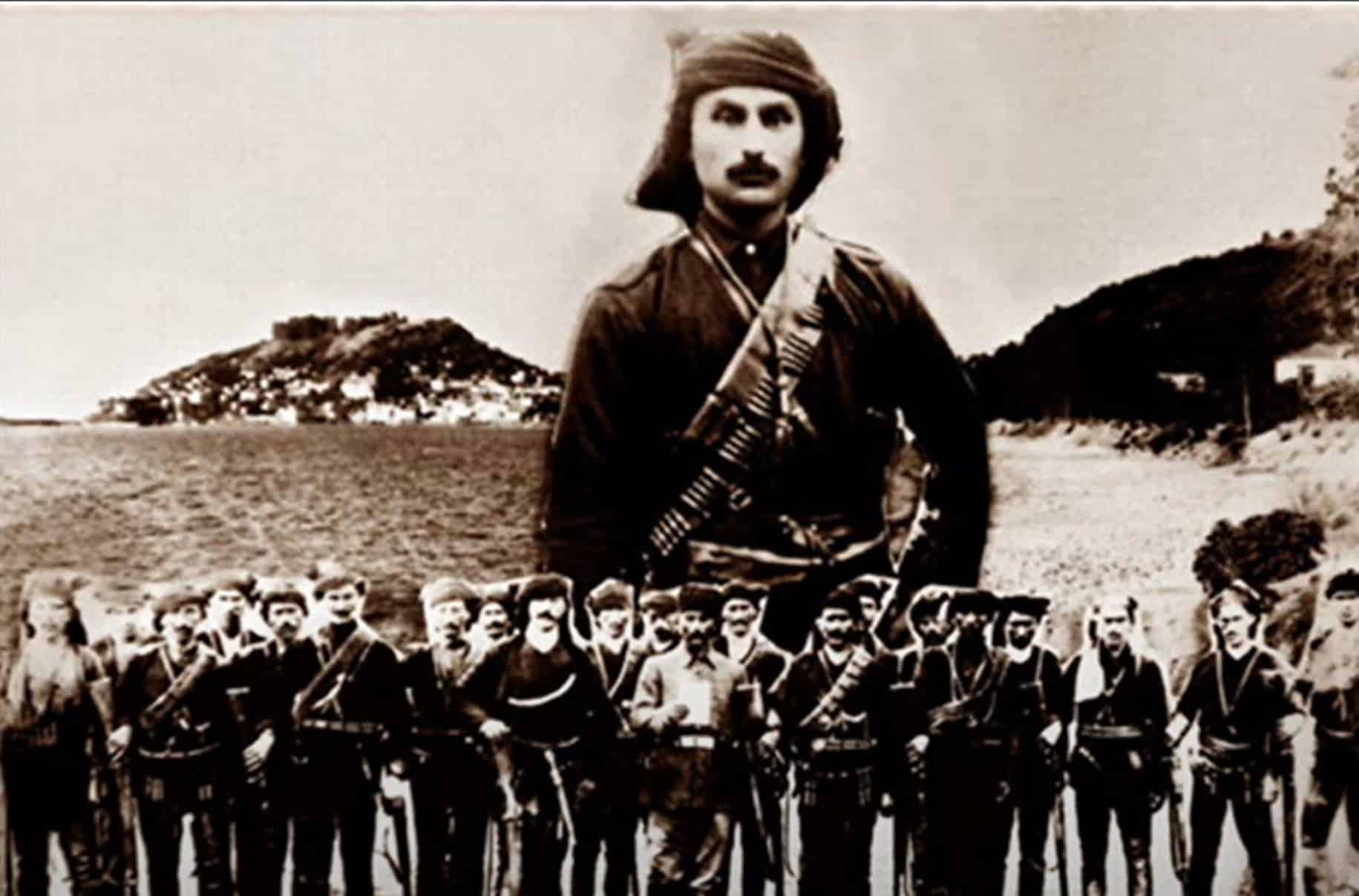
Topal Osman was a relentless persecutor of the Pontic Greeks during the last decade of their lives in their homeland (1914-1924), leader of a group of irregular Turkish fighters (Çeteler), based in Kerasounta. Fanatically loyal to his leader, Kemal, until the end, he was executed on Kemal's orders, punished as an example for the abduction, torture, and murder of an opposition member of parliament. He ended up as a victim of his leader's political game during the post-war years of the consolidation of Kemalist democracy in Turkey.
In the national narrative of our neighbors, Osman is honored as one of the fighters for the liberation of Turkey, while for the Greeks of Pontus, as well as other minority populations in the region, Osman was a brutal protagonist in their persecution and extermination. In 1962, on the fortieth anniversary of the 1922 war, journalist and first-generation Pontic refugee chose Osman's harsh personality and actions as the basis for a narrative about the sufferings of his compatriots, published in serial form in the Thessaloniki newspaper Eleftheros Laos.
This series of narratives, based on research and study of historical sources and eyewitness accounts, was published independently in two volumes (Volume I, 1963; Volume II, 1967). The work was a success with readers: four editions followed (in one volume, all published by Afoi Kyriakidi in Thessaloniki), which have been out of print for years.
Recently (early 2020), a revised edition of the work was published by the same publishing house. The new edition, edited by the author's daughter, also a journalist, Ourania Lampsidou, condenses the original body of the first edition to about one-third. At the same time, the editor adds to the text (in the form of comments and notes that are inseparable from the main or original narrative) a contemporary perspective that updates the narrative by placing it in the current context of viewing the past around the emblematic year of 1922.
The narrative is reframed with the cool critical eye afforded by the hundred years that have passed, enriched with the knowledge, political and historical knowledge, (collective and individual) experiences, and scientific research that we have gained in the meantime, and is questioned in relation to contemporary phenomena that could be perceived as similar or related to the drama of Pontic Hellenism at that time (continuous refugee flows, new forms of abuse of minority populations, ideological investment in extreme violence, etc.).
Interestingly, the new text that emerges from this blending respects the original narrative of the first edition, which was based on thorough research and organized with a solid foundation of historical knowledge. This creates a unified narrative in which the paradoxical or unusual (and in any case extremely interesting) layering of two different narratives occurs: a memorial narrative – testimony of the original edition and a more reflective narrative of the recently revised edition. The first responded to various demands (for knowledge, memory, storytelling, etc.) of the first-generation refugee reader (and then the subsequent second generation). The second is aimed at the contemporary reader who is interested in awareness, reflection, and self-consciousness, now at a significant distance of three generations and within a contemporary, European, and global perspective.
These layers of a «memorial narrative» that serve our institutional, collective, and individual memory also chronicle the path that has been taken: a «history of our historical perspective» on the expression of Pontic Hellenism as it changes over time. Thus, the «stories of a genocide,» as the book's subtitle suggests, are transformed into stories of reflection, both individual and collective, for today's reader. The publication of the revised «Topal Osman» in early 2020 was an introduction to the (expected) beginning of the current period of research, writing, and publishing on the events of 1922. Now that we are at the climax of the anniversary, the reflective gaze of the retelling of Topal Osman can trigger our personal reflection on the past of the narrative and the present of our reading. Not out of duty, but out of necessity.
Vasilis Vassiliadis, Assistant Professor of Modern Greek Literature, Aristotle University of Thessaloniki