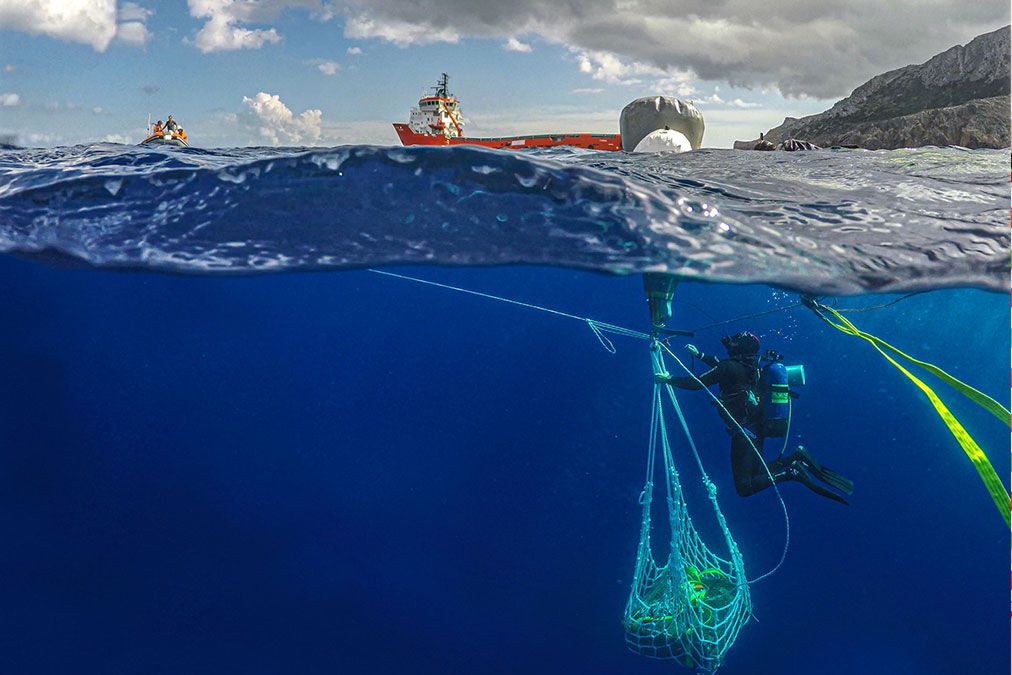
For the first time, more than 80 artifacts from the Antikythera Shipwreck are on display at the Catherine Laskaridis Foundation, in the most comprehensive periodic exhibition to date presenting the results of contemporary research, from 2012 through the most recent findings of 2024, and provides information about the ship, its crew, its cargo, and its passengers.
According to a related announcement, after six years, the Aikaterini Laskaridis Foundation is once again hosting artifacts from the Antikythera shipwreck, once again offering the public the opportunity to discover and explore the remarkable finds from the magnificent Antikythera shipwreck, including its famous mechanism.
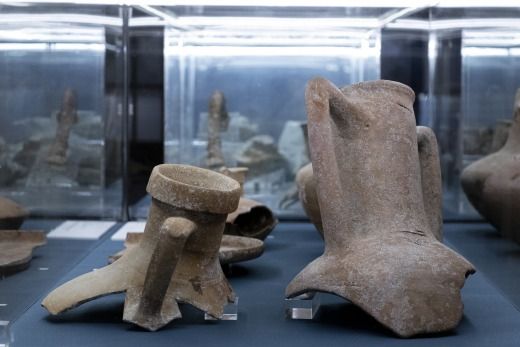
Bronze rings used to control the sails, lead rings that released the ship’s five anchors, as well as planks from the ship’s hull are some of the artifacts that provide information about the ship’s rigging—information that is being presented for the first time, following 12 years of excavations. The report also includesspears, amphorae, lagynos, metal objects, glassware, jewelry, and a rich collection of ceramics that reveal not only the ship’s cargo but also the route it followed, with stops at all the major ports of the era, such as Kos, Rhodes, and others.
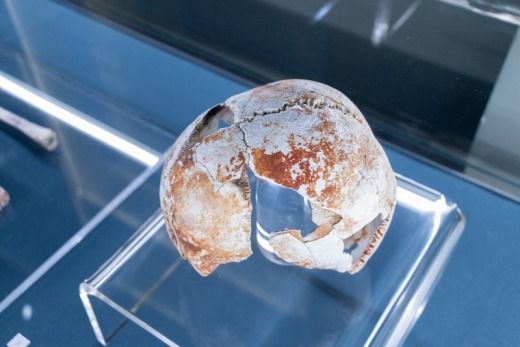
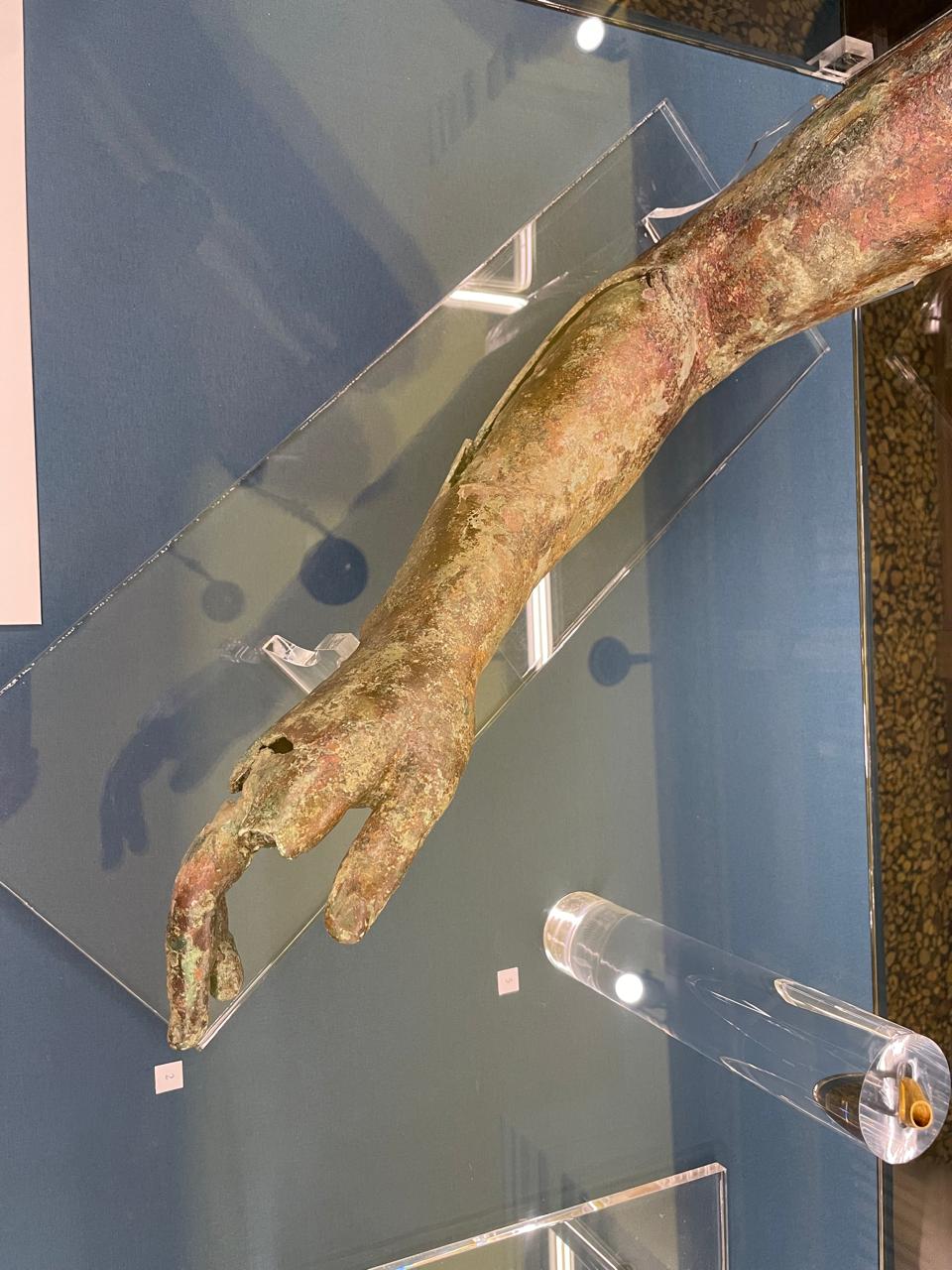
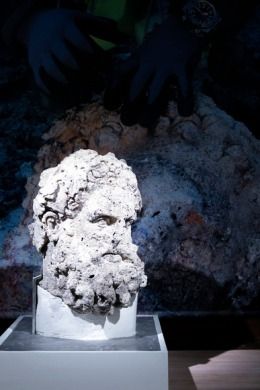
Among the findings, oversized fragments of marble and bronze statues hold a special place. What stands out is the marble head of Hercules crowned with a vine, which appears to belong to the headless marble statue of Hercules of the Farnese type, from the National Archaeological Museum, which had been salvaged in 1901 by sponge divers from Symi, according to the foundation's announcement. The exhibition also features fragments of human bones, providing information about the shipwreck victims, while objects such as sections of a flute, sticks, and olive pits bear witness to the way of life during the voyage.
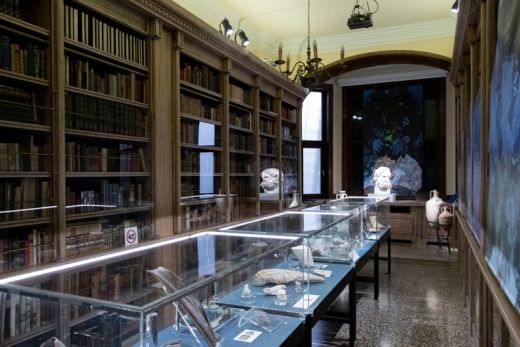
The exhibition «The Antikythera Shipwreck: 124 Years of Underwater Archaeological Research» is organized into sections on the ground floor of the Historical Library of the Aikaterini Laskaridis Foundation, where the first room displays parts of the ship and its equipment. The foyer of the main hall features exhibits related to shipwrecks and life aboard the ship, while the main hall itself is filled with items from the ship’s cargo.
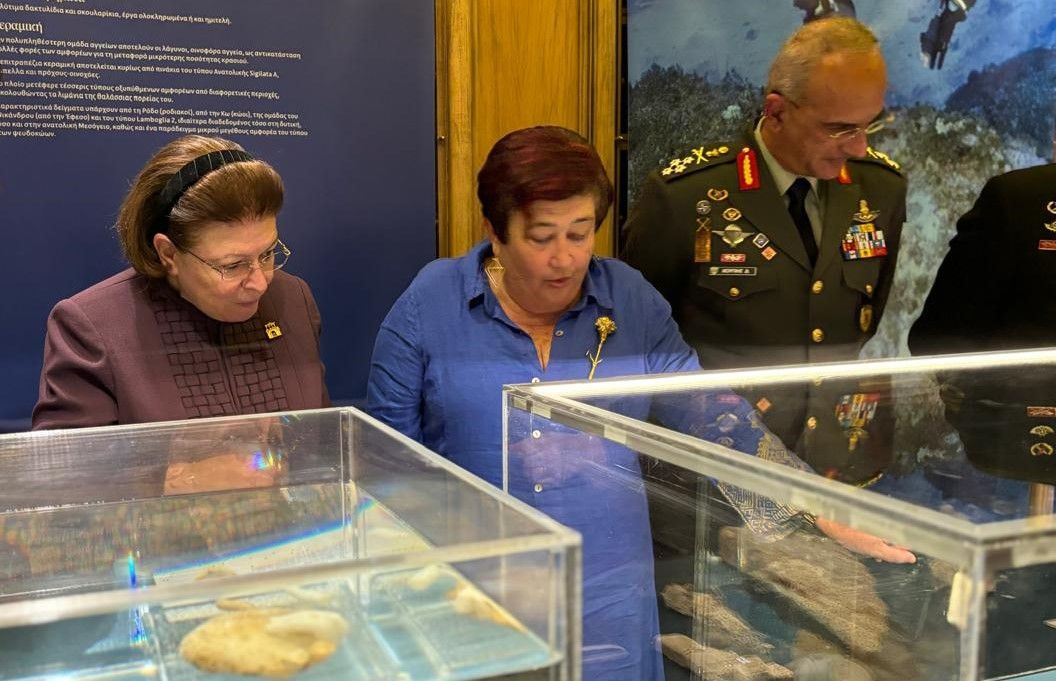
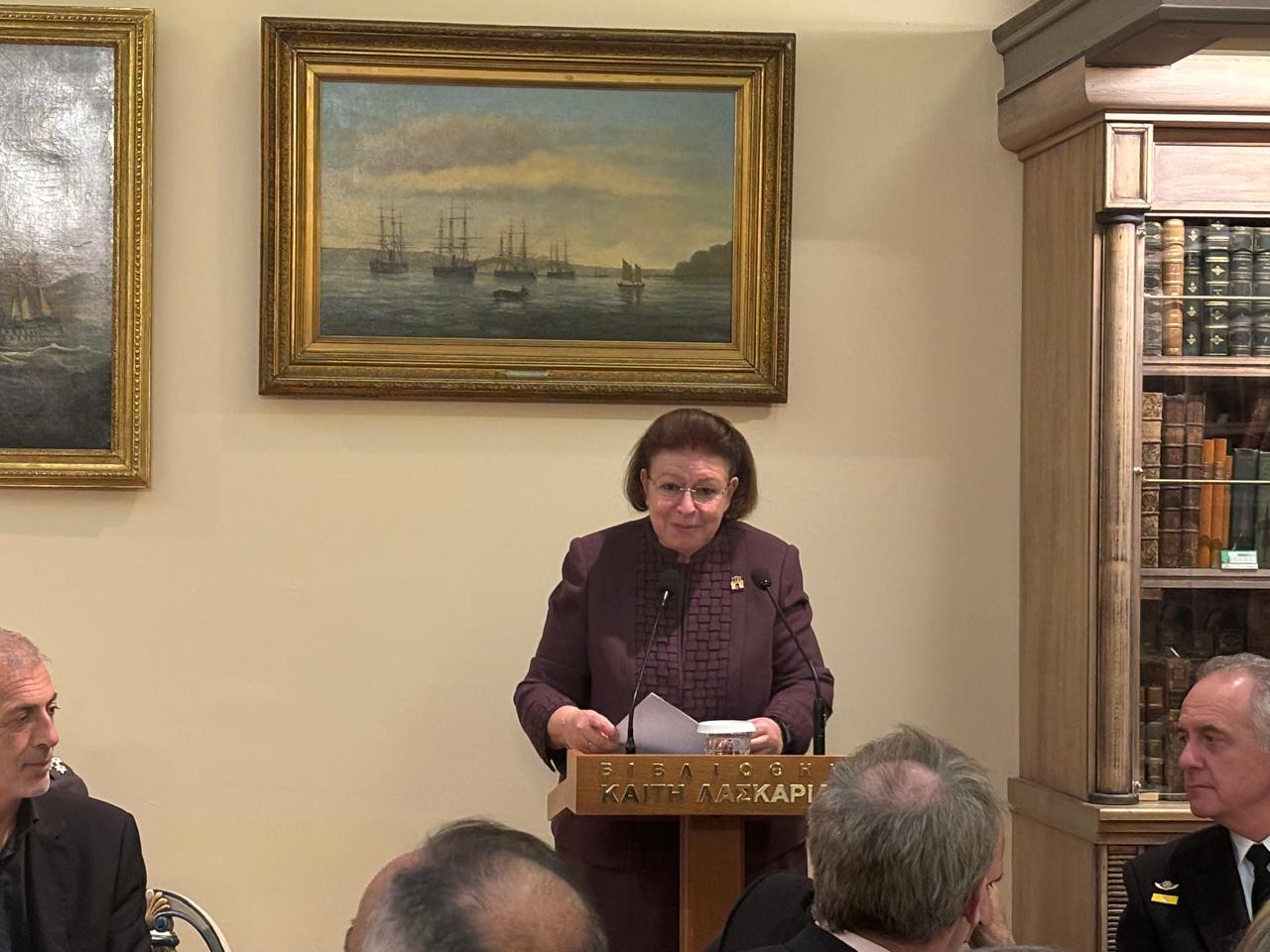
The exhibition opened on November 18, in the presence of Minister of Culture Lina Mendoni, at a special event. The exhibition It is organized with the support of the Ministry of Culture and the Ephorate of Underwater Antiquities, and is curated by Dr. Angeliki G. Simosi, an archaeologist. The exhibition is accompanied by a full-color, fully illustrated catalog, and guided tours will be scheduled throughout its run. For more information, please visit the Foundation’s website and social media channels: https://www.laskaridisfoundation.org/ ,
https://www.facebook.com/LaskaridisFoundPage/
and https://www.instagram.com/laskaridisfoundation/.
For its young friends, the Aikaterini Laskaridis Foundation, on the occasion of the completion of the grant-funded program «From the Aegean to the Ionian: A Sea of Knowledge,» has designed the educational workshop «A Dive into History» to let them “dive” into the shipwrecks of the Greek seas. To participate in the workshop, you must register via the Foundation’s website. The famous Antikythera shipwreck, with its renowned Antikythera Mechanism and rich cargo, became 124 years ago a unique cultural heritage «monument» hidden at the bottom of the sea “monument” of cultural heritage, whose discovery helped mark the beginning of underwater archaeology in our country. And as research continues, it is certain that the findings will continue to impress us, the foundation’s announcement concludes.
The exhibition «The Antikythera Shipwreck: 124 Years of Underwater Archaeological Research» will run through January 19, 2025. Admission is free.
Lina Mendoni: «In 2026, the Ministry of Culture will open the National Museum of Underwater Antiquities. Let’s draw inspiration from this and invest in modern underwater archaeological research.»
The Minister of Culture, Lina Mendoni, presided over the opening of the exhibition «Return to Antikythera,» which is being held in the magnificent spaces of the Historical Library of the Aikaterini Laskaridis Foundation.
«It was around the middle of the 1st century B.C.,« said Lina Mendoni in her opening remarks, »when the large ship —the «olkas»—fell victim to stormy winds and dangerous currents in the Antikythera Strait, while carrying a cargo that, by today’s standards as well as those of its time, constituted a veritable treasure of great economic and, above all, historical and cultural value. A cargo that reveals much about trade connections, and especially about the «trends» of the market and the preferences of high society within the politically and economically Roman-dominated Mediterranean, which, however, remained firmly under Greek and Hellenistic cultural and intellectual influence. Impressive sculptures, in marble and bronze, many larger than life, such as the Bronze Adonis, the marble Hercules of the Farnese type, and the statue of the »Philosopher,” as well as precious metal vessels, furniture, glass and gold jewelry, amphoras of various origins and contents, which attest to the enormous demand among the Roman aristocracy and bourgeoisie for luxury goods and works of art from the Eastern Mediterranean, intended to adorn their villas in Italy. The Antikythera Mechanism, an astonishing analog computer used for astronomical calculations, a feat of Greek scientific thought and technology, the like of which would not appear again for many centuries, was, as is well known, among the cargo that sank with the ship and was scattered across the steep seabed off the coast of Antikythera.”.
«This exhibition,» the Minister of Culture noted in her opening remarks, “is dedicated to one of the most important and fascinating chapters in underwater archaeological research worldwide, which aims to uncover and reveal the many secrets of the Antikythera shipwreck that remain hidden. The partial recovery of the shipwreck represents the world’s first large-scale underwater excavation: a chance discovery in 1900 by sponge divers from Symi, who brought from the seabed to the surface, brought to light unparalleled treasures with the assistance of the Royal Navy and the Archaeological Service. Since then, it has continued to captivate, to pique global interest, and to constantly enrich our knowledge of the ancient world.”.
Decades passed since the first difficult surveys of 1900–1901, until 1976, when Jacques-Yves Cousteau, along with his Calypso team and Lazaros Kolonas from the Archaeological Service, conducted the first scientific underwater surveys using specialized equipment. After that expedition, no one dived on the wreck until 2012.
Speaking about the exhibition, Lina Mendoni said that «it is certainly neither the first nor the most impressive exhibition on the Antikythera shipwreck. We all remember the major exhibition held at the National Archaeological Museum from 2012 to 2014, and it truly served as a landmark event, subsequently traveling abroad, where it garnered international admiration. However, this exhibition is also extremely important, as it demonstrates that the Antikythera shipwreck has not yet revealed all its secrets. On the contrary, it appears to hold many significant discoveries in store for the future. Discoveries that modern archaeology, with the aid of technology, is now able to decipher and interpret much better than in the past.».
«In 2026,» the Minister of Culture noted, “after a delay of many decades, the Ministry of Culture will open the National Museum of Underwater Antiquities to the Greek and international public not far from here, in the SILO building at the Grand Harbor. It is one of the flagship projects of Kyriakos Mitsotakis’s government, funded with approximately 100,000,000 euros from the Recovery Fund, and is set to fill a major gap in history, archaeology, and the promotion and showcasing of the cultural wealth of the Greek seas. Let us draw inspiration from the story of the Antikythera shipwreck and the achievements of ancient Greek technology. Let us be inspired and invest in modern underwater archaeological research. Let us continue, together—the public and private sectors alike—with the same passion, our efforts to preserve and promote our precious cultural heritage.”.
The exhibition features fragments of marble and bronze statues, glass and metal vessels, as well as pieces of the ship’s wooden hull. A highlight is the head of Hercules, wearing a vine wreath, which appears to possibly belong to the headless marble statue of Hercules of the Farnese type, in the National Archaeological Museum, which was salvaged in 1901 by sponge divers from Symi. Also on display is a small bronze object that may be related to the famous Mechanism.
The «Return to Antikythera» program resumed its research in 2012, on a purely archaeological basis. Since 2021, with a target date of 2025, the research project has been directed by Angeliki Simosi and Professor Lorenz Baumer, in collaboration with the Ministry of Shipping and Island Policy through the Special Diving Team of the Coast Guard’s Underwater Missions Unit. This new initiative is at the forefront of international underwater archaeological research, applying innovative and cutting-edge methods and utilizing the latest technological advances.
It is generously supported by the Aikaterini Laskaridis and Athanasios K. Laskaridis Foundations, as well as the watchmaker Hublot, and is at the forefront of international underwater archaeological research, applying innovative and pioneering methods and utilizing the latest technological advances.