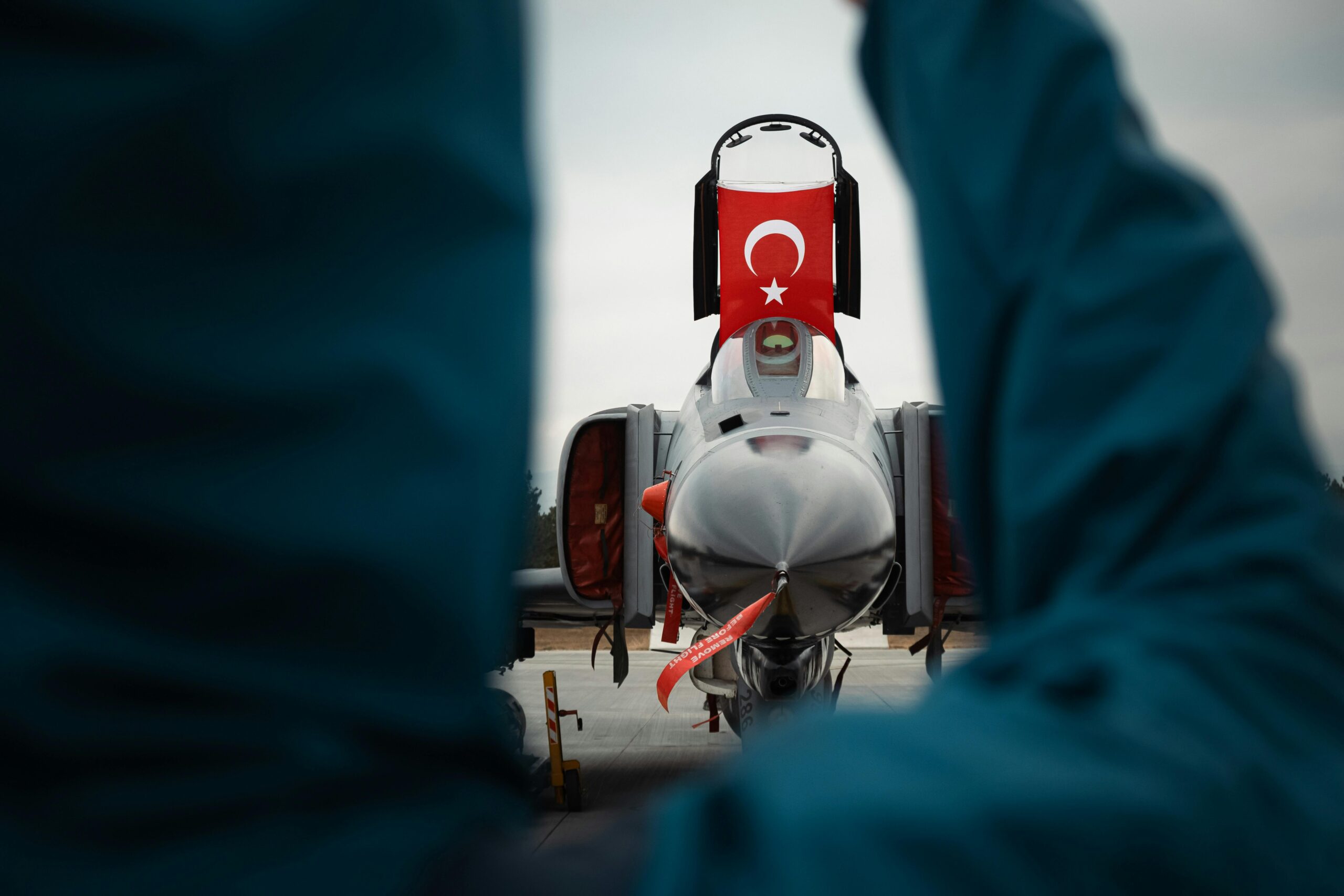
On May 27, 2025, the General Affairs Council of the European Union (EU), despite the opposition of Greece and Cyprus has decided by a qualified majority and not by unanimity (thus avoiding the possibility of a veto), the Turkey's indirect participation in European arms programmes.
Despite the methods of some partners in the EU (who wanted Turkey to participate in the SAFE programme), but also the unprecedented in European terms institutional diversion which they did, eventually the pressure from Cyprus and Greece worked and important safeguards have been ensured such as:
(a) the Article 16, which explicitly states that «the participation of a third country in SAFE may be excluded if that country poses a direct threat to the security of a Member State» and
b) the incorporation of Article 212 in conjunction with Article 218 of the Treaty on the Functioning of the European Union, where they relate to the EU's external action and provide that the Union's economic, financial and technical agreements with candidate partners will be decided by unanimity.
The whole evolution, caused heated debates within Greece and was characterized both by some members of the press and by the well-known populists - super-patriots on the couch as national failure and defeat.
But in the end, what is Turkey's partial participation in European defence?; national failure or national opportunity?;
In this light, it should be noted that the issue of Turkey's participation in European defence is not new.
For decades, Turkey has been directly or indirectly involved in European defence and its long-standing basic strategic objective has been its full integration into its structures, as well as its participation in European armaments programmes.
Specifically, in 1992 Turkey became an associate member of the Western European Union (WEU), without voting rights. The IC at that time was the main European defence body before its integration into the EU through the Common Foreign and Security Policy (CFSP).
Also, in the 2000s, Turkey, as a member of NATO, requested institutionalised access to European Security and Defence Policy decisions and operations (NAPA).
In particular in 2003, when the EU and NATO reached the agreement «Berlin Plus» where it enabled the EU to have access to NATO's defence planning and infrastructure capabilities for the fulfilment of its operations, Turkey (as a NATO member) had the right of veto (veto) on the use of these capabilities and exercised this right repeatedly, in EU operations involving Cyprus. Also in this context, Turkey has had operational participation in EU missions. such as «Operation Concordia» in North Macedonia (2003) and the «Operation Althea» in Bosnia and Herzegovina (2004).
Turkey too, since 2006 had an interinstitutional agreement of an administrative nature (Administrative Arrangement), with the European Defence Agency [(EDA. Established in 2004 to support EU Member States in developing their military resources)].
Under this agreement, Turkey had the ability to monitor cooperation programmes, to have limited participation in specific research initiatives and to participate in in working groups on technical and scientific issues.
In addition, Turkey, although not an EU member state, has been actively involved as a third country in European research projects, mainly through the Horizon 2020 (EU research and innovation funding programme for 2014-2020). In particular, Turkey:
- Through the Turkish Institute of Science and Technology TÜBİTAK BİLGEM, participated in the programme RESIST (Resilient Smart Critical Infrastructure Systems) on the protection of critical infrastructure against cyber threats and natural disasters.
- Through the Turkish group Arçelik A.S. participated in the programme iBUS (Integrated Business Model for Customer Driven Custom Product Supply Chain), which concerned the integration of digital technologies in the production of customised products.
- Through Turkish companies and research centres, it participated in the development of Industry 4.0 tools. EFPF (European Factory Platform) and had cooperation with European partners from Germany, Italy and the Netherlands.
In addition, it is worth noting that for years Turkey has been despite its occasional obstacles and exclusions from European programmes (such as the PESCO programmes, the EU SatCom Market programme, the EDF programmes and the IRIS² satellite programme), cooperates bilaterally with European defence industries of EU Member States.
For example, the Turkish company ASELSAN collaborates with French companies Airbus Defence and Space and Thales LAS, in the context of studies and technical services for the NATO Support and Procurement Agency (NSPA) for the development of a modular, scalable ground-based air defence system. In parallel, cooperates with companies in Germany, Spain, France and Italy in areas such as radar, electronic communication systems and anti-drone systems.
Also, the Turkish missile systems company Roketsan collaborates with the French Thales and the Italian Leonardo, mainly through exports of subsystems and coordinated research into new technologies and maintains cooperation with Spanish and Polish companies in the field of propulsion and engines.
Summarizing the above data, some questions may reasonably be raised to all those who have been and are criticizing harshly the recent decision of the EU for Turkey's partial participation in European defence and have spoken of a national failure and defeat.
Specifically, all these years the accusers in question did not know that Turkey was directly or indirectly involved in European Defence;
If they didn't know, how do they effortlessly express opinions on foreign policy and defence issues that they don't know?;
If they knew and did not speak for reasons of petty politics and personal interest, are they not only populists but also nationally dangerous?;
Also, how is it possible to talk about national failure and defeat, when Turkey is not celebrating and complaining to the EU, asking for the removal of the restrictive barriers to its participation in European defence?;
Moreover, if Greece was defeated on this issue, why Mr. Erdogan and the Turkish media are trying to disconnect the issue of the lifting of the Casus Belly (raised by the Greek Prime Minister, Mr Mitsotakis), from Turkey's participation in European defence?;
Following on from the above questions, I will provide one more piece of evidence that I believe will further prove how false the claims of national failure and defeat are.
For decades it has not been a national line (which has been supported by the majority of political parties and by many Greek prime ministers), Greece's support for Turkey's EU accession process., as a tool for peace, stability and normalisation of Greek-Turkish relations?;
Therefore, if Turkey joins the EU as a full member, will it not participate equally in European defence?;
Then all those who today talk about national failure and defeat, what will they say? Will they talk to us about national success?;
Finally is there a lack of seriousness and hypocrisy in Greece?;
Evaluating the above data, the author of the article considers that Turkey's participation in European defence is not a national failure of Greece, but a total failure of the EU.
In this context, the current juncture is a golden opportunity for Greece to develop a narrative and take diplomatic actions that will convince its partners that Turkey's participation in European defence is a strategic defeat for Europe and a dangerous experiment that threatens its existence and sustainability.
To make this objective achievable, Greece must make political use of the institutional diversion that has been followed (qualified majority vote) to highlight the democratic deficit of the EU. It must be stressed that taking a decision bypassing the European Parliament raises serious questions about the democratic legitimacy of the EU and creates a dangerous precedent that raises questions about the transparency and accountability of decisions.
Also, Greece should exert pressure to make it a strategic priority of the European institutions and the EU member states to ensure that Turkey's non-full participation in European defence is a strategic priority, because:
- Turkey sees defence as a tool for national expansion rather than collective security. The EU Member States are seeking to strengthen their European defence in order to be able to defend and protect themselves from the Russian threat. Turkey, on the contrary, is a key ally of Russia and acts as Russia's Trojan Horse both in NATO and in its relationship with the EU.. (after refusing to sanction Russia like all its other NATO allies, openly cooperating with Russia and acquiring Russian military equipment with dangerous consequences for the security of its Allies). Turkey does not want military cooperation to strengthen collective European security, but to consolidate its regional sovereignty and to create a fait accompli in the Aegean and the Eastern Mediterranean.
- There is a risk that the cutting-edge military technology Turkey will acquire will be used against EU member states.
- On the part of Turkey there is a lack of credibility and disrespect for the institutional and value system of the EU. According to the reports of the European Commission and the European Parliament, Turkey is a non-democratic country that does not respect the rule of law and systematically violates fundamental human rights. Therefore, Turkey does not meet the political and institutional criteria required for European defence integration.
- Since Turkey seeks to operate autonomously on the international chessboard and has strategic interests that are often contrary to the interests of many European states, its participation in European defence undermines European strategic autonomy.
Finally, for the sake of Greece's credibility with its partners and to strengthen its position in the European defence architecture, it is of strategic importance for Greece to decouple the issue of Turkey's participation in European defence from the Greek-Turkish confrontation. In a period of world-changing geopolitical developments, Greece should not be accused by its partners of blocking the process of strengthening European defence because of its chronic confrontation with Turkey.
At the same time, taking into account the existing reality (i.e. Turkey's direct or indirect participation in European defence over time), that no one has yet dared to confess, the author of the article, considers that Turkey's participation in European defence is not a national failure, but can be a national opportunity.
It can be a national opportunity, because Greece will have more to gain from a Turkey that operates within the European institutional defence framework than from a Turkey that is isolated, unpredictable and uncontrollable.
Specifically, when Turkey participates in European missions or defence structures, it will have to operate under a system of rules, transparency, joint decision-making and accountability, and its behaviour will be controllable and more predictable.
So it is better, instead of dealing with it unilaterally, to deal with it within a European framework and with defined procedures, where Greece has a voice, influence and alliances..
Also, Turkey's participation in the European security framework means its recognition of the EU's status as a geopolitical player. If this happens, it is a strategic development that Greece should take advantage of. In particular, Turkey has so far been expanding and, moreover, is seeking to become a middle power and an important geopolitical player in Southeastern Europe and the Mediterranean. This role is not in line with the framework of its participation in European defence. Turkey will be asked to decide whether it will continue to function as an autonomous geopolitical and security player or operate within the EU framework.
If you choose the second option its hegemonic aspirations, with its «Blue Homeland» doctrine and extreme aggressive rhetoric, will create a credibility gap for Turkey towards the EU, which Greece can exploit.
Greece can also take advantage of (and partly did), Turkey's interest in participating in European defence to contribute to a better understanding of Greek positions by its partners, to build new alliances and to promote the security issues of Hellenism as matters of European interest. The safeguards that have already been put in place for Turkey's limited participation in European defence and the subsequent reactions of Turkey prove the point.
These safeguards enable Greece to shape the terms of Turkey's participation in the European defence structures., linking them to Turkish behaviour (removal of the casus belly, respect for the EEZ, Cyprus, airspace violations, etc.).
In conclusion, Greece has no reason to fear Turkey's limited participation in European defence. On the contrary, it can exploit it strategically to limit its aggression and force it to operate in a way that respects the European institutional framework of defence and security.
Author of the article:

Political Scientist – International Relations Specialist
Former Director General - Directorate General
National Defense and International Relations Policy (GDPAAD)
Ministry of National Defense (YPETHA)