By Linos Yfantis
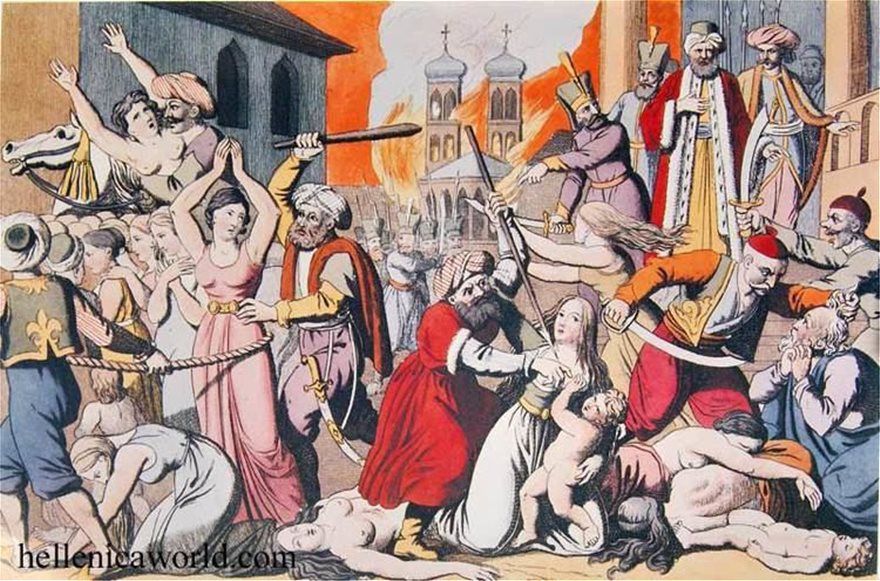
In the late 17th century, the Venetians had invaded the Aitoloakarnania. The Turks They had been temporarily driven out, but not before committing acts of violence. One of these was the bloody massacre harem in Messolonghi the year 1684.
The antagonist was the Sefer Agas, governor of Aetolia-Acarnania. This was preceded by the defeat of the Ottomans from the Venetians and Greeks military commanders in the Sivista of Arakynthos, Makryneia (in modern Greek). The Turks suffered a major defeat. Sefer Agha barely managed to reach his base in Messolonghi with the few soldiers he had left. On his way there, he slaughtered 15 Christians whom he encountered by chance.
Meanwhile, the noose around Sefer Aga had begun to tighten from the plain as well. The Venetians, under the command of Lombard General Strassoldo, had surrounded Messolonghi. Meeting no resistance, the Venetians, together with the Melitean military leaders and, accompanied by Greek cavalrymen, they entered the city. There they were greeted by approximately 2,000 residents of Messolonghi who were inside the walls.
Sefer Aga's bloody act
Sefer Agas, however, had managed to escape and had effectively sealed off the building that served as his headquarters. When Strassold finally broke in, he was confronted with a horrific sight: Seventeen (17) young beauties—as they were described—lay covered in blood in the harem. Four of them were still breathing, and despite the care they received, only one managed to survive.
Strasold was surprised to learn her story. Her name was Vera Maria Michaili and came from a noble Venetian family. Strassold was truly puzzled as to how she had ended up in the harem of the bloodthirsty general Sefer Agha.
Thus came the tragic end to the liberation of Messolonghi from the Venetians at that time. A week later, Aitoliko was also liberated. Strasold imposed a tax of 4,000 talers there. This move confirmed that the Venetians were serving their own personal interests and, in essence, placed yet another burden on the inhabitants of Aetolia-Acarnania.