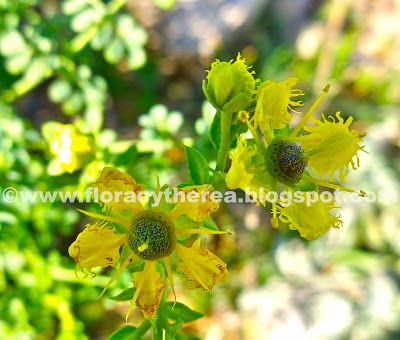
Ruta chalepensis L
They went
The genus *Ruta* comprises approximately 60 species found throughout Southwest Asia and the Mediterranean. The type species of the genus is *Ruta graveolens* (rue, or heavy-scented rue).It is rarely found in the wild. It is cultivated in gardens as an ornamental plant. The difference between it and the species we found on Kythira lies in the shape of the petals. Ruta graveolens has a pungent odor that many people find unpleasant.
Laden with all manner of symbolism, the apeganos was considered in earlier times to be a powerful abortifacient (it is still used today by midwives in the developing world), an anti-inflammatory, laxative, stomach tonic, analgesic (for toothaches and earaches), and antirheumatic (in oil). Today, it is used as a homeopathic remedy.
Pliny the Elder believed that it protected against most known poisons, but strictly forbade its use by women. Since ancient times, it has been regarded as a powerful talisman against black magic. “...exorcised with the apegan!” This common phrase, used throughout Greece, is very well known to older generations, including those on Kythira. Perhaps this is the plant that Odysseus used to protect himself from the spells of the all-powerful Circe. Great masters of painting are said to have consumed fresh apiganos to maintain sharp eyesight. It was also believed to symbolize human sorrow, mental anguish, and remorse. Perhaps this is why Catholics used it to sprinkle holy water on the congregation. In Lithuania, it symbolizes female purity. That is why young girls wear wreaths made of linden during festivals. The sword on the playing card depicts the leaves of the linden tree.
Its dried leaves are considered to repel insects. Cats do not approach the area where the plant is growing. Chinese traditional doctors use it to treat snake bites.
Everyone agrees that it should be used with the utmost caution and in very small doses, as there have even been reported deaths from excessive consumption of the fresh herb.
We found this species on Kythira Ruta chalepensis in the southern part of the island.