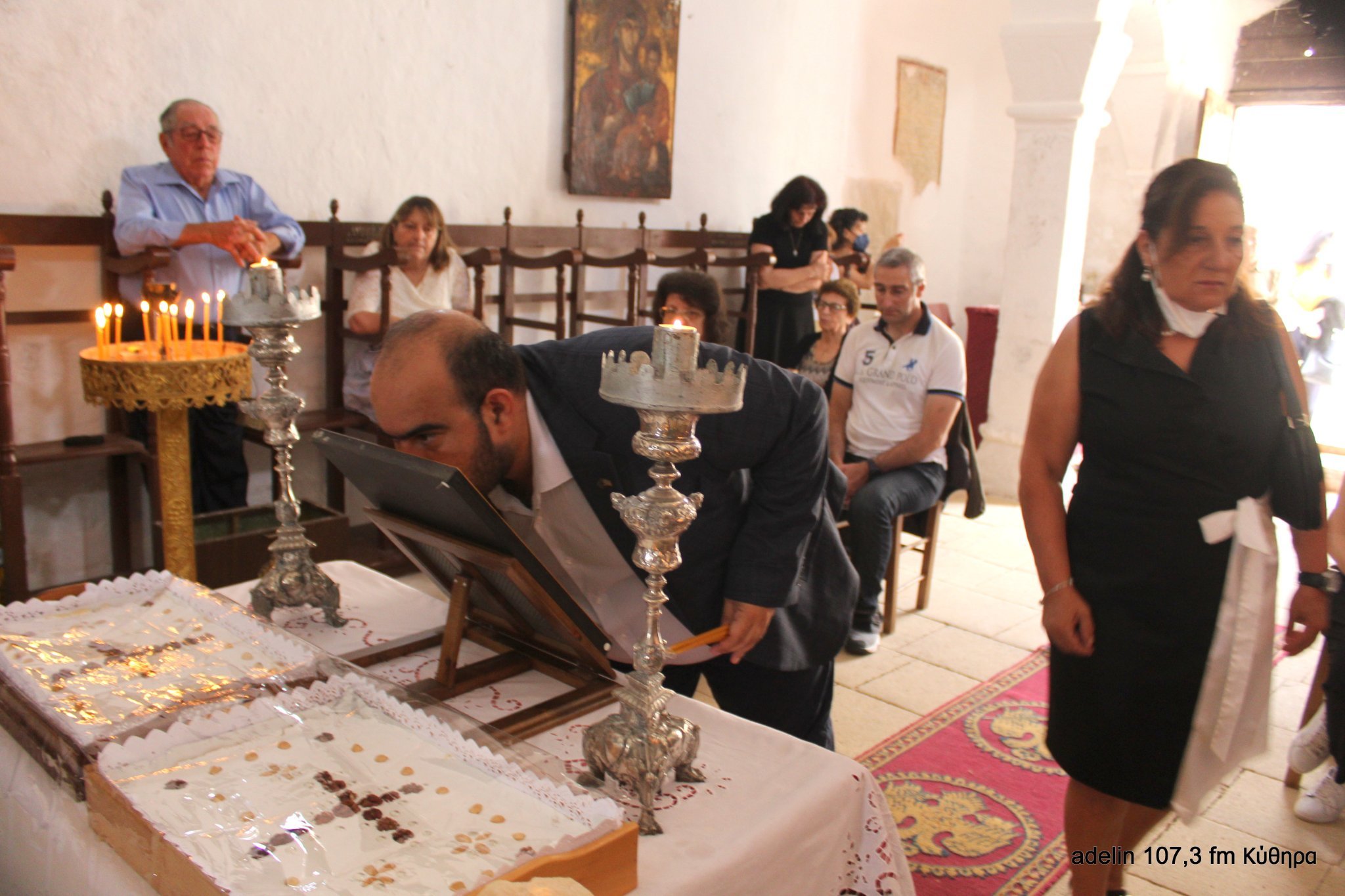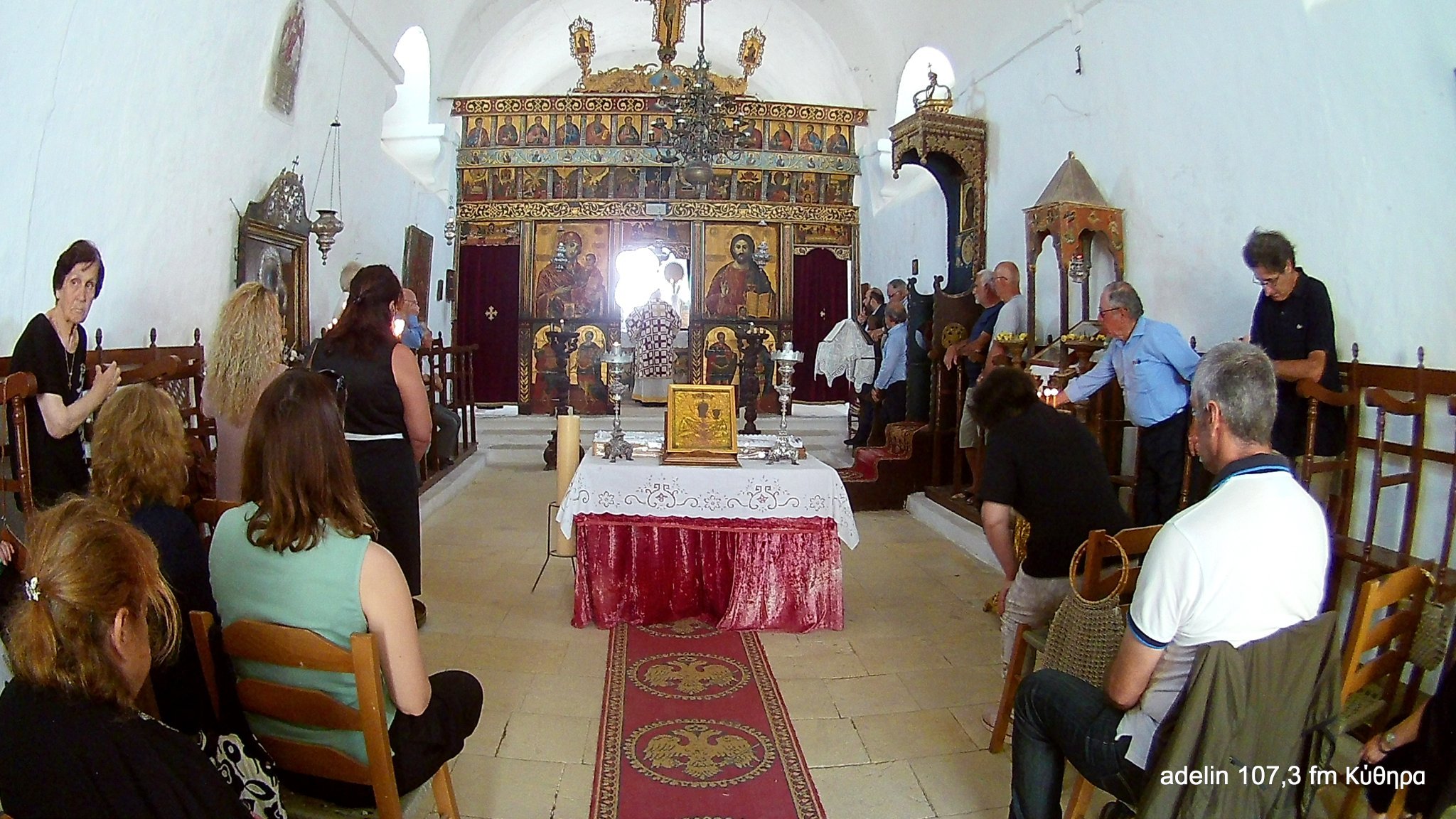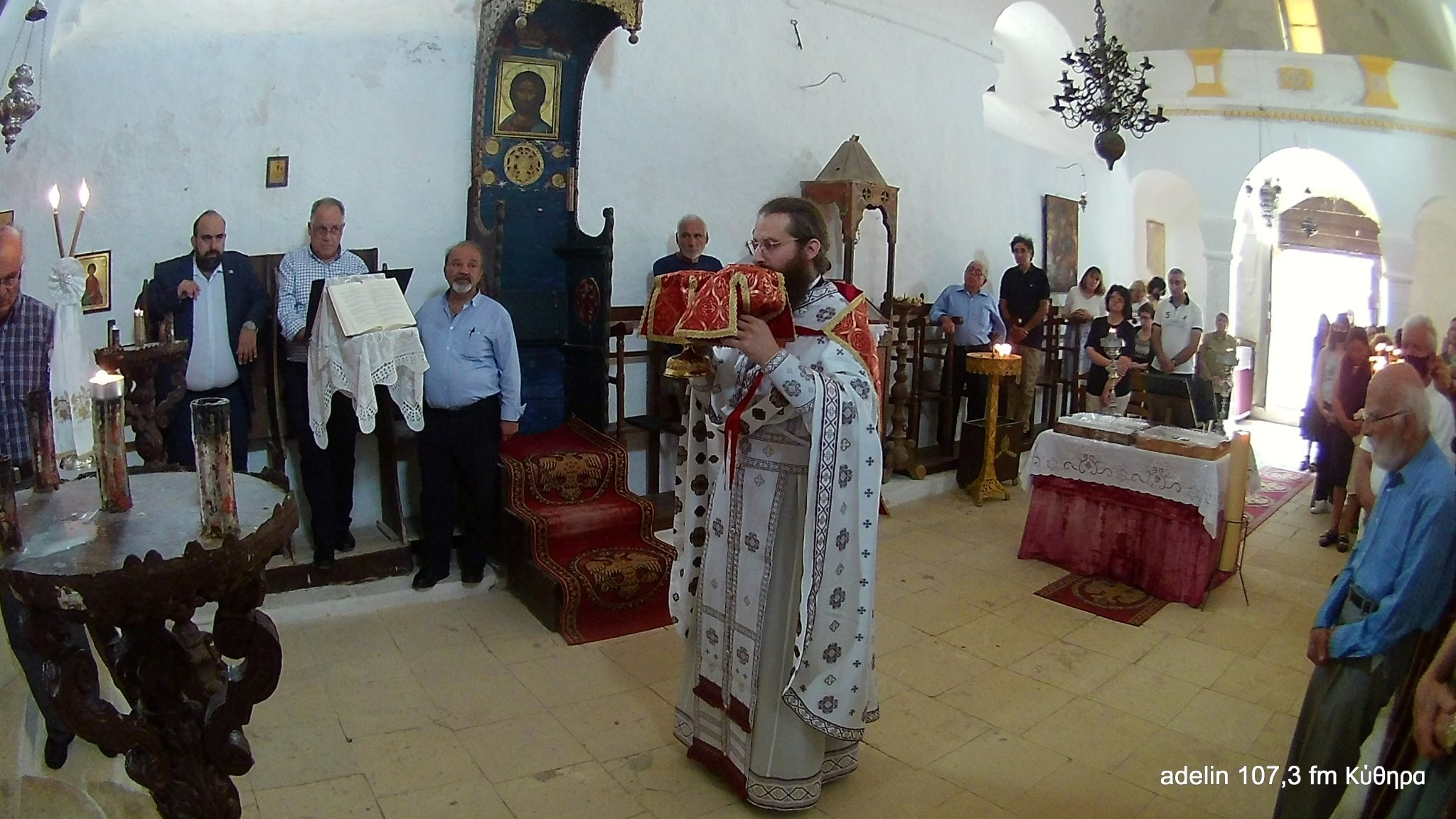
Holy memorial in memory of the last emperor of Byzantium, Constantine Palaiologos and its defenders Istanbul, was held at the the holy church of Panagia Myrtidiotissa of the Fortress (Castle) of Kythera, on the day (29 May) of Fall of the City by the Ottoman Turks.
In his speech, the Mayor of Kythera, Efstratios Harhalakis, he said:
«It is customary for speeches on the Fall of Constantinople to be filled with emotion and national associations about the «irredeemable Homelands», full of lamentations and legends that are rarely related to actual historical events. It is also customary for all kinds of speakers, even those who are not related to historical science, to talk about the Alossos, with the result that it is extremely difficult to distinguish the myth from the real historical dimension, which requires thorough research into the sources, using exclusively scientific methods and completely free of emotion.
In this light, it is extremely useful, 569 years after the Fall of Constantinople, to note just a few historical dimensions of this event.
- The Fall of Constantinople is usually treated and analysed as a stand-alone event. This is a historical mistake, as the Fall is only part of a series of events and factors that have been lost over the centuries. After all, for historical science, no historical event is static or one-dimensional, but arises as a result of a profound relationship of cause and effect, which must be analysed.
The Fall of Constantinople did not happen by chance or suddenly. It was the natural result of the gradual decline in the power of the Byzantine State, especially after the Western Conquest in 1204. The Byzantine State never managed to regain its former glory, despite some diligent efforts. In the two centuries before the fall of the Empire, the Empire had to face both serious challenges on its external borders and civil wars that had weakened the already weak state and undermined the small forces that still remained. Thus, the leaders of neighbouring countries began to take advantage, as did the ruler of the Serbs, Stefan Dusan, who in 1345 conquered Serres and began to call himself «King of the Romans».
The remnant of what had become the once mighty Byzantine Empire was plagued by another serious problem: economic stagnation, a consequence of the privileges granted to foreign merchants. Nikiforos Gregoras says that the Genoese received about two hundred thousand coins from taxes, while the Byzantines barely received thirty.
Despite the deplorable state of the State, socially and economically, Byzantium was also actively involved in the war between Genoa and Venice over the Black Sea trade, which not only caused new losses and defeats, but also resulted in another internal conflict between John V Palaiologus and Catacousin.
When Constantine XI succeeded John VIII in 1448, the fate of Byzantium was historically predetermined. The last of the Palaiologues was a very capable man, but his skills could not overcome insurmountable problems that had been accumulating for almost two centuries. His efforts for foreign aid failed, the State was in total disarray, the treasury was almost empty, the army disorganized and tired. Moreover, the State was diplomatically isolated, a fact which was taken care of by Sultan Mohammed II, who succeeded his father Murat in 1451.
The last siege of Constantinople lasted only 52 days. It began in early April 1453 and ended with the Fall of Constantinople on 29 May. Palaeologus, in his last speech to his subjects, which is preserved by Franzis, prepares them for the end by presenting their death as a given. And for 4 reasons, as he says: «First, for my faith and godliness; second, for my country; third, for the king as Christ the Lord; and fourth, for kinsmen and friends. Therefore, brethren and fellow soldiers, remember in remembrance of your memorial, and your memory and fame and freedom shall be eternal.
The City, which for 11 centuries had been the political and cultural centre of the Empire, fell. A few foci of Hellenism still remained, but not for long. In 1456 Athens was captured, in 1460 the Despotate of Mystras and in 1461 Trabzon. And so began the endless night of Ottoman slavery that would last 368 years, until 1821.
The lessons of the Alossos should not be reduced to sentimentality and inapplicable irredentism. We should be grounded in reality and not live in myths. Against the view that «we will take back the City», we should oppose something more realisable: we should not relive any kind of Fall, whether real, imaginary, martial or spiritual. And unfortunately, nowadays especially, we are more in danger of spiritual alienation. Moral alienations, alienations of opinion, alienations of faith, alienations of patriotism, alienations from both sides. It is up to us whether these alienations will also turn into alterations. Let there be no mistake!»