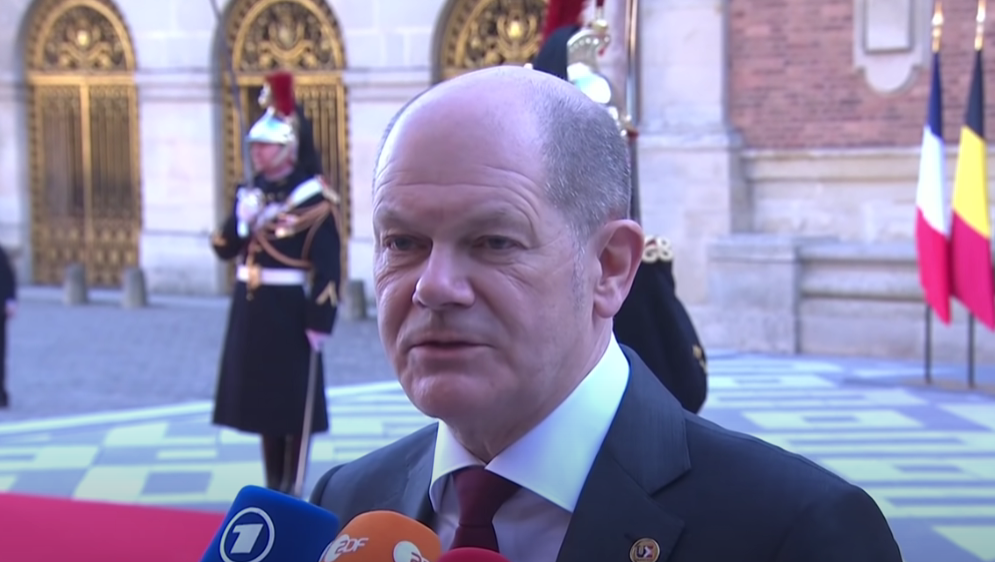
Olaf Scholz wanted to be the «chancellor of climate», of the welfare state, of human rights, even the chancellor of the post-pandemic recovery. But he certainly did not want to be - after Angela Merkel - the chancellor of crises and even less of war, the energy crisis, inflation and - even personal - scandals.
«Olaf Scholz thinks he is a genius. But he is not. He's not evil, but he's not a genius. You see him, but it doesn't show. You hear him, but you don't understand what he's saying,» wrote Gabor Steingard a few days ago in his influential newsletter.
«In the investigative committee on the Cum-Ex scandal, Olaf Scholz shows all the arrogance he has - and it is great,» Handelsblatt comments on the Chancellor's appearance before the Hamburg parliamentary committee investigating possible political involvement in the Warburg Bank tax evasion scandal involving billions of euros at the time when Mr. Scholz was mayor/governor of the Hanseatic city.
«Have you considered whether you are really coming across as arrogant?» asked the chancellor directly by Tina Hassel of the public ARD. So lately, it is not only Olaf Scholz's performance that has come under the spotlight, but also his character. And that, in a country like Germany, which for 16 years has had an East German woman as Chancellor with no interest in communications, means something.
A year ago, few would have bet that Olaf Scholz, the man who failed to win the leadership of his party (SPD), would win the election and become chancellor. Some, of course, would argue that the Christian Democrats (CDU), through a series of disastrous choices and communication failures, had handed victory to their rival, who, however, in the coalition negotiations, proved to be remarkably adept at mixing schools of thought and opinions and a great balancer, eventually managing to lead Germany's first three-party government. The more... suspicious, of course, said at the time that the ultimate glue was nothing but the will of all three to govern.
Nine months later, the SPD is consistently below 20% in the polls, behind the CDU and the Greens, and Mr.Scholz himself between 3rd and 4th place in the ranking of politicians' popularity. Dissatisfaction with the government's performance reaches 63% and the head of the government is finding it difficult - through no fault of his own - to coordinate his party, the Greens and the Liberals (FDP) in the face of the huge problems that are urgently demanding solutions.
Mr Scholz had every reason to believe that it would be easier. He was finance minister for the past four years. He knew he was taking over a strong economy that was waiting for the end of the pandemic to get going again, selling Made in Germany at a premium again. He was planning a shift to the more... green and the more social and was confidently looking ahead, even to a second term.
Reality, however, proves to be much harsher and not at all sensitive to the vision of the former Marxist youth leader of the SPD. By the time he was installed as chancellor in December 2021, inflation and energy problems had already begun to loom, although Mr. Scholz was still among the leaders betting that Russia would not attack Ukraine.
When this belief collapsed, it was dragged along by the German-Russian Nord Stream 2 pipeline, which never worked, and of course any recovery plans. The consequences of the war are proving unbearable even for a robust Germany. The country's criminal degree of dependence on Russian energy and Russia's clear insolvency as a trading partner repeatedly put the Chancellor and Economy Minister Robert Habeck in the uncomfortable position of admitting that «it is impossible to predict the situation for the coming months».
Olaf Scholz has been criticised for weeks as being too - even suspiciously - hesitant in his military support for Ukraine. «Mr. Chancellor, do you really want the Ukrainians to win the war?» wrote BILD daily.
The first measures to relieve citizens from the price explosion, the fuel tax rebate and the introduction of the single ticket of 9 euros, were welcomed. They even curbed inflation. In recent weeks, however, in the run-up to winter, and while citizens« insecurity has increased dramatically, the Chancellor has been circulating his government's »30 billion package', but he has not been able to describe exactly what it will include.
Not surprisingly, in a recent poll for RTL, 90% expressed dissatisfaction with the easing measures. Even from the SPD camp, criticism is now heard daily about the inadequacy of the benefits and the failure to provide relief to lower incomes.
This is to be expected, one could say, following the daily behaviour of the three parties of the coalition, along the lines of the Delphic oracle «let him who saves himself be saved». «In the face of gas shortages and fears of a harsh winter, there is little left of the friendly unifying atmosphere of the early days of the coalition. Instead, among central ministers, self-praise and self-promotion prevails. The main thing is for each of them to get it at least somewhat clean. What matters is the “I”,» writes Spiegel, which runs the headline «The face of pain: is (Economy Minister) Robert Habeck authentic or does he wear a mask?».
The last few weeks have been disastrous. Labour Minister Hubertus Heil (SPD) is proposing «climate money», infuriating Finance Minister and FDP leader Christian Lindner, who in turn is infuriating the Greens with his ideas on extending the operation of nuclear power plants, but also with his proposal for tax breaks for the rich. He then advertises that he will fight to get the EU to allow the 4.2 cents/kWh gas surcharge to be exempted from VAT, when everyone knew that this was also legally impossible. The next day, Mr. Lindner's Vice President Wolfgang Kubiqi calls for Nord Stream 2 to finally work, just as Vladimir Putin and his friend Gerhard Schröder proposed. The government spokesman has no time to deny and the chancellor is watching the peculiar antagonism profile of his partners.
Olaf Scholz himself had a rather nightmarish week: it started with the announcement of the «gas levy», which caused panic among citizens and industry. He continued with a mildly unfortunate appearance at a press conference with Palestinian Authority President Mahmoud Abbas, when he left his guest's comments about «50 holocausts by Israel against the Palestinians» unanswered. «Scandal of anti-Semitism. The chancellery at its nadir,» BILD commented, despite the government spokesman's public statements of responsibility. And he concluded by appearing before the commission of inquiry into the Cum-Ex scandal.
According to the RND Network, the Chancellor used five or six variations of «I don't remember» in his three hours of testimony. Although he was called as a witness, for most of them he was an accused. The opposition called for his resignation, former left-wing leader Fabio de Mazi said Germany could not afford a «Pinocchio chancellor», the chairman of the investigative committee, Richard Zeelmaker (CDU), suggested that Mr. Since Helmut Kohl and the CDU donations scandal, no other chancellor has earned such spicy titles,« the Austrian daily Kurier commented, also noting that Kohl was no longer in power, while Scholz had not even completed twelve months.
The weaknesses of the political system are embarrassing German society, which has learned to expect effective solutions from its leaders. The pressure currently being exerted on Olaf Scholz is unprecedented - at least not in the recent past.
The .... «Scholzomat» (due to the unemotional and emotionless delivery of the speech) seems, however, to be still holding up. A few days ago, the chancellor stood for 50 minutes in an open square in Neurupin, Brandenburg, to answer questions from citizens. A few meters away, protesters from the Alternative for Germany (AfD) and the left called him a «liar» and a «traitor to the people», giving a foretaste of what we are likely to see in the coming months if the worst-case scenarios are confirmed. He also described the energy crisis as «explosive material» for society.
The event was completed as planned. Because that is exactly what the Germans expect from their Chancellor.