Article by Dr. Athanasios Ragou*
The issue of formulating development strategies for island regions is particularly complex, as both the selection of appropriate measures and the strategy itself are directly related to the specific characteristics of these regions.
First and foremost, the most important source of income for these regions is tourism. Second, life on the islands is inextricably linked to local customs, traditions, and the history of each place—characteristics that give them their unique qualities. Third, farming households on the Greek islands are, for the most part, engaged in multiple occupations, which means that their members have multiple sources of income, either within agriculture (e.g., processing of primary products) or outside of agriculture (e.g., food and hospitality services).
Kythira is no exception to any of these three distinctive characteristics; therefore, development initiatives should be in harmony with them. These characteristics reveal the multifunctionality of the production systems in Kythira, as well as on our islands in general.
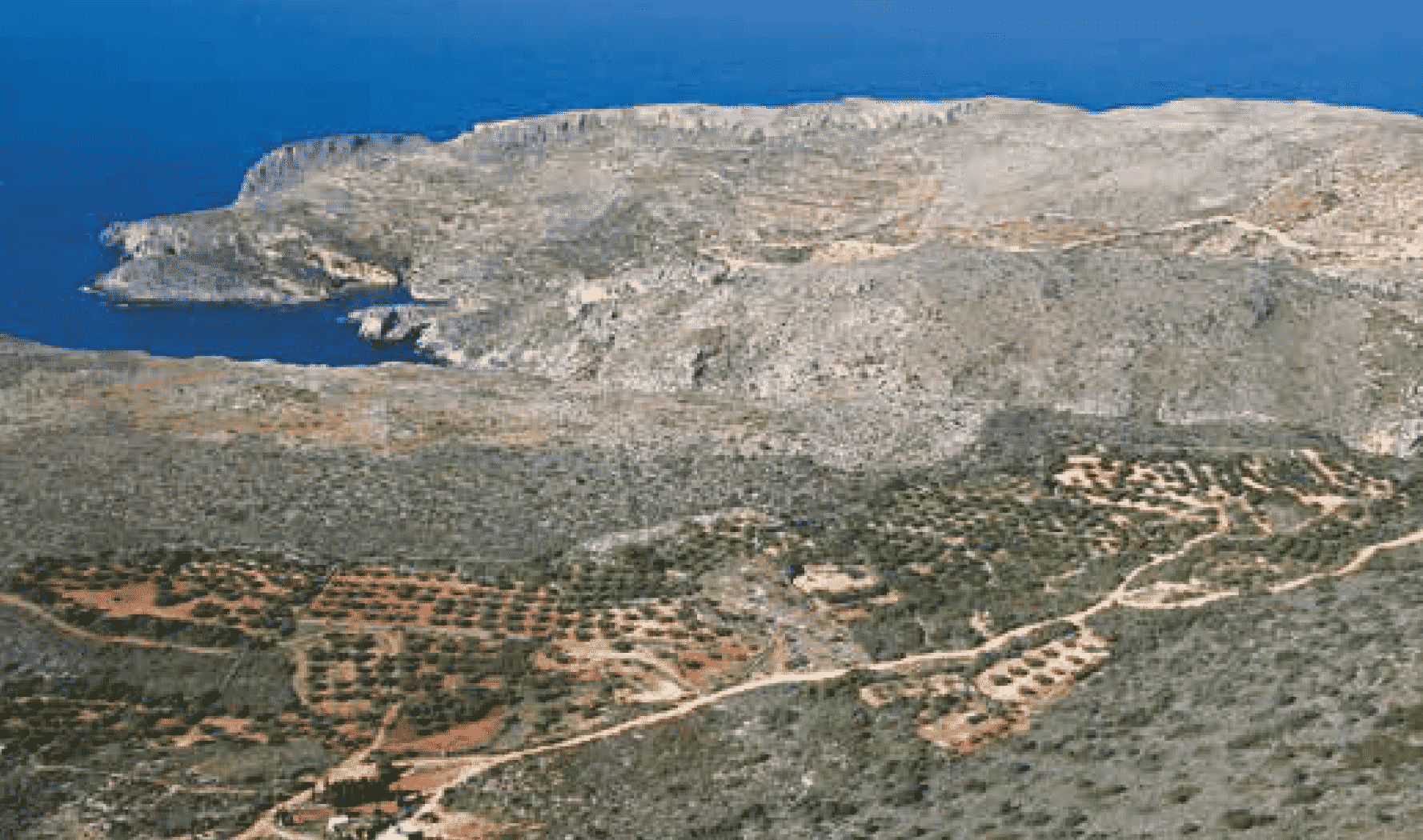
Thus, island agriculture and livestock farming lead to the production of goods that are not merely foodstuffs, but reflect the history and culture of the region. The production process itself has, in many cases, shaped the cultural elements that characterize island regions today. Furthermore, the landscape has been shaped to a significant extent by the cultivation of the land and the grazing of animals, to a significant extent, resulting in a notable interaction between the natural and human-made environments and the productive systems.
Local products, in the broadest sense, are therefore of particular importance, as they embody all of these multifunctional characteristics. In other words, they tell the story of the place. The production, marketing, and distribution of such products, as well as the provision of related services, are in any case economic activities that can provide income for those involved.
Nevertheless, can they ensure broader benefits?;
Can they be linked to the development of the islands?;
This article focuses on these two issues. On the one hand, it seeks to clarify the issue of introducing alternative crops and activities, and, on the other hand, to propose a broader development framework in which the utilization of local products will contribute to achieving broader benefits for the entire population.
New Crops and Production Models for Kythira
Kythira has soil and climate conditions that are well-suited to a Mediterranean agricultural model, with a focus on a relatively small number of crops. In this context of diversification, there is often discussion of alternative, innovative crops, which are cited as examples of primary-sector activities that can provide solutions for farms whose conventionally produced products face marketing and competitiveness challenges. These are production sectors that are quite heterogeneous in terms of their technical and economic characteristics, especially given that the term encompasses a large number of crops and activities.
In general, however, the following applies:
- These crops cover a relatively small area and are not particularly widespread in the country.
- They have relatively low labor requirements and make use of the available labor force in areas and during periods where alternative employment opportunities are limited.
- Furthermore, their capital requirements (both variable and fixed) are not high, compared, for example, to sectors such as vegetable farming, arboriculture, and cotton production.
- They have low environmental impacts, either because they do not require high inputs of agrochemicals or because their cultivation is promoted within the framework of low-input production systems (e.g., organic farming).
- They are primarily purchased by end consumers in niche markets, though this does not mean there is no demand at the industrial level, a fact that makes it easier to differentiate them from similar imported products.
- They are suitable as a source of supplemental income and are promoted through a range of financial instruments.
Their disadvantages are as follows:
- Typically, these alternative crops are imported from abroad, so there is no domestic infrastructure for the production of seeds and agricultural supplies.
- They place particularly high demands on management competence and knowledge on the part of the producer.
- These are innovative activities, resulting in a shortage of specialized personnel—primarily geotechnical engineers—who could provide technical support and managerial guidance.
The development of alternative crops, on small plots of land and with low-volume production, makes it possible to design an alternative development model in which sustainability is linked to synergies. In addition to the points mentioned above, the following factors are also of particular importance with regard to diversification toward such alternative crops:
- There must be interest in the crops planned for introduction; technical and economic data must be available; and, more generally, scientific knowledge must be available to provide guidance to producers.
- It is desirable for new crops to be compatible with existing activities in the primary sector, thereby adding value to them.
- To ensure broader benefits, new crops must be able to make use of the island’s existing infrastructure and expertise and require only minimal intervention to become established.
Kythira has a specific range of products and productive activities that are well-established and reflect the island’s unique characteristics (e.g., grapevines, olive trees). It is therefore recommended that the preferred strategy be to focus on interventions that will prove beneficial to these sectors, both in primary production (e.g., improving cultivation techniques) as well as in the marketing sector.
In any case, expansion into other crops—at the collective level rather than as an individual business venture—should be the result of strategic planning that takes into account:
- The compatibility of the new activities with the soil and climate conditions of Kythira, including the minimization of potential pressures on natural resources and ecosystems.
- Ensuring that expected yields do not differ significantly from actual yields or, if relevant data are not available, conducting a pilot crop before expanding a new crop.
- The extent to which the capital required to enter the industry is available and will be covered by the expected benefits, and the overall outcome, at the socioeconomic level, will be better than the scenario of maintaining the status quo.
- Ensuring the availability of all necessary inputs, especially when they are needed, as well as adequate infrastructure for the production, storage, marketing, and sale of products.
- Securing markets, following thorough market and consumer behavior research.
- Needs for technical and administrative support and consulting.
- The compatibility of the new production model with local conditions and the potential for leveraging specific local oral know-how.
Certification of Products from Kythira
The island of Kythira is a place of special environmental, historical, and cultural significance. It possesses significant comparative advantages and characteristics that give it a unique identity. As a result, products originating from Kythira are inevitably associated with the place, regardless of their quality. Thus, the misuse of the «Kythirian origin» label may have an overall impact on local products and, accordingly, the promotion of a product as «from Kythira» may confer value upon it, regardless of its characteristics. With the aim, therefore, preventing the phenomena of the first category, as well as achieving the synergies of the second, an interesting proposal for the island involves the comprehensive certification of Kythira’s products under a single brand name (brand name).
This certification of the Kythira product is consistent with a relatively new approach to local development, described by the term «territorial development.» According to the European Centre for Development Policy Management (www.ecdpm.org): «Territorial development refers to the integrated, multisectoral development of a specific part of a territorial area, guided by a spatial vision of the desired future and supported by strategic investments in infrastructure and environmental management. This definition does not distinguish between spatial scales (local, regional, national, or transnational) and applies equally to any of them.» This form of development unfolds through two pillars: the region’s social capital and the production of distinctive local products.
On Kythira, the first pillar is expressed through collective actions, such as the island’s cooperatives. The second pillar concerns the shared, collective recognition of «Kythira’s products,” which may include food products, experiences, services, landscapes, and any other element that characterizes the life, history, culture, and nature of Kythira and is embedded in the collective consciousness of the people of Kythira.
Conclusions and Future Prospects
In addition to the proposed framework, some additional proposals for development support for Kythira include:
- Strengthening the infrastructure for existing activities (technical, processing, marketing), supporting diversification, and providing incentives for the development of interconnections among them.
- Protection of local products and development of a comprehensive strategy for their promotion, with the aim of achieving benefits at both the individual and collective levels.
- Strengthening the sustainable nature of tourism development on the island and shifting toward alternative forms of tourism, as part of efforts to promote local products. This strategy would also result in an extension of the tourist season, with even more positive consequences for the island.
- Support for collective action and, among other things, a shift toward Producer Groups, with the aim of taking advantage of funding opportunities under the Common Agricultural Policy (CAP).
* Dr. Athanasios Ragkos is an Agronomist and Agricultural Economist, and a Research Associate at the Institute of Agricultural Economics and Sociology – ELGO «Dimitra.».
The text of Athanasios Ragou This is a reprint from the magazine «Nature» published by the Hellenic Society for the Protection of Nature (Issue 160), which features a special section titled: «The Journey Toward the Rebirth of Kythira»