Η political regularity, as we have known it in its first 35 years Post-Communism (1974-2009), meant, first and foremost, two major parties alternating in government. And, secondly, the ruling party had to serve at least two terms.
This rule was in force in 1974 and 1977 (Southwest and Konstantinos Karamanlis), in 1981 and 1985 (PASOK and Andreas Papandreou), and was temporarily reversed in 1989-1990 (Konstantinos Mitsotakis' Southwest served only one term), restored in 1993 (again PASOK and Andreas Papandreou) and continued uninterrupted in 1996 and 2000 (PASOK and Kostas Simitis) and stopped in 2004 and 2007 (ND and Kostas Karamanlis). In 2009 we entered the memorandum era and governments were barely completing a term (PASOK and George Papandreou 2009, ND and Antonis Samaras 2012, SYRIZA and Alexis Tsipras 2015).
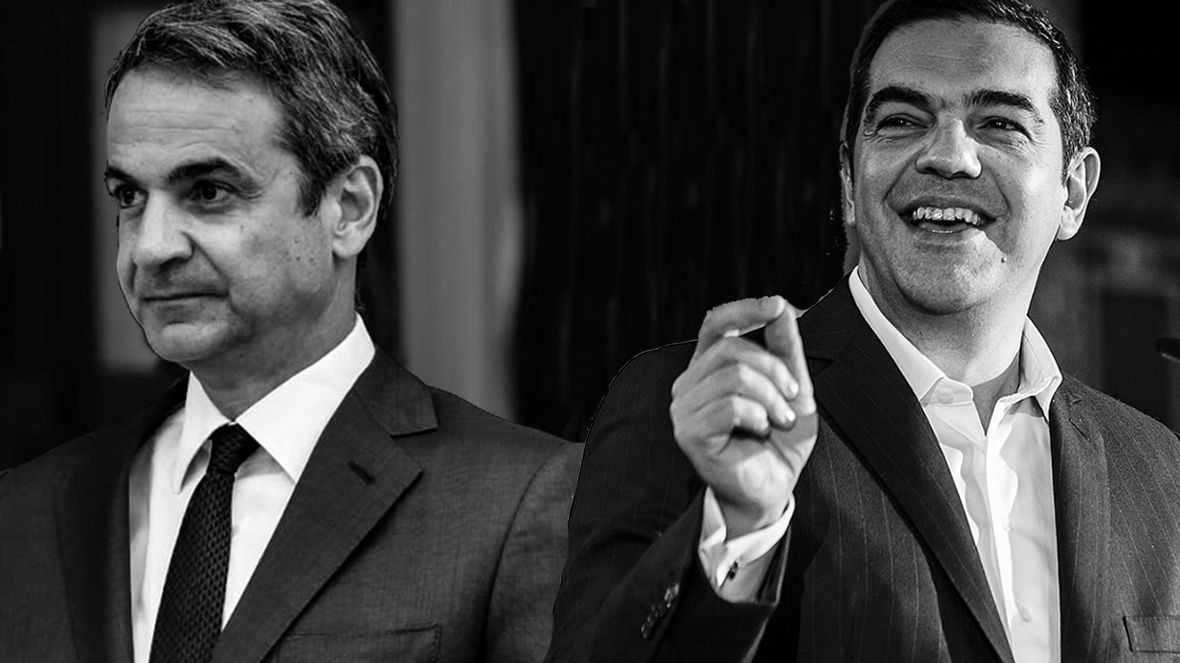
In 2019, the memorandum period ended, at least formally, and the first post-memorandum government of the Kyriakos Mitsotakis will complete its first two years in office. The apparent end of the pandemic, at least in some way, heralds a return to some kind of normality. Will it also be political normality, as we knew it until 2009, with two major parties and two terms of government?;
The answer to the first part of the question seems to be becoming definitive. Yes, we have two major parties (ND and SYRIZA), even if their percentages do not reach those of the old two-party system. It is noteworthy that SYRIZA in 2015 won with 35% and ND in 2019 failed to reach 40%, percentages that in previous decades the losing party accumulated. On the second part of the question, i.e. whether we will return to two terms of government, the answer cannot be given with certainty. The current evidence suggests that Kyriakos Mitsotakis' ND may repeat its electoral victory, especially if the elections are held (more or less) early. However, certain unpredictable factors, first and foremost the electoral system (the next elections will be by simple proportional representation), which favours the fragmentation of the party forces, do not allow to draw a safe conclusion as to whether we will have a new (self-reliant) term of government for the South-West.
Mr Mitsotakis and his colleagues are aware of this peculiarity of the current situation and will certainly take it into serious consideration there at the end of the summer, if the epidemiological data allow. Their current demographic dominance is on the one hand temptation and on the other hand sets a dilemma. The temptation to «hold early elections, burn the simple proportional representation and renew the government's term of office» means implementing the plan «two plus four» years in power. The dilemma has to do with the possibility of the unexpected, which may not lead to the expected outcome and make it difficult to form a self-sustaining government.
From his point of view, SYRIZA needs time. Its leadership knows that if the elections are held in early autumn, the best it can expect is that, with the help of the simple proportional representation, ND will not achieve self-reliance. But that does not solve his own problem. Ο Alexis Tsipras it takes time. First, in order for the electorate to «forget» the negative aspects of the Syriza government. Second, to catch up complete the transformation of SYRIZA from a party of the «radical left» to a broad party, extending from the progressive centre to the fringes of the KKE, something that PASOK successfully did for almost three decades. And, thirdly, to allow more time in between, during which he hopes that the deterioration of the Mitsotakis government will be rapid and will become greater.
All of this will come to the forefront in the summer, coronavirus permitting. If a kind of normality is consolidated in our lives, Mr. Mitsotakis will be called upon to decide whether to keep his promise or to put forward the early elections aiming for «two plus four» years in government.
But with plans, calculations and objectives, what the great warlord Napoleon Bonaparte said may be true: «I've done all the calculations. Fate will do the rest.»…
By George Karelias