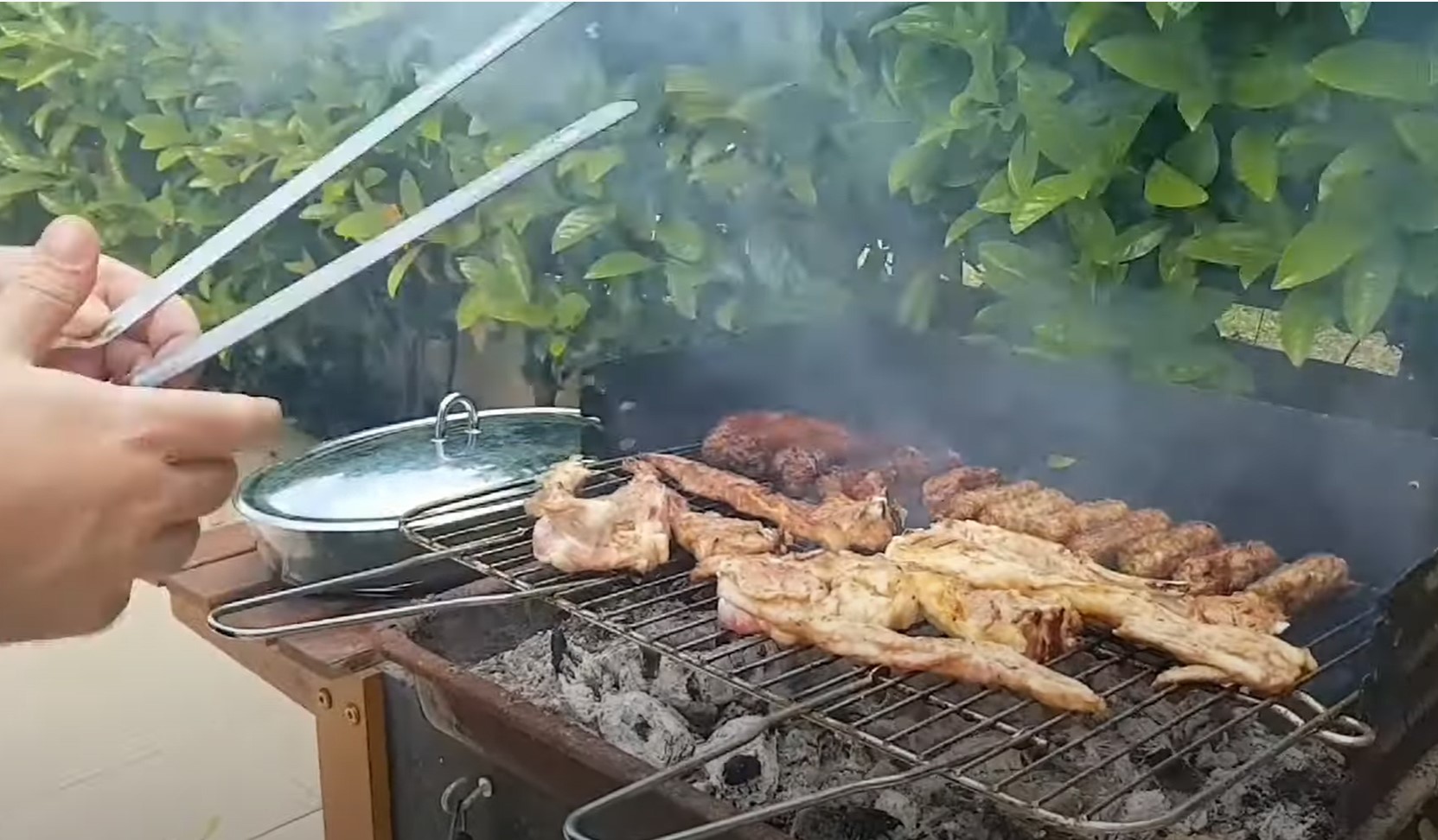
Grilling at a backyard gathering is serious business. Whether you're cooking burgers, chicken, steak, vegetables or fruit, you definitely don't want your food to smoke. Grilling is a tricky business - we're literally playing with fire - and there's little room for error.
That said, there is one mistake in particular that baking professionals say they see time and time again: not getting the temperature right.
It's a mistake that is said to happen often, no matter what one is baking, and can happen at different points during the baking process. Keeping our food at the right temperature is important both for taste and to protect everyone from illness from contaminated food. Can we feel the heat? Here's what we need to know about grilling and temperature.
Let's get the meat cooking at the right time
According to Meredith Goldwyn, founder of AmazingRibs.com and author of «The Science of Great Barbecue and Grilling,» temperature comes into play at the beginning when it comes to preheating the grill. «You want to preheat and it usually takes 15 minutes for the metal on the grill to get up to temperature,» she said.
When do we know when it's time to put the meat to roast? Goldwyn says the middle area around the grill should be hot. Pretty simple, right? Now we're ready for the main event: cooking the food - and that's when temperature control becomes most important.
Let's properly control the heat of the barbecue
As with cooking food on the stove, the temperature you want the grill to be varies depending on what you're cooking, says Susie Buloch, creator of the blog Hey, Grill, Hey.
«With each type of grill, we have a lot of flexibility in terms of temperature control,» he says. If you're cooking something thick, such as steak, pork chops or chicken, he recommends starting at a lower temperature and then finishing at a very high temperature. «That's how you get that warm, crispy, flavor at the end that really connects with the flavor of a roast,» he said.
Goldwyn says this is exactly why it's important to set your grill to two zones. «Half the grill should be hot and the other half shouldn't,» she advises. The hot side of the grill should have direct heat but the other side should not. The hot air from the hot side of the grill will circulate over the food and that will be enough. If we are grilling burgers for a large group of people, this is also important so that the burgers we cook first stay hot and also helps to satisfy the varied requests of guests for «done».
The author of «How to Grill for Beginners», Richard Sherman, echoes what Buloch said about different types of meat requiring different types of heat. «If you're cooking a larger piece of protein, such as a roast beef or whole chicken, it's best not to use direct heat and essentially use your grill as an oven,» he says, adding that this way it cooks more evenly. «Direct heat is best for smaller cuts of meat and vegetables, cooking the food over medium-high heat.» But it's not just the heat on the grill that matters. The internal temperature of what you're cooking is important.
Let's monitor the internal temperature of our food
Having a cooking thermometer is key... «It will give us a ”reading” accurately within two to five seconds, which is important because the internal temperature can change very quickly.» Sherman co-signs this, saying that chicken and lean pork have a small «window» of readiness.
Goldwyn says a key reason why it is important to use a cooking thermometer is if meat is undercooked, it puts those who eat it at risk of foodborne illness. The Food Safety and Inspection Agency says the internal temperature of ground beef should be 160 degrees Fahrenheit (71 degrees Celsius), 165 F (73.8 K) of turkey and chicken, and 145 F (62.7 K) for steak and pork - however, Goldwyn recommends that steak be cooked to an internal temperature of 135 F (57.2 K), otherwise it can be too dry.
Classically trained chef Billy Parisi says there are visual cues that can tell us when our meat is ready. «Chicken ”tightens up” quite a bit when it's done,» he advised. «To see if it's done a steak, I press the sides and that's a good way to see if it's still really rare or if it's gone to medium rare.» If you press the sides and there's some firmness, it means it's medium rare. The firmer a steak is when you press it, the more done it is.
Let's not add the sauce too early
If you add barbecue sauce or marinade to your meat, Paris says this is another example that time and temperature are important. He stresses that it's important not to add the sauce or marinade too early because it burns the sugar.
«If I'm grilling chicken breasts, I'll do most of the cooking on one side. I'll flip it over on the other side when it's about 70% cooked when I add the sauce,» he says.
No matter what you're cooking, Buloch says to wait the last five minutes before adding the sauce. «If you put the sauce in too early, the sugar will caramelize and burn,» she says. «There's a fine line between charred and burnt.».
What to keep in mind when roasting vegetables and fruits
Although not cooking produce well will not put us at risk of food poisoning, it is still important in terms of taste. Buloch recommends cooking fruits and vegetables over high heat for a short period of time (between 4 and 10 minutes, depending on what you're grilling). «High heat cooking brings out the inherent sweetness of fruits and vegetables, and as with sauce, anything sugary loves to caramelize,» she said. Her other tip regarding grilling fruits and vegetables: Let's make sure the grill is well cleaned. We don't want our grilled peaches to taste like ... chicken.
Clearly, temperature control is important throughout the baking process, but Buloch says it's not that different from using the oven or stove, so don't be alarmed. «The same heat and fire rules apply across the board,» she says. «I always tell people that anyone can roast anything.».