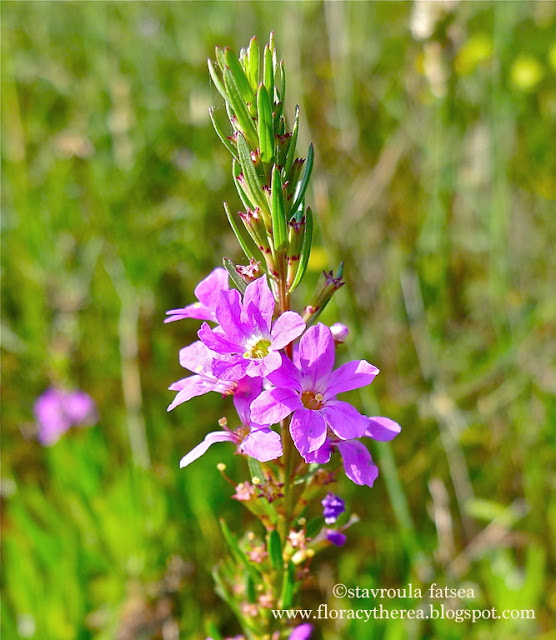
Lythrum junceum Banks & Sol. 1794
Syn. Lythrum graefferi Ten.
Lythrum meonanthum Steud.
A perennial plant native to Europe, the Middle East, and Western Asia. It thrives in moist areas and can be found in early summer in ditches, ravines, and along roadsides where moisture is present. Its delicate pink flowers bloom along upright stems from May through July.
In the genus lythrum There are approximately 38 hydrophilic species found throughout the temperate zone.
In traditional folk medicine, species of the genus such as lYthrum salicaria and the Lythrum hyssopifolia They were used to treat hemorrhoids and internal bleeding, as well as dysentery, and externally as wound-healing agents. It is possible that Pedanius Dioscorides was referring to one of these species when he described the plant Lysimachium or lytron.The genus name derives from the ancient Greek word λύθρον = “stained blood,” a possible reference to the therapeutic properties of the plants in this genus. The specific epithet of the species comes from the Latin *junceus* -a -um, meaning “resembling a rush.”.
On Kythira, it can be found in ditches, ravines, and generally in damp areas throughout the island.