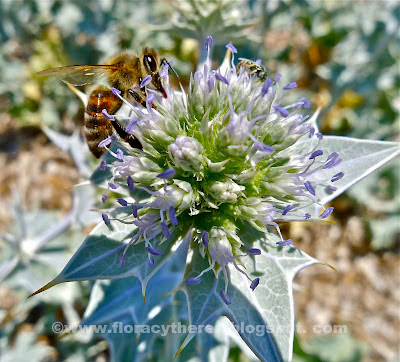
Eryngium maritimum L.
Galanagathos, Agathia
Perennial plant, native to almost all European coasts, on sandy beaches and dunes.
This seemingly insignificant thorn is transformed into a rare jewel during the flowering season. Its tough, spiny leaves and delicate flowers are blue-purple or silver-green in colour and attract a multitude of pollinators. The roots can grow up to a metre long and hold up loose sandy soils preventing erosion.
The plant is called eryngium by Theophrastus and Dioscorides and is considered beneficial since antiquity in cases of liver and stomach diseases, fluid retention, gas. It owes its name to this property. Erygium or eryngium from the verb erygano = to eructate and eructate = to emit stomach gases from the mouth.
The decoction of the root is considered to have diuretic properties and is still used in folk medicine in urinary tract diseases. Eryngium maritimun is also a widely used homeopathic remedy.
Pliny mentions that the tender shoots and the roots are eaten, a habit that continues to this day in some regions, where it is eaten as a boiled salad with olive oil and garlic or cooked with lamb fricassee, in omelettes, etc. The cooked root has a sweet chestnut-like taste. The Anglo-Saxons sweeten it and make candies which are much sought after.
Although the species has a wide distribution, it is considered endangered and in some parts of Europe it is endangered ( eastern Scotland ) as its natural habitats are under great pressure mainly due to tourism “development” and lack of awareness of visitors who often collect it as a souvenir.