
On Saturday, March 6, 2021, I watched with great interest the entire online meeting and discussion open to the public entitled «A Kythira New Deal,» which was held on the initiative of Manos Trifyllis, Spyros Michalakakis, and Yannis Koronaios.
If I did not personally know the three organizers of this discussion and their sincere and selfless interest in Kythira, I would say that I heard «more of the same» again. That is, a completely platitudinous discussion in which each of the participants spoke mainly about issues related to their professional identity without actually taking a position or submitting proposals on Spiros Michalakakis' initial presentation.
Since 1985, I have participated in dozens of committee meetings, workshops, conferences, etc., with topics generally related to the island and its «development.» At all these face-to-face meetings, the current situation on the island was recorded, along with (ambitious) proposals on what should be done to develop the primary, secondary, and, of course, tertiary (services) sectors.
The problem I always noticed in these meetings, as well as in this online one I am writing about here, is that while there was usually a careful and documented representation of reality, as well as of the desired outcome, when the discussion reached the «bottom line» , i.e., how the excellent proposals that had been put on the table would be implemented, the discussion ended.
For example, it is well known to the «inhabitants of Jerusalem» that the arid olive trees of southern Peloponnese, Kythira, and northeastern Crete produce the best olive oil in the world, which, under certain conditions, could be sold for at least twice the price it is sold for today. However, what has been sought for years is how to massively collect, evaluate, separate, and standardize the olive oil of Kythira, and then immediately find ways to market the product in such a competitive global environment. Most important of all, however, is the education that must be developed among primary sector producers on the above issues, as well as the necessary cooperation between private individuals and organizations.
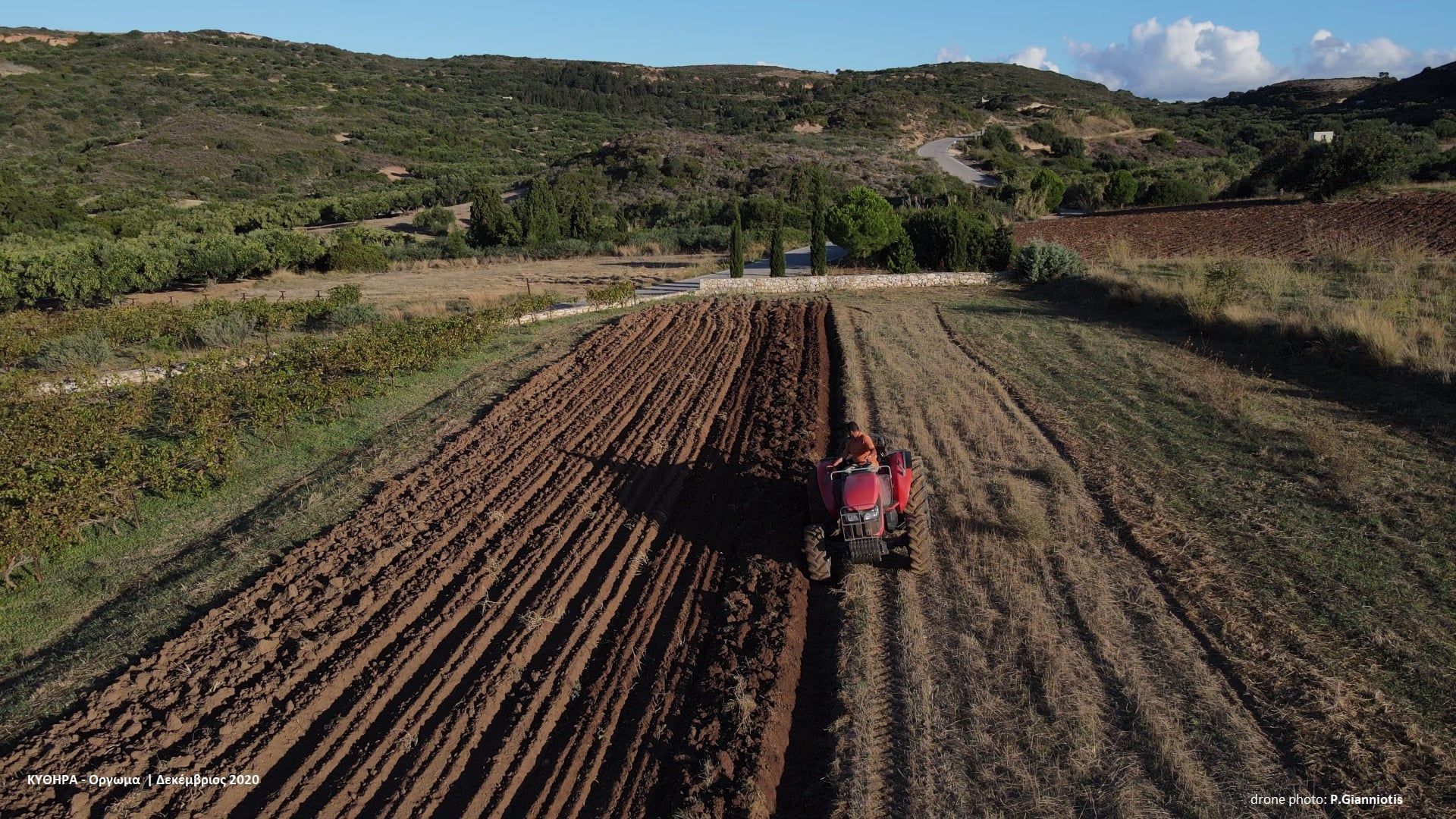
Things become even more difficult when one considers the reality of the above sectors on the island. In other words, when it comes to the primary and, to a lesser extent, the secondary sectors, there are very few young people involved in them, perhaps only a handful. Most are middle-aged, retired, or foreigners who have leased land in some way and therefore find it difficult to adapt to the modern approach of utilizing and distributing products to other markets.
Of course, there are shining examples of people who, mainly using European resources, have created exceptional businesses related to the primary and secondary sectors on the island, and who, in my opinion, should be on the panel of guests.
In conclusion, I would like to say that it is good to have such discussions, but the organizers and participants must also propose ways of implementing their proposals, which may be different, innovative, or even unconventional. What is certain is that even if they are criticized or ridiculed, they will not be ignored. Because, to misinterpret Steve Jobs a little, the ideas that seem crazy enough to be implemented are ultimately the ones that change the world or, in this case, Kythira.











Dear Panagiotis.
First, I would like to thank you for following the discussion and for your comments. I agree with many of your observations. However, I would like to make a few comments:
1) You write that since 1985 you have participated in dozens of meetings that have not yielded tangible results. Have you ever wondered why? Could it be because they were held for show rather than substance? Could it be because the model of administration and intervention they served ended up in the same old chairs? Could it be because the “equation” was missing those who (along with everyone else) have done it before in their lives and know how to implement programs? Could it be time to change it?;
2) You correctly point out that there is a generality in the proposals. To be precise, the description in our proposals reaches a point, advanced or less advanced. However, it would be disrespectful to our interlocutors if we told them, “This is the costume, wear it.” Since we are inviting them to participate, we are also waiting for their own proposals so that we can decide on the appropriate course of action.
3) I find the comment about oil really interesting. It may be commonplace (we have all discussed it dozens of times), but it gives me the opportunity to reiterate my own observation that it is not enough to want it, you also have to be able to do it. The creation and establishment of a brand (in this case, “Kythira”) requires the contribution of people who know about marketing, who know about sales promotion, who know about communication. Fortunately, today there are many Kythirians and friends of Kythira who have these skills. We aspire to activate them so that they can contribute their knowledge to something that has not been successful in the past because these skills were lacking.
Panagiotis, I assume that you are also one of those who have realized the ineffectiveness of the public sector when it is staffed by individuals whose résumés only include “party affiliations.” They are unaware of the daily necessity of “earning a living.” I consider the osmosis of public institutions with private experience to be essential. This can be achieved to a large extent with our proposal and the cooperation of all those we describe in it.
In this sense, I thank you for your contribution and for giving me the opportunity to develop some of my thoughts.
Yannis Koronaios
Fortunately, Yiannis, I have managed to develop an objective (I believe) perspective in my life, both as a civil servant and as a “professional” through our family businesses. I also understand your approach to the issues of “marketing, sales promotion,” etc., which you mention here. It is logical for all of you to have such an approach to the issue, which is, of course, correct.
But Yiannis, this approach is not the crux of the matter. All these actions come up against the most important problem that has existed on the island for decades, which we permanent residents of the island experience, and unfortunately no one mentions it. The lack of people to work in the primary and secondary sectors.
When we, and then the state, lead our children to live and work in front of a computer, possibly in another country, how will the primary sector become attractive and how will your proposals be implemented?;
Talking daily with people who work exclusively in the primary and secondary sectors, I believe that if one does not start with them (the people), there will be no development of any kind.
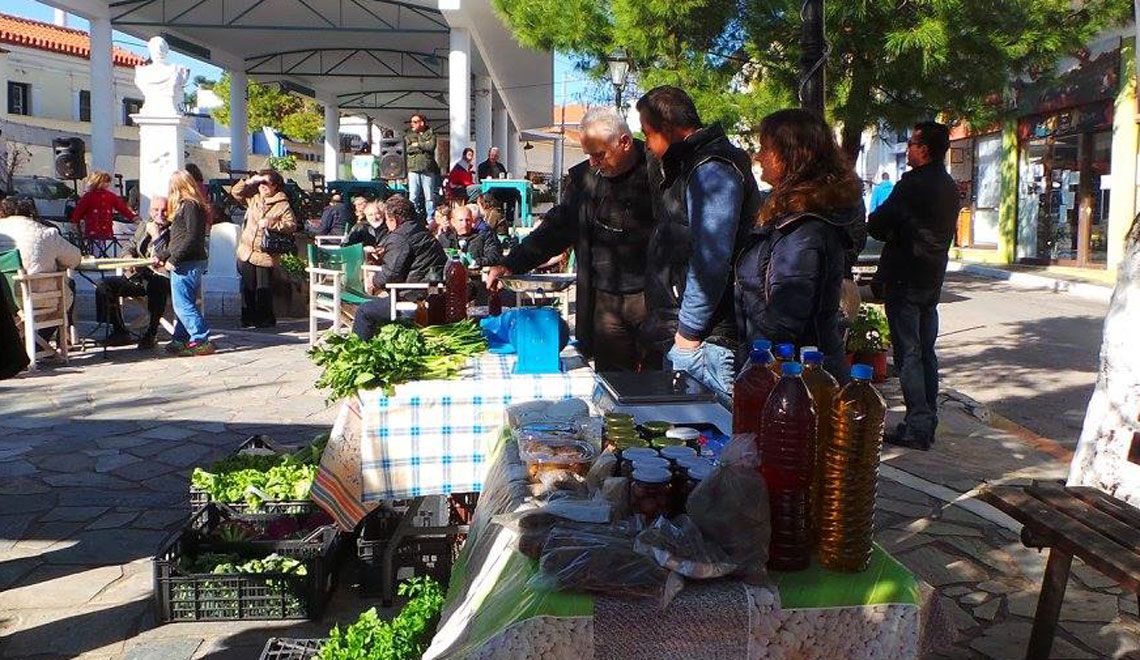
What's the point of sophisticated marketing for honey, for example, if you don't have a product to sell, since producers have not yet been convinced that there should be a single standardization with the «Kythira» brand?.
As regards the inefficiency of the public sector when it is staffed by individuals whose CVs only contain “party stamps,” I agree, with one observation that I have been repeating for many years in various discussions.
In my opinion, the public sector, and especially the municipality, because I imagine that is the reason, should be a helper and supporter of the private sector. The municipality cannot be a farmer, a hotelier, or a businessman. However, it can accept documented proposals from agencies and collective bodies and implement them institutionally and financially together with them. In all these years, I am not aware of any proposal, at least in the field of tourism, that came from an organization and was not accepted by any mayor or municipal council.
I could tell you a lot more in the context of a substantive and obviously completely apolitical discussion, but I would prefer to talk to you in person sometime.
Thank you for taking the time to read this.«