Ο mandatory vaccination against COVID-19, for which the Germany which he refused to listen to a few months ago, will be the subject of a bill to be tabled in parliament before the end of the year, in an effort to stem the tide of infections, the future Chancellor announced today, Olaf Scholz.
By making this major shift, Europe's first economy hopes to convince a maximum number of citizens to opt for vaccination before it becomes compulsory, if parliamentarians decide to do so.
Germany's federal and state governments will take joint action to deal with the fourth wave of Covid-19, government spokesman Stephen Seibert said today. The federal and state governments are considering proposals, including restrictions on contact, especially for unvaccinated people. Details of the plans will be studied by Thursday, he said.
“Many people have not been vaccinated,” Scholz told Bild TV.
Making vaccination compulsory is justified “for the protection of all of us”, he added, explaining that he would like MEPs to examine the issue and put it to a vote by the end of the year so that it could come into force in February or March.
The Social Democrat future chancellor, who is expected to take office next week, made the remarks at the end of an emergency meeting with outgoing Chancellor Angela Merkel, the future coalition and state leaders to consider various measures aimed at fighting the fourth wave of infections.
Germany had so far ruled out the radical option of imposing vaccination, adopted by its neighbour Austria.
Olaf Scholz had opposed such a measure during the election campaign, in a country where restrictions against Covid-19 largely divided public opinion.
On Tuesday, Solts expressed his support for such a measure, it was reported in his entourage.
- “Dramatic” situation -
The debate on this issue has escalated in recent weeks, while the country has been hit hard by the increase in infections.
At the end of the meeting, yesterday, Tuesday, 30 November, «everyone agrees that the fourth wave of the pandemic has led to an extremely serious, sometimes dramatic situation at regional level in our health system, to which the federal state and the Länder will react jointly and decisively,» the Chancellery statement said, a few days before Merkel's departure.
The health situation remains very tense, with the incidence rate now standing at 452.2 per 100,000 inhabitants.
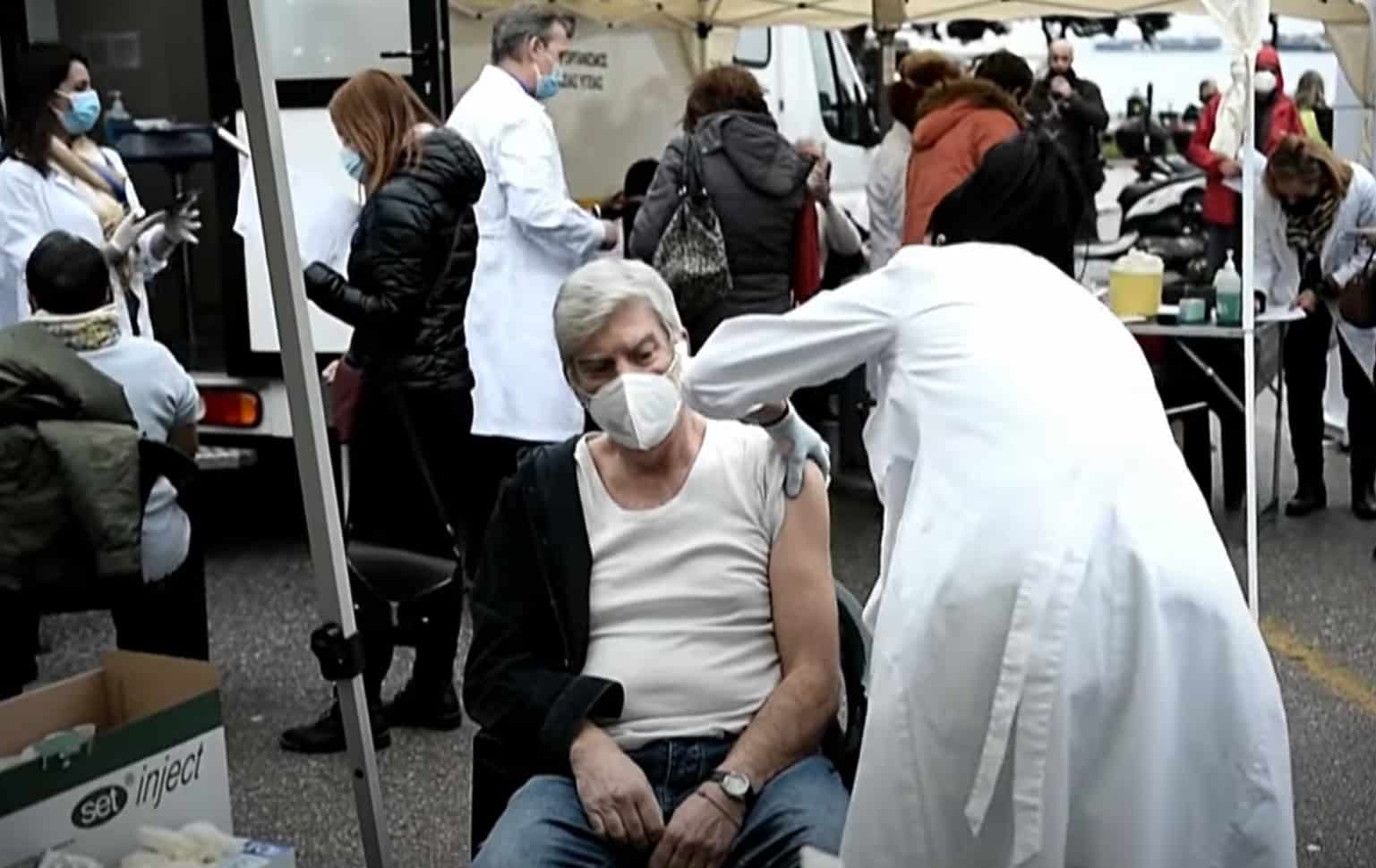
Top priority, according to the Chancellor: the continuation of the vaccination campaign.
«By Christmas, up to 30 million first, second and booster vaccinations should be possible,» the chancellery says.
Compulsory vaccination was recently decided for the staff of nursing homes and hospitals, as well as for soldiers of the German Federal Army (Budnesver) and is expected to enter into force soon.
The conservative camps of the Christian Democratic Party (CDU) and the Christian Social Union (CSU) of outgoing Chancellor Angela Merkel, who is preparing to move to the opposition, now support compulsory vaccination.
And according to the newspaper Welt, a large majority of ecologist MEPs, who will govern with the Social Democrats, are also in favour.
- A patchwork of rules -
The vaccination campaign has so far enabled the complete vaccination of almost 57 million people (68.5%).
Compulsory vaccination, long rejected by a majority of Germans, is now demanded by almost two thirds (64%) of them, according to a recent poll by RTL and ntv.
Other measures to be discussed on Thursday include the adoption of significant restrictions on contacts, especially for unvaccinated persons, including private meetings” or “the extension of 2G rules (i.e.: vaccinated or treated) to retail outlets and “restrictions during major events”.
«What needs to be done is absolutely clear: contacts need to be reduced,» said the future vice-chancellor, environmentalist Robert Habeck.
Several severely affected states have already cancelled Christmas markets and banned unvaccinated people from accessing public places such as gyms, indoor sports facilities and leisure centres.
Many officials believe, however, that the patchwork of rules is a source of confusion and want there to be uniformity in restrictions at the national level.
The German constitutional court today ruled legal the radical restrictions imposed at the beginning of the pandemic to contain the infections, namely the curfew, school closures and exit restrictions.