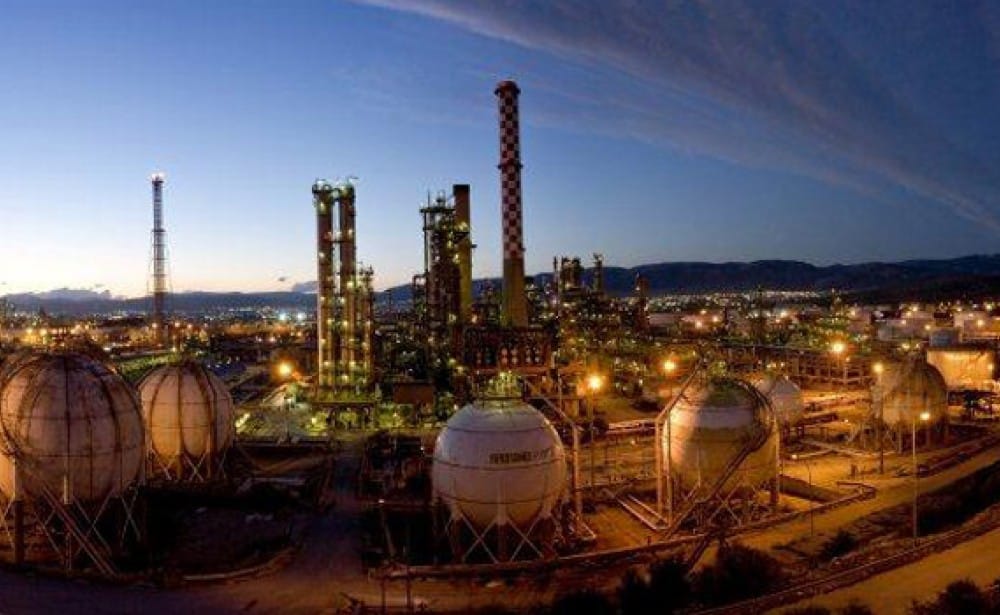
Recent developments regarding the Hellenic Petroleum provoked strong reactions in parties and trade unions.
The State grants to the private shareholder (Latsis-Paneuropean) the management of the largest energy group in the region (estimated to be worth over €100 million) and minimises the potential for interference in critical strategic, economic and geopolitical issues
The deprivation of public rights is presented as a «vision for the corporate and energy transformation of the Group»...
Only it's not like that at all. So let's talk about HELPE and development, «illuminating» 2 key points:
First, on the transformation strategy of HELPE into a broader energy group as presented on 6.5.21 (Vision 2025): the objective is legitimate and necessary, it was set many years ago, but during the current administration it has fallen behind. It raises questions about the lack of depth and coherence of the plans announced since they stick to the obvious (improving refineries, increasing RES, «pilot» efforts in new technologies, Hydrogen, etc.). From 2019, the Group has a complete and realistic programme in its hands («HELPE - ¨Vision 2050 & Roadmap for Sustainable Development and Transformation for Future Energy» with 7 key pillars, energy and digital transformation, and rolling five-year programs (2019-2030) to achieve the objectives - HELPE 2019 Edition (p.144) - Presentation, then President and CEO. Stathis Tsotsoros - Presentation - Presentation and CEO and Chief Executive Officer Stathis Tsotsoros).
Second, is that not explained why we need to get the public sector out of the way to transform the Group?; Is the current government not supporting the progress of such an important company in its critical role in the energy transition?; The 2050 Vision provided for a much bolder transformation, without compromising the rights of the State. The argument that the definition of administration by the State has a negative impact on its results is also ill-founded. This is not the case at all. Quite the contrary:
In the period 2015-2019, the SYRIZA government exercised the right to appoint the majority of the administration. Previous governments (implicitly...) appointed administrations nominated by the private shareholder, (Paneuropean of Mr.Latsis). But what were the results?;
From the published results of HELPE, loss-making operation for 2020, in contrast to the profitability (at a record level) of the period 2015-2018 for HELPE. The 2013-2014 period was also loss-making. Why? It is insufficient to invoke the international environment and the pandemic. HELPE made losses in the last eight years when it was privately managed and profits with public management... In addition, in 2020 they experienced the largest decline in earnings of all related companies
So why now will private management do better?;
HELPE can become a regional energy champion for the benefit of all (shareholders and the State). They must act within the framework of the «Vision 2050» that they themselves have formulated.
In summary:
- Preservation of the rights of the State in the appointment of the majority of the management of HELPE
- Decisive Progress in the Exploration and Production of Domestic Hydrocarbons
- Development in the context of the energy transition (optimisation of refinery operations, expansion of Petrochemicals, new forms of low-carbon fuels), public-private partnership in Natural Gas and Renewable Energy Sources.
- Upgrading of marketing, with new types of petrol stations.
- Expanding presence in the Balkan countries
- Valuable use of human resources with continuous improvement of health and safety conditions.
By Gregory Stergioulis and Spyros Michalakakis
Grigoris Stergioulis is a Chemical Engineer, former CEO of HELPE
Spyros Michalakakis is a Chemist, a former senior executive of BP/Castrol and President and CEO of BP Hellenic.