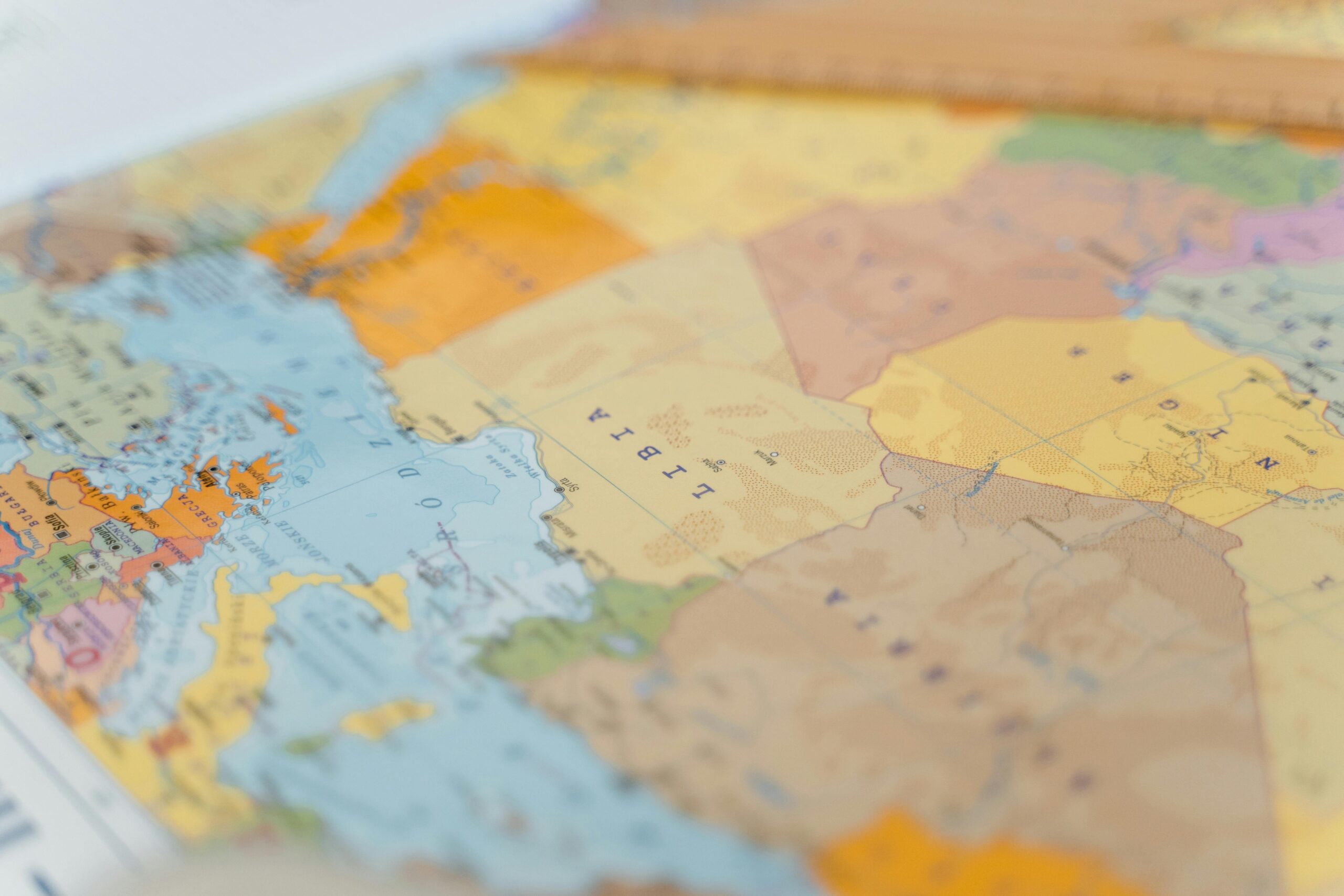
The latest developments, such as the signing of a Memorandum of Cooperation between the Libyan National Oil Company (NOC) and the Turkish TRAO for offshore exploration - in response to the publication by the EU of the Greek international call for exploration south of Crete - in combination with the increasing migratory flows to Crete and the intense diplomatic mobility of Greece in the EU, have reignited diplomatic tensions between Greece and Libya.
But to understand the current impasse, it is worth noting that before the fall of Gaddafi, Greece had the opportunity to conclude an EEZ agreement with Libya, as in 2010 there was a positive atmosphere in the bilateral consultations. However, the agreement did not go ahead and the opportunity was lost.
A few months later, the situation in the country changed dramatically: Libya, after the fall of the Gaddafi regime in 2011, entered a prolonged period of instability and gradual collapse of state structures, ending up with is a typical example of a failed state.
In particular, the country to date has experienced serious institutional erosion, lack of central control over much of the territory and ongoing civil conflicts. International actors such as the US, Russia, Turkey, Egypt, Egypt, Italy, France and the UAE are directly or indirectly involved in the conflict, while the European Union continues to seek a coherent strategy for Libya.
Since 2014, the country has been effectively divided, with two competing centres of power: the UN-recognised Government of National Accord (GNA) in Tripoli and Marshal Khalifa Haftar's forces in eastern Libya.
In this complex and rapidly evolving landscape, Greece - despite its direct geopolitical interests in the Eastern Mediterranean - remained practically absent.
From 2011 to 2019, no meaningful engagement strategy was developed with the warring sides in Libya. The Greek embassy in Tripoli had been under-operational since 2011 and was closed permanently in July 2014 without any political initiative for the return or upgrading of the Greek presence.
On the contrary, other forces such as Turkey exploited skillfully exploited the power vacuum and the Tripoli government's needs for military support, ensuring in November 2019 the signing of the so-called Turkish-Libyan Memorandum, which serves as a strategic tool for consolidating the Turkish presence in Western Libya. Ankara has also established military bases, developed critical coastal control infrastructure and strengthened its geo-economic influence through reconstruction and investment projects.
Finally, those who currently practice inexpensive and afterwards Review on Greece's strategy in Libya (without awareness of the complexity of the field and without sufficient understanding of the operational and geopolitical parameters of the crisis), they must answer the following critical questions:
- Where were they all when Turkey, methodically and with long-term planning, was strengthening its presence on Libyan territory?; Were they then silent or indifferent?;
- Who is responsible for Greece's eight-year diplomatic absence from Libya;
- They bear no responsibility for the fact that, for years, Greece has left free space for other powers to consolidate their influence.;
Before they make easy complaints, should they not first consider the consequences of their own strategic inaction and account for it?;
Despite the fact that since 2019 a significant effort has been launched to upgrade and consolidate the Greek presence in the region under the Prime Minister Kyriakos Mitsotakis, I have to admit that in the management of the Turkish-Libyan Memorandum, there have been mismanagement, as recently admitted by the Minister of Health, Mr. Adonis Georgiadis.
However, despite the unfortunate manipulations of the past, Greece has put in place a methodical and painstaking effort to substantially upgrade its presence and influence in Libya, with the aim of safeguarding national interests and promoting stability in the region.
In particular, Greek diplomacy re-established and consolidated relations with the recognised government in Tripoli, while maintaining channels of communication with the leaders of Eastern Libya.
At the same time, Greece strengthened its presence in European and international fora, taking an active role in the European Union and NATO to promote peace and stability in the region.
Greece has consistently refused to legitimise the Turkish-Libyan Memorandum, both through strong diplomatic interventions and coordinated interventions at EU level, with allies such as Italy and the United Arab Emirates. At the same time, purposefully cultivated a network of strategic alliances with key countries in the Eastern Mediterranean and the Arab World, such as Egypt, France, the Emirates and the Republic of Cyprus.
Η Greece's participation in the European Operation ERINI, which aims to implement the arms embargo and prevent illicit transfers to Libya, and and the training of members of the Coast Guard to enhance surveillance of the Libyan coast, demonstrate the Greece's commitment to active engagement and continued support for security in the Eastern Mediterranean.
Furthermore, the intervention of Prime Minister Kyriakos Mitsotakis at the European Council led to an explicit reference in the Conclusions on Libya, strengthening European support for Greek positions and promoting a more coherent European policy in the region.
End, Greece succeeded in preventing the implementation of illegal Turkish drilling in the Libyan maritime area, demonstrating the effectiveness of its strategy in the face of challenges that threaten the country's sovereign rights.
In this complex and unpredictable environment, it is necessary to make some observations in response to recent developments. At the same time, they may prove useful both to those involved in the design and implementation of our foreign policy and to those who insist on analysing it in terms of past decades.
1: Libya cannot be analysed without Turkey, because it has become its strategic protectorate.
When we look at Greek-Libyan relations, we cannot ignore the catalytic role of Turkey. Libya, especially under the Government of National Unity in Tripoli, is operating as a de facto protectorate of Ankara. It is not just a matter of diplomatic influence or military cooperation, but a structural relationship of dependence: political, military and economic.
The key strategic error of many analysts and a significant part of the Greek opposition is that they approach Libya with analytical tools that correspond to a structured, unitary and institutionally stable state.
But the reality is exactly the opposite. Libya remains a post-civil war, divided entity with two rival powers (Tripoli and Benghazi), dozens of armed militias and strong interference from third countries.
In this fluid landscape, Greece is not only called upon to manage a traditional diplomatic relationship, but to confront Turkey as the institutional guarantor of the Libyan government.
2: Turkish aggression is not a sign of Greek weakness, but proof that our strategy is pushing Ankara's deadlines.
The latest flare-up of tension in Libya and the Eastern Mediterranean must be seen in the light of the irritation caused to Turkey by the active and targeted Greek strategy.
The declaration of National Spatial Planning, the marine parks communication in areas of Greek jurisdiction, as well as the obstructing Turkey's participation in European Defence, are political moves with a real impact.
Ankara, which is accustomed to operating under the doctrine of a fait accompli, is reacting precisely because it sees that Greece is no longer limited to reacting, but is forming a positive strategic footprint in the Southeastern Mediterranean.
3: Greece chooses diplomacy and legitimacy, while Turkey chooses unilateral military expansion.
Unlike Ankara, which is pursuing unilateral military initiatives with the aim of projecting power and widening the fait accompli in Libya and the Eastern Mediterranean, Greece acts as an institutional stabiliser and voice of international legitimacy in the Eastern Mediterranean, insisting on the promotion of peace, stability and international legitimacy.
Athens supports dialogue and democratic processes in Libya, promoting the holding of elections and a political agreement leading to a viable peace solution.
So what would critics of the «current» Greek foreign policy prefer?;
For Greece to send troops to Libya and engage in a military confrontation in order to gain influence; or to continue to insist on its institutional role as a force for peace and stability in the region, calling for a ceasefire, respecting international law and promoting peace in the country?;
4: The Haftar Shift as an Expression of Cold Realism and Balance Adjustment.
Khalifa Haftar's recent shift towards Turkey does not signal a change of policy, but expresses cold geopolitical realism. Recognizing the new balance in Libya, it seeks to manage the Turkish presence, which has been militarily and politically entrenched in Western Libya, as a means of maintaining control in the East and international legitimacy.
In particular, Haftar is attempting to gain greater bargaining power and to highlight his role as a crucial factor in the search for a political solution.
This approach is nothing but a survival tool, which aims to maintain the status quo in the eastern territories under its control and to legitimise its role internationally, so that it can participate on an equal footing in future political compromises.
Haftar requested military support from Greece, which was not provided, which probably pushed him towards Turkey. At the same time, he sought diplomatic and financial support from other countries to strengthen his negotiating capital and balance Turkish influence in Libya.
5: The Turkish-Libyan Memorandum is legally invalid and politically non-existent.
Too much strategic importance should not be attached to the so-called Turkish-Libyan Memorandum, as it is a legally invalid and institutionally invalid agreement, with no binding force for the international community or the Libyan state itself.
It was signed in 2019 by a provisional government of disputed legitimacy (GNA), which had a mandate only to organise elections and not to conclude agreements of a sovereignty nature.
Never approved by the Libyan House of Representatives which is the only elected and recognised parliamentary body in the country. On the contrary, the Parliament declared it invalid and unconstitutional.
However, even if the Parliament decides to ratify it afterwards, it does not have the institutional competence to ratify international agreements of a sovereign nature, as Libya is under a special transitional regime as defined by the Suhairat Agreement (Skhirat Agreement), (see the Agreement here: https://unsmil.unmissions.org/sites/default/files/Libyan%20Political%20Agreement%20-%20ENG%20.pdf ), and the UN resolutions (see: https://www.securitycouncilreport.org/un_documents_type/security-council-resolutions/?cbtype=libya&ctype=Libya&utm_source=chatgpt.com ). The agreement signed in 2015 under the auspices of the United Nations, provides for the establishment of a provisional government with a limited mandate and strictly defined powers (notably the organisation of elections and the management of the transition to stability). It does not provide for the possibility of concluding binding international agreements on strategic policy and sovereignty issues, unless there is broad national consensus and full institutional legitimacy.
It is characteristic that at 163η Meeting of the Council of Foreign Ministers of the Arab League, held in Cairo the Wednesday 23 April 2025, participants explicitly reiterated that the Suhairat Agreement remains the overall framework for a political solution to the Libyan crisis, in full alignment with the relevant UN Security Council resolutions, the decisions of the Berlin Conference and the Paris Summit (see: https://libyareview.com/55046/arab-foreign-ministers-reaffirm-support-for-libyan-political-deal/ ).
Therefore, any act that violates this institutional framework, such as the Turkish-Libyan Memorandum, lacks legitimacy and institutional validity.
Apart from its institutional non-existence, the memorandum is contrary to the principles of the Law of the Sea (UNCLOS) and is a product of external imposition and dependence. It is not the result of a sovereign national will, so it should not be treated as an institutional fait accompli.
Following the above observations, it becomes imperative for Greece to develop a coherent and multidimensional strategy of re-engagement with Libya.
Specifically, the Greek strategy to re-engage with Libya must be based on institutional respect, transparency and common interests, in order to contribute to stability and cooperation in the region. In this context, I would like to make the following proposals:
- Diplomatic Initiative for Open Communication Channels, Listing to strengthen its diplomatic relations with all the main political forces in Libya, in Tripoli and Benghazi, maintaining open and balanced channels of inclusive communication, so that Greece can become a bridge of dialogue in a divided country.
- Making the most of its institutional role in the EU and the UN to promote a common European strategy in Libya, focusing on stability, preventing illegal agreements such as the Turkish-Libyan Memorandum and strengthening democracy. At the same time, strengthen its legal positions through the International Law of the Sea to address violations of sovereign rights.
- Financial and Investment Presence to increase its influence in the region. I must disclose that the Ambassador of Libya Mr. Hamad Bousayf during our official meeting (Monday 6 March 2023) at the Ministry of National Defence, he had asked me to intervene with the Greek Prime Minister to get Greek interest in this direction (see: https://www.gdpeads.mod.mil.gr/synantisi-genikoy-dieythynti-tis-gdpeads-dr-konstantinoy-mpalomenoy-ton-presvi/ ). I propose to develop investments in critical sectors such as port management and development (Tobruk, Benghazi) as commercial hubs, energy projects (including renewable sources), logistics and transport infrastructure, with emphasis on partnerships with European and Arab actors.
- Cultural Diplomacy and the development of Greece's Soft Power, through actions such as scholarships for Libyan students and academic exchanges, cultural and humanitarian initiatives in cooperation with local authorities and NGOs and the creation of institutional and social links that enhance Greece's image as a reconstruction partner.
- Gradual Trust Building with Institutional Bodies
such as the National Oil Company (NOC), the Central Bank and educational institutions, which ensure the continuity of the state, regardless of transitional governments. - Reversing the Turkish-Libyan Axis through Multilateral Cooperation through Multilateral Cooperation Schemes such as: strengthening trilateral formations with Italy and Egypt on energy, EEZ and security issues; working with France and other European partners to strengthen the European role in Libya; and coordinating at EU and NATO level to promote alternative institutional poles of influence.
- European Cooperation for the Libyan Transitional Process, through cooperation with Italy, Malta and other European countries, to promote a common policy of support for the Libyan transition, including support for electoral processes and institutional strengthening.
In concluding the above analysis, it should be noted that η The shift in Greek policy towards Libya after 2019 is moving in the right direction.
Greece must continue to act as an institutional stabilizer in the Eastern Mediterranean, with pragmatism, alliances and strategic patience to strengthen its international position and contribute to peace and stability in the region.
Author of the article:

Political Scientist – International Relations Specialist
Former Director General - Directorate General
National Defense and International Relations Policy (GDPAAD)
Ministry of National Defense (YPETHA)