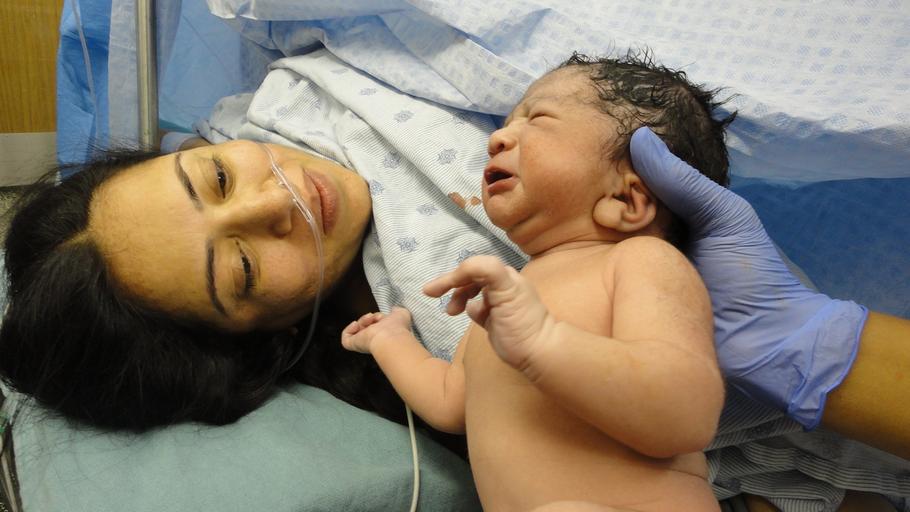
Christmas. The day of the coming of the divine infant, so awaited by millions of believers in the world. However, as far as the advent of “common mortals” is concerned, there is a relative paucity of arrivals. A fact that has of course its explanation.
It is estimated that in many countries, 30% to 40% fewer children are born at Christmas than at the peak of the year, usually in autumn. A key reason why Christmas and New Year's Day few children are born, is that doctors don't schedule C-section deliveries these days. Given that almost one in three babies are now born by caesarean section, it is clear how much this affects the distribution of births in the year.
But even if the birth is not by caesarean section, but by artificial means (induction of labour by the doctor), gynaecologists prefer to celebrate Christmas with their families rather than rushing to the maternity hospital. But the prospective parents themselves make their own time management, often avoiding births during the holidays.
The most popular season for births in many countries is autumn, usually in September or October. This is partly because many babies are conceived during the colder months of the preceding winter. Reliable data for most countries (births per day of the year) do not exist, much less that about one in four children born on Earth are officially...non-existent, as there are no registries or other services to formally record their birth.
Elements of United Nations show that the most popular months for birth move with latitude. In more northerly countries births peak in July and August, while in countries closer to the equator this occurs later, usually in October.
In the USA most people have a birthday on 16 September, in Britain on 26 September, in Ireland on 1 October, in Australia on 17 September and in New Zealand on 30 September. In all English-speaking countries (USA, UK, Ireland, Australia, New Zealand, etc.) the top two places on the list of least popular birthdays are the same days.