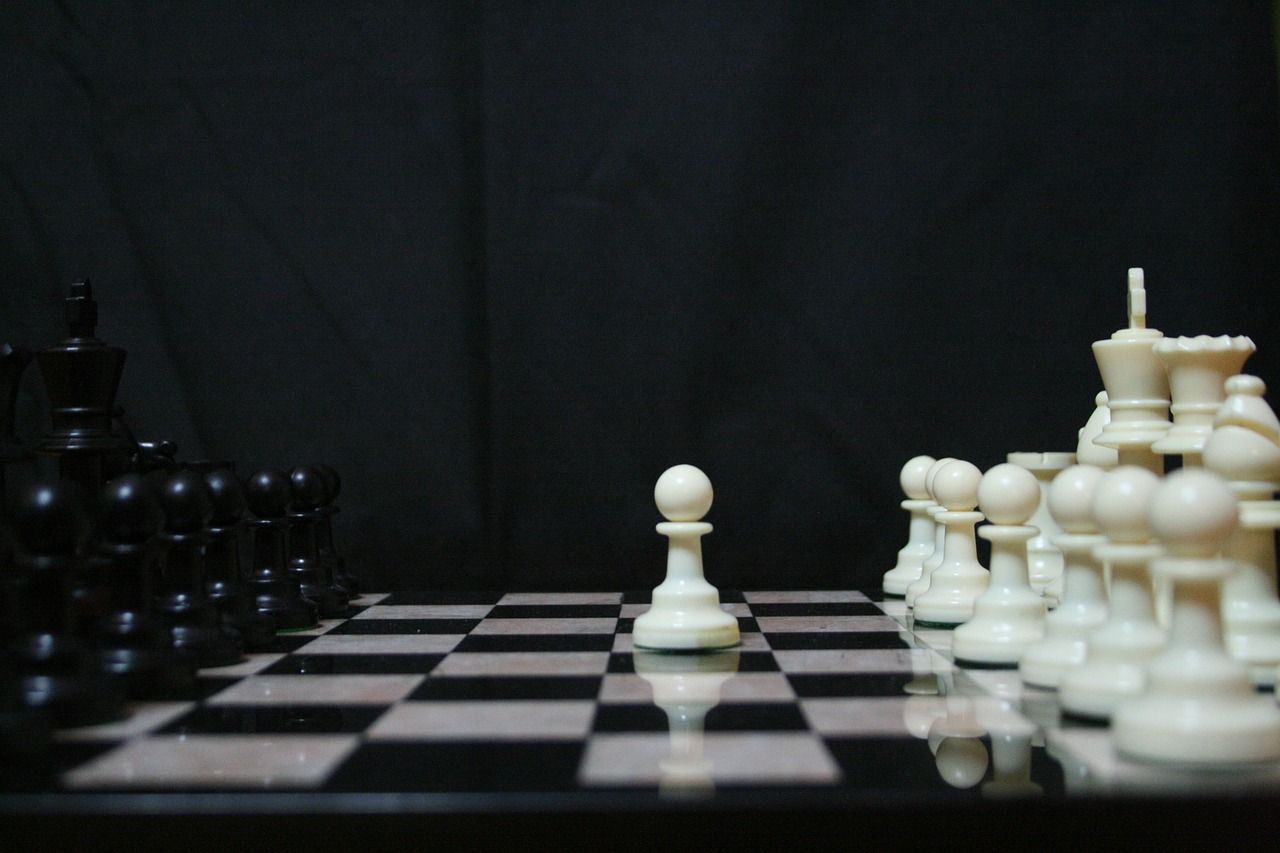
The World Championship finals in chess among the Bobby Fischer and Boris Spassky in 1972 and in the Gary Kasparov – Anatoly Karpov 1984 is considered to be the year of the greatest milestones in the history of the institution, and their impact propelled the game's popularity worldwide.
Between these two finals—which, for different reasons, took on the aura of a… blockbuster for fans of the «sport»— there was also a world title match that was far less publicized, yet far more special than any other. It was the match between Anatoly Karpov and Viktor Korchnoi in 1978, which at the level of mind games, «Cold War-like atmosphere» between the two rivals and conspiracy theories… it was unprecedented, and there was nothing like it before or since.
Fischer ended Soviet dominance in ’72, but three years later he refused to take his place at the chessboard to defend his title, insisting that the World Chess Federation accept all of his conditions for holding the final. And so, the new world champion It was determined by the outcome of the challenge match, and the winner was Karpov, who defeated Korchnoi in Moscow in 1974 by a narrow margin of 12.5–11.5.
The Favored One and the Unwanted One
Karpov, a true… Russian, was the new, all-powerful grandmaster of the Soviet school, and because of his age (born in 1951), he became at that time the regime's favorite child, who saw in his abilities the chess player who would ensure that the country retained its crown for many years to come, against any would-be challenger… Bobby Fischer. After all, the risk that the legendary American might return at any moment to reclaim his title was always a possibility.
In stark contrast Kortchnoi was already 46 years old and everyone believed that his best years were irrevocably behind him. Of Jewish and Polish descent—with ancestral roots in a land that had suffered greatly under the Stalinist dictatorship Ukraine – was also one of the country’s most famous figures of a reactive nature, openly disagreeing with some of the regime's practices.
The different treatment he received from the system was glaringly obvious in that final match between the contenders, which would determine Fischer’s opponent. Kortchnoi was subjected to harassment —even threats—while all the great grandmasters he approached to join his team for the final (in an advisory and coaching capacity, as is always the case) refused.
The only person he accepted was David Bronstein, who was also of Jewish descent and of Ukrainian origin, who, however, was blackmailed and forced to abandon him before the games began. As he wrote in his book *Secret Notes* (published a year after his death, in 2007), he returned to Korchnoi’s side when the latter was already trailing 10.5–7.5. Kortchnoi won two of the next three games, narrowing the gap to 11–10, but the final score ended in a draw after the last three games.
At the closing ceremony of the final, Kortchnoi hinted at his desire to defect to the West. From that day on, he officially became a «red rag» to the regime. The Soviet Chess Federation barred him from leaving the country for international tournaments. It became more flexible only after Karpov was awarded the title of world champion (1976) and Korchnoi was allowed to participate in a tournament in Amsterdam that year.
After taking first place, he reported to the Dutch authorities the next day and applied for political asylum, which was granted to him. To avoid arousing suspicion, he had purchased his return tickets, and he had already made arrangements to have his vast chess library transported out of the Soviet Union. Back in Leningrad, however, his wife and son remained. They would henceforth be known as the family of the «traitor» and «renegade.».
Like a spy showdown
Kortchnoi moved to West Germany for a short time and eventually settled in Switzerland, where he became a Swiss citizen. The Soviets boycotted any tournament in which he participated, but they were unable to prevent his bid for the world title in 1978. The world federation allowed him to participate (under the Swiss flag), and that’s where the Soviets would have to face him. It was a huge upset. Korchnoi eliminated three of his compatriots in succession, including the two former world champions, Petrosian and Spassky. The final against his former friend, Anatoly Karpov, it would be yet another major chess event with «Cold War» implications, after the Fischer–Spassky match, six years earlier. The tension was even higher now. And as it turned out, it would reach the point of… madness.
The grand final was held from July 18 to October 18 in the Philippines, and the winner would be the first player to win six games. For the Soviet Union, winning the title was of the utmost importance. A potential defeat at the hands of the «renegade» would be considered a massive blow to prestige. The media in the USSR did not even mention his name; they referred to him as the «contender.».
The tournament seemed destined to be eventful even before it began. Korchnoi requested to compete under the Swiss flag, but the Soviets objected. After his request was denied, he asked to play with a white flag bearing the word «stateless,», A proposal that was accepted. The organizers, however, ruled that the only flags permitted in the hall would be those of the Philippines, the Soviet Union, and FIDE (International Chess Federation).
Kortchnoi also asked to bring his own chair into the room, something Karpov initially objected to. In fact, to avoid incidents similar to those that occurred during the match Fischer-Spassky, the organizers agreed to have the chair examined with X-rays at a nearby hospital in the city to make sure there were no electronic devices built into it!
After much negotiation and tactical maneuvering, the match began.
Karpov had a large team of people with him in the Philippines to help him prepare. Among them was the Vladimir Zukar, a so-called psychologist-hypnotist who was in the audience throughout the matches. Korchnoi protested vehemently that Zukar She was trying to focus on his eyes in order to… hypnotize him. The organizers refused to bar him from entering the venue, so the 47-year-old grandmaster took matters into his own hands. He began playing, standing over the chessboard, large black sunglasses so that Zukar's practices wouldn't affect him. Now it was the 25-year-old Russian’s turn to respond. He claimed that the glare from his opponent’s glasses was throwing him off and demanded that his opponent take them off.
The Unfinished Reversal
The tension had reached a fever pitch, and at some point it was going to turn… a shade of purple. When, during a game, someone from Karpov’s team brought him a purple yogurt without having asked for it, the Kortchnoi He lodged strong complaints, believing that the color of the yogurt was some kind of coded message. The referee, however, did not share his view, and the match continued.
After 17 games, everyone considered Korchnoi to be finished, as the score stood at 4-1 in wins (with 12 draws). He was also 22 years older, so the battle of mental endurance was, in theory, stacked against him. On the 21stη The Soviet «defector» narrowed the score to 4-2, on the 27thη But Karpov made it 5-2, and all that remained was the final move. That's when Korchnoi recruited two well-known players to his team American yogis to help him relax and not be influenced by external factors. In the next four games, something almost surreal happened. While Korchnoi had won only one of his previous 27 games, He won three of those matches and evened his record at 5-5. On page 32η In that match, however, Karpov secured the one victory he was looking for, and with a score of 6-5 (or 16.5–15.5), he retained his title, sparking celebrations across the Soviet Union.
The blow below the belt
Kortchnoi didn't give up. He never gave up. Although he was already 50 years old—an age considered prohibitive for the highest level—he was once again Karpov’s opponent in the 1981 finals. Once again, the contest had become politicized. Kortchnoi’s wife and son were still in the Soviet Union. The authorities had promised his son that they would let him follow his father into exile if he handed over his passport. However, when that happened, he was called up to serve in the Soviet Army and was arrested for desertion. Despite international protests, he was sentenced to two and a half years of forced labor in a camp, where he ultimately served his entire sentence. After his release, he was once again denied permission to leave the country, which was granted … quite by chance in 1982. That is, one year after Korchnoi's second loss to Karpov. Under such conditions of psychological «warfare,» Kortchnoi faced the reigning world champion in 1981 in Merano, Italy, and of course it comes as no surprise that this time he lost almost without a fight (6-2).
After that match, Kortchnoi was never again a contender for the world championship title, but he continued to play at a high level, even representing Switzerland on the Olympic team. He is still considered the strongest chess player who never became world champion and by far the second-oldest person to have played chess at such a high level. In January 2007, he was ranked 85th in the world on the FIDE international rating list, at the age of 75, making him by far the oldest chess player in history to be ranked in the top 100.
A year earlier, Korchnoi had won the 16th World Veterans Chess Championship with ease, and in 2009, he became the oldest chess player ever to win a national championship in any country when he claimed the title in Switzerland at the age of 78.
The most impressive thing of all, however, was his victory (playing with black, no less) over the 18-year-old Italian grandmaster, who was 62 years his junior Fabiano Caruana, currently ranked No. 2 in the world! It happened in 2011 in Gibraltar, when Korchnoi was 80 years old, forcing the (chess) world to throw up its hands in defeat…
Not even the stroke he suffered in 2012 kept him away from the chessboard. He returned in 2014 and participated in several tournaments until his death in June 2016, at the age of 85. FIDE President Kirsan Ilyumzhinov remarked at the time that ’with Korchnoi’s passing, an entire era in chess has come to an end.«.
Perhaps because no one has loved the game as much and for as many years as «Victor the Terrible.».