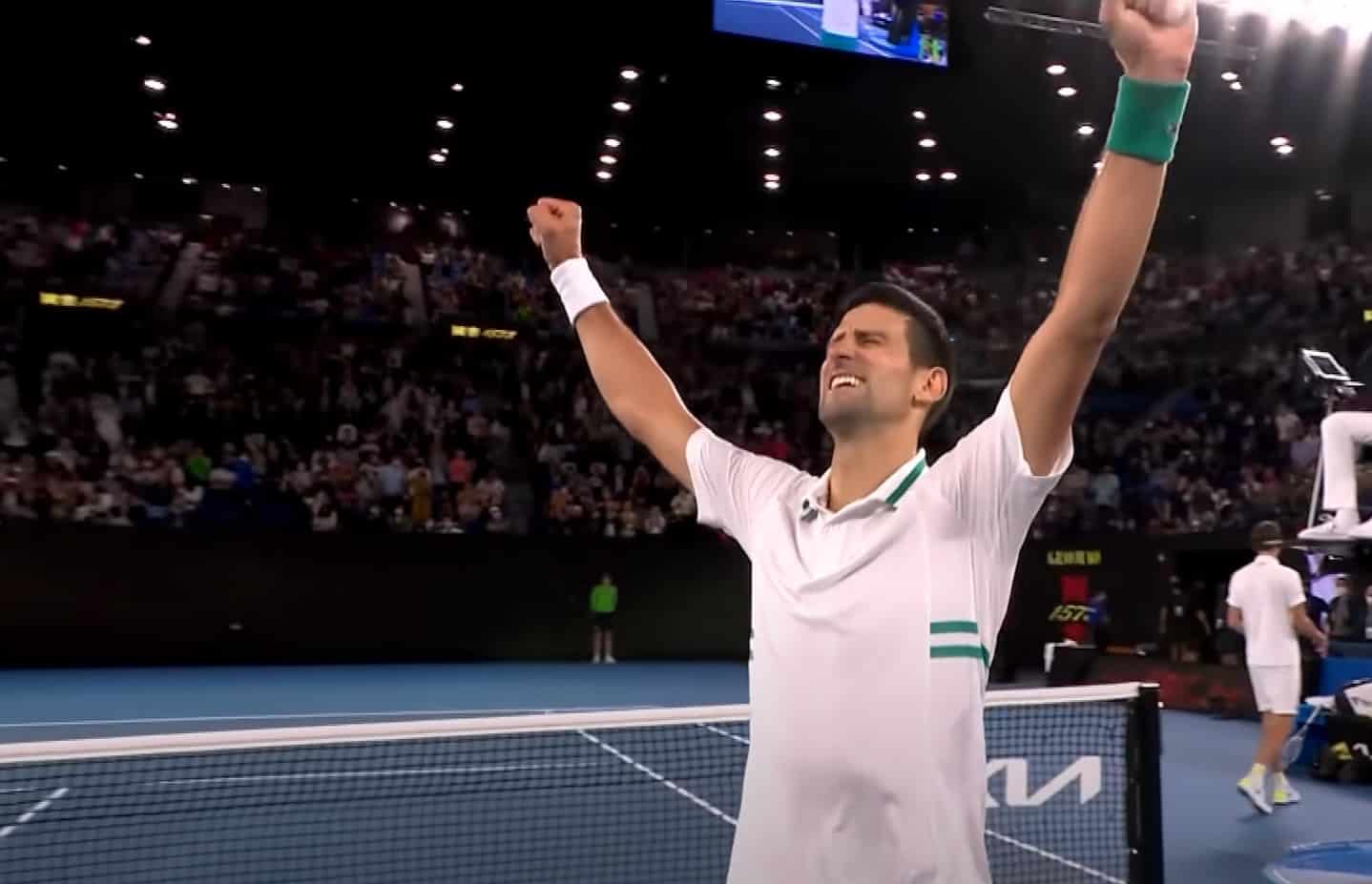
Ο Novak Djokovic, the world's No. 1-ranked tennis player, spent a second day in quarantine at a migrant hotel in Melbourne, as his lawyers are trying to secure his release and prevent his visa from being revoked so that he can play in the Australian Open and to be exempt from the strict COVID-19 vaccination requirements.
Australian Interior Minister Karen Andrews responded to allegations by his supporters, including Djokovic’s family, that he was «being held captive», emphasizing that the star player is free to leave the country at any time.
Djokovic, who is chasing his 21st Grand Slam title, was detained at the airport when he arrived on Wednesday afternoon.
His entry visa, which was based on an exemption from the country’s vaccination requirements, was revoked, forcing his lawyers to successfully seek legal authorization for him to remain in the country until his hearing scheduled for Monday.
«Mr. Djokovic is not being held captive in Australia; he is free to leave whenever he chooses, and the Border Force will actually facilitate that,» he told reporters.
The Spanish champion, Rafael Nadal, He told reporters in Melbourne that he felt sorry for Mr. Djokovic, but he also emphasized that «he had been aware of the circumstances for many months.».
However, the American tennis player, Tennis Sandgen, who has stated that he opposes mandatory vaccination, sent his support: «Novak, stay strong, man,» Sandgren told Reuters. «I hope you’ll be out of there soon.».
Djokovic's wife, Jelena, posted a photo on Instagram of the couple embracing on a beach to celebrate Christmas, saying «The only law we must all respect, across every border, is love and respect for one another.».
The Djokovic family held an emotional press conference at his restaurant in Belgrade on Thursday, with his nine previous trophies on display Australian Open to be displayed, followed by a protest in front of the parliament.
Serbian President Aleksandar Vučić accused the Australian government of harassment and persecution, allegations that Canberra rejected.
«They're holding him captive. They're trampling on Novak to crush Serbia.», ," said Srđan Djokovic about his son.
Some critics say that Prime Minister Scott Morrison is using the issue to bolster his credentials in the fight against the pandemic, as elections approach in the coming months amid a record surge in new COVID-19 cases.
The initial decision to grant Djokovic an exemption, who consistently refuses to disclose his vaccination status while publicly criticizing mandatory vaccinations, was widely criticized in a country where more than 90% of the population has been fully vaccinated.
Djokovic is set to appear in court on Monday, when a judge will attempt to untangle the complexities of Australia’s federal system, under which States and territories can grant vaccine exemptions, but the federal government controls international borders and can veto those exemptions.
As Australia's daily cases have reached record highs, putting pressure on hospitals and causing labor shortages, The Morrison government and the Victorian state government are at odds over who is responsible for the situation.
Djokovic had been granted permission to enter Victoria by the state government, which does not have the authority to issue visas to international visitors. While the reason for his medical exemption was not officially disclosed, The Age reported that this was based on the fact that he had contracted COVID-19 in the past six months.
Upon his arrival in Melbourne on Wednesday evening, however, Officials from the Federal Border Guard at the airport said that Djokovic was unable to provide a valid reason for his exemption.
Morrison said that the Australian Tennis Federation was informed weeks ago that a recent infection did not meet the exemption criteria, even though a government working group that provides guidance on such matters had recommended that an infection within the last six months should be sufficient to meet the requirements.
Federation officials and Victorian dignitaries stated that Djokovic had not received preferential treatment, adding that it was among the «few» approvals for exemptions granted by an anonymous and independent committee evaluating 26 applications.