By Tonia A. Maniatea
February 1922. Night. The cold air whistles in the streets of Kypseli. A monitor stops outside a two-storey magnificent house, on Troy Street, and dismounts its middle-aged passenger. Tucked into his heavy felt coat, he runs to the entrance of the house, but has difficulty unlocking it. Something in the keyhole blocks the key. He's trying to figure out what's going on when three men, both in military fatigues, appear from the alleys around the house. They approach him, shoot him six times and run away! Sergeant Zepos and Captain Livadas, who are passing by the place at the time, have heard the shots and run to catch up with the attackers. The two uniformed men manage to escape. The third, however, stumbles and falls. The officers catch him.
Some neighbours have come out of their houses and rushed to the bloody man. They carry him inside his house. Very soon his doctor friend arrives, but he doesn't have much time. The injuries are serious. His wife and three sons are horrified to see their man choking until he breathes his last. The autopsy, which will follow, reveals that of the multiple shots only one hit the target. The bullet hit the abdomen, penetrated the intestines and liver and lodged in the chest. A second severe wound to the temple, which shattered the skull at the point of impact, was attributed to the victim's fall.
URGENT AND URGENT APPEAL TO POPULAR OPINION... - THE PENHIMO FRONT PAGE
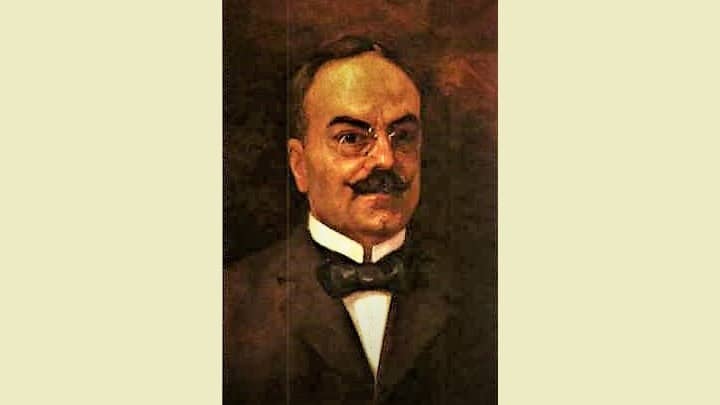
The man who was shot in front of his house is the journalist, editor of the pro-Venizelist newspaper «Eleftheros Typos», Andreas Kavafakis. He was born 50 years ago, from a wealthy family, in Aidini, Asia Minor, studied at the Evangelical School of Smyrna, came to Athens to study law and then went to Paris for further training in political science. In Cairo, where he later travelled, he met his future wife Zoe Staikopoulou. Married now, he seeks a better fortune in Istanbul, where he publishes the newspaper «Ameropletos», defending the rights of the enslaved part of Hellenism and stirring up the neo-Turkish comitatus against him. Hunted and with the help of his friend, Ion Dragoumis, he leaves Istanbul and comes to Greece.
In Athens, the smell of national division pierces nostrils. Venizelists and Constantines are deadly hated. Kavafakis, always inspired by his liberal spirit, a fanatic supporter of the Entente, sided with Venizelos from the first moment and in a few months he published the Free Press, the official organ in Athens of the National Defence government, composed of Venizelos, Kountouriotis and Daglis.
«... Never was it so imperative, so urgent to appeal to popular opinion, never! The highest service that Mr. The highest service which the Prime Minister can render at this time, is to direct himself smoothly and rapidly towards it, by yielding his position to rulers who are strangers to party passions, who enjoy both the confidence of the Powers and the trust of the people, and who can symbolize both the reconstruction of the national unity which has been broken by so many follies, and the impartial taking of the people's will.» are the last thoughts in the tragic editor's last article, published the next day alongside the - under a pithy headline - front-page news of his murder. It is the article he handed to his editor-in-chief the previous evening, before leaving for Kipseli, where a trap had been laid for him.
The city is small. News of the violent death of the publisher travels fast. People rush to the newspaper offices to get details. Newly arrived from a month-long trip abroad, Prime Minister Dimitris Gounaris declares: «... My anger is indescribable for the crime committed. Justice will be actively engaged in this work and will pursue and exemplarily punish the discovered perpetrators of the crime, whoever they may be.».
Newspapers, regardless of their political affiliation and party affiliation, condemn the attack and the Union of Editors issues a resolution condemning the attack. In the text of the protest signed by the newspaper directors, they directly refer to «imprisonment, destruction of property, exile, persecution and murder of journalists, which is the history of the press at the moment», a situation which «makes it impossible to carry out the duty of journalism». The signatories of the text inform«...as a protest against the horrible crime against the life of the Director of “Eleftheros Typos” ANDREAS KAVAFAKIS, the Athenian Newspapers, in disgusted solidarity, interrupt their publication from tomorrow for twenty-four hours».
The news of the brutal murder travels beyond the Greek borders. The foreign press speaks of «action by paramilitary organisations» and «establishing a climate of terrorism against political agents of the Regency».
From the night until the next morning, the body of Kavafakis is exposed in a popular pilgrimage at his house, where politicians and diplomats pass by to express their sympathy to his widow and their three boys. At noon he is taken to St George of Karitsis for the funeral service.
Outside the temple the air smells of gunpowder. Concentrated opposition supporters, convinced that the assassination was planned by the ruling pro-royalist Wunari faction, demand revenge: «Death to the murderers!» In a laudatory eulogy on behalf of the Liberal party, General Daggles stigmatizes «the atrocious felony.», where «is a further abhorrent manifestation of terrorism and a terrible blow to these freedoms of the press and the people» further inflaming the spirits, which the cooler ones calm down by averting the explosion of the threatened clash. The service ends and the procession of thousands of people - as recorded in the newspapers of the time - to the First Cemetery starts from Ai George and makes a short stop a little further on, at the entrance of the mourning Free Press, on Edouard Lo. In a sign of pain and respect, the victim's colleagues kneel down and put their palms on the building's staircase. They salute the publisher and offer their condolences to his colleagues.
The text on the front page of Eleftheros Typos, which frames the photo of the murdered publisher in the coffin with his wife beside him, is heartbreaking... «At the height of the battle, what a heartbreaking moment for the warrior, when suddenly, casting a quick glance to his right, he no longer distinguishes the leader of his unit [...] The associates of Andreas Kavafakis had infinitely more dramatic moments the night before yesterday. They did not see a fearless leader of joint efforts die within minutes. They saw him die as a steady and bright leader of the constant struggle for the prevalence of sound principles. They saw together the wonderful friend whose heart was always open and whose lips blossomed with the smile of a rare kindness. And they even saw him succumb not to the projectiles of an honest enemy, who declares war and leads the charge breast to breast in the daylight, but on a night platform, under the barrel of shattering assassins...».
A CRIME THAT WAS NEVER SOLVED
This was the first murder of a journalist in Greece in the early 20th century, a time when the country was caught up in the heated political passions between the Venizelist and royal factions, but also in the underground activity of parastatal mechanisms. After the victory of the People's Party in the elections - the last ones held by ballot - of 1 November 1920, where the Venizelos faction suffered an impressive crushing defeat (118 seats against 251 for the united anti-Venizelist faction) and with the Asia Minor campaign underway, the political scene in the country had begun to change. When, in the summer of 1921, the Greek army, which by then had advanced as far as Sangarius, retreated, the general crisis in Greece created the conditions for the development of a ferocious, uncontrolled parastatal mechanism, which directly targeted Venizelos' supporters. And this is not the first time that Kavafakis has been targeted. Another one had preceded it, in August 1921, when he and the writer and journalist Spyros Melas were assassinated in the middle of Klathmonos Square by a man named Sureas, who, when arrested, justified his act as not being a "criminal". tolerance «to such treacherous attitude of the scoundrels who deliberately spread false rumors, harmful to the ongoing struggle in the East»...
Nevertheless, chroniclers of the time note that Kavafakis came into the nostrils of his opponents this February, publishing on the 12th the bold for the time «Democratic Manifesto» by Alexandros Papanastasiou and six of his associates, in which the left wing of the Liberals called for «reconfiguring the dynastic regime in order to regain the confidence of the allies» and a few days later, publishing a report on the meeting between British Prime Minister Lloyd George and Patriarch Meleti in London, in which the former tells the latter that «King Constantine destroyed all the alliances that Greece had [...] After the fall of Constantinople by the Turks, the return of Constantine to the throne is the most devastating event for Hellenism...».
All those who live in the climate of political fanaticism are going crazy and those living in Jerusalem know it. Kavafakis was eaten by the opponents of the ideas he so passionately defended. But the man arrested that night of the attack denies any connection with the case! He claims that he was passing through the area and that the revolver found next to him did belong to him, but the missing bullets had been fired earlier!
He is Antonis Mastrantonis, a 30-year-old fruit seller and a member of the «People's Political Association». When the interrogation gets tough, he confesses that he committed the crime on his own initiative and denies the involvement of other persons. The months that follow hide the dramatic development of the Asia Minor disaster for Hellenism, the eruption of the revolution by Plastiras and Gonatas and the abdication of King Constantine. On top of the general chaos, the royal collaborators try to close the Kavafakis case once and for all, succeeding in transferring Mastrantonis to the Aegineteion as a lunatic, with the aim of having him deported from there. At the last moment, however, they retreat, fearing the leak of the plan and the scandal. At that time, investigator Vlastos reopens the file on the publisher's murder and, as he personally interrogates Mastrantonis, he hears a different version...
The assailant says that a month before the attack he happened to be at the offices of the People's Political Association with some state officials and military men who were expressing their discomfort with the publisher's passionate anti-royalist positions. Days later, in another conversation at the offices of the Association, he heard some of them say that «Kavafakis wants to be killed, because he does not make sense with a beating...».
Mastrantonis claims that some soldiers he had met that night at the Association got him drunk and lured him to Troy outside the victim's house. But when he heard the shots he was not present. He vomited in a dark corner at the side of the house. As everyone fled after the attack the real perpetrator left the revolver next to him to incriminate him. He denounced the involvement of the then Athens police chief in the case and said that while he was in jail he received several visits from members of the Association who offered him money to take the crime upon himself.
The turbulent climate of the time, the diligent efforts of the revolutionary government to tooth and nail the parastate and to cleanse the public from corruption, to settle the hordes of refugees from Asia Minor and to inspire security and optimism in the people, put aside the case of the solving of the Kavafakis murder. In the following year it was put into the archives, effectively keeping the moral and physical perpetrators of the murder in obscurity.
The «child» of the victim, however, has a future... Until his son, Christos, reaches the point of taking over his father's creation, the management of Free Press is taken over by Kavadakis' brother Diomedes. In 1927, Christos fell out with the small co-owners and the newspaper suspended its circulation. In 1963 an attempt is made to republish it, but it fails and closes again. Twenty years later, the publisher Aris Voudouris buys the title and puts it back into circulation.
SOURCES OF INFORMATION AND PHOTOS
«FORGOTTEN PUBLICATIONS / REPORTS FROM THE NEW GREEK MICROHISTORY», Yannis Ragos (POLARIS Publishers)
«Andreas Kavafakis: The life and the murder of a martyr of struggling journalism», Karolos Moraitis (New Synora - A.A.LIVANI)
«HISTORY OF THE HELLENIC NATION», group book (Athens Publishing House)
THE PRIME MINISTERS OF GREECE, Antonis Makridimitris (Ed. I. Sideris)
Newspaper archive