The following text presents the antiquities that have been discovered in Antikythera in recent years (note 1). Their analysis, in combination with the literary and epigraphic data, for the first time, leads to historical conclusions about the relatively unknown (note 2) small island. It seems to have played an important role in the history of the Hellenistic period, from the beginning of Alexander the Great's campaign at the end of the 4th century BC, until the suppression of the «Cretan Revolution», which completed the conquest of the Greek territories by Rome in 69-67 BC.
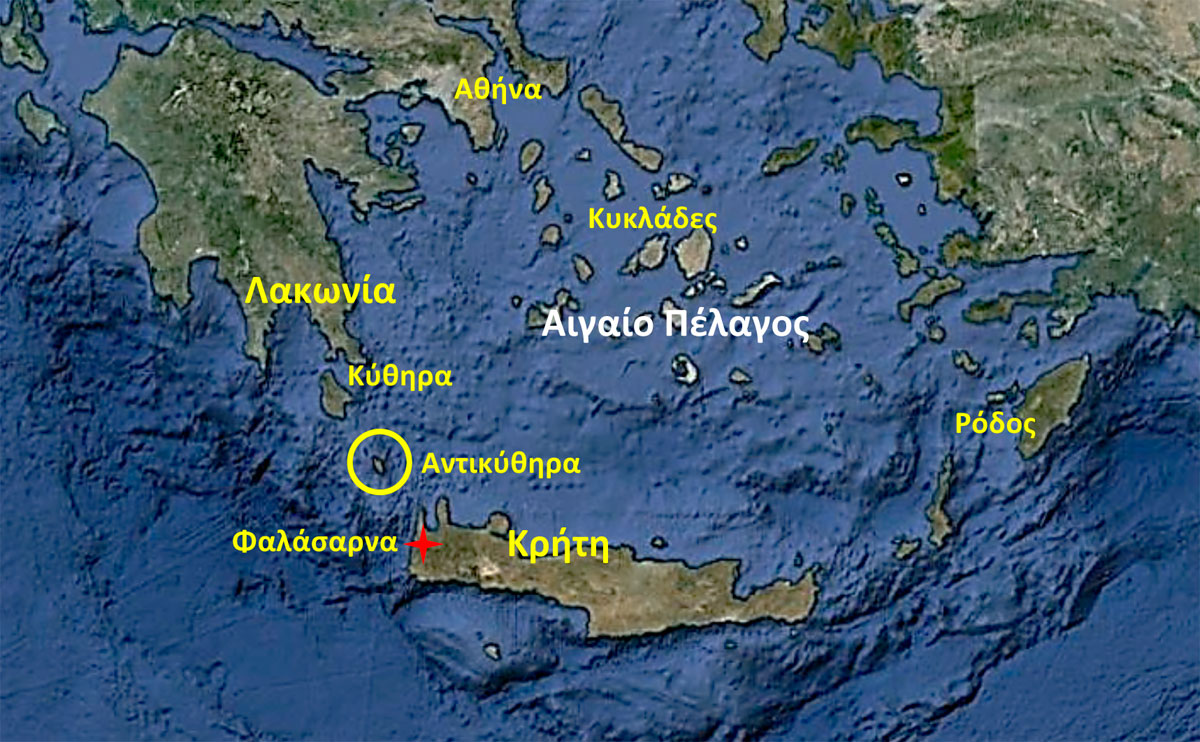
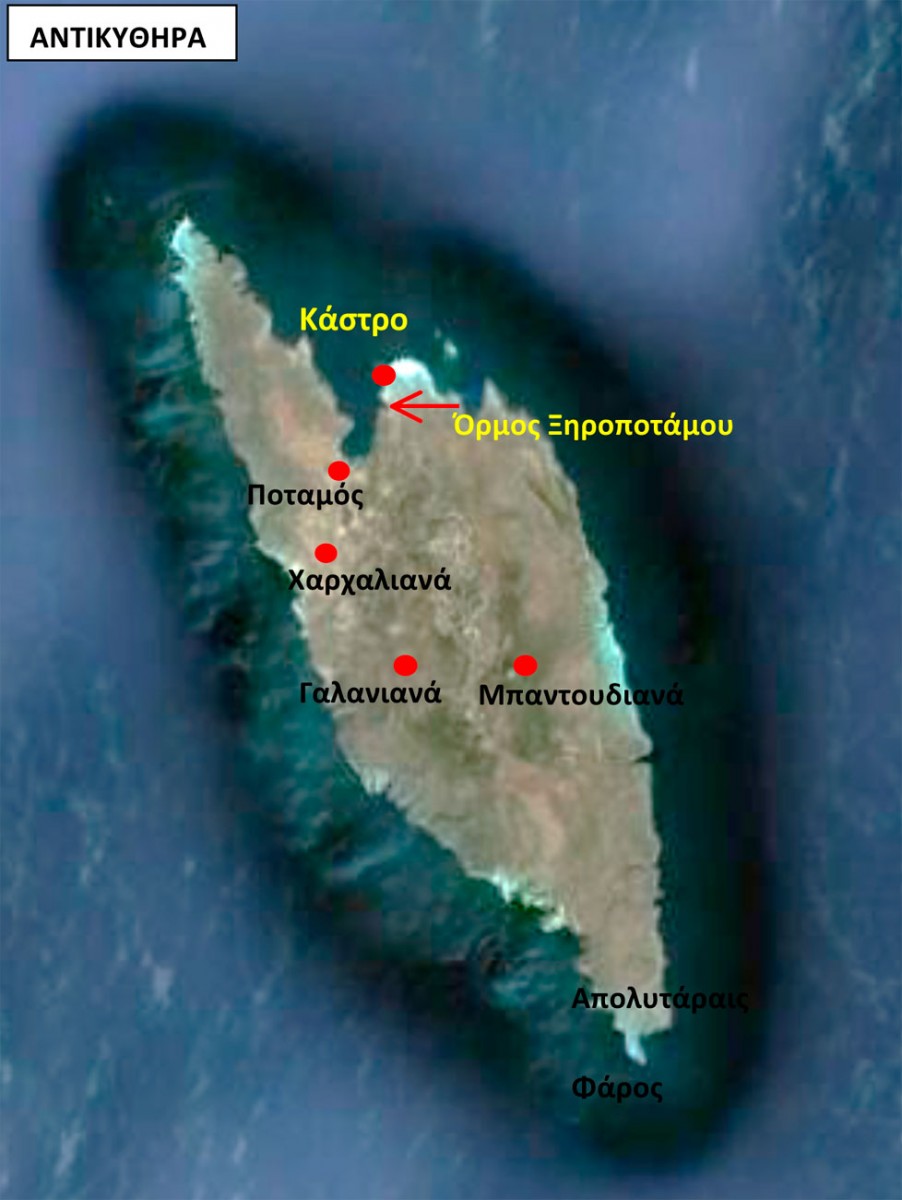
Antikythera (fig. 1), a small island with an area of about 20 square kilometres, is located in the dangerous sea area between Kythera and Crete. Despite the island's strategic position, controlling the passage from the Aegean and the Black Sea to the Western Mediterranean, the difficulty of survival of a large group of inhabitants on the island left it in relative obscurity throughout most of antiquity.
There are very few references to Antikythera by ancient writers. In Plutarch (note 3) they are mentioned as Aigilia, Aigialian and Aegean Sea, to Stephen of Byzantium (note 4) as Aigilia, in the various manuscripts (codes) of Claudius Ptolemy (note 5) as Aigila, Egypt, Guns (from the capitalized AIGILA, with the (oral!) writing of ai as e, as is often the case in the later years of antiquity, and the erroneous reading of C and I as P) and in Pliny (note 6) as Aigila, Aigilia and Aeglia.
In the inscriptions to which we will refer below it is marked as Aigilia, while the adjective Aegileus also refers to Aigilia. The names that have survived to the present day are Lioi in Kythera and the Peloponnese and Sigilio or Siglio in Crete, names derived from the ancient name. During the Venetian occupation, and after the conquest of Crete by the Ottomans, the official name of the island is Cerigotto or Cecerigo from the Italian name of Kythera which is Cerigo. The current name «Antikythera», established with the discovery of the shipwreck in 1901, is due to the Cephalonian radicals, who reintroduced the name of Kythera in place of the Italian «Tsirigo» and imposed a new name on the island, which at that time was the most remote part of the English-occupied Ionian State.
In the 1850s, many Kefalonians and Zakynthian radicals were exiled to the isolated island. Along with the other Ionian islands, and after the persistent and painful struggle of the Eptanesians, it was «given» to Greece in 1864. From then until the incorporation of Crete into the national body (1912-13), the island was the southernmost and most remote point of the Greek territory.
The antiquities of the island are known since the 19th century, while the radical Kefalonian Elias Zervos-Iacovatos makes specific reference to them in his memoirs (note 7).
Antiquities from Antikythera were published for the first time in the Archaeological Journal of 1862 by Athanasios Roussopoulos (note 8), who also «took care» of the «export» of the antiquities he uncovered and published (note 9)!
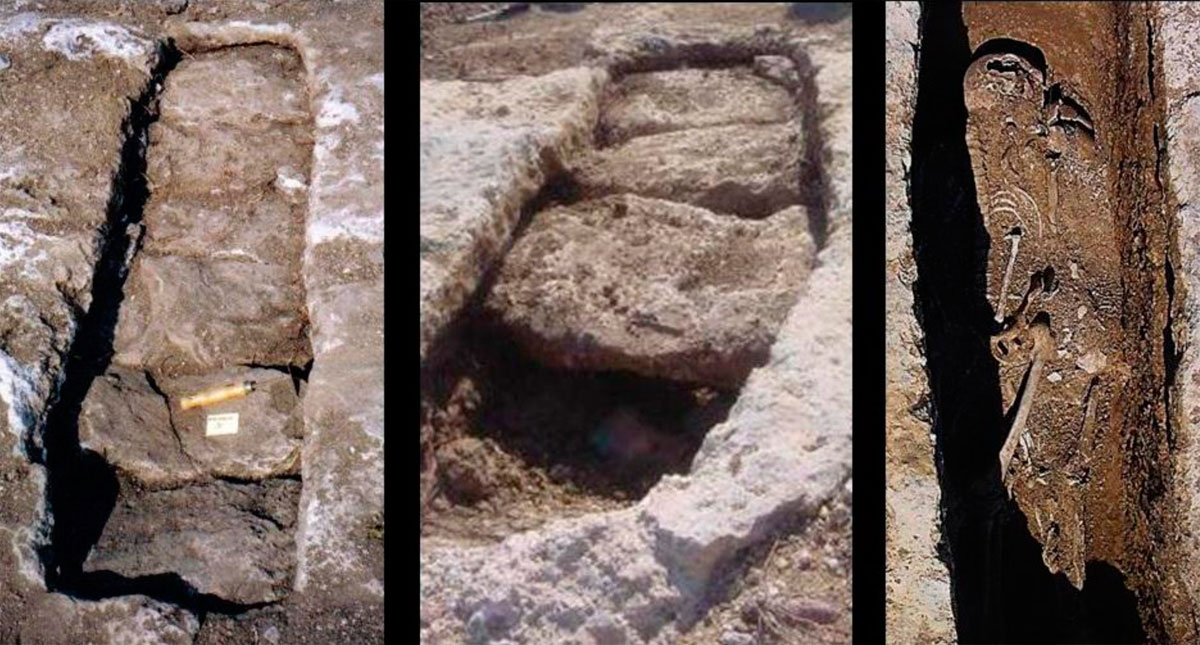
The most obvious antiquities on the island today are the Hellenistic fortified city in the old settlement of «Kastro», above the bay of Xeropotamos, and the tombs and some other productive facilities of late antiquity in the settlements of Potamos, Charhaliana and Bandoudiana. Movable surface finds of the Hellenistic, Early and, after a break, Middle Byzantine and, finally, Late Venetian periods have been identified on the island by the surface survey carried out by the Canadian Archaeological Institute and the KΣT Ephorate of Prehistoric and Classical Antiquities (note 10). Below, the sites from which the historical conclusions are drawn are presented in chronological order.
The beach at the bay of Xiropotamos, the ancient port and the Sanctuary of Apollo
At the mouth of the stream of Xeropotamos, in the homonymous creek in the north of the island, a seaside sanctuary of Apollo and Artemis operated from the second half of the 4th century BC.
In ancient times the sea penetrated much deeper into the bay, creating a «hidden» harbour protected from the strong northern winds. With the strong earthquake (note 11) of 365 AD the island was «raised» by 2.80 m, shifting the coastline to its present position.
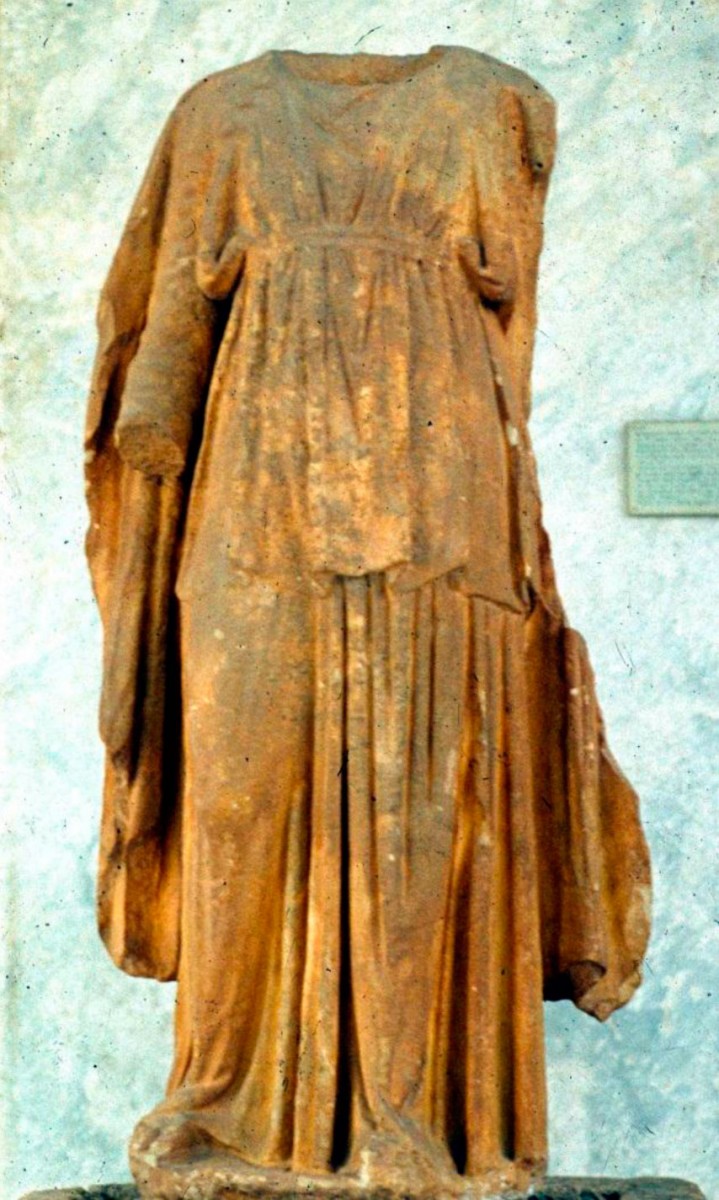
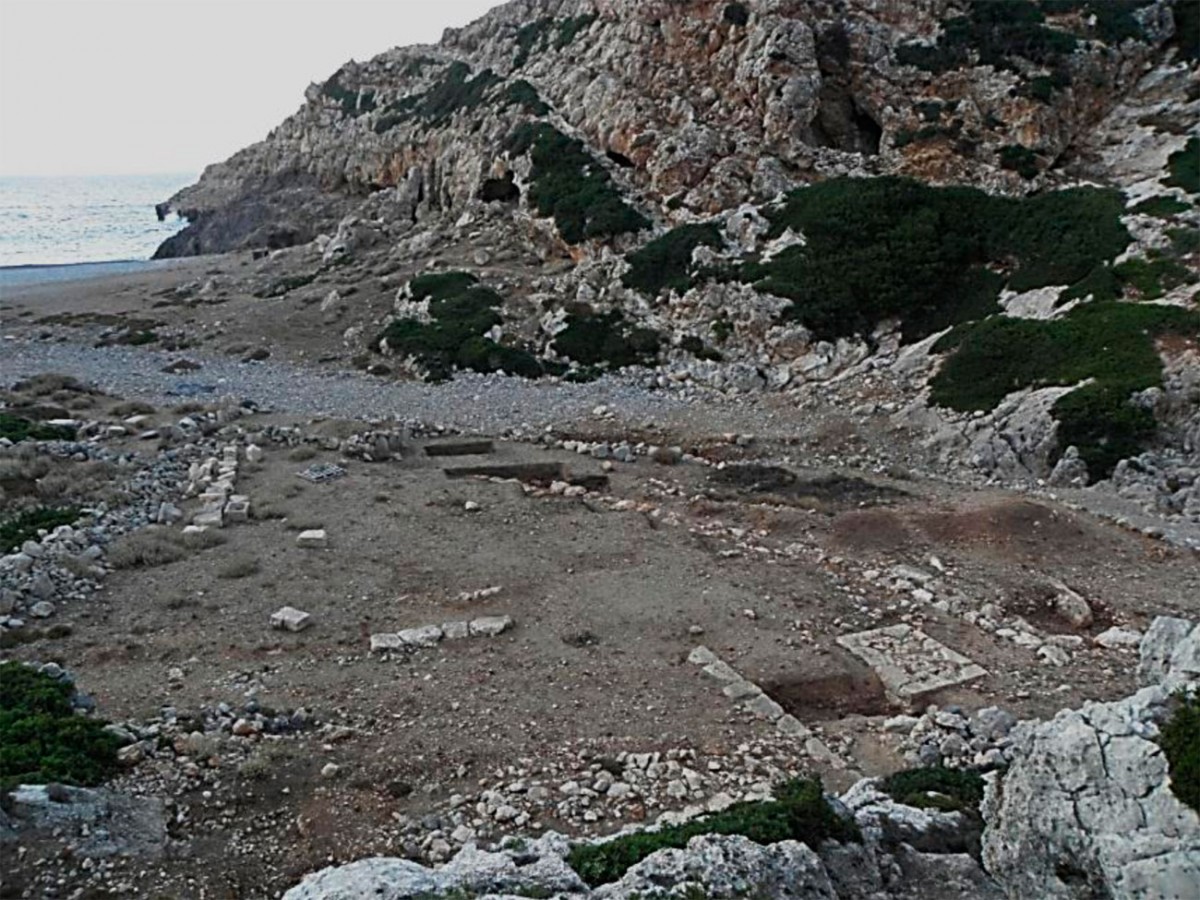
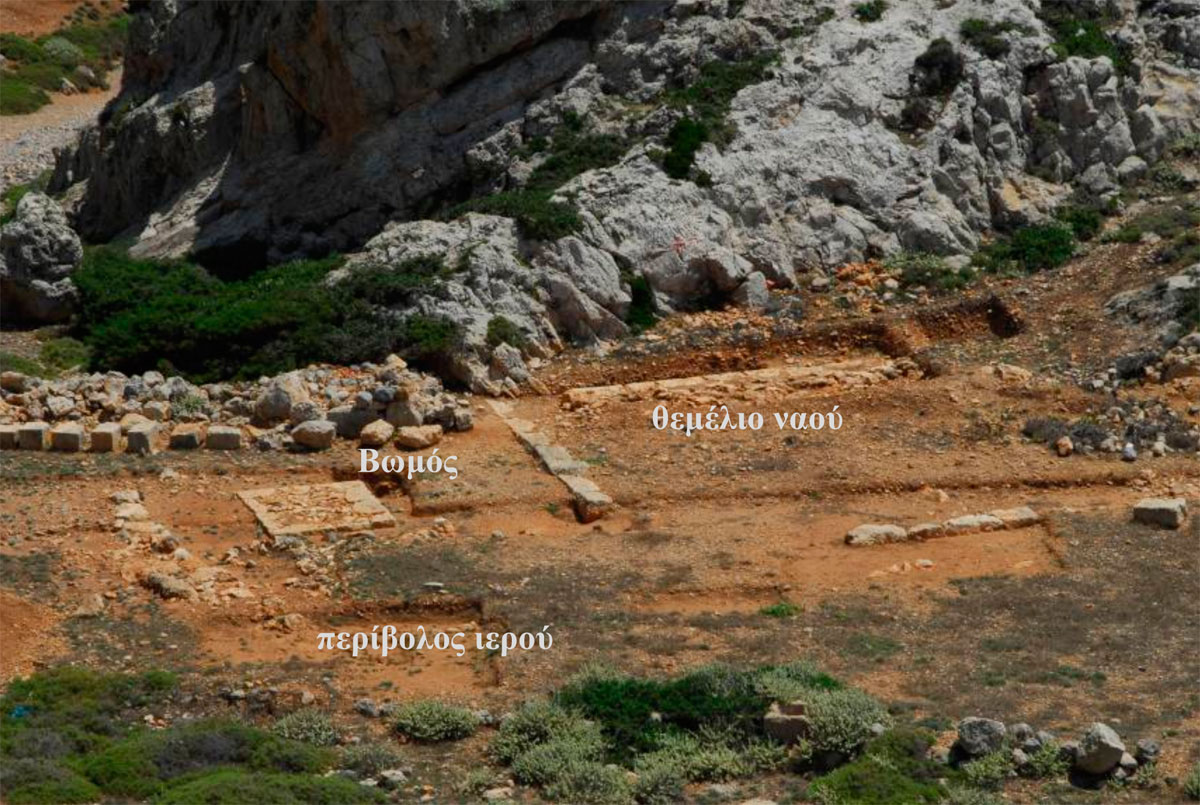
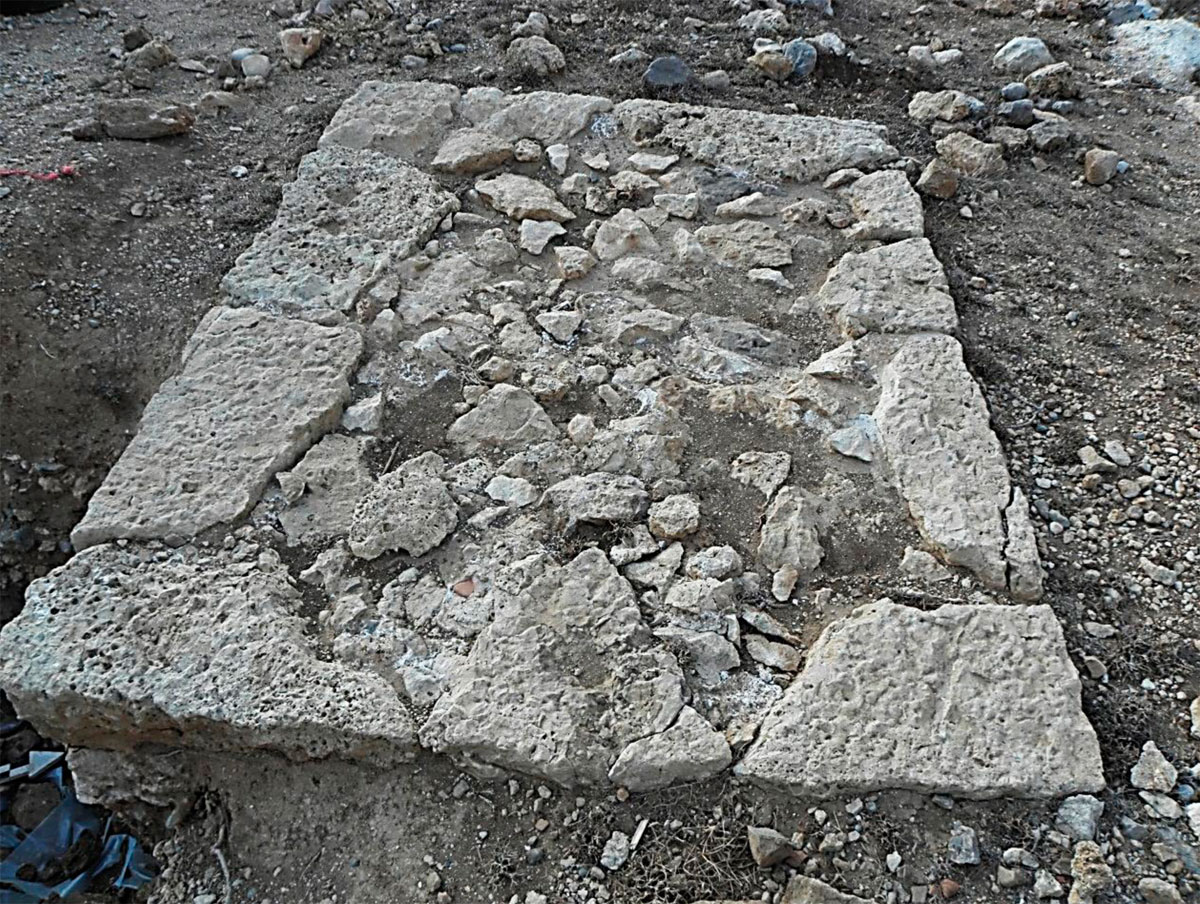
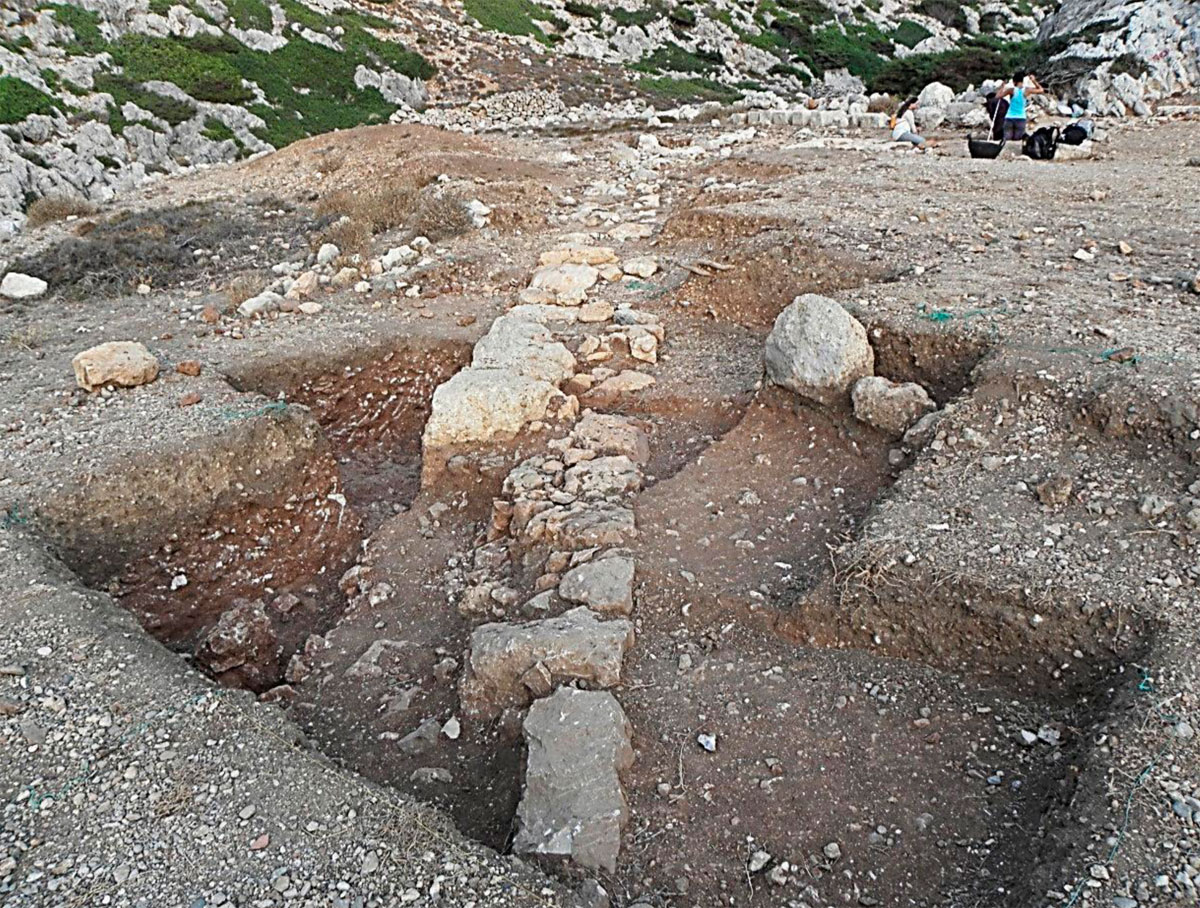
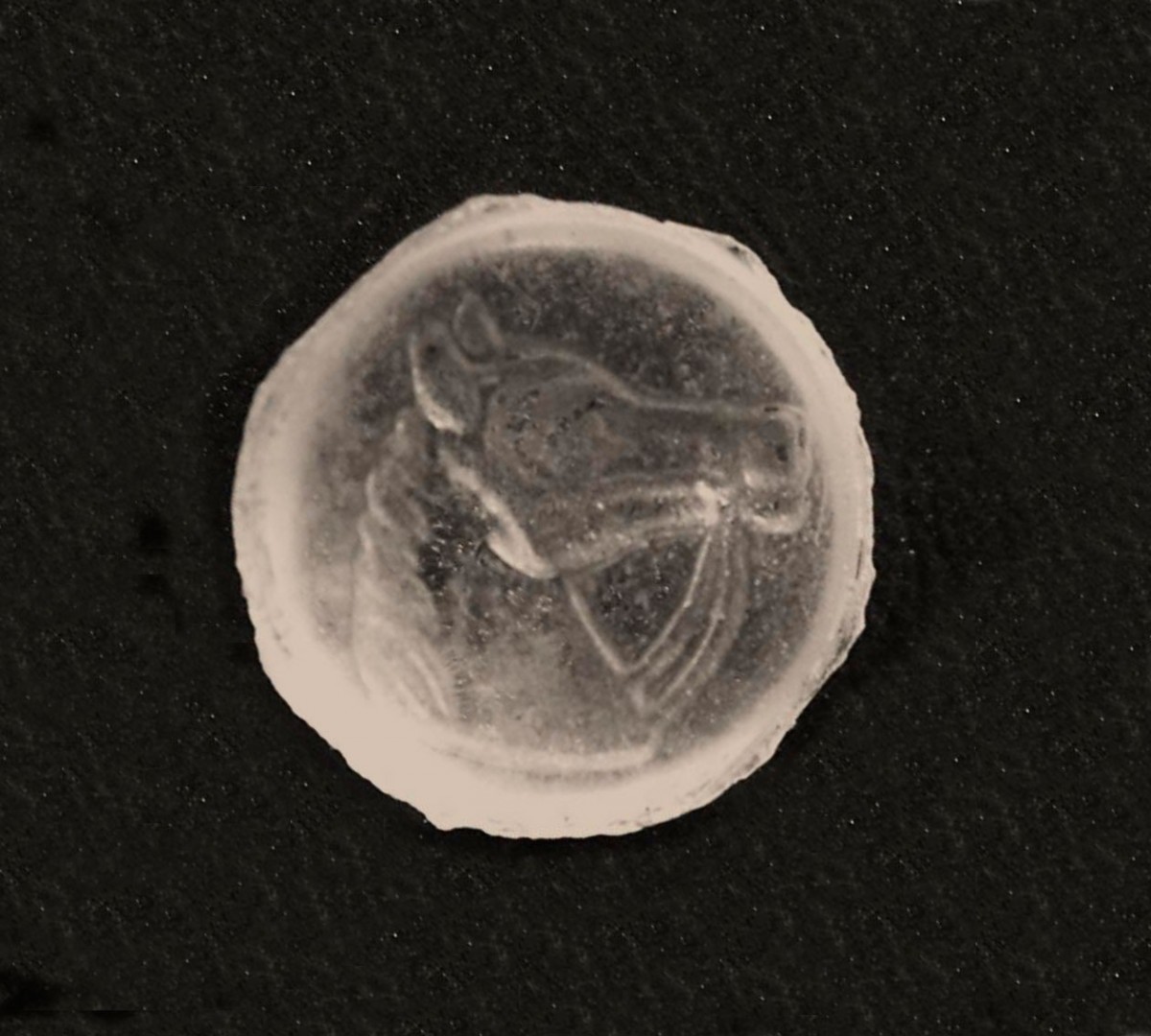
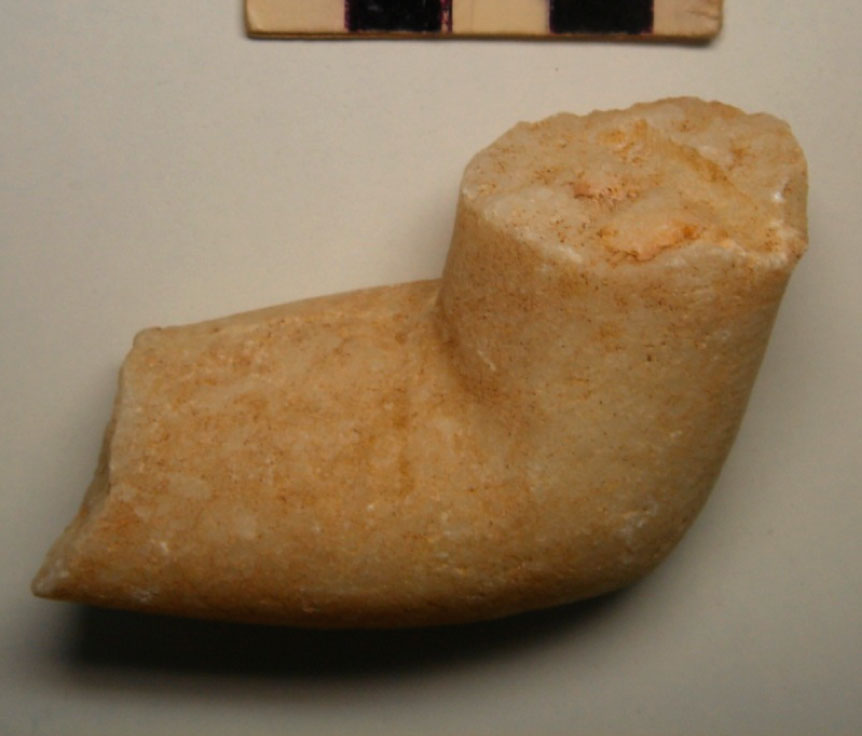
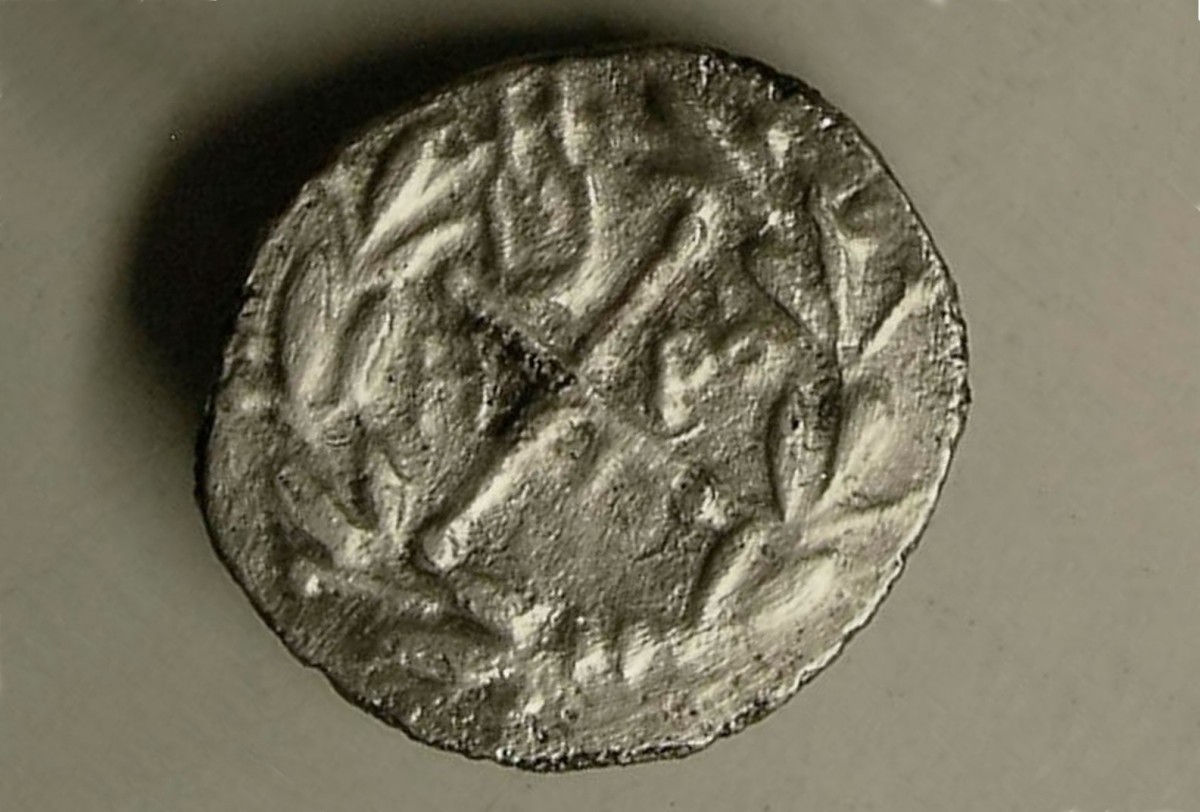
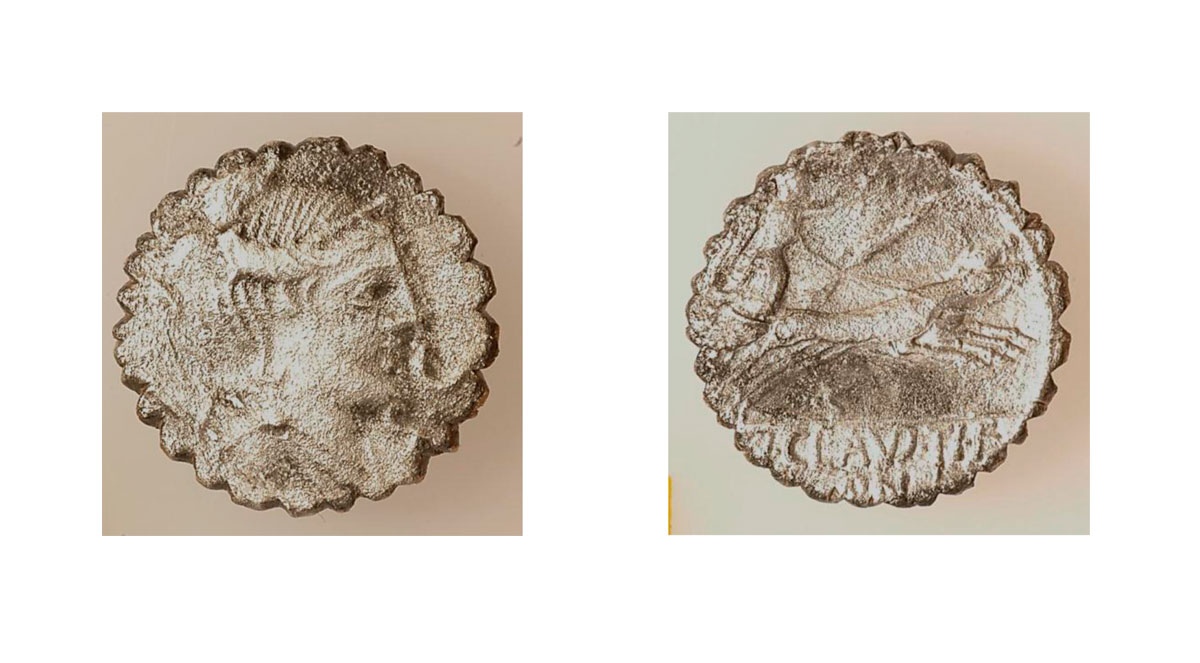
In 1888 agricultural work in the area brought to light a headless statue of the type of «Kitharodos Apollo» (fig. 2) and the research conducted by Valerios Stais (note 12) revealed an inscribed base of an anathematic monument (probably a statue) that mentioned the offering to the «Aegilea» Apollo by Aristomenes Aristomedes, Thettalos from Feron and from the Nikon(α) Kifissodorou, Athenaeus (fig. 3). From these two (note 13) monuments and from the findings of the excavation, it appeared that the site was used, throughout the Hellenistic period, as a sanctuary of Apollo and Artemis (fig. 4). The excavation research revealed, in 2004 and 2005, the foundation of the ancient temple which had the form home, as well as the base of the altar (fig. 5). The axis of the temple has a direction from S-SW to N-NE with a slope of 450 from the parallel to the straight line of Delos. The enclosure of the sanctuary is very strong and seems to have been in contact with the harbour (fig. 7). Of the movable finds found during the excavations, apart from the statue and the inscribed base, fragments of marble statues and vases (perianth) stand out, many arrowheads, since it is known that Apollo had taught the Cretans the art of archery, as well as a number of coins depicting Apollo and Artemis, but also jewellery, ring stones and inlaid coins (figs. 8, 9, 10, 11).
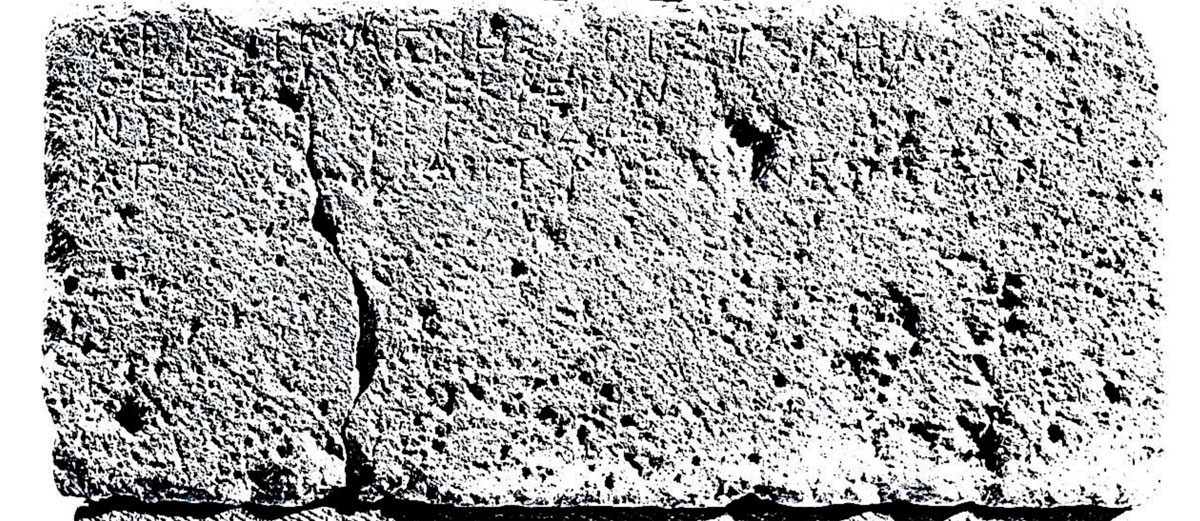
Another, much more important information provided by the reading of the inscription was the origin of the two anatheists, one was a Thessalian and the other an Athenian. Stais, who published the inscription, assumed that they were castaways who were rescued on the island (note 14) and felt the need to express their gratitude to the island's patron god for their salvation. Below, after the presentation of the entire archaeological site and the results of the excavation, the conclusions on the interpretation of the two names and the role they played at an important moment in the history of Hellenism will be discussed.
The «Castle» (the fortified city)
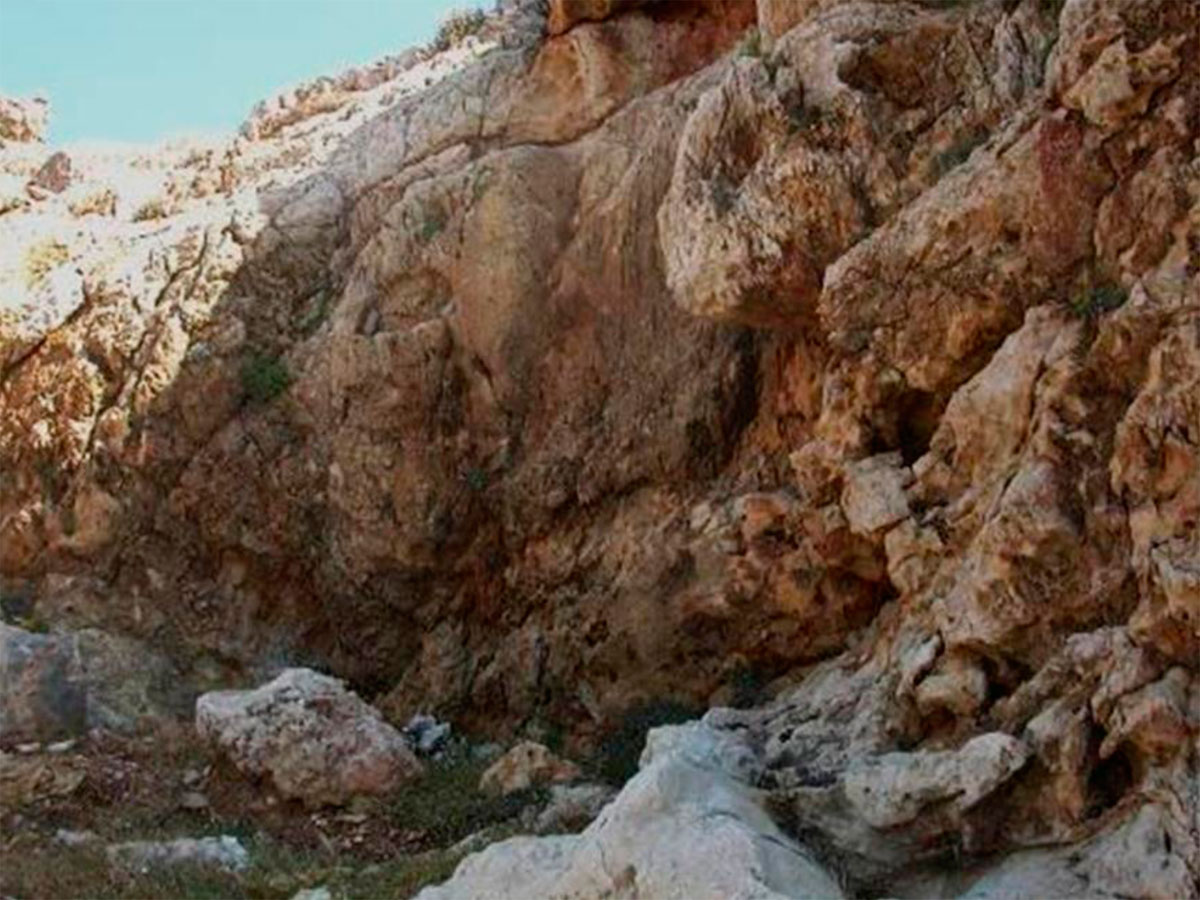
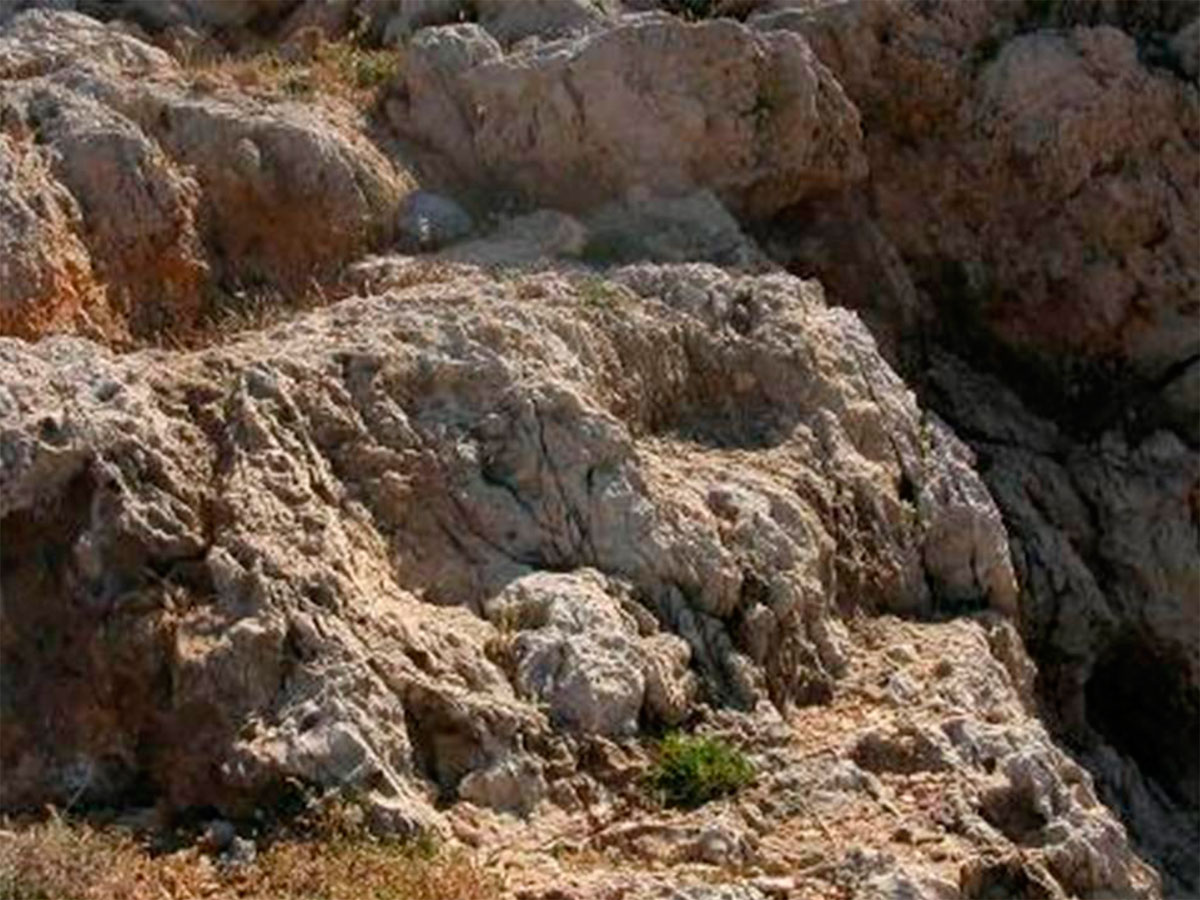
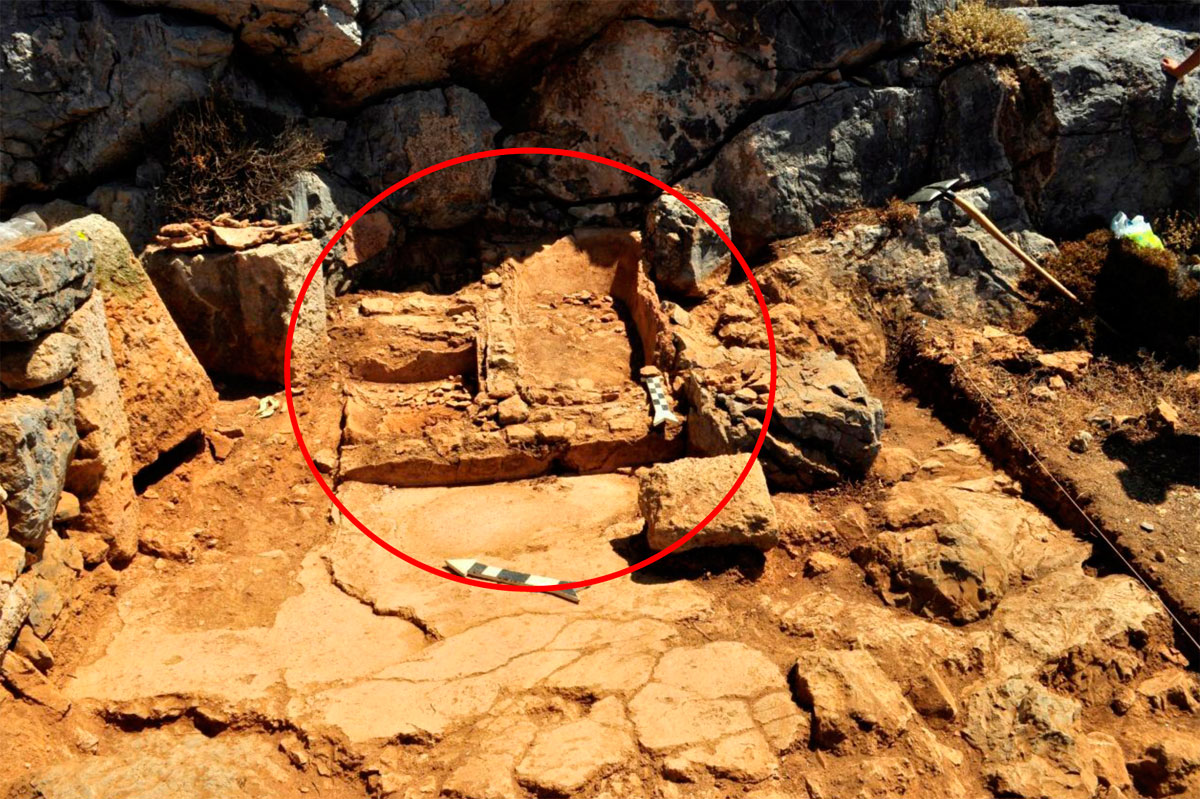
On the eastern bank of the stream of Xiropotamos two paths lead to the fortified settlement of «Kastro» (fig. 12). The western path very close to the beach, which has been seriously altered over time, was narrow and did not allow the passage of wheeled vehicles. In many places, the protective embankment is still visible, as well as carved or stone steps. About ten metres south of the gate leading to the town, on the rock on which the pathway was built, a «rocky» sanctuary with two niches and a throne survives (fig. 13). This was a sanctuary outside the gate leading only to the right (east) bank of the harbour, intended for those leaving or returning from a sea voyage. The gate of the fort at the end of the path, the «Southwest Gate», had a relatively elaborate and decorated form judging by some architectural elements found on the site (figs. 14, 15, 16).
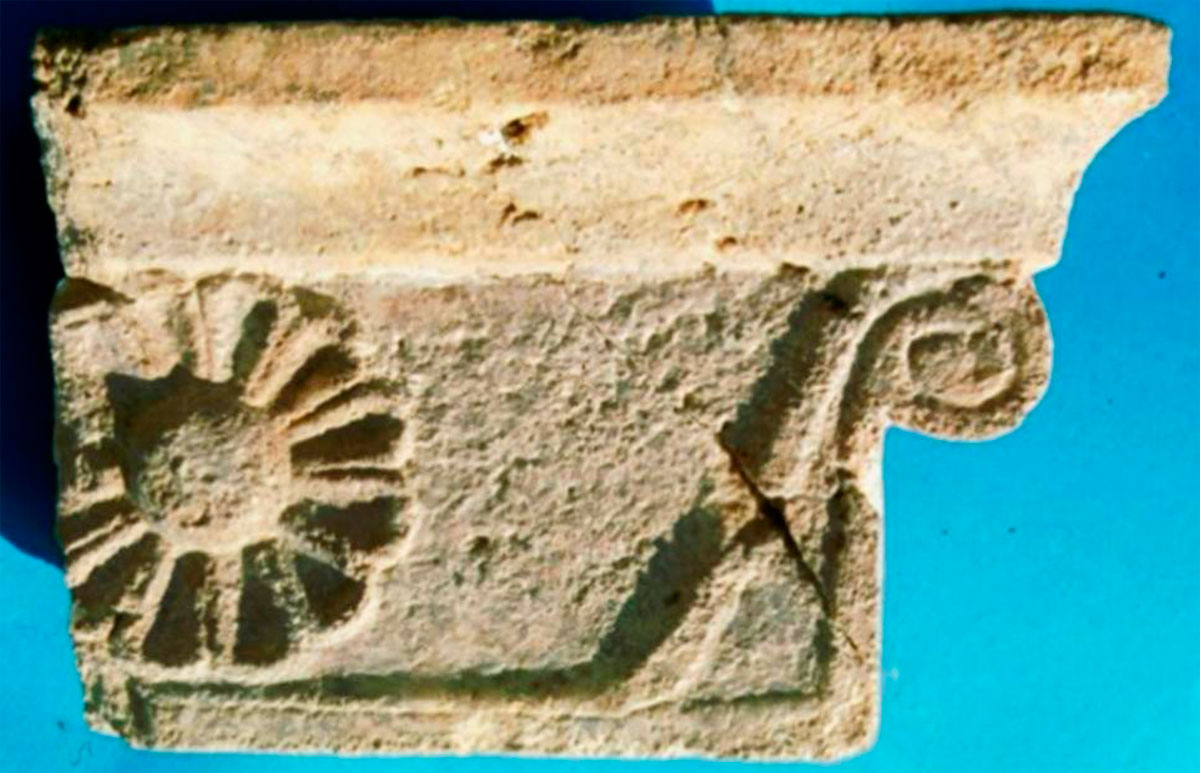
The ancient city was built on the western slope of the peninsula of the «Castle» (fig. 17). In the southern part of the wall, which faced inland and was accessible from the interior of the island, a second gate opened, the «South», which was reached by a more passable path east of the harbour (fig. 18).
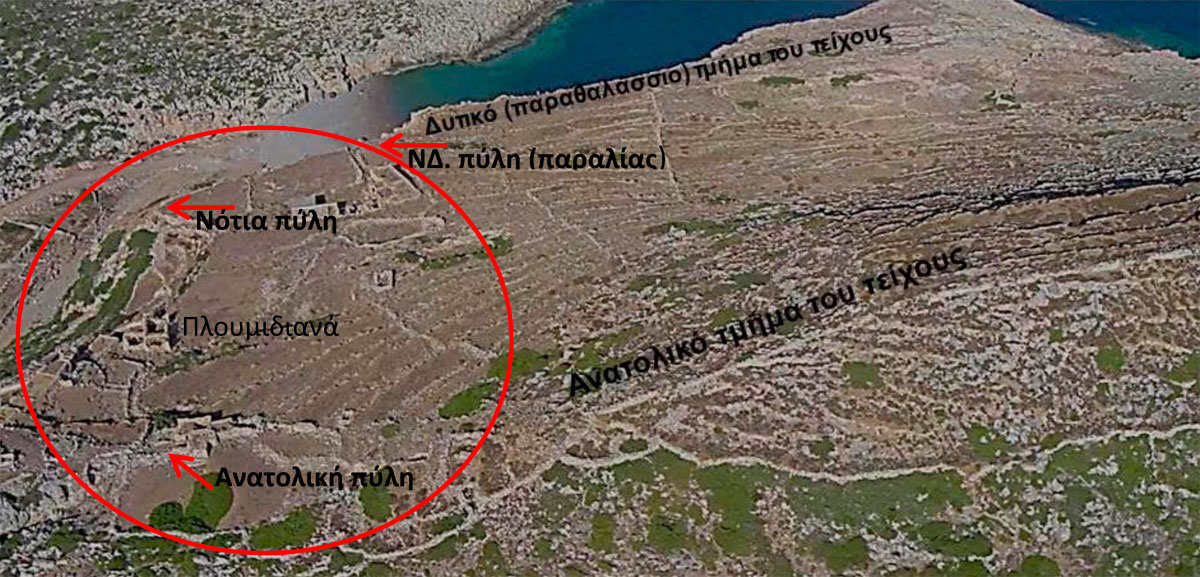
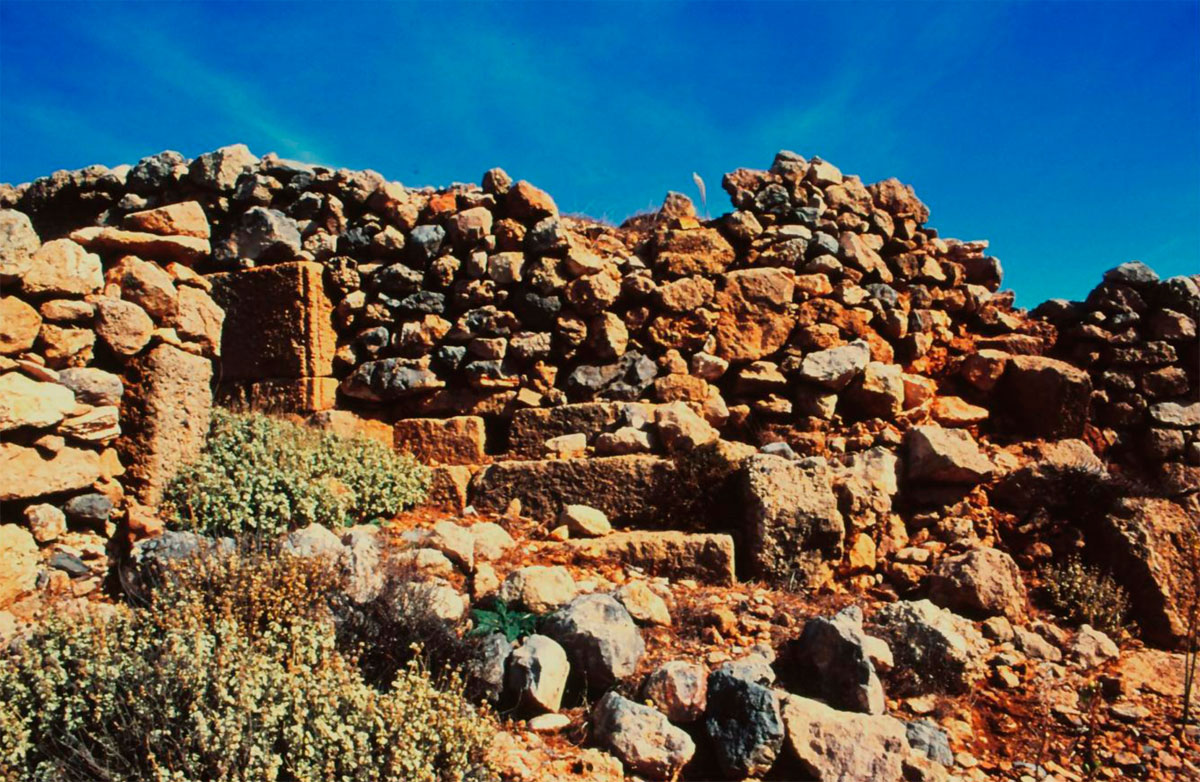
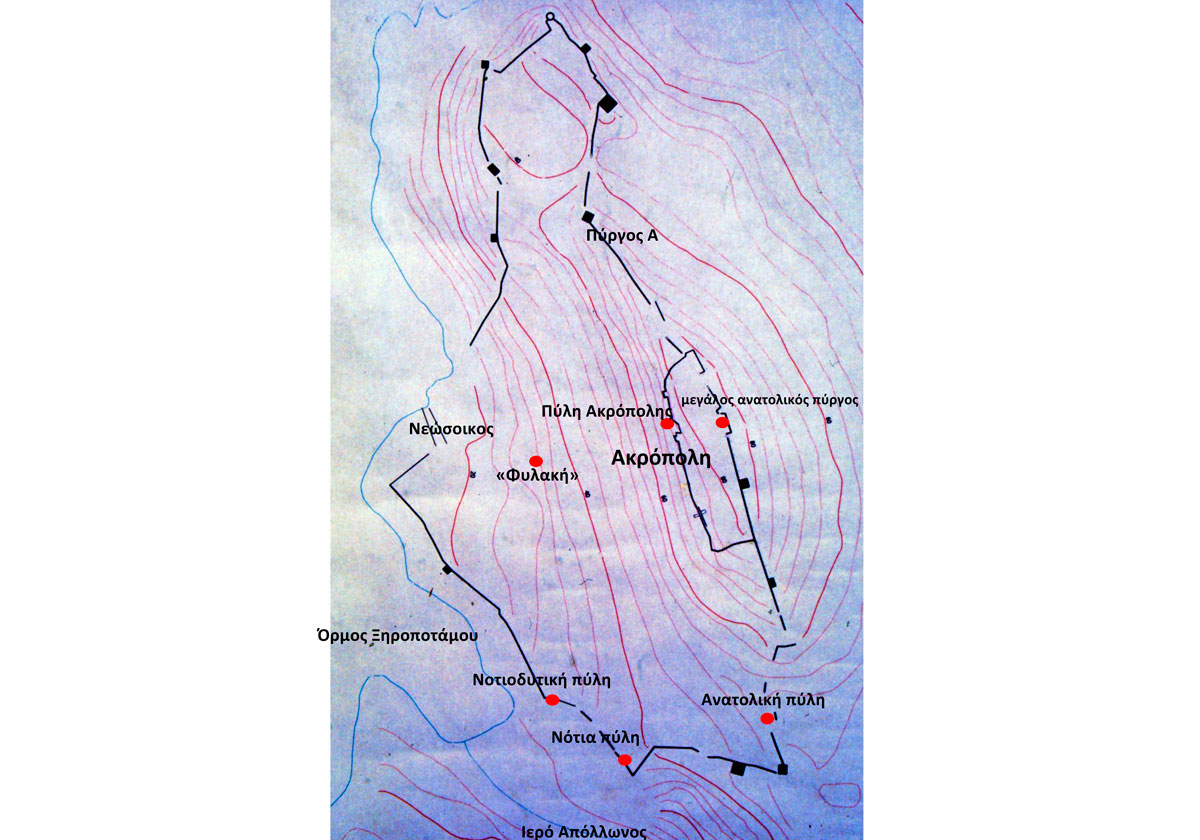
The wall covered the entire western slope of the peninsula, from the rocky beach to the west and north to the ridge to the east (fig. 19). At the highest point a second line of fortification enclosed the administrative centre of the city, the «Acropolis». The Acropolis was also the home of the «leader» of the city, protected by the strong rock rising to the east (fig. 20), while the gate of the «Acropolis» to the city was also monumental, but it seems that from the beginning of its operation it had been destroyed by an external attack and its restoration was carried out with a different plan (fig. 21).
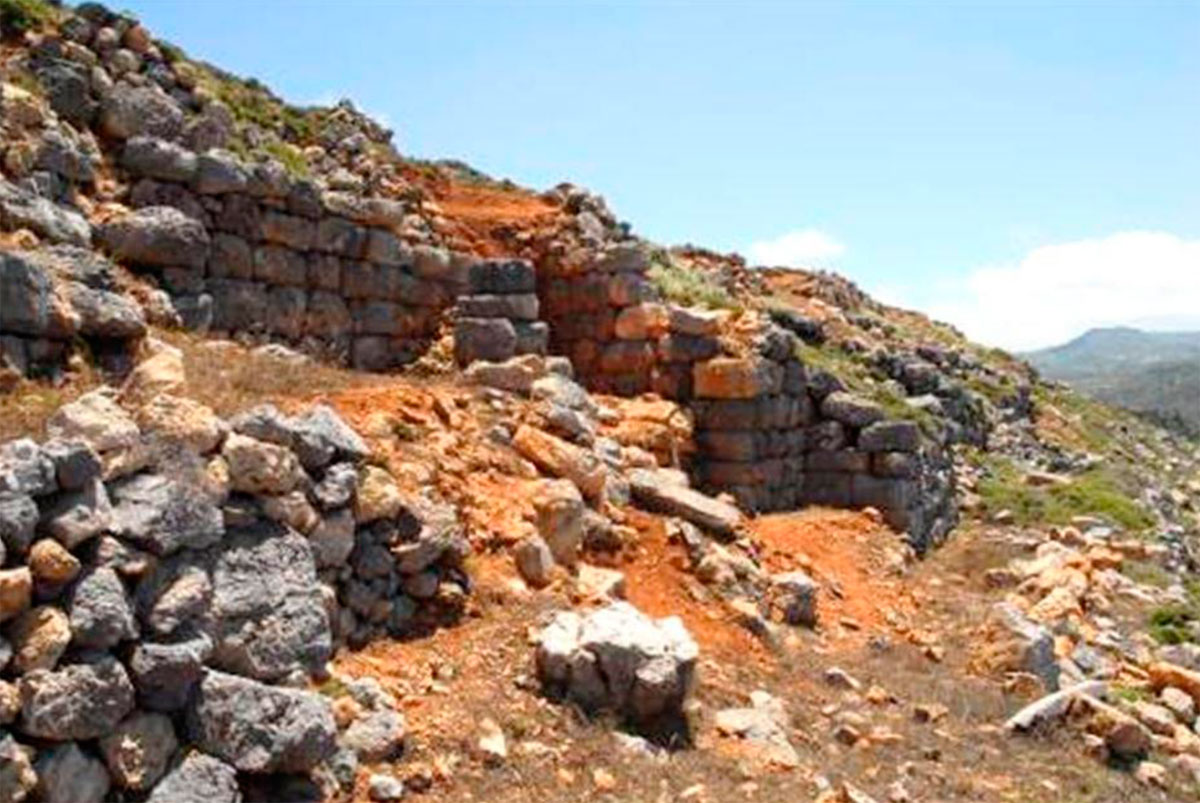
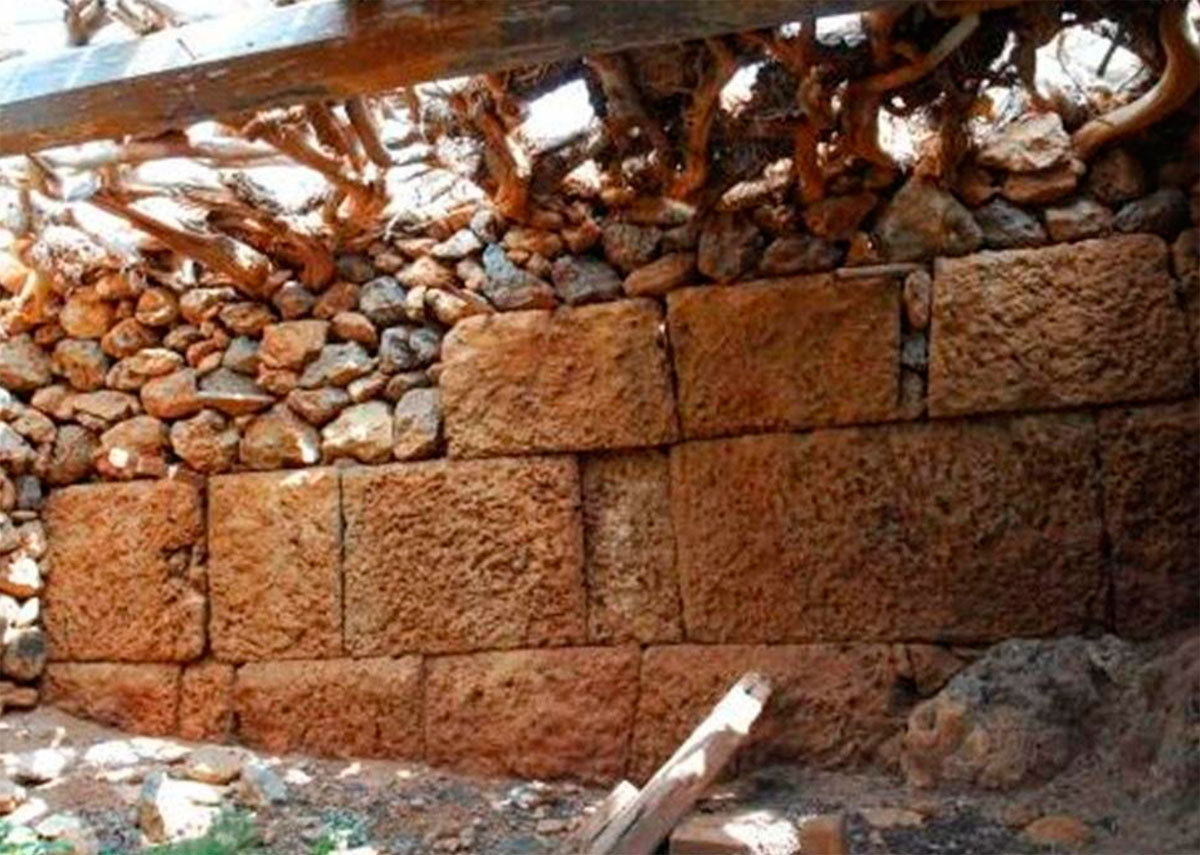
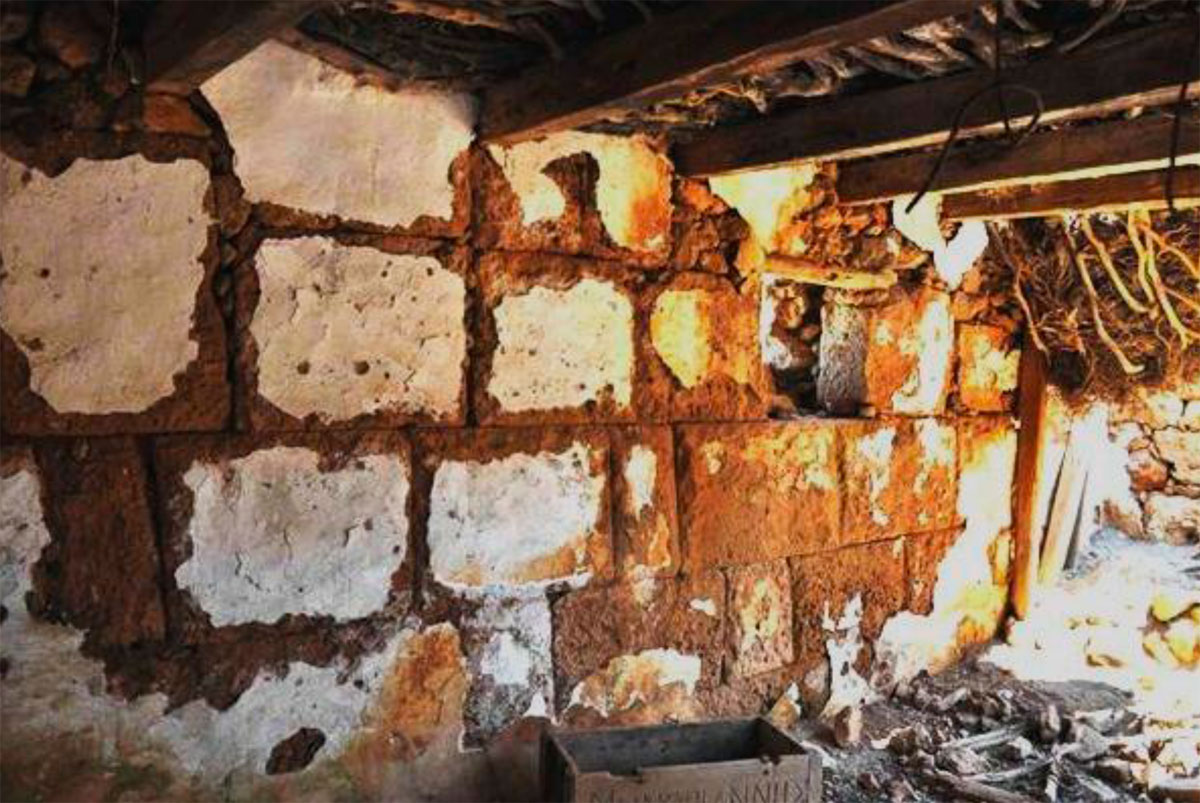
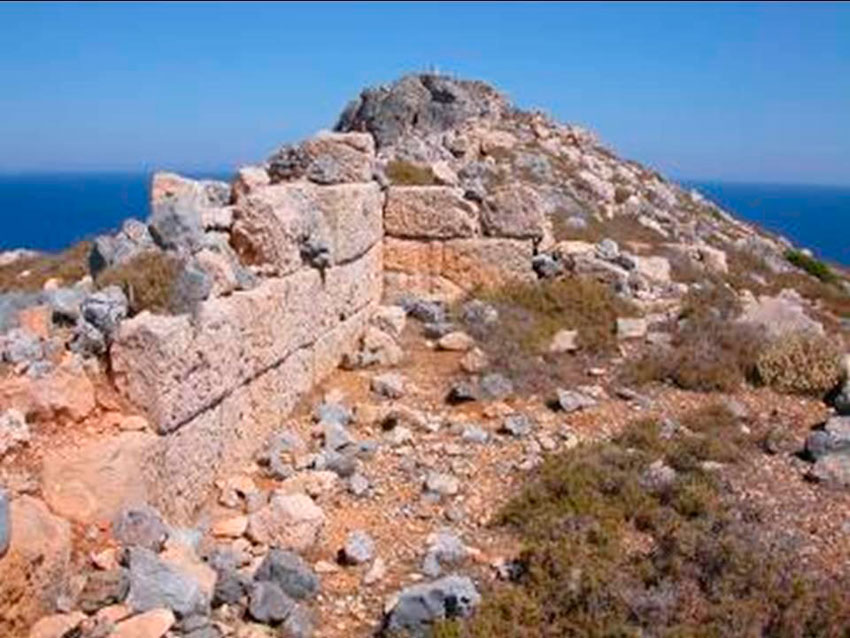
The fortification wall of the city is visible almost all along its length (fig. 22) and was constructed in different ways determined by the local material. In the parts where soft limestone was accessible, the wall consisted of elaborately cut stone blocks, placed isodically (figs. 23, 24, 25, 26). In the parts where the material was hard and difficult to process limestone, the untidy polygonal construction used in the Hellenistic period in many fortifications in Crete was preferred. As can be seen, the original builders paid attention to the appearance and stability of only the outer face of the fortress, while inside, the wall separating the Acropolis from the city was originally constructed with untidy polygonal construction, and later (unknown when, but not long after its initial construction) it was covered with a pseudo-isodic series of stones (fig. 28). Rectangular fortified towers project from the wall, all along its length (figs. 29, 30, 31).
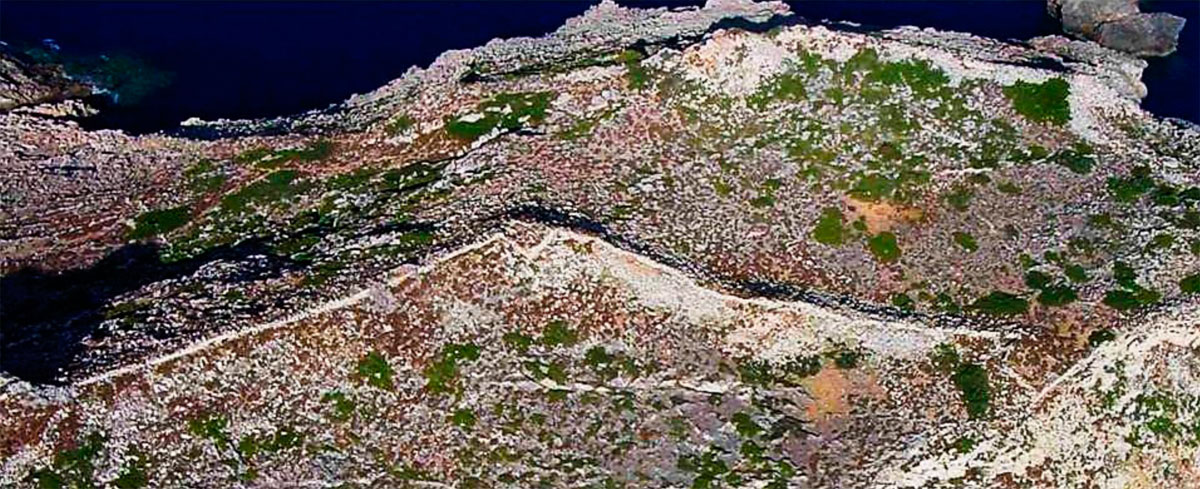
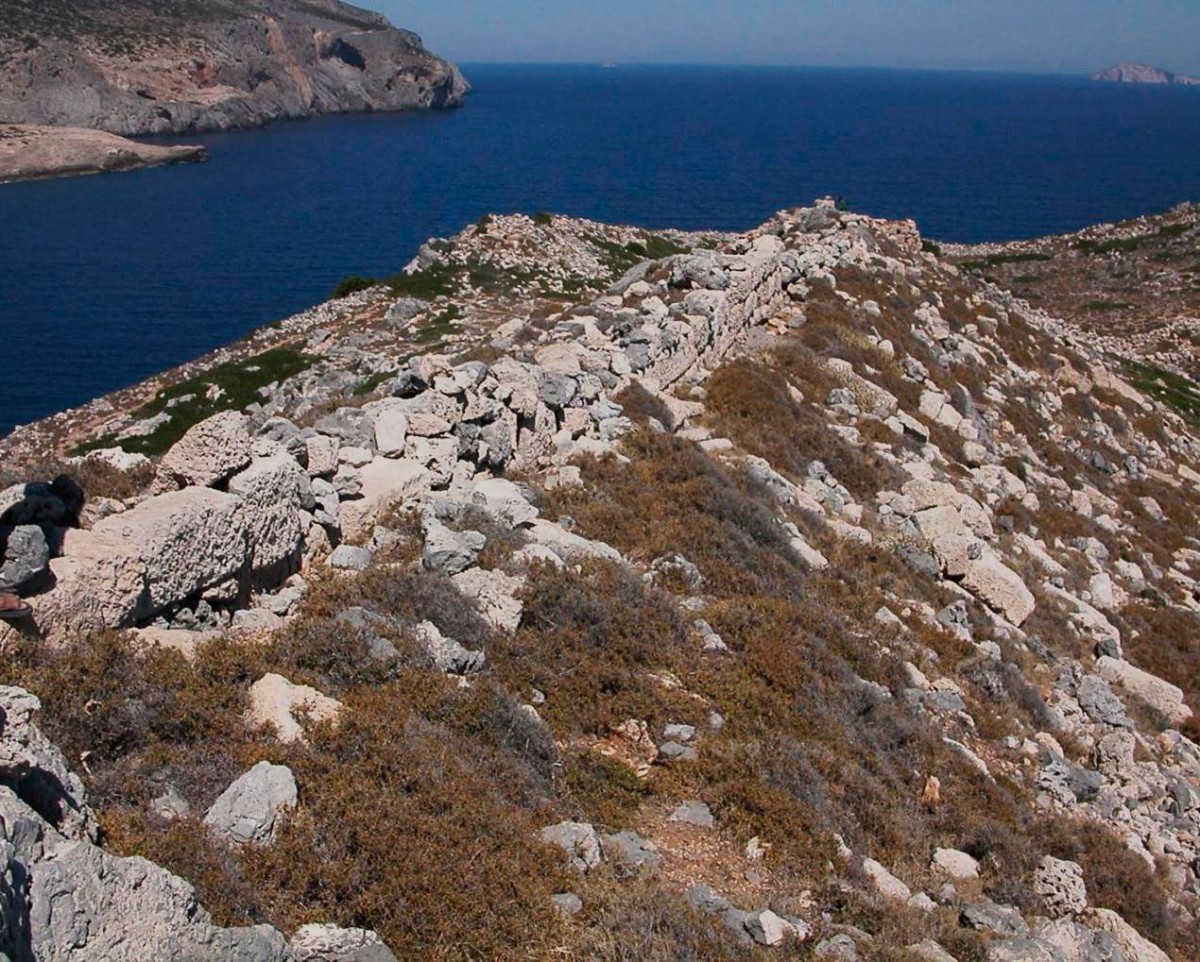
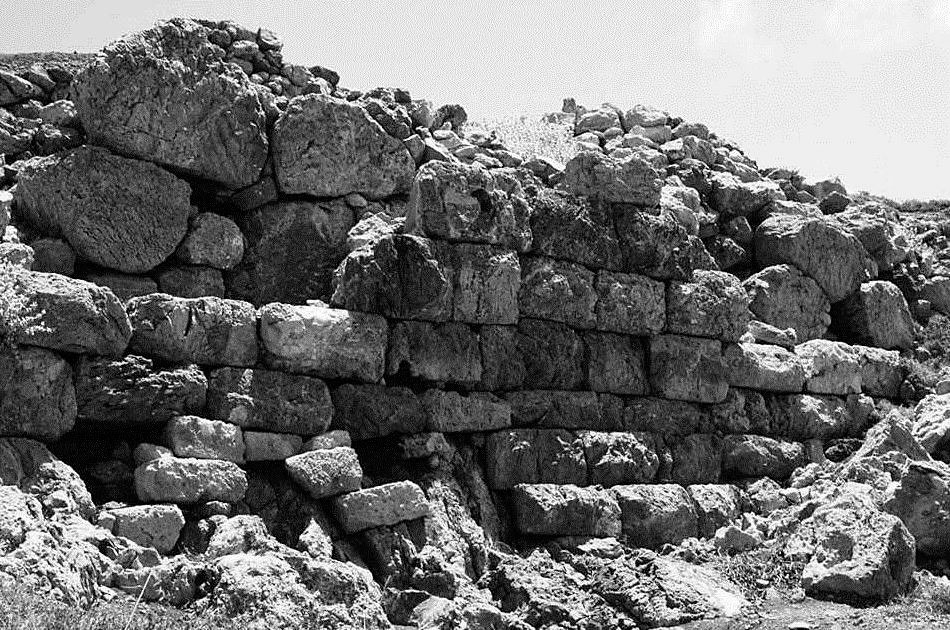
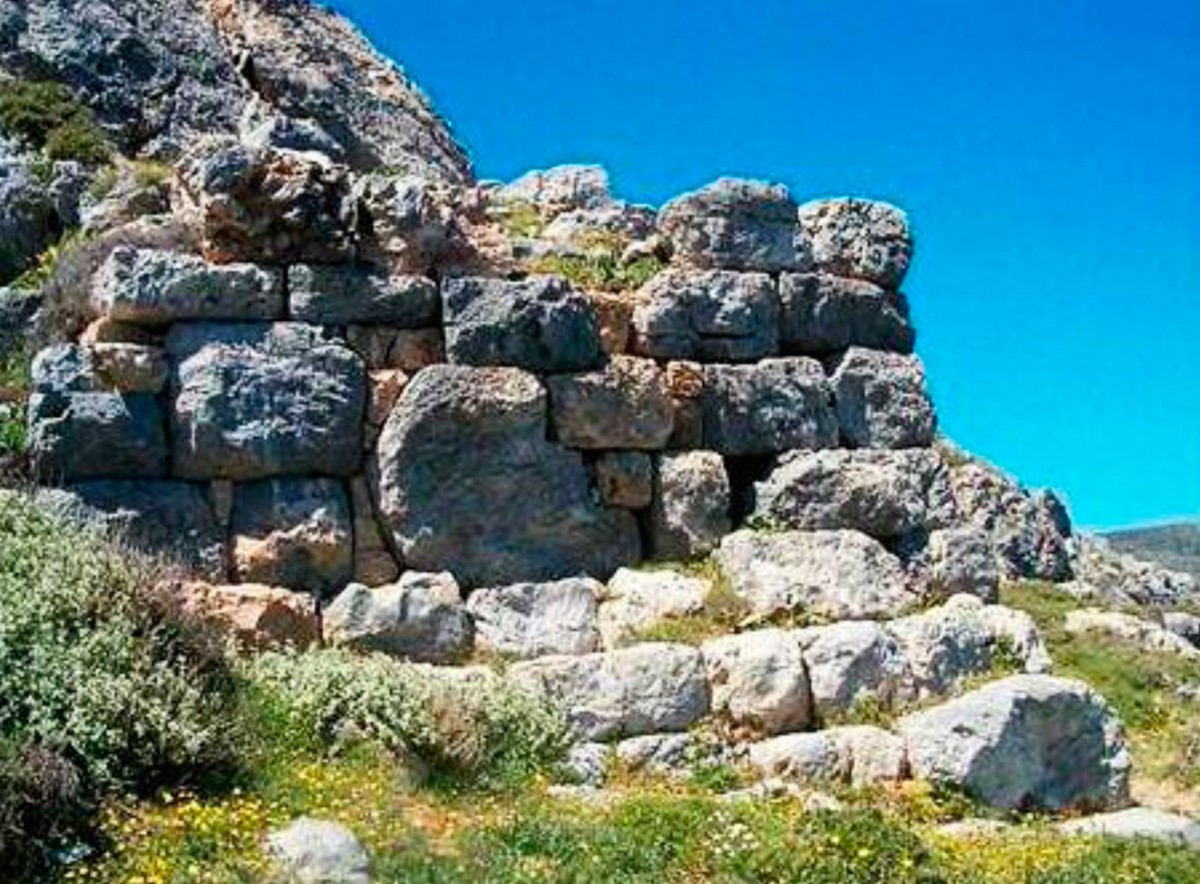
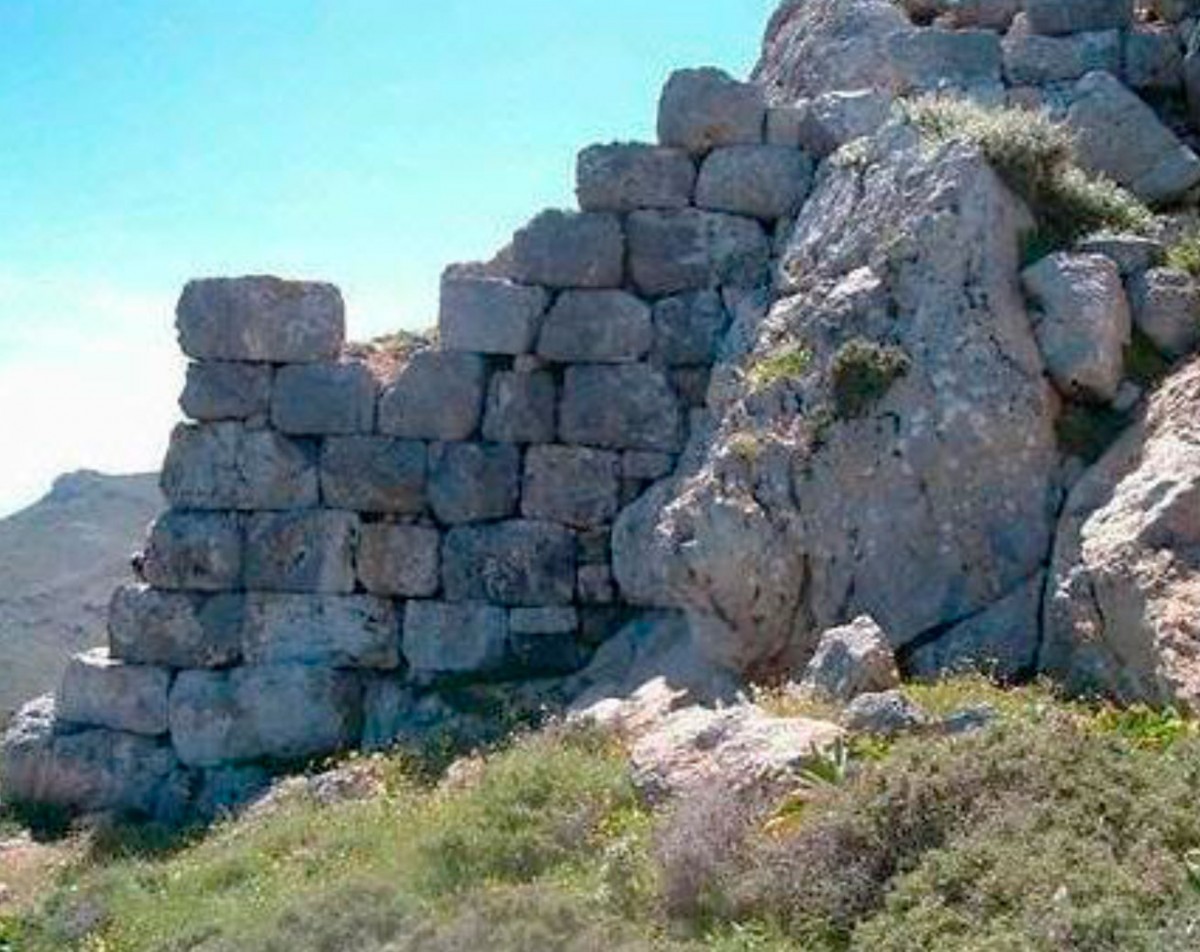
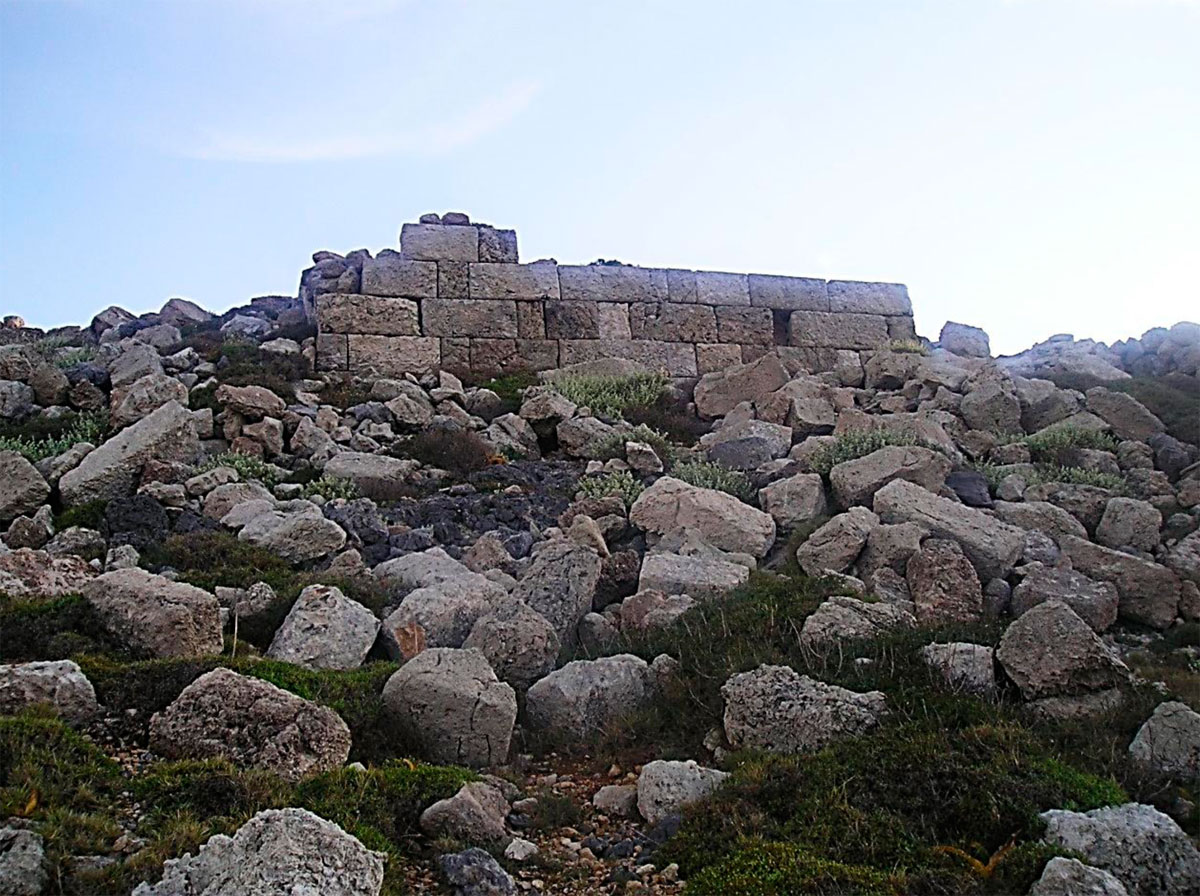
In the northern part of the fortress a significant section was left without houses or other structures, as is the case in places that are often attacked and «host» either the inhabitants who take refuge there for protection or troops coming to reinforce the defence (fig. 22).
Two other monuments that are preserved almost intact inside the city are a neosoholikonos and a cave sanctuary - the «Phylaki» as it is called by the current inhabitants.
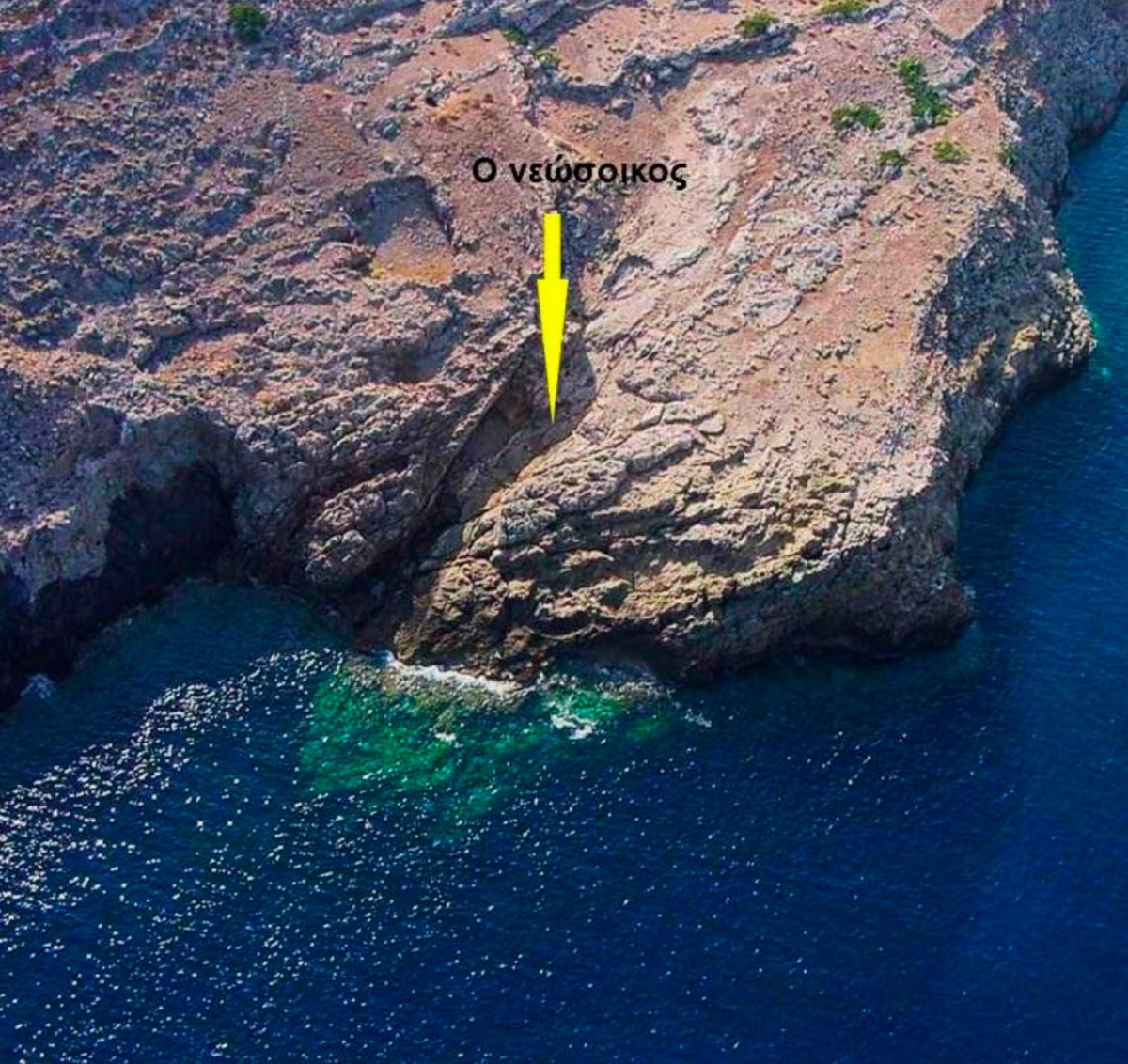
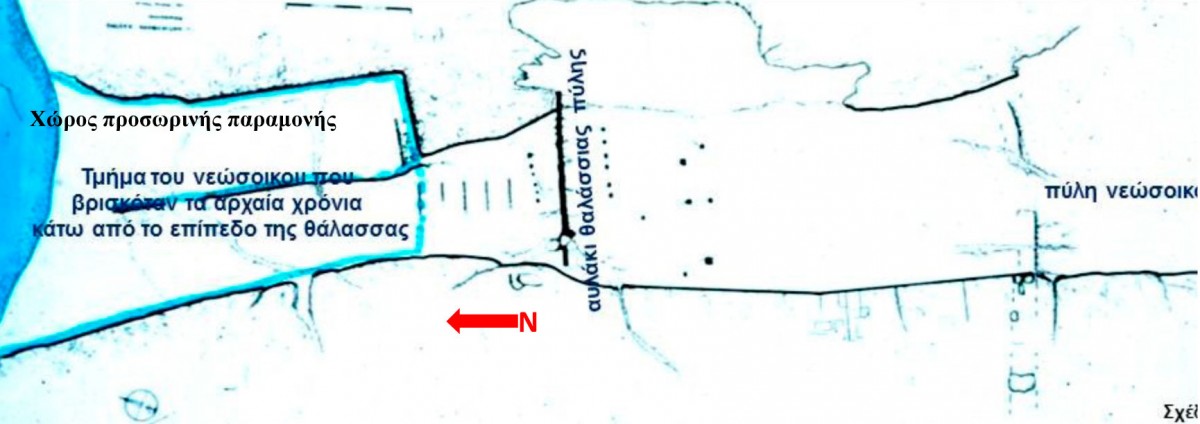
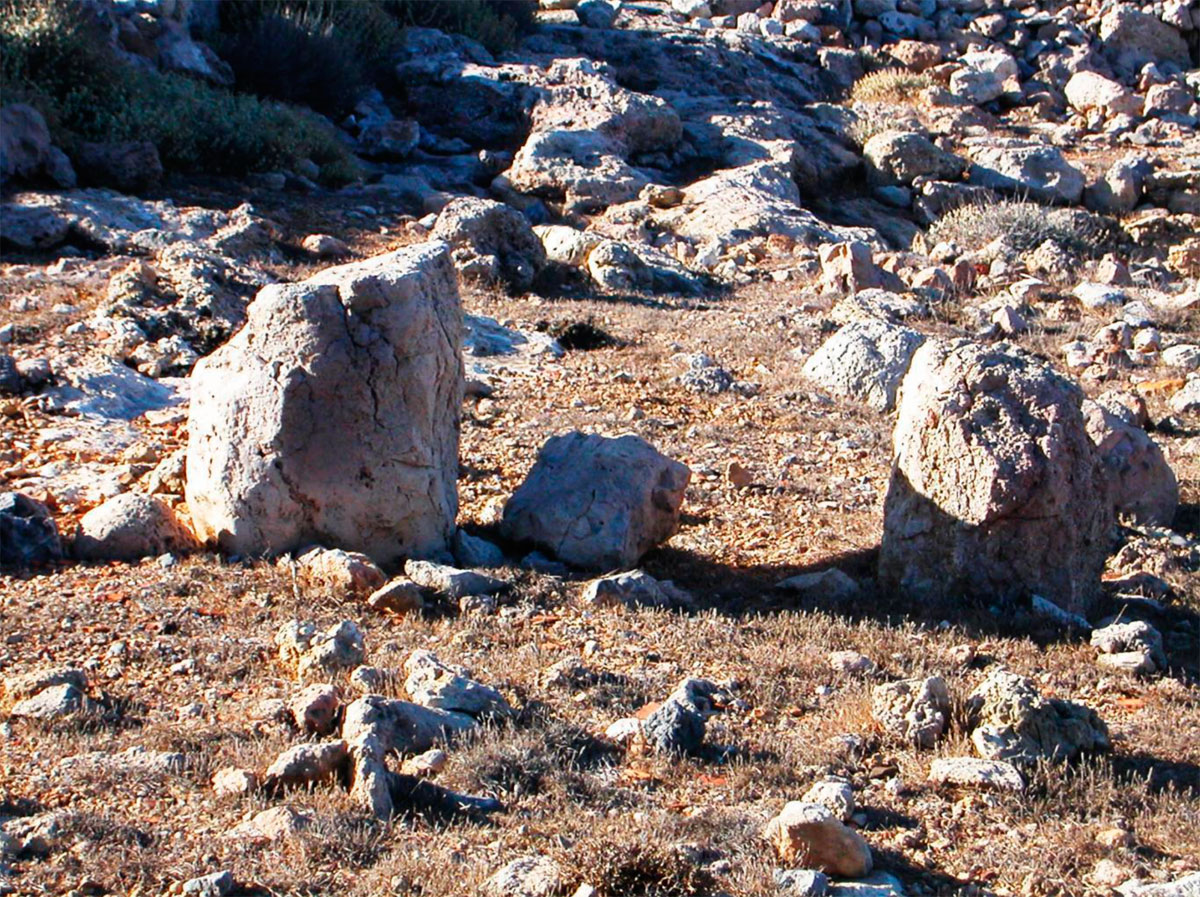
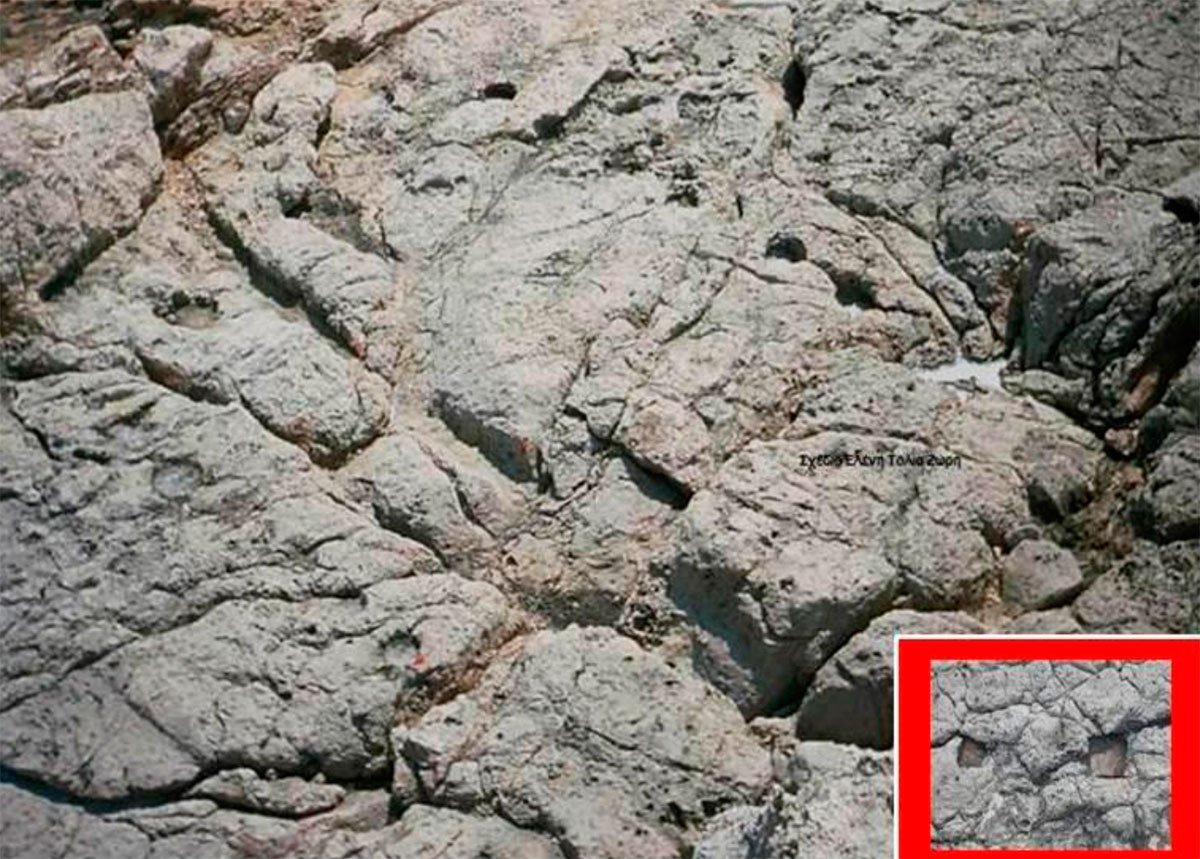
The neoshoikos, about 30 m long, is visible today along its entire length due to the uplift of the island mentioned above (figs. 32, 33). The parts that were carved below the sea surface are also visible today. The useful length of the neosikou, the part that would have accommodated the ship on land, is 18 m. The groove in the rock in which the strong sea gate would have been placed, which would have been subjected to great pressure from the northern winds, which in winter hit the island with great intensity (fig. 34).
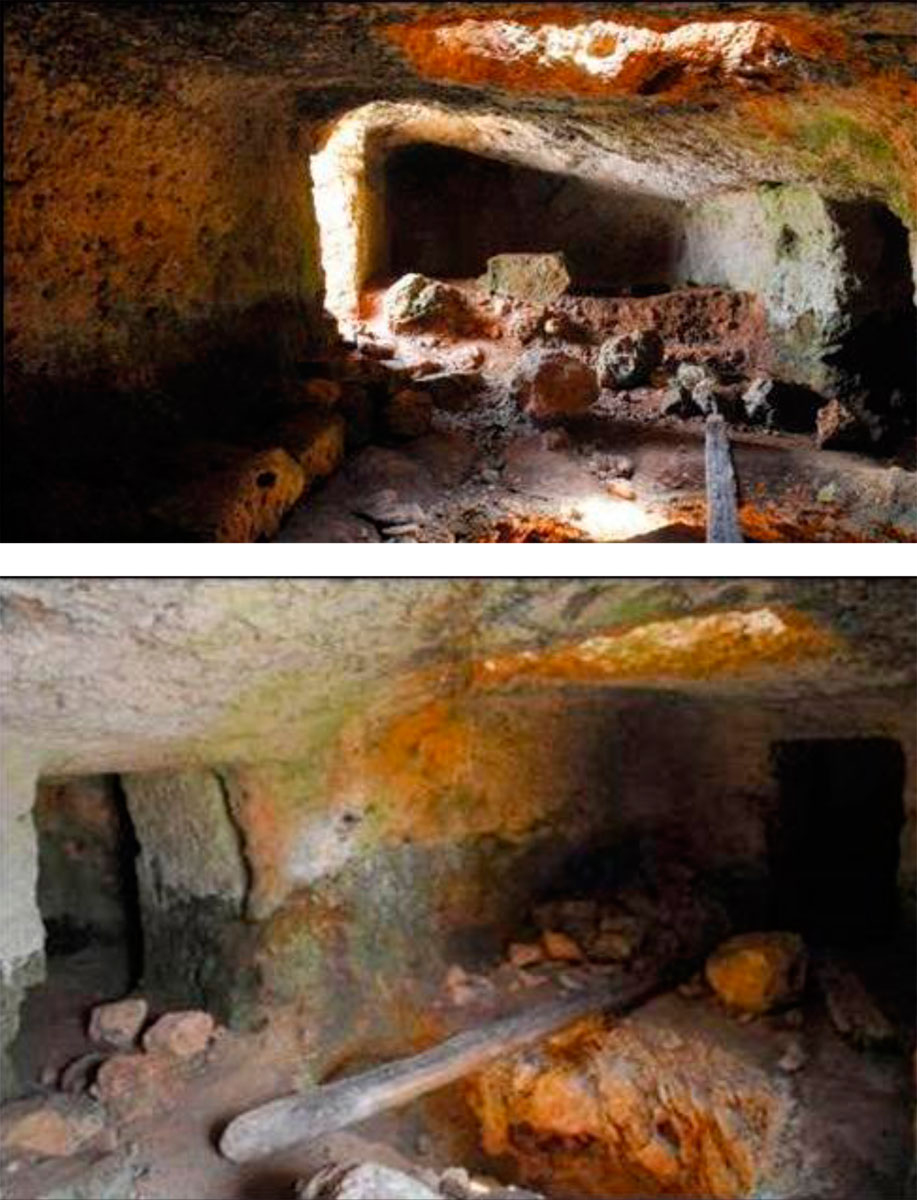
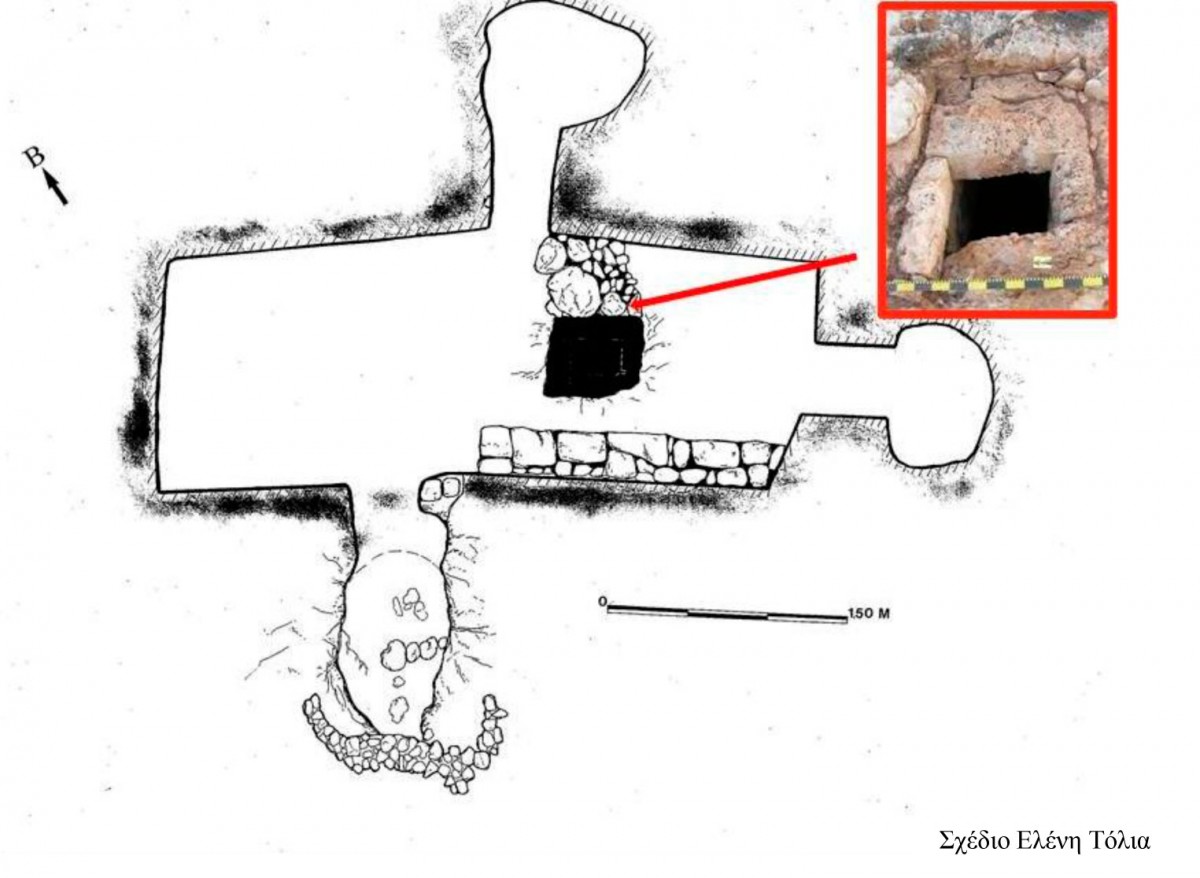
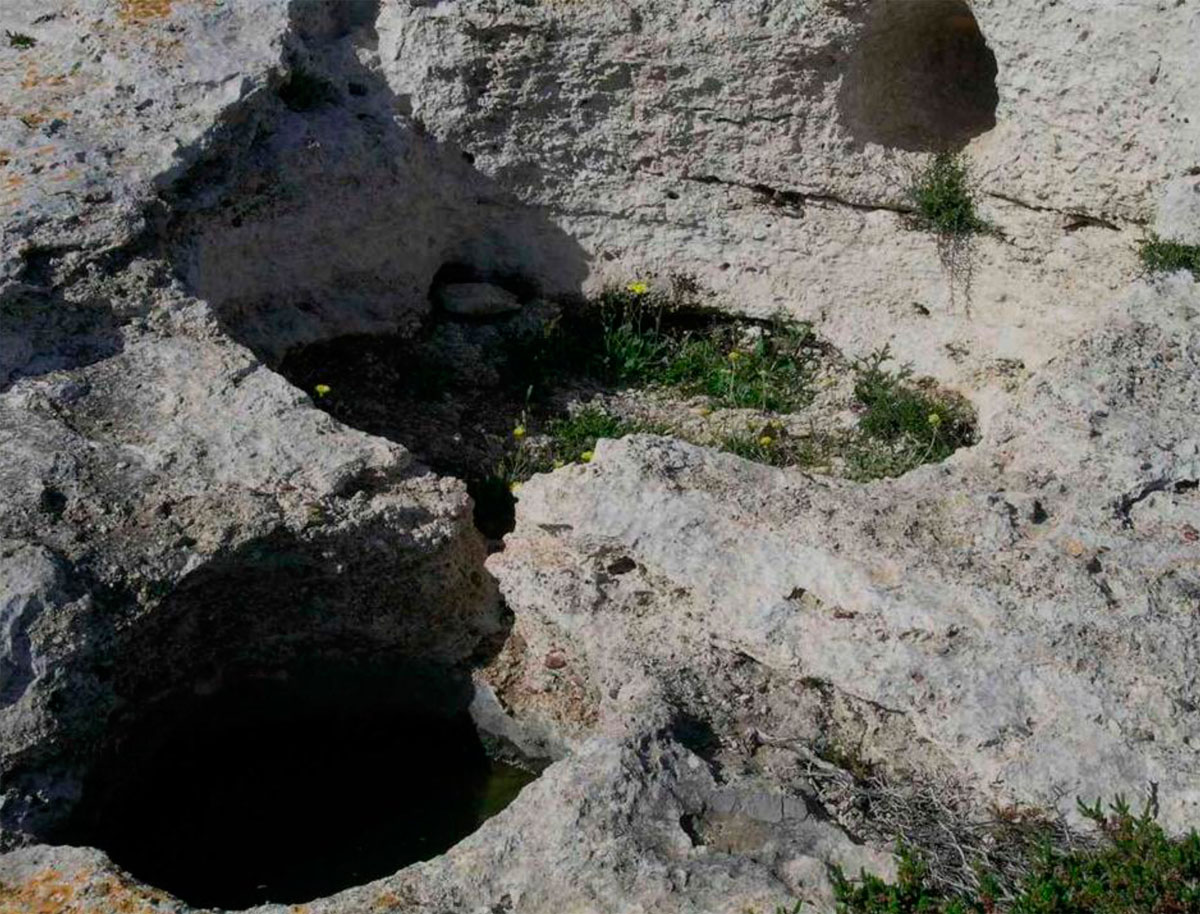
The so-called «Prison» is located at a relatively short distance from the neoshoikon in the middle of the large limestone quarry (fig. 35). It is a cavernous rectangular space with a N-S axis and two small side chambers, one to the east, opposite the entrance, and the other to the south. On the west side, south of the entrance, there is a built-in altar and a «offering» well has been dug in front of it. Above the well a «moonstone» has been carved in the overlying rock, from which offerings were probably made to the deity (fig. 36). The name of the chthonic deity worshipped has not been preserved.
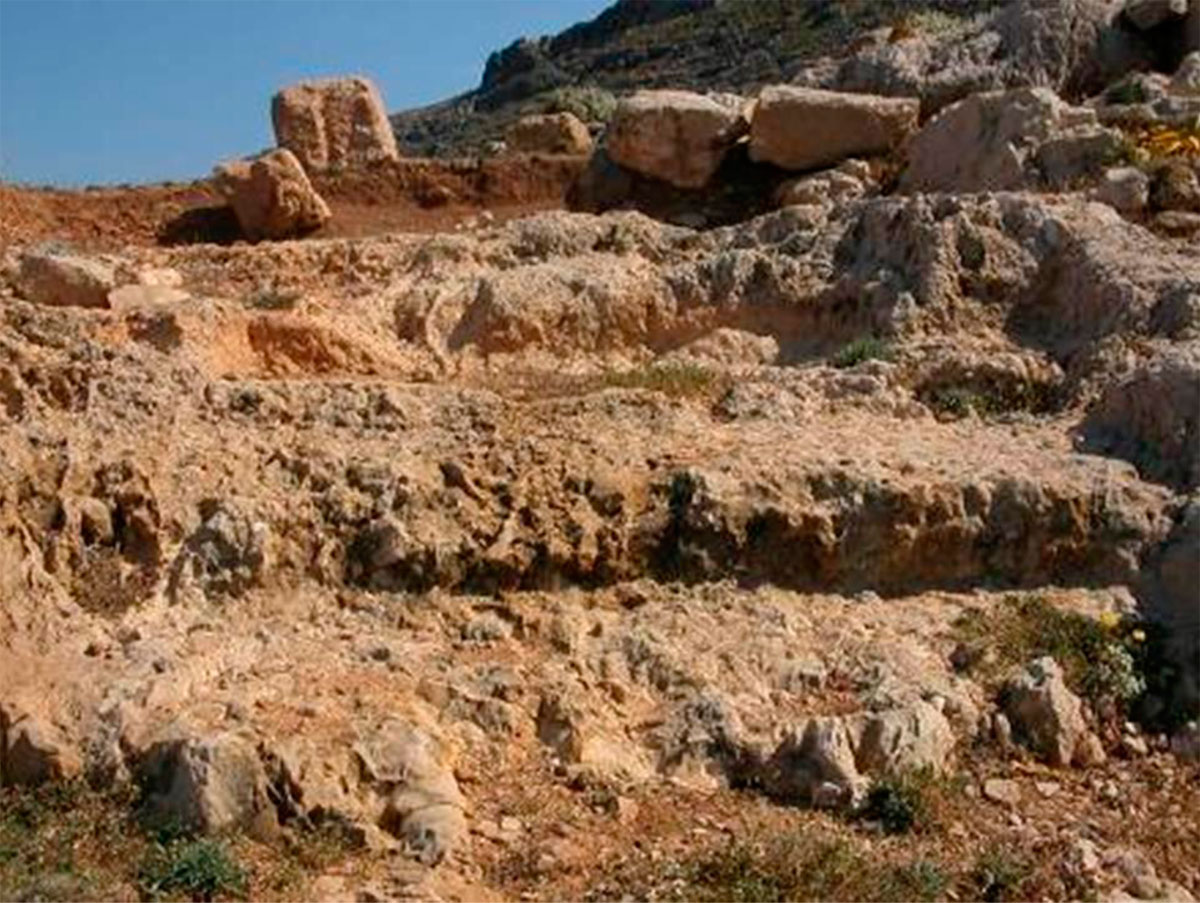
The entire fortified area, except for the northern part mentioned above, was covered by houses. The construction of cultivation mounds by the younger inhabitants has covered the ancient structures, but in many places remains of the houses, walls and parts of the floors can be seen. In the western part of the town, which is flat and rocky, foundations of houses survive (figs. 37, 38), many of which were built in direct contact with the western part of the wall.
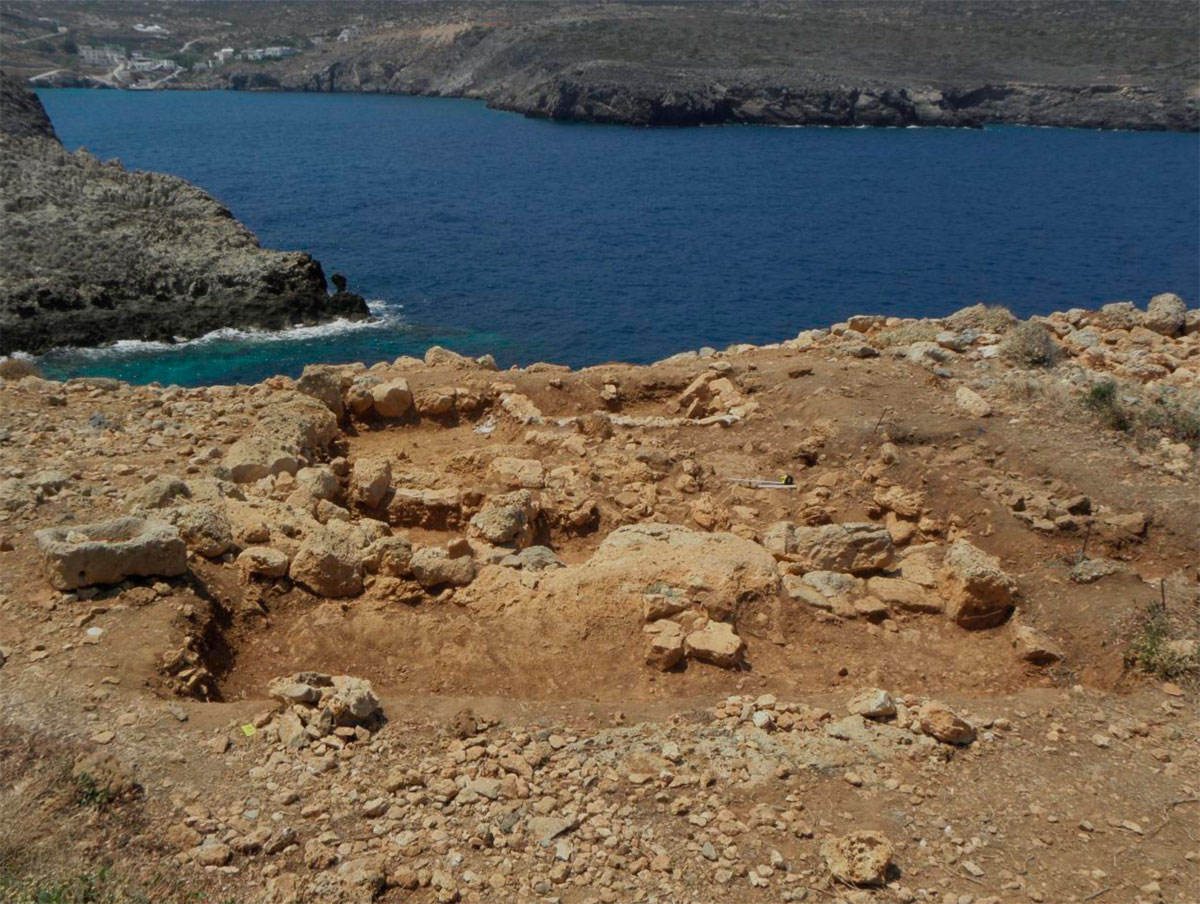
From the movable findings it is clear that the period of use of the fortified polis is limited to the Hellenistic period and more specifically dates from the end of the 4th century BC to the first half of the 1st century BC. In the «Castle», apart from a small part of a Minoan stone vessel and a few blades and points of obsidian and local flint (note 15), no movable finds are dated to periods before the end of the 4th century BC, and there are no finds later than the second quarter of the 1st century BC. This is a «closed» set, limited chronologically to the Hellenistic period, which poses problems of historical interpretation given the monumental nature of the structure and the strategic position of the island.
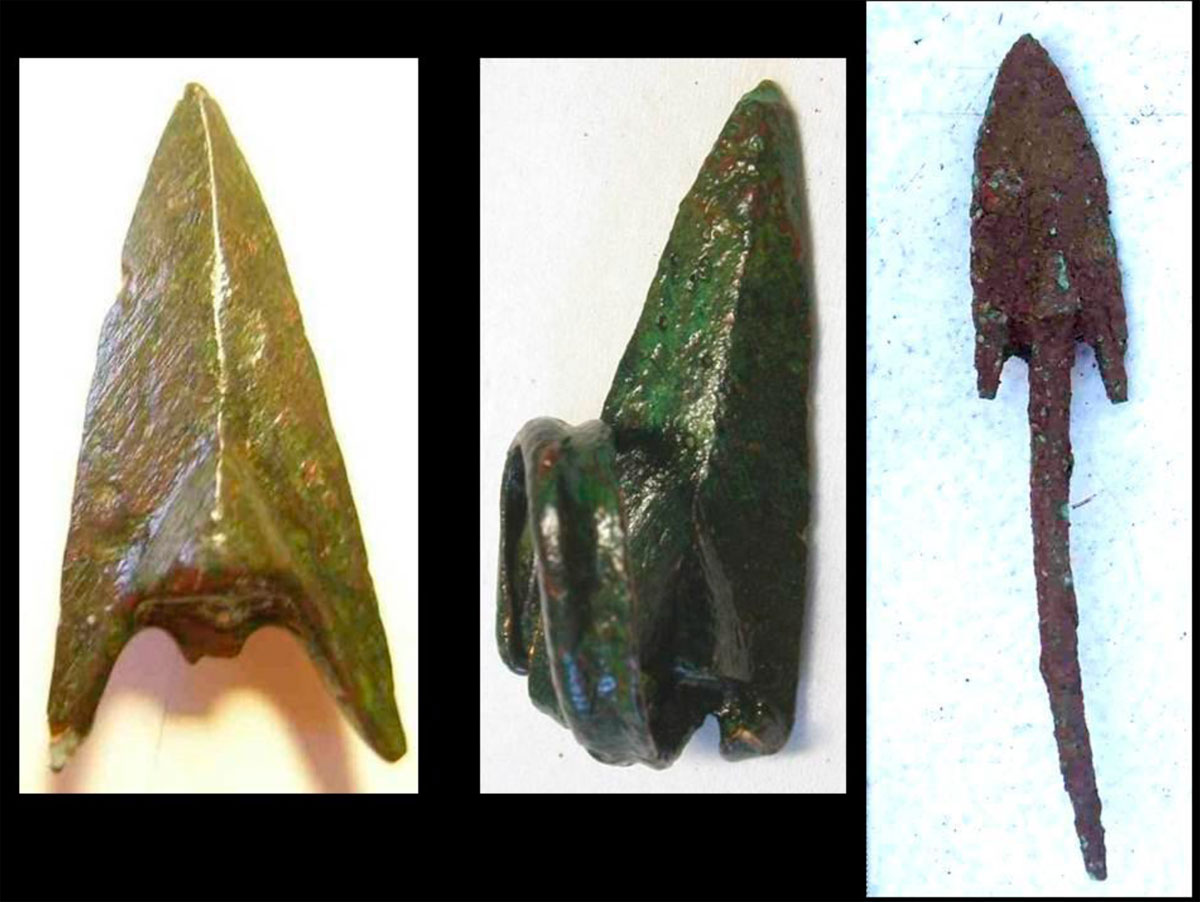
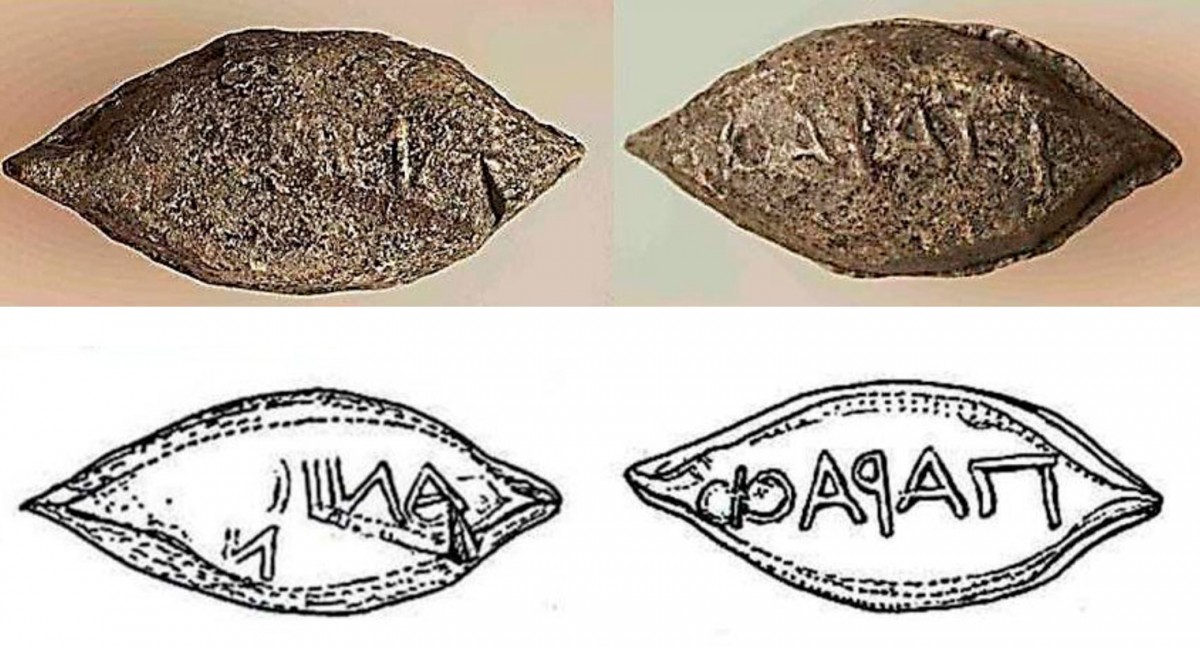
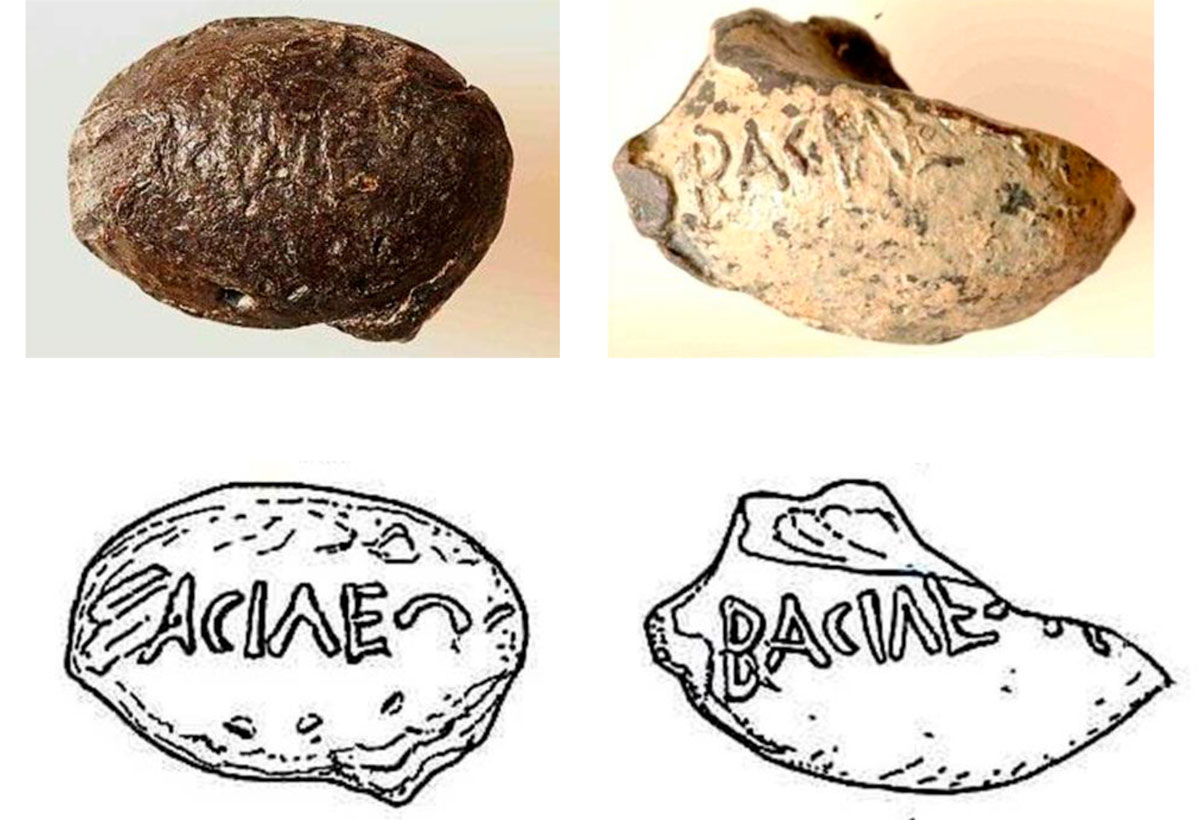
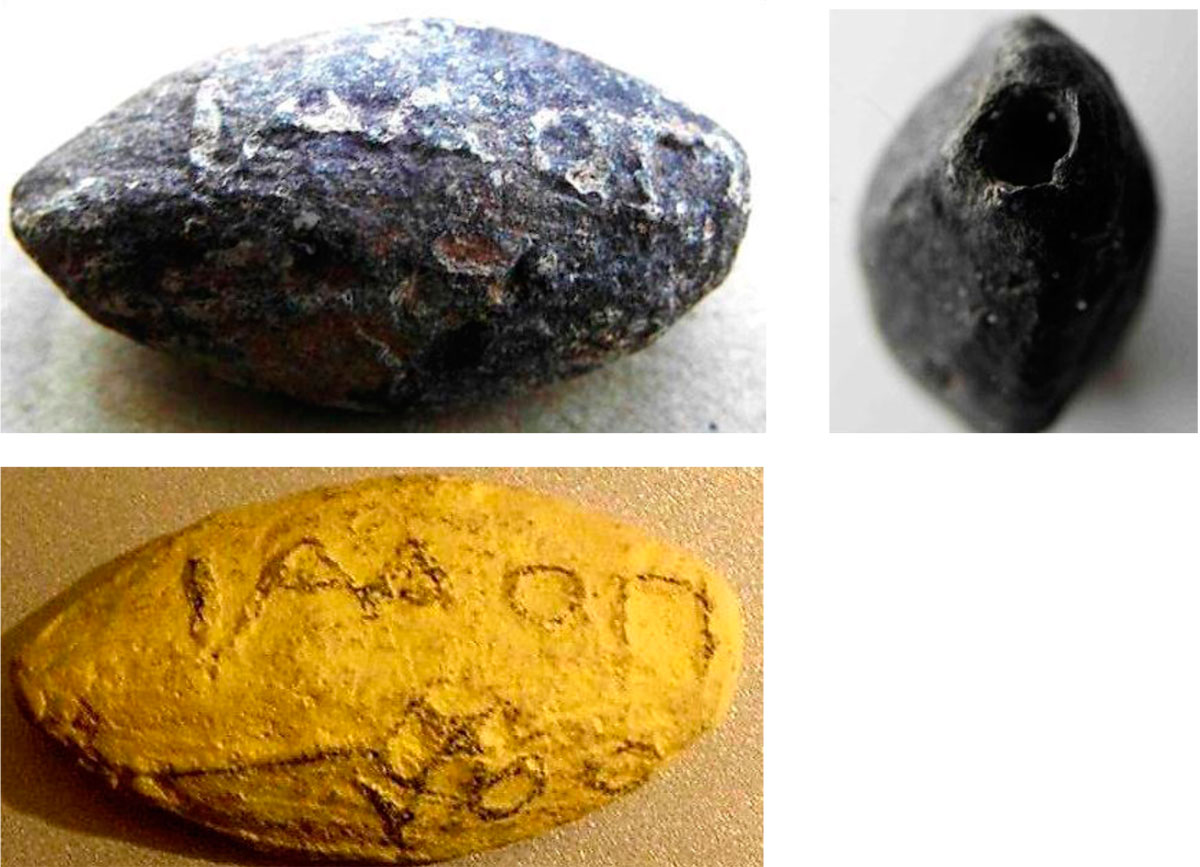
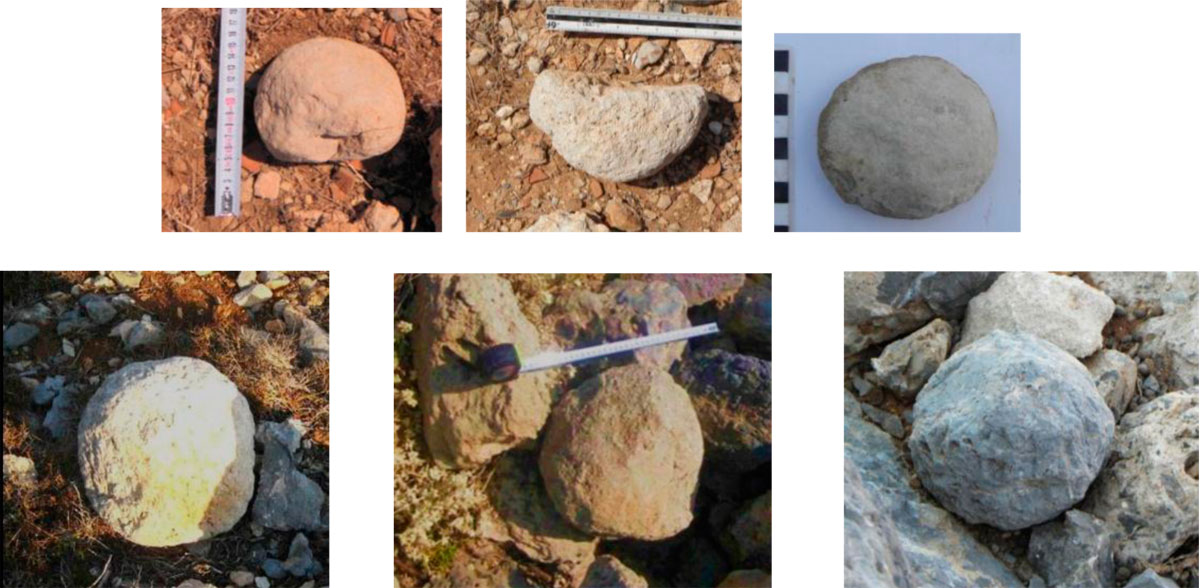
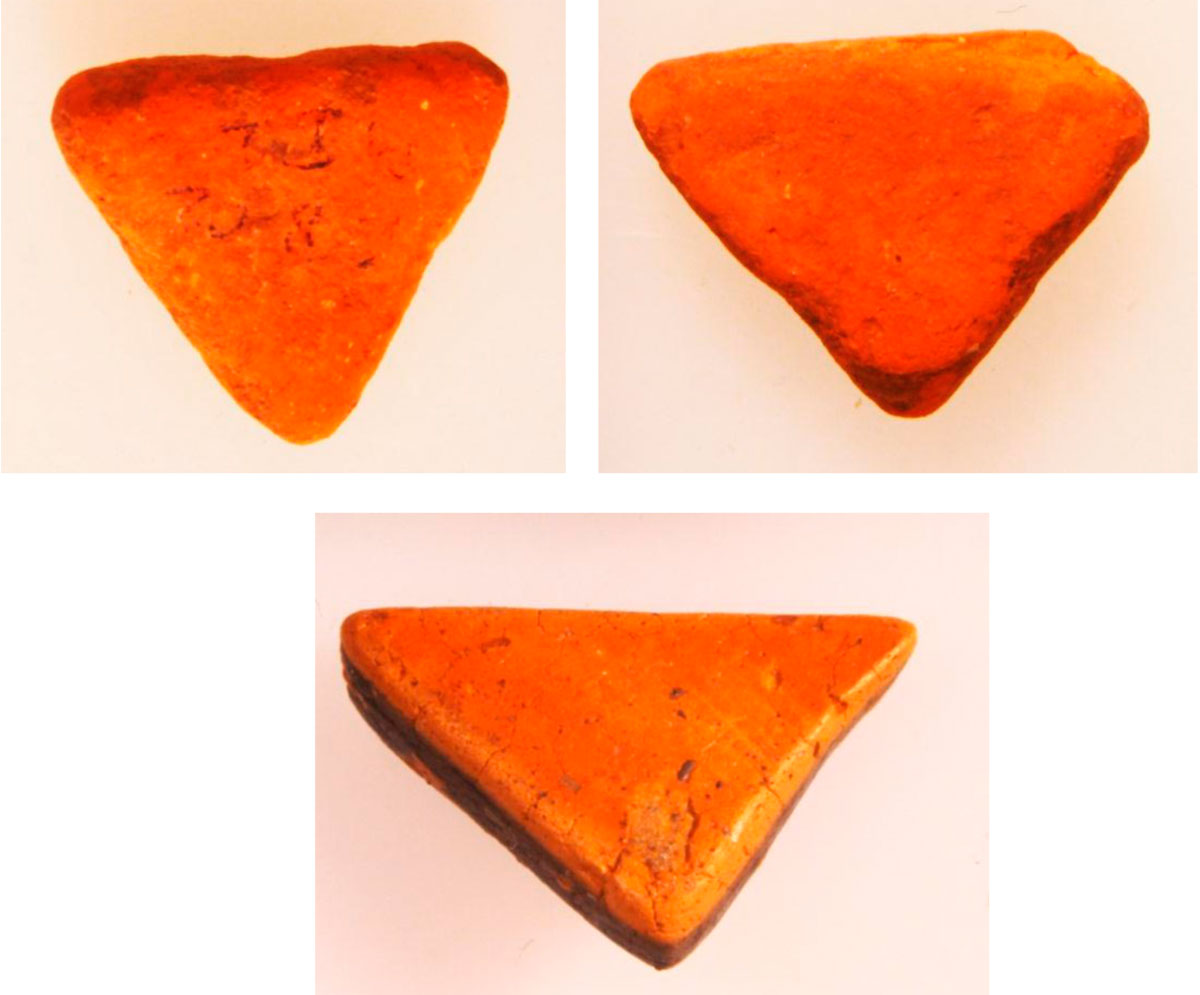
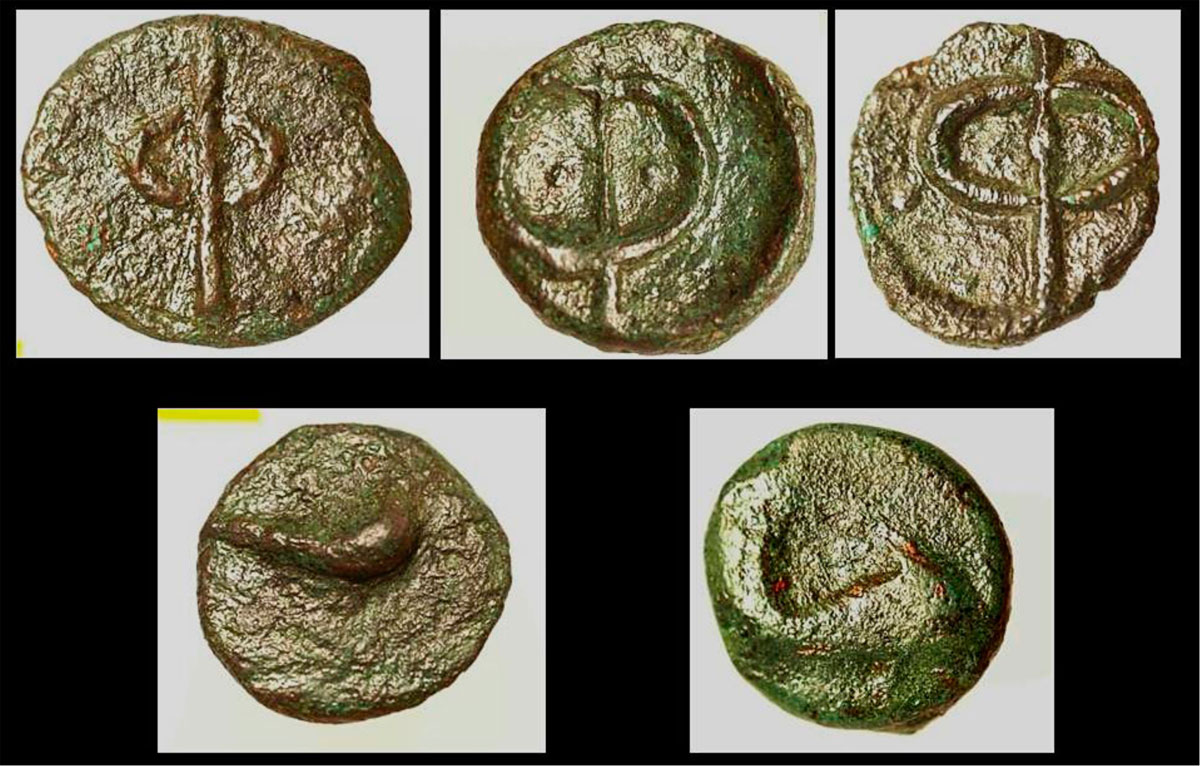
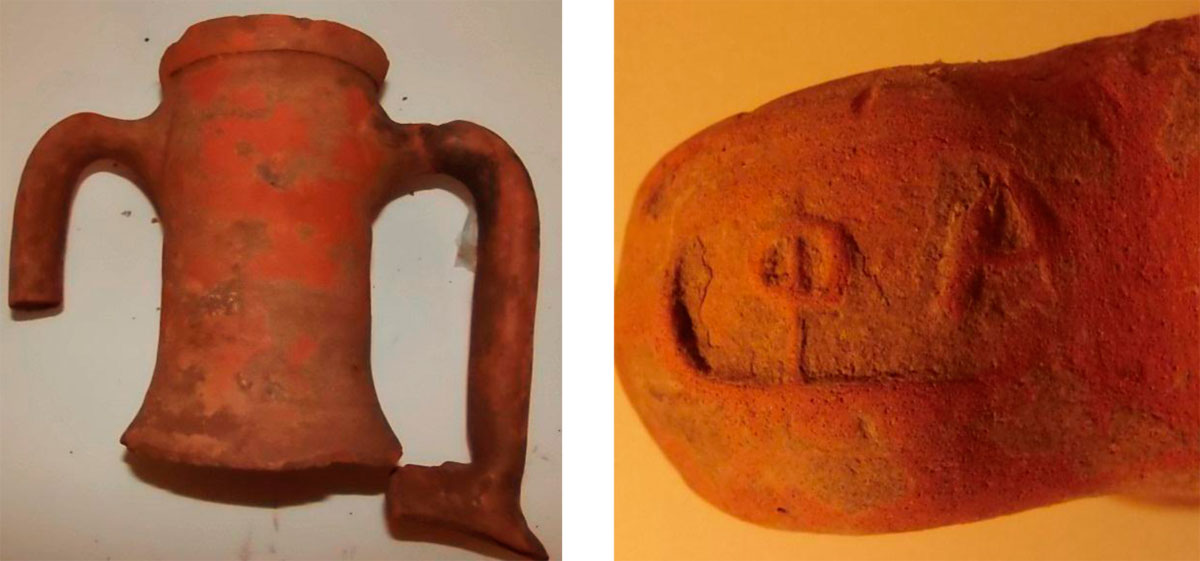
But before the historical discussion about the causes and the intentions that led to the construction of such an ambitious and impressive fortress which, according to Stai, «in a silver island and under the ancient writers, just a mention of any, seems to me very paradoxical» (note 16), let us note that among the movable finds there are war objects, arrowheads and crossbow projectiles (fig. 39), pencils (figs. 40, 41, 42), as well as catapult projectiles of various sizes (fig. 43), finds that show a society in constant warfare (fig. 44). It should also be noted that, based on the coins that have been found (fig. 45), but also on some other ceramic finds (fig. 46) and lead coins, the island, for most of its «life», was part of the Cretan city of Falassarna.
Historical conclusions
The historical interpretation of the site was attempted for the first time by Valerios Stais, after the rough excavation he carried out on the beach of Xiropotamos. Stais assumed that the fortress was built by the Athenians during the Peloponnesian War, i.e. at the end of the 5th century BC: «It seems, however, that because of its geographical position it was useful during the Peloponnesian War, when it suffered the fate of Kythera, which was overrun by the Athenians. . . . It is therefore probable that during the Peloponnesian war the city was fortified by being walled in, as it was in Kytheri.
In 1961, Helen Waterhouse and Richard Hope-Simpson (note 17), on the basis of the existence of some parts of the wall of «polygonal» construction, without proceeding to historical interpretation, dated the construction of the fortress in two phases, a first one, during which only the «Acropolis» was constructed at the beginning of the 5th century BC, and a second one, during which the western wall was covered in an isodic manner and, at the same time, the whole settlement was fortified. As mentioned above, the archaeological-excavation data do not confirm these two hypotheses. The polygonal building method is «untidy», as was often the case in the late Classical and early Hellenistic periods and is dictated by the material of the site, while the movable finds do not show any evidence of habitation before the third quarter of the 4th century BC.
The question remains, of course, «who, when and why» went ahead with the construction of such a costly project. What was the source of income for the population on an island that does not have enough arable land to feed its inhabitants and generate sufficient surplus to allow such an expensive fortification? The first, logical, answer is that some foreign power that would have an interest in controlling the southern Aegean would get involved either directly or by funding the island's rulers.
Certainly in the second half of the 4th century BC, when both Greek and world history were changing course, the strategic position of the small island would have interested some powers to control it. But when the great Greek cities were still «free» (note 18), before the battle of Chaeronea and the destruction of Thebes in 335 B.C., their interest was directed towards the danger from the north coming from the rapid advance of Philip and Alexander. The interest of the rising Macedonian power was also directed to the east and not to the Aegean. As a major power that might be interested in controlling the island remained Persia, which shortly before had reconquered Egypt and had also become aware of the anti-Persian plans of the Macedonians.
The answer is given by the reading of the inscription found in Xeropotamos. The first sponsor listed is Aristomenes Aristomedes, Thessalian from Feron who seems to be known from the literary sources. An Aristomenes is mentioned as «admiral» of the Persian fleet in the Aegean after the Macedonians entered Asia Minor. One Aristomedes, a Thessalian from Feres, participated, as leader of twenty thousand barbarians, in the Persian army at the battle of Issus (n. 19). As is well known, after the conquest of Thessaly by Philip, many Thessalians, belonging to the leading group driven out by the Macedonians, fled to the Great King as mercenaries in the hope of returning home (Note 20).
We also know that after the defeat at Granicus the Persians conquered Chios and tried to win over, through the mediation of the Spartans and the disposal of large quantities of gold, Greek cities that did not participate in the campaign of Alexander the Great (note 21). The Cretan cities belonged to this category, and it seems that the effort of Agidos III, who was laden with many talents by the Persians, was directed in that direction. The appearance, in the second half of the 4th century BC, of a large number of strong and costly fortifications in the Megalongo, can be explained by the influx of Persian gold in the empire's attempt to organise its counter-attack. The astonishing advance of Alexander, who acted further wisely by cutting off the Persians« access to the Mediterranean in time, cancelled all plans of counterattack. We know that after the battle of Issus, Alexander dealt with the fate of Chios by imposing the return of the republicans who were the main exponents of the anti-Persian (pro-Macedonian?) faction (note 22). For Crete, which was more distant from the main Greek body, in the cities of which similar political processes would certainly have intermingled (note 22). 23), there is no evidence of Alexandrian intervention, but the premature death of the Macedonian leader and the quarrels of his descendants probably relieved the Cretan cities of their punishment for the attempt at »Medism'.
Immediately after the disappearance of the Persian state, the armed and fortified Falassarna, without much income and taking advantage of the strategic position of the island, began to engage in piracy (note 24) and from early on disturbed the growing commercial activity of Rhodes, but also of the other weaker islands which Rhodes protected with similar rewards. Two inscriptions from Rhodes provide evidence of this activity (Note 25). The first is an honorary resolution of the municipality of Rhodes for some of its citizens who distinguished themselves in the Rhodian campaign against Egypt. Their dating to the first half of the 3rd century BC matches the dating found in the extensive layer of destruction in many parts of the castle. A few catapult balls were also found in the same layer, the throwing of which was most probably the responsibility of the catapult expert mentioned in the inscriptions (= trapper), Polimarchus, son of Timakrateos, Casarevus!
Polemarchos himself, son of Timocrates, who was later promoted to colonel, is mentioned in a second, tombstone inscription along with his brothers and it seems that all three were killed in campaigns against pirates in various parts of the Mediterranean. His older brother, who was a ship's captain, primitive, according to a proposal to complete the inscription, was killed in Aegilia in the campaign for which the Warlord was honoured, if we accept that the Rhodians attacked Aegilia only once.
Antikythera is mentioned as the place to which the «rebel» king of Sparta, Cleomenes III, fled after his defeat at Sellaia in 223 BC, on his way to Egypt (note 26), whose king, Ptolemy the Benefactor, would give him reinforcements to return to Sparta. At Antikythera, Theriac, Cleomenes' squire, disagreed with him, because he thought it unacceptable as Spartans to leave Sparta instead of returning and falling in battle. After Cleomenes' reply that his goal was not to demonstrate futile heroism, but to return to change the social structure of Sparta, Therychio committed suicide on the island.
A few years after the passage of Cleomenes, Antikythera was in the throes of the conflicts of the Cretan cities, but also the attempt of the powers that wished to control the southern Aegean and the passages to the West, where the power of Rome had already appeared. Two claimants seem to have been involved in Cretan affairs at this period, Philip V of Macedonia and Nabis of Sparta. Both would certainly have sought to control the little island, the former because he had found an «invitation» to the Megalongo from the Polyrrhinians (Note 27), the enemies of Falassarna, and the latter because he had a practical involvement in the affairs of western Crete (Note 28). A material relic of Nabidus's «visit» is a number of inscribed pencils of the Laconian type, found in the area of the «Castle», bearing the title «Vassilikos», a title which Nabis gave himself in the last years of his reign (fig. 41).
The 2nd century seems to have been a century of development of the settlement. The first indication is the construction (or reconstruction) of the seaside sanctuary of Apollo and Artemis. The area occupied by the temple was «added» in the 2nd century BC with the construction of the strong enclosure of the sanctuary which enclosed the channel leading to the «hidden harbour». The second indication of the relative recovery of the settlement of Egypt, is found in the stratigraphy of the excavation at the site of the «Castle». The upper layer of houses on the site, and as it appears the last, dates to the 2nd century BC. What is the reason for the relative prosperity observed? Surely the explanation lies in the income from the pirate activity of Falassarna (note 29). Rome had entered the history of the Aegean region in a big way, and trade between the eastern and central Mediterranean was booming. The island's involvement in inter-cretan conflicts is also evident from the excavation data. A series of sealed pencils found in Aegilia bear the names of Cretan officials from cities that had allied relations with Falassarna (note 30) (fig. 42).
Η Egypt seems to have suffered the vengeful fury of the Roman general Metellus who brutally suppressed the «Cretan Revolution» in 69-67 BC. Life in the «Kastro» came to a halt in those very years. At the same time Falassarna was destroyed.
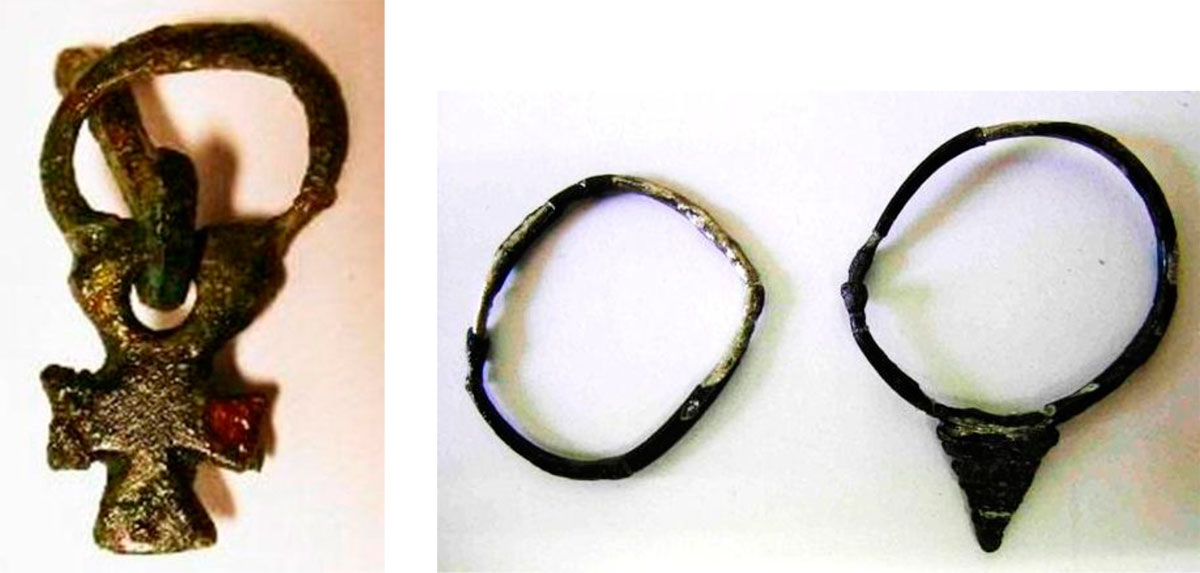
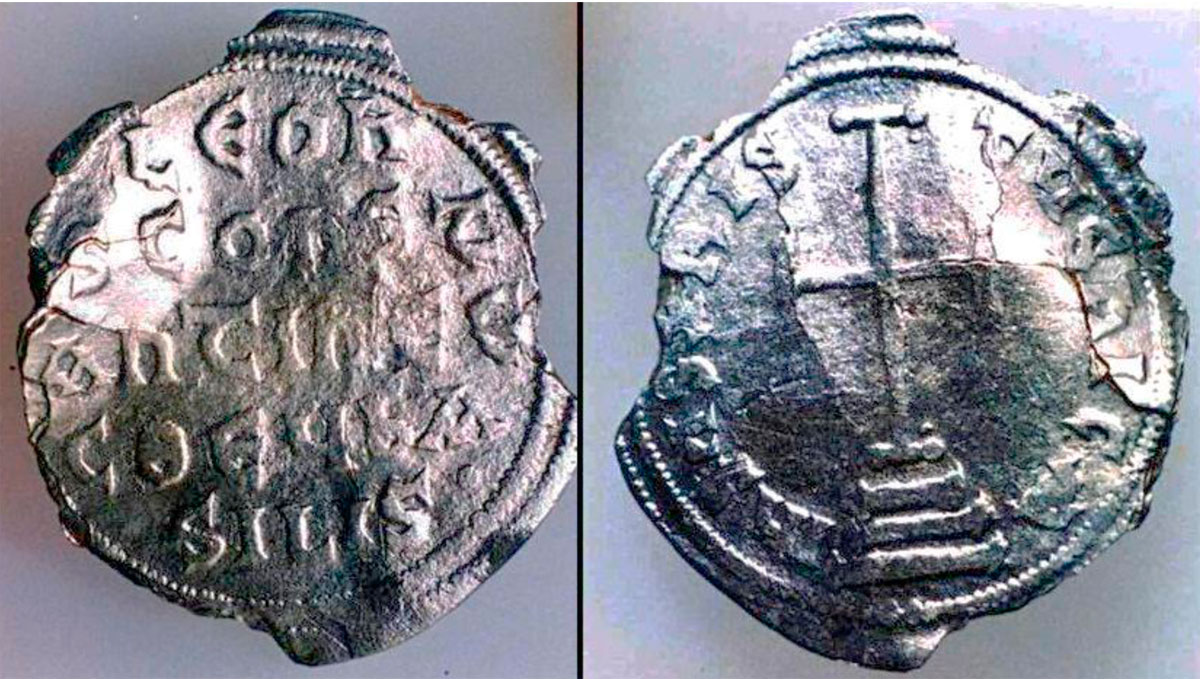
Human presence is again established on the island after the 5th century AD (figs. 47, 48, 49), when life in the Aegean normalized with the power of the Byzantine fleet, until about the beginning of the 8th century, when the Arab attacks began and it seems that Antikythera lost its population again (fig. 50).
The inhabitants returned in the Middle Byzantine years, shortly after the expulsion of the Arabs from Crete, and after the 4th Crusade until the Napoleonic Wars, they belonged, along with the rest of the Ionian Islands, to the possessions of Venice.
Today the island is going through a new period of desertification, which seems to be irreversible, unless the antiquities are «used» with alternative tourism programmes which will be an element of attracting visitors and prolonging the tourist season (note 31).
An archaeological tourism programme has already been proposed, the aim of which is not to turn the «Castle» into an organised and elegant archaeological site, but one in which the visitor will remain a mere passerby. The project proposal consists in the creation of a live An Archaeological Park, in which visitors will have the opportunity to become active and will be transformed from mere spectators into acting subjects. The difference is that in the simple archaeological site the visitor exhausts it with one, at most two, if he is very diligent, daily visits, while, as proposed, in the «Living Archaeological Park» the visitor will be involved in the discovery of antiquities, but also in the design and presentation of the site. In Greece, particularly in the south, the sunny days that allow outdoor work begin in mid-March and end in late November. This makes it possible to plan archaeological activity throughout this period.
This activity is part of the general framework of an alternative tourism programme. Interested visitors-tourists will come not for a simple visit but, as mentioned above, to participate in the process of revealing and creating the archaeological site. In other words, they will work as «working» staff and will be taught both the excavation process and all the other activities required for the creation and operation of an archaeological park, such as the uncovering of the antiquities and their restoration, the creation of paths to the sites of special interest, the guided tour of the site, while at the same time, in the afternoons, they will be given lessons on (a) the history of the archaeological site, (b) the way in which historical conclusions are drawn from the excavation data, but also (c) lessons on the objectives of archaeological research, (d) lessons on the direct conservation and design of movable and immovable finds, and (e) the ways of presenting the «ancient» to the wider public.
The above proposal achieves three objectives which, while requiring no public expenditure, are part of a self-financing process of excavation, configuration, enhancement and protection of the archaeological site. They also extend the tourist season by contributing to the economic development of the area in which they are located, and residents will come into contact with their cultural heritage, while at the same time jobs are secured (again, it should be stressed: not at public expense) for archaeologists, antiquities conservators and antiquities designers and, indirectly, for all the professions which will serve this action.
Aris Tsaravopoulos
Archaeologist
*Note of image 19: The mapping of the outer fortification was done by a team of the Australian Archaeological Institute consisting of: Cosmos (Cosmos) Coronaeus, Anthony Miller and Andrew Wilson. The mapping of the inner wall of the Acropolis was done by the designer of the KΣT΄ Ephorate of Antiquities Eleni Tolia and the engineer topographer Panagiotis Protopsaltis with the help of the Antikythera parser Manolis Harhalakis. All the above volunteered their services and the excavation team expresses its thanks.