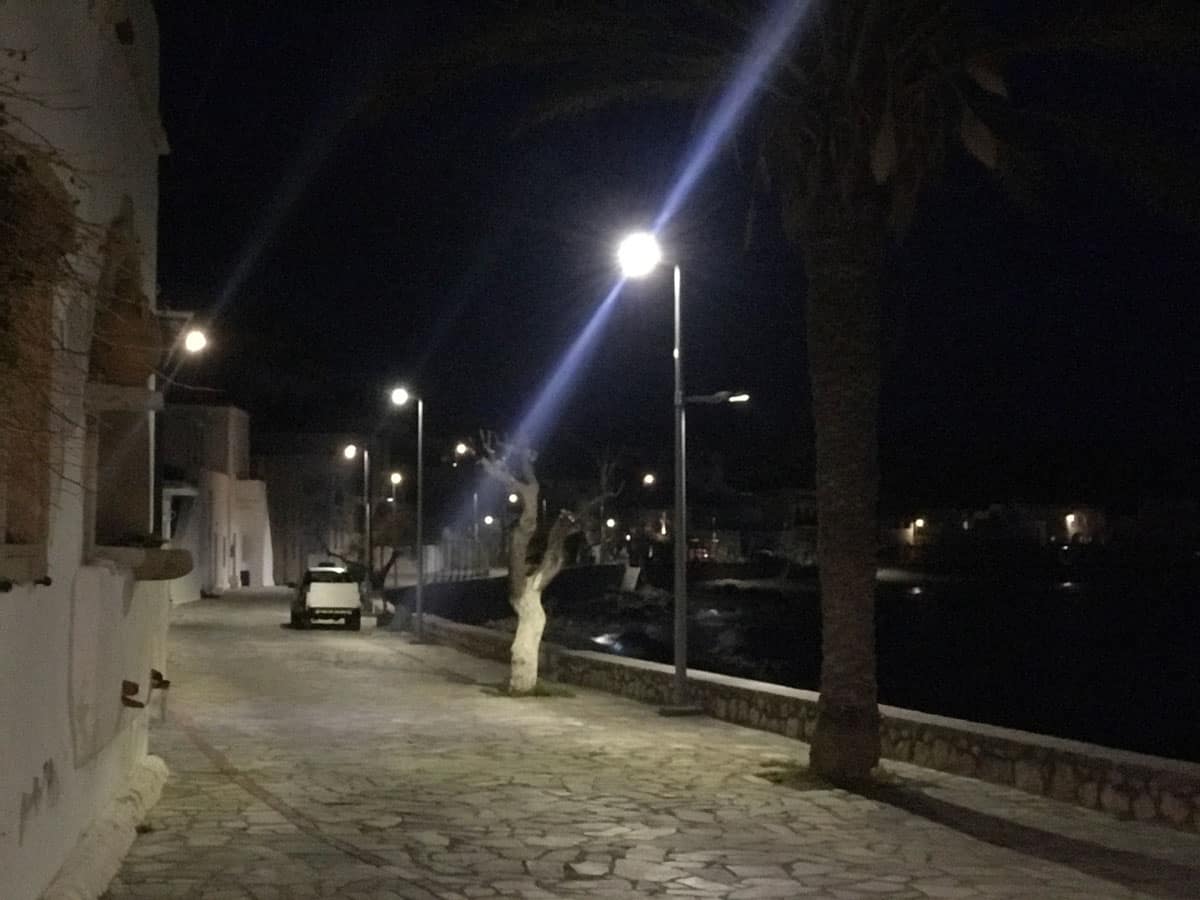
With an open letter to the Mayor of Kythera, Mr. Efstratios Harhalakis, Mr. Orestis Haros, visual artist, teacher who teaches lighting design in the built environment in the postgraduate program «Applied Environmental Protection Policies and Techniques» of the University of West Attica. The content of the letter was about the much-discussed public lighting installed in Kapsali. Mr. Haros stands on the scientific, technical and legal aspects of the installation of public lighting, argues on the issue and poses questions to the Mayor, inviting him to answer publicly. At the end of his letter, he asks the Mayor to take note of the relevant lighting study carried out for this project.
Note that Mr. Haros shared his letter with a comment under a post by the Mayor on Saturday 17 April on his personal Facebook account, which we also published commenting on some of its points. Read Mr. Charos' letter below:
Letter from Orestis Charos to the Mayor of Kythera Efstratios Harhalakis
Dear Mayor
Street lighting (and lighting in general) has nothing to do with what you mention. Street lighting is not a subjective matter («like» - «dislike»), has nothing to do with painting or any art form and (fortunately) is not resolved by referendums.
It is a specialised scientific issue that is not regulated by democratic procedures but by the Lt. D13/b/oik.16522 (Government Gazette B’1792 3.12.2004) of the Minister of PE.HΩ.DE (Photometric data and Technical Specifications of street lighting) while subject to a specific legal framework and specifications that have emerged from scientific research. Therefore, the result of a lighting project is judged in a completely objective way as «good», «average», «bad», out of specification, harmful or completely out of place. This applies irrespective of which body has approved it and irrespective of whether the citizens of a municipality like the lighting.
It is based on a special lighting study that can only be carried out by experts and which must (by law) follow specific specifications and in this case the ELOT EN 13201-2:2003 standard, which establishes lighting categories (ME, CE, S, A, ES, and EV).
Each lighting category is defined by a set of specific photometric requirements related to the visual needs of the users of the specific roads (pedestrians, car drivers, motorcyclists, motorcycles, bicycles, etc.) to ensure their safety during the night. It also takes into account many other parameters such as the geometry of the road, traffic density, speeds, existing lighting and many others. Based on these characteristics, roads are classified into categories defined by the above ELOT standard. Each of these defines the levels of brightness, lighting uniformity, glare limit, light pollution, ambient lighting, visual comfort, safety and how users transition from bright to dark space (visual guidance).
If the lighting of the new lighting network in Kapsali is equivalent (as mentioned) to dozens of other areas (urban, island, coastal, marinas, tourist, archaeological, etc.), uses the same fixtures and produces a similar effect, then this implies an absolutely destructive and non-statutory lighting project. Such a destructive effect could only be explained in the absence of a scientific study signed by someone who can be referred to as a «lighting designer» (and not by someone scientifically illiterate).
Based on what I mention in the preceding comment, I wonder:
- Was the public area defined by the relevant table of the ELOT EN 13201 standard? (cases of lighting situations: e.g. car traffic, slow moving vehicles, pedestrians, cyclists - E2)
- Was a proposed range selected from ambient lighting? (Table A.20 of the standard)
- Has a lighting category been selected from Table A.19 of the standard? (crime level, face recognition, pedestrian flow e.g. S2)
- Has the area under consideration been defined according to Table 5.4 (parameters) and the paragraphs for the areas under consideration? (traffic data, environmental and other external influences such as existing ambient lighting, weather conditions, etc.)
- Have the general recommendations been checked for corresponding areas with specific particular characteristics (site geometry, unevenness of the road surface, etc.)?;
- Has any study (if any) taken into account the characteristics of the area as «outstanding natural beauty» (FEK 305/B/1983); E.g. design and colour of the lighting columns, scale and height of the lighting columns in relation to the height of adjacent buildings, trees and other visible objects, position of the lighting columns in relation to the natural beauty, monuments and listed buildings in the surroundings.
- Have the necessary checks been made after installation, as to the required level of lighting? (dazzle caused to users and surrounding houses, light pollution, etc.), as required by the directives and standards?;
- Has anyone taken into account what it means to place in a landscape, a pedestrian street (6m-10m wide) and a settlement like that of Capsali a luminaire suitable for highways several tens of metres wide? (according to the specifications of the company that produces it).
It should be noted here that the selection of the luminaires and the arrangement in which they will be placed should - at least - have been preceded by all of the above. Failure to comply with them may raise serious issues of legality and serious legal claims of private individuals against the Municipality or other parties involved (applications for injunctive relief), since there are critical issues of light pollution, public health and nuisance to the residence, residents and holidaymakers, obvious issues of indirect damage (in the sense of archaeological legislation) to a number of adjacent monuments and listed buildings and direct damage to the (declared) «landscape of outstanding natural beauty».
Therefore it would be interesting to see the lighting «study» done for this project (if it exists). A request will be submitted to the municipality and we await your response and positive feedback.
Orestes Charos
Visual Artist - Educator
MSc «Lighting - Multimedia», EAP