With his eyes fixed on the Eastern Mediterranean, Greece and France strategically upgrade their relations, through a broader defence agreement. The agreement includes clause mutual defence assistance (to be triggered if a country is threatened or provoked) and is expected to strengthen the Navy.
Changing the balance in the Eastern Mediterranean - Belhara and GoWind for the Navy
This move by the two countries, will act as a bulwark against escalating Turkish provocativeness and comes as a continuation of the supply by the Air Force, of fighter aircraft of the Rafale type. In the coming period, Greece and France are expected to conduct joint exercises in the region.
These decisions are part of a broader context of geopolitical developments, including both the Eastern Mediterranean and the political structure of the European Union, with thoughts of a European common defence gaining momentum within its ranks. Developments have undoubtedly been accelerated by the recent US strategic alliance with Australia and Great Britain.
The final framework of the agreement was finalised yesterday, Monday 27/09, in the French capital, during a working dinner between the French President, Emmanuel Macron and the Greek Prime Minister, Kyriakos Mitsotakis. Announcements are expected today, while the Ministers of Foreign Affairs and Defence go to Paris, Nikos Dendias and Nikos Panagiotopoulos.
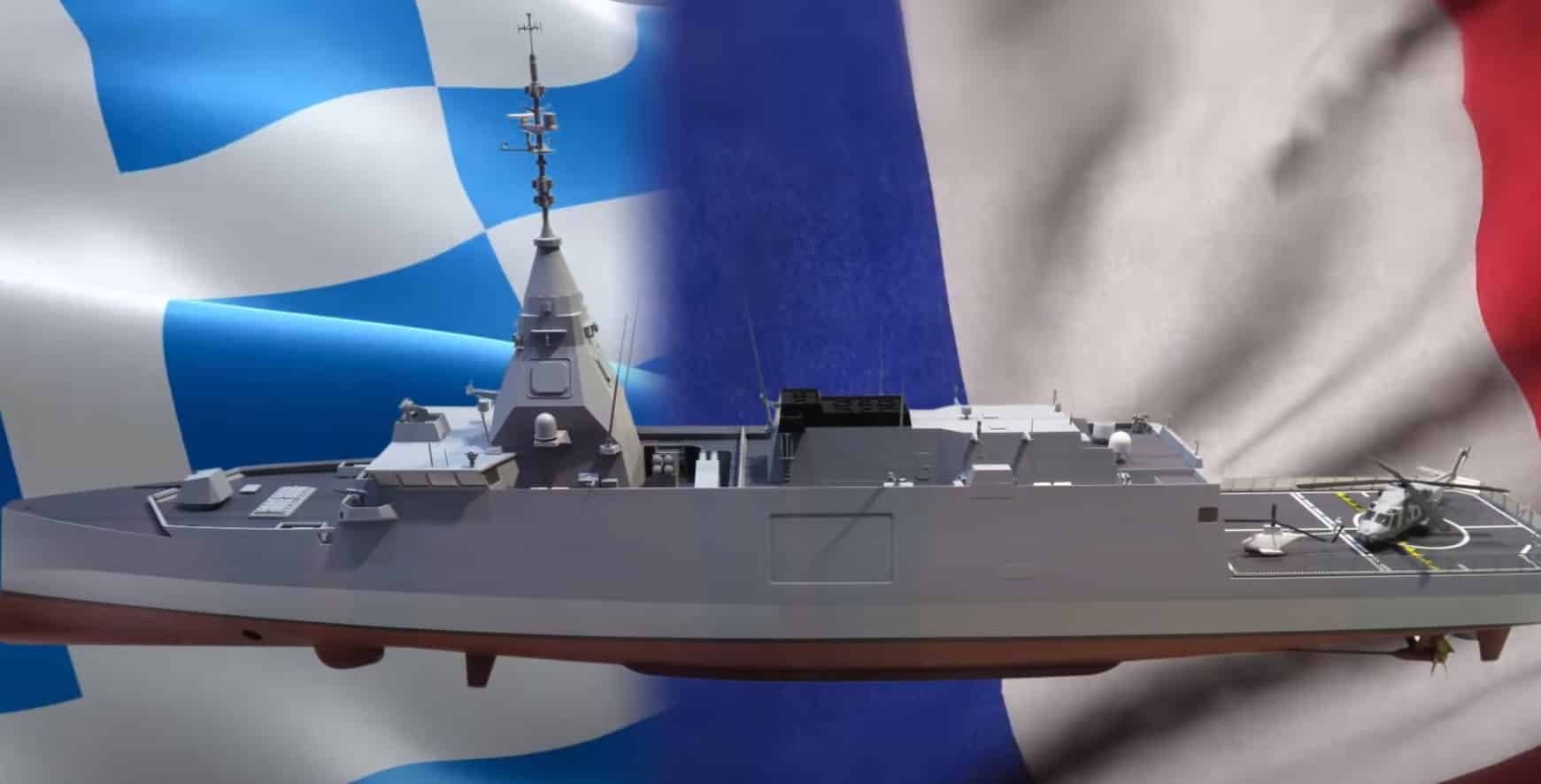
According to reports, the agreement will involve three Belharra frigates, with the possibility of acquiring another one, while the package will also include all the weapon systems they can carry. Also included are three French corvettes Gowind, for which the use of Greek shipyards is expected. At the same time, the upgrade of four frigates MEKO.
The total cost is estimated at €5 billion, while the agreement will also include the delivery schedule (the first two frigates are expected to arrive in 2025). It should be noted that these are weapons that Ankara does not have and will not acquire, as there are clauses in the agreement signed with France.
The role of AUKUS
The developments seem to have been accelerated by the strategic alliance of the USA with the Australia and the Great Britain (the so-called AUKUS). It is known that Paris lost a major contract for the sale of submarines to Australia, which was worth more than 50 billion euros. It therefore focused on the deal with Greece and even submitted an improved proposal, which was accepted.
The Prime Minister, yesterday, noted in an interview with ERT, that «I am not in the mood to enter an arms race with Turkey» but stressed that it will deliver an Armed Forces far more powerful than the ones it received. At the same time, he spoke of a a substantial deepening of the strategic cooperation between Greece and France.
It should be noted that prior to Kyriakos Mitsotakis« visit to Paris, he had two more meetings with Emmanuel Macron. The first meeting took place in Marseille, at the Congress of the International Union for the Protection of Nature, on the occasion of the French initiative »Mediterranean, an exemplary sea by 2030". This was followed by the French President's visit to Athens for the EUMED 9 Mediterranean Summit, which took place just one day after the AUKUS announcements.
Discussions for a new defence agreement between Greece and the USA intensify
Meanwhile, in mid-October, Foreign Minister Nikos Dendias is preparing to travel to the US, where the new defence agreement between the two countries will be discussed and its duration will be clarified. It should be noted that yesterday Nikos Dendias had a meeting with US Ambassador Jeffrey Pyatt and the discussion focused on issues of strategic dialogue between the two countries.
At the same time, Turkey is looking for allies on the international stage, but without seeing... white smoke. Turkish President Recep Tayyip Erdoğan's trip to America did not bear fruit, while no meeting with US President Joe Biden was held. Now, Recep Tayyip Erdogan is preparing for Moscow, where he is expected to to discuss the acquisition of a new S-400 package.
However, Ankara is determined to continue on the path of provocations, while the Turkish Cypriot leader also maintains the hard line, Ersin Tatar. It is characteristic that coming to the informal trilateral - with the UN Secretary General, Antonio Guterres and the President of the Republic of Cyprus, Nicos Anastasiades, he brought back the inflammatory rhetoric about two states on the island.