The Press Offices of the Ministries of Education and Religious Affairs and Health announce:
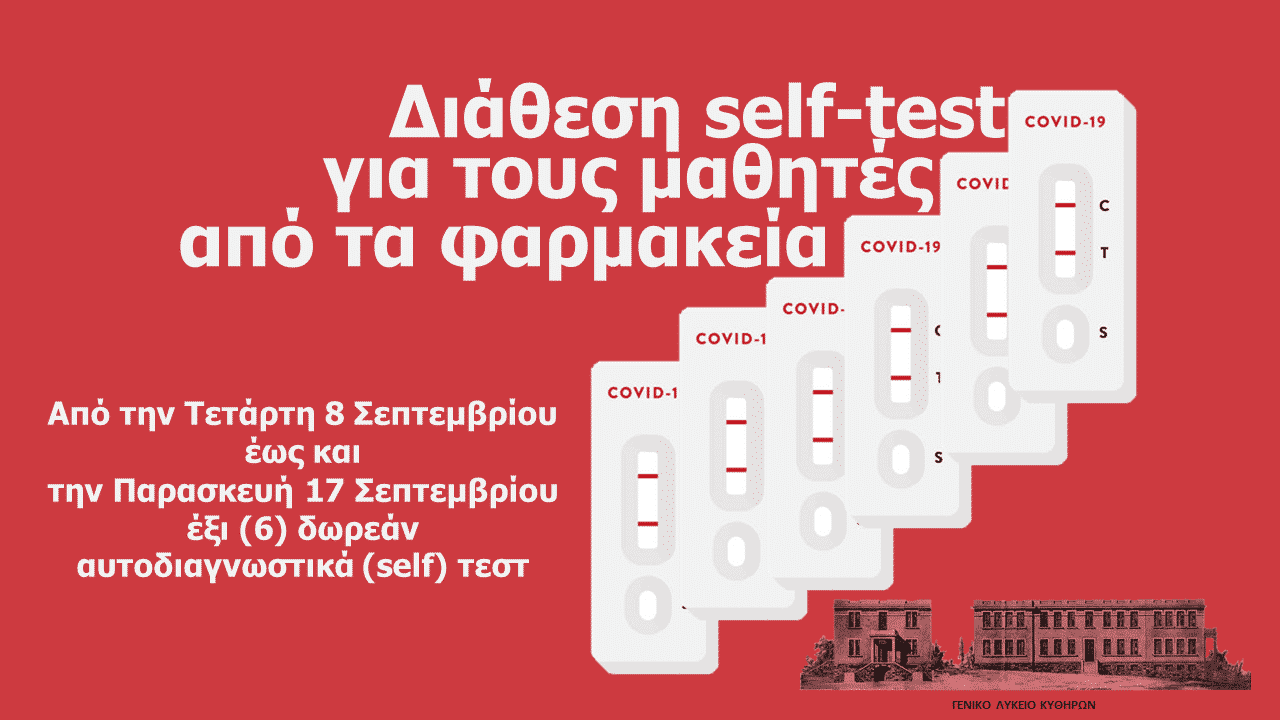
From Wednesday, September 8 to Friday, September 17, students of all grades will receive six (6) free self-diagnostic tests from pharmacies, in order to meet the needs of the next three weeks (13-3/10), i.e. the whole month of September, and to come to school according to the instructions of the experts.
Recall that:
the self-test will take place twice a week, Tuesday and Friday, up to 24 hours before school. In particular, in the first week of the school year, the test must be carried out up to 24 hours before school on Monday 13/9, the screening for the new coronavirus by means of a self test is compulsory for pupils, students who do not have a vaccination certificate (for students 12 years and older) or a certificate of past illness (last semester) must carry a self-test certificate; vaccinated students are not entitled to a free self-test, as they are not required to take it unless there is a special reason; free self-tests are available from pharmacies only during working days and hours, so that they can be used during overnight stays and overnight stays to meet emergency needs.
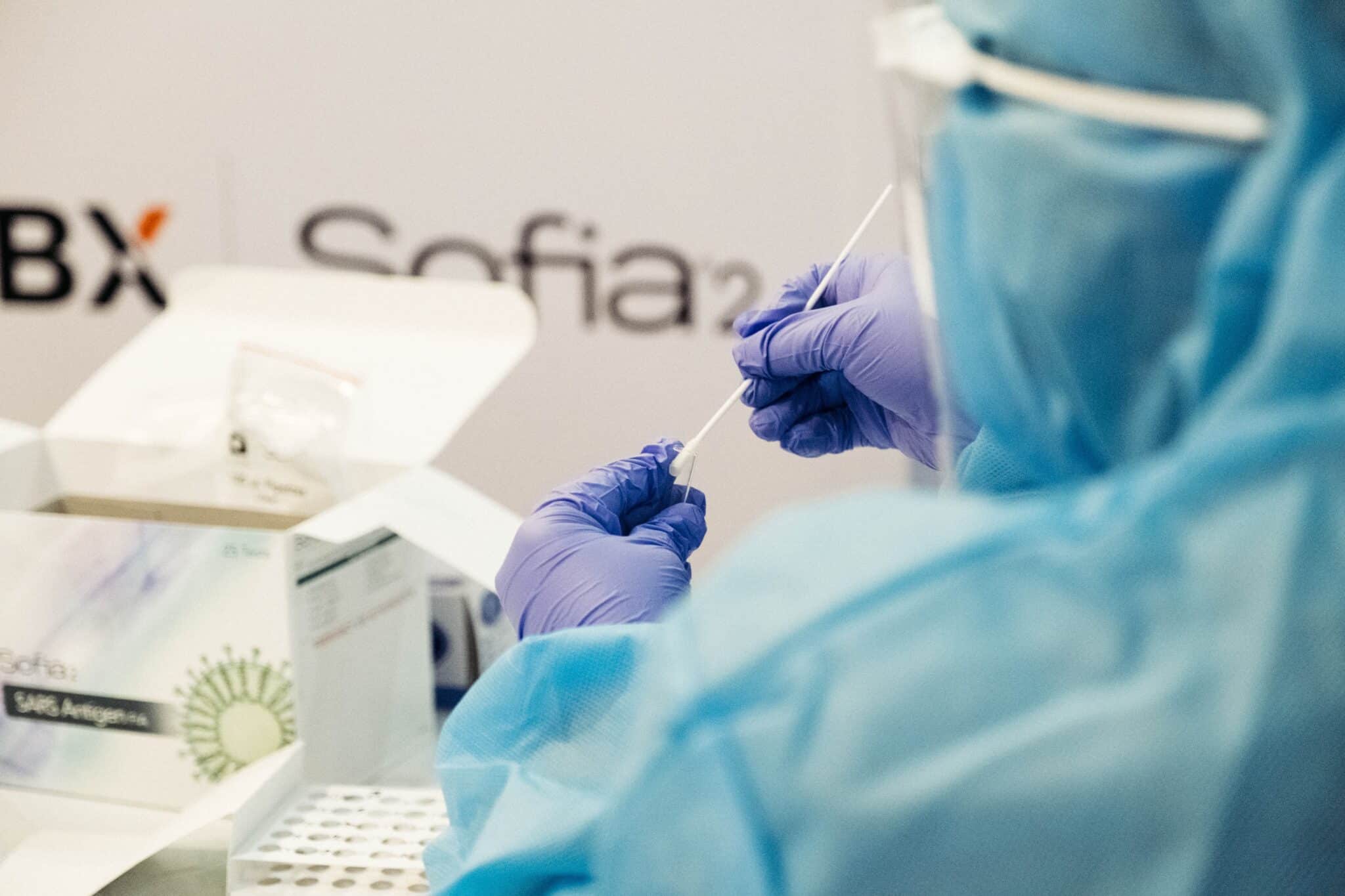
Self-diagnostic testing is an easy and simple procedure, used in other countries for the operation of schools, having helped to identify thousands of cases and consequently limit the spread of coronavirus in the community.
But now we also have the vaccine, a powerful weapon against COVID-19. We urge parents of students aged 12 and over who have not yet vaccinated their children to rush to take advantage of this shield against the virus, thereby helping to build a wall of immunity.
Here you can find frequently asked questions and answers from the National Commission on Immunization about vaccinating children and adolescents:
2-9-2021 SARS-Cov-2 vaccination of children and adolescents - Frequently asked questions/answers about the vaccine
NATIONAL VACCINATION COMMITTEE
Vaccination against SARS-Cov-2 coronavirus in children and adolescents
From July 2021, a new coronavirus vaccine was added to the National Vaccination Programme for children and adolescents aged 12-17 years.
Frequently asked questions/answers about the vaccine
- I hesitate to vaccinate my child because these vaccines were produced in a short time. Are they not safe?;
Vaccines have been produced rapidly thanks to advances in technology, global collaboration of scientists, strong funding, large numbers of volunteers and reduced bureaucracy. Efficiency and safety controls were strictly adhered to, with no deviations from the control mechanisms.
- Which vaccines against coronavirus have been approved for children?;
The vaccines that have been approved by the FDA and EMA for children aged >12 years are the vaccines produced by the mRNA methodology and are: the Pfizer Biontech Comirnaty vaccine and Moderna's Spikevax.
- What are mRNA vaccines?;
Vaccines made with mRNA technology do not contain a virus, but a series of information (message) to train our cells to make a protein (the coronavirus spike protein) that will activate the immune system to produce protective antibodies.
- Why should I vaccinate my child if the disease at his age is mild?;
To protect itself, to further shield the process of education and to contribute to the wall of immunity that is so important for our overall return to everyday life. As a rule, the risk of a serious Covid-19 infection is small but real. Rarely in children the multisystemic inflammatory syndrome (MIS-C) associated with Covid infection occurs, and of particular concern is the persistence of symptoms, after disease, at a rate of about 2%, for many weeks (long covid).
- Are children being vaccinated to protect unvaccinated adults?;
Vaccination is recommended:
A) First and foremost to protect the individual health of the children themselves, both physically and mentally.
B) For their safe return to school and extracurricular activities.
C) To reduce the spread of the virus in the family. Vaccination of children and adolescents protects vulnerable family members who may not have developed sufficient immunity to vaccination.
D) Increased vaccination coverage of students and teachers will reduce the spread of the virus in schools and thus the number of new cases in the community at large.
E) Reducing the spread of the virus in the community prevents the emergence of new mutations.
- Can children with allergies be vaccinated?;
Yes. Common allergies to food, drugs, environmental allergens, dyes, insect nits, are not contraindications. Vaccination is contraindicated in rare cases of allergy to the components of the mRNA vaccine (polyethylene glycol Peg and polysorbate 80). Children with a history of allergy shall remain in the vaccination centre for 30 minutes post-vaccination observation.
- Is it recommended to administer the antipyretic before vaccination?;
No. It is not indicated as a preventive measure because it can reduce the body's immune response. However, if the child develops a fever or myalgia after vaccination, an antipyretic/painkiller can be given.
- Would my child getting sick with Covid be better than getting vaccinated?;
No. The vaccine protects you without risk of possible side effects of the disease. After all, immunity from the natural disease also declines over time.
- Is there a fear that the vaccine will change the DNA of the child-teenager?;
No. The mRNA vaccine cannot change human DNA. The mRNA never enters the nucleus of the cell where the DNA is located.
- Can the vaccine affect fertility or the menstrual cycle in young teenage girls?;
No. The vaccine mRNA molecule is destroyed once it has completed its mission in the body and is eliminated from the body. There is no biological link between vaccine and fertility and no harmful effect of the vaccine on fertility in men and women has been established.
- Can my child get sick from the vaccine itself?;
No. The vaccine does not contain a live virus. Therefore, it cannot cause infection and disease.
- What are the most common side effects of vaccination?;
To date, of the many millions of vaccines given (>10,000,000 in 12-17 year olds), the ones that have been reported are similar to known vaccines. Mild, short-lived and include: fever, fatigue, headache, muscle aches, chills, diarrhea and pain at the injection site.
- Can the mRNA vaccine cause heart damage? How dangerous is it?;
In rare cases (18:1,000,000) the vaccine has been associated with myocardial or pericardial inflammation. These events usually occur in young males aged 12 to 29 years and occur a few days after the second dose of the vaccine. In the majority of cases, the disease is self-limiting.
The symptoms are: chest pain, difficulty breathing and palpitations. In this rare case, you need to contact a doctor and fill in the yellow card. It should be pointed out that Covid's disease causes at least six times the number of cases of myocarditis.
- What is the schedule for the other recommended adolescent vaccines (HPV, diphtheria, tetanus, meningitis) and coronavirus?;
Vaccination against coronavirus does not prevent the administration of other vaccines for children and adolescents. They can all be given a few days apart or even at the same time. There is no specific interval between vaccines.
- I am afraid of side effects that can occur years after vaccination.
Most side effects of vaccines occur in the first few weeks after administration. The mRNA vaccines are destroyed by the body within hours of giving the ’signal« to produce antibodies. No component of the vaccine accumulates in the body to be associated with a long-term adverse effect.
- After vaccination of children - adolescents, are precautions against coronavirus needed?;
Yes. Vaccinated children should continue to wear a mask, maintain social distance, hand hygiene and cleanliness of the area. The vaccinated asymptomatic child can become infected with the virus and transmit it to another person in their environment.
Vaccination is considered complete after both doses of vaccine have been completed.