Anagyris foetida L.
Syn. Neapolitan Anagyris
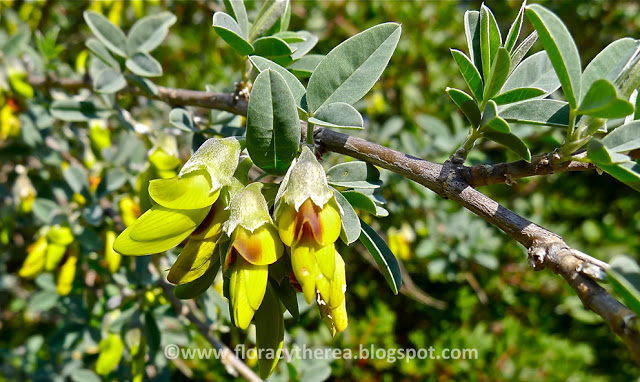
An evergreen shrub native to North Africa and most countries in the Mediterranean and Southern Europe. All parts of the plant are toxic, but especially the seeds, which can cause serious poisoning in humans and animals. Fortunately, this is relatively rare, as its characteristic smell is repulsive. (It resembles rancid vitamin or spoiled boiled beans.) It contains the toxic alkaloid anagyrine.
The name of the genus is first recorded in Pliny the Elder's Natural History and derives from the ancient Greek ana +gyros = from the characteristic way in which the leaves curve upwards and the characteristic adjective from the Latin foetidus – a -um = foul-smelling.
In folk, traditional medicine, it was used in the past, as an emetic and laxative, and as a homeopathic remedy for headaches and amenorrhea.
In some parts of Crete, there is a tradition that this is the tree on which Judas hanged himself, and for this reason, it is despised.