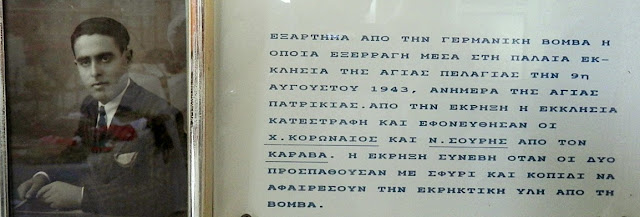
On the occasion of today's post of the doctor Cosmas Megaloconomou for a rare photo of the interwar period from Saint Pelagia we republish the text about the great tragedy of 9 August 1942 during the occupation. The text - reportage was published by Adelin FM on Sunday 24 May 2015.
How the chapel of Agia Pelagia disappeared during the difficult years of the Occupation
A German pilot, finding a fault in his plane, decides to make an emergency landing on the sand in front of the old church of Agia Pelagia. Before starting the descent and for safety reasons, he unsecures the bomb he brought and lets it fall on the soft sand near the monolith to prevent it from exploding. The Germans recovered the pilot by leaving the plane and the bomb in the sand near the church.
The plane was quickly dismantled by the inhabitants, each taking what was useful to him. Hard years and the boot of the conqueror heavy as a catapult. Survival was a daily struggle. The bomb remained on the beach for some time. In those days, the fishermen used dynamite in their fishing. They were playing sucker's bets with their lives. But necessity made them put that on the back burner and risk their lives to provide for their families. This was the reason that made a group of fishermen from Karava think of using the amount of charge from the bomb. They had to very carefully remove the explosive from the capsule and then use a hammer and chisel to open the iron shell to get the charge that was useful to them.
Ten people agreed to the idea and set the date of the argument for August 9, 1943 at dawn on the feast of St. Patrick's Day. Thinking that the villagers would be away from the village to the remote church where they would go to worship, they would have time to carry the bomb into the small church of St. Pelagia to do what they were doing without anyone noticing. So they did. The whole operation went ahead as planned. Without a word with careful movements and with sweat dripping - and stinging eyes - as it rolled down their foreheads the capsule was removed, the shell was opened with a hammer and with a chisel a large amount of charge was removed. But there was still quite a lot left. Most of the group took it upon themselves to remove and store the explosive. They had decided to hide it in the area of the Galani spring towards the river. Three people stayed behind at the church continuing the effort to remove the remaining explosive material. Every hammer and breath was knocked out of them in anxiety lest the blow go astray. One wrong move would bring disaster.
In the agony, suddenly there was chatter and laughter of girls. One of the three peered through the door and saw two girls squeezing their way to the chapel. They were the daughters of the Amorgian from Logothetianica. He caught up with them outside and, thwarting them, asked what they wanted. The girls shortened and somewhat embarrassed told him that it was daylight and they had come to light the candles in her honor. He replied that he had lit the candles himself, and in this way showed that he was not above a second conversation. The girls turned to leave, and John the Blackbird, it was he who spoke to the girls, and he too turned to enter the church again. He didn't have time to grab the door handle and was hurled, taking him several yards away. He was miraculously saved! The church was shaken to pieces. It was thrown into the air along with two of the protagonists of the whole operation.
But what happened? Everything was going well up to that time and it was coming to an end. The two pioneers of this idea, Nikos Souris of Christos (Varvakis) and Charalambos Koroneos (Korios) were unfortunately lost. No one knows what it was that caused the explosion... Could it have been a spark...a wrong hammer, bad timing, no one can know.
At the same time the residents who had gone to worship in the church of Agia Patricia were listening to the words of the priest. Little children were playing on the rocks jumping here and there. Suddenly a loud flash made them all marble, unable to understand what had happened. Stunned, they looked towards St. Pelagia and saw a heavenly mushroom of smoke rising up into the sky. Unable to react and staring dumbfounded at the sight, a powerful crack shook the earth and sky and they were stunned. They could offer no explanation for what had happened. No sound of a plane, no buzzing had prepared them for such a thing. They were thrown out of the church and running towards St. Pelagia everywhere they encountered the remnants of the explosion. At that time in Megali Volta were the brothers Mitsos and Stavros who were coming down from Potamos to go to work at the nuclear power plant. They saw the mushroom cloud of smoke and dust and ran to the scene of the disaster.
On arrival there was no... church. It was... nowhere to be found. It had disappeared. Around the area on the sand in the sea everywhere pieces of the church and unfortunately of the unfortunate Nikos Souris and Charalambos Koronaiou. Amidst the wreckage and in the distance, they tried to pick up as much as they could of their scattered parts and match what was of each deceased. They made 2 makeshift stretchers wrapped the lifeless bodies with woven sheets and the people began a silent march towards Karavas. At Karava unsuspecting widows and orphans waited for their people to return but not in this way. For days afterwards dogs pulled and dragged limbs from the bodies of the unfortunate fishermen. This is how the church of Agia Pelagia disappeared, and as historian Panagiotis Tsitsilias says, the date it was built could not be determined.
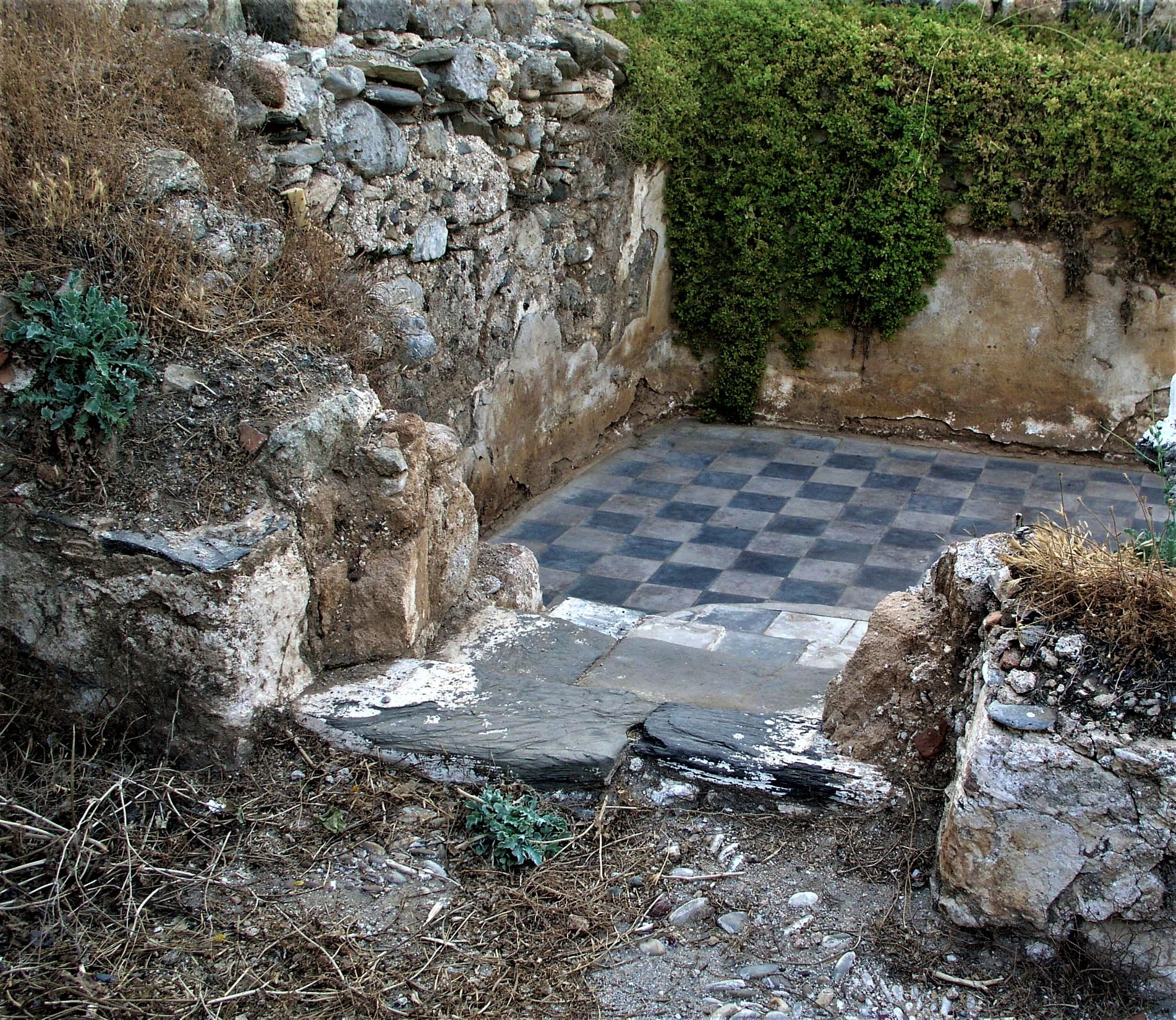
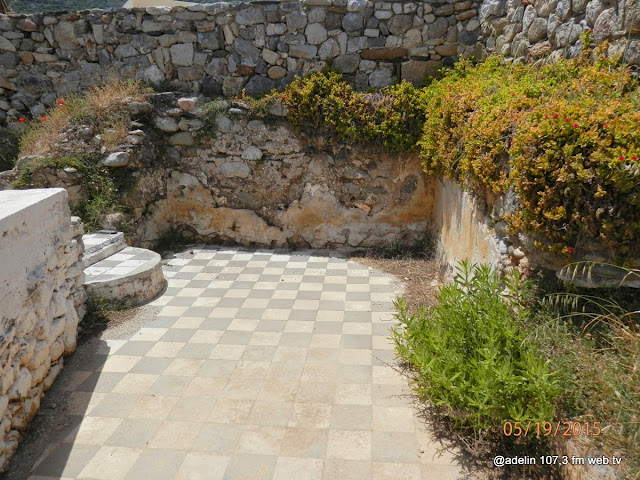
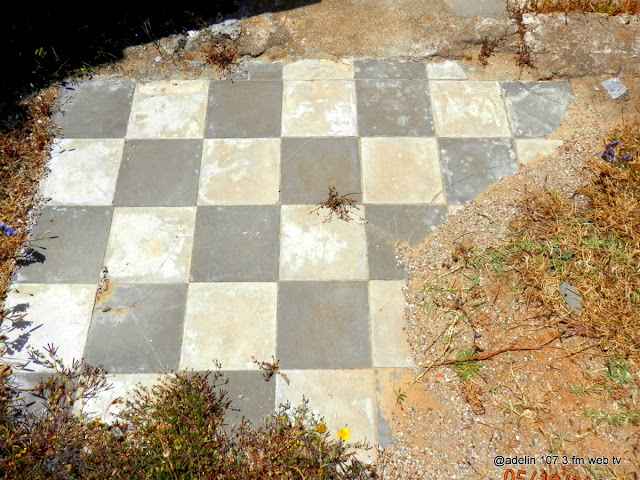
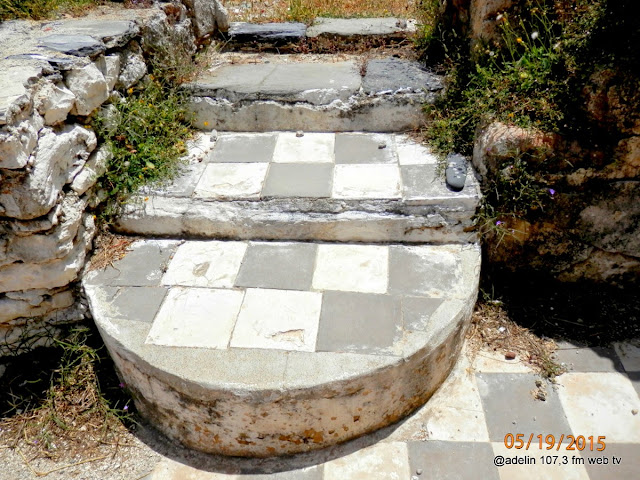
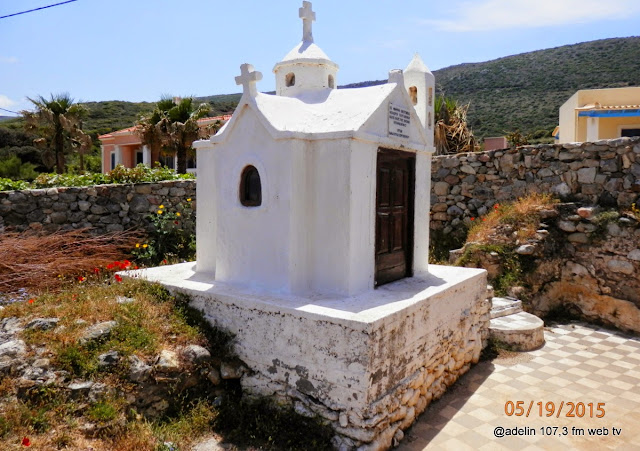
Today remains of the floor and walls are preserved. Several years later, a small church was built at the spot as a reminder of that terrible tragedy that is recorded in the black spots of the history of Kythera.
Here is today's post by Cosmas Megalokonomou:
Treasure
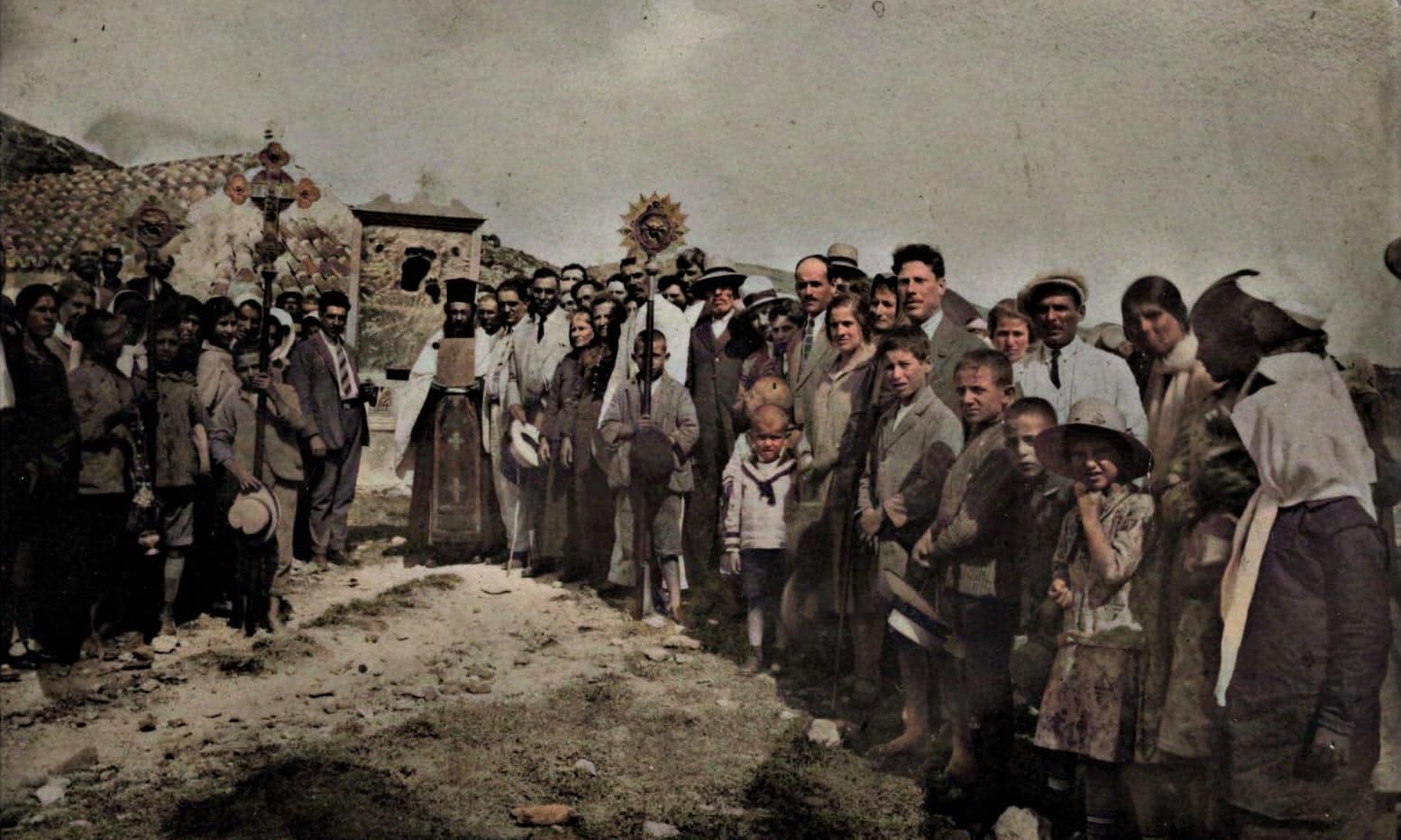
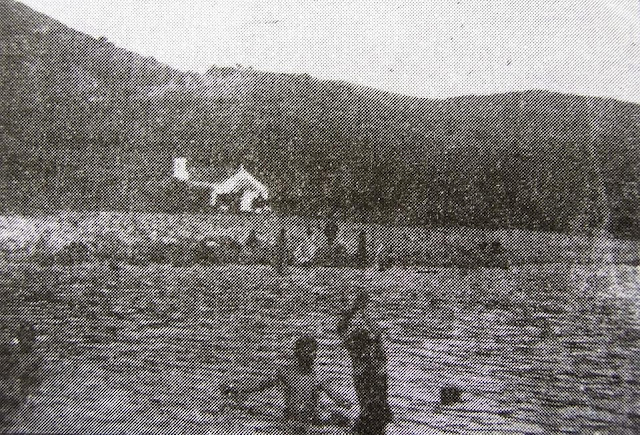
A photograph, taken in Kythera at the end of the 1930«s and missing from Kythera until now, was sent by a collector to Eleni Harou, knowing her interest in the history of our island. Eleni with her knowledge and her historical-divine genius thought that perhaps I could help her in identifying the place and some of the people. I did indeed confirm one person she had identified and identified another. More importantly, I recognized the place. So here is the only photo that clearly depicts the Old Church of St. Pelagia. The identification was made by many signs. First and foremost by what was being celebrated that day. It was Ascension Day when the icon of the Larioness was descending to Agia Pelagia for the consecration of the waters. Papa Kyriakos and the leading hierophant Evangelos Kavieris can be seen. There is only one other photo of the church (distant shot and low resolution) published in a pre-war Kythera newspaper and republished in my book: »Potamos - History and Images". I recall that this small historic church was blown up during the German-Italian occupation. We owe the repatriation of this unique photograph to the gifts and radiance of Helen. It has been edited and has excellent sharpness. I consider it a treasure for our place, a complement to what remains of the chapel. Please if anyone recognises any faces in the photograph, please let us know.