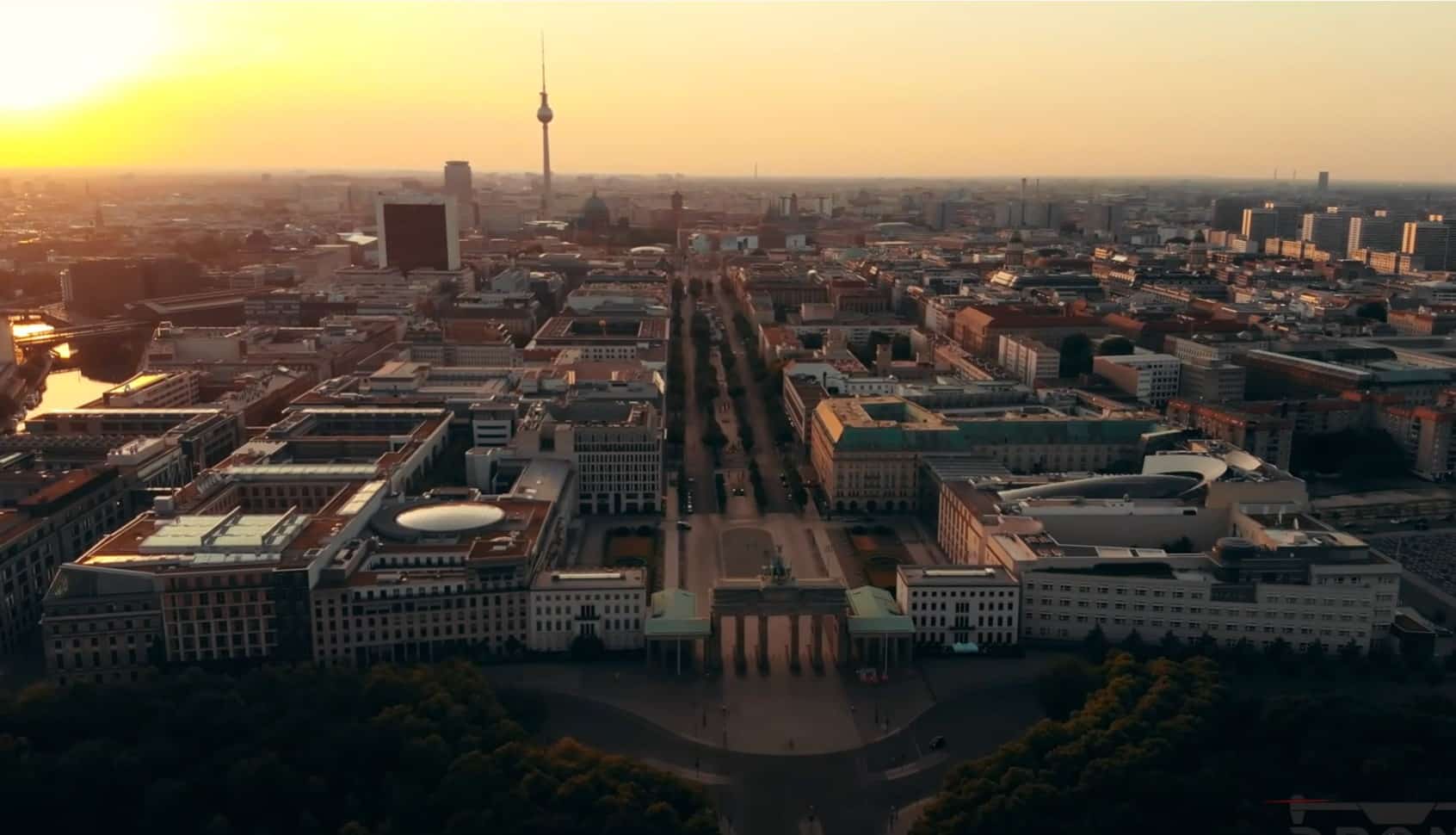
It is not clear whether Germany has decided who it wants to be in ten years« time. It adopted the role of »leading power« in Europe in 2010 reluctantly, awkwardly, rather belatedly. Its population and economic size, however, leave little room for manoeuvre. If it wants to survive, to maintain its prosperity and the level of its welfare state, it is forced to run at the speed of its competitors. If there is a »positive' side to the latest international developments, it is that it has become abundantly clear that over-dependence, monopolies and naivety can cause enormous problems - of existential proportions. The question is how to pursue a smart policy today, how to achieve the right mix of partnerships and ultimately how to achieve decoupling from old partners.
«We came at the right time. It couldn't have been more appropriate!», said Finance Minister Robert Habeck in Singapore last week.
Together with Chancellor Olaf Scholz, they visited Singapore and Vietnam, promoting Germany's «new trade strategy» in the Indo-Pacific.
But is now really the right time to look for partners in the region? Most German analysts comment that Berlin, long committed to China, was criminally late in «discovering» Southeast Asia.
It is significant that it was only in 2020, when the Social Democrat Heiko Maas was Foreign Minister, that the German government's Indo-Pacific Strategy Paper was first drafted.
Now the players are in place. The US has had its hand in the region for years, so has China.
It took a war, an energy crisis and Beijing's at least controversial stance for Berlin to realise that it urgently needs to find more... oranges, in case the Chinese «oranges» turn out to be sour in the future.
Germany is completely unprepared, for example, for the possibility that a military attack by China on Taiwan could trigger sanctions against Beijing and a catastrophe in the German economy - of a magnitude many times greater than the current one, the economy minister admits.
Problems
But Berlin's late operation of «charm» is not expected to be easy. In her 16 years in office, Angela Merkel has visited China 12 times, but only once to Indonesia, Singapore and Vietnam.
Since last summer, however, the routes have become more frequent. Foreign Minister Annalena Burbok visited the Republic of Palau, Indonesia and Japan. Federal President Frank-Walter Steinmeier visited Japan and South Korea. Olaf Scholz made his third trip to Asia since taking office.
The chancellor and vice-chancellor never tire of repeating that Germany needs other partners in the region, but this does not mean a complete disconnection from China, which remains, Solts says, «an important economic and trade partner» and at the same time a «systemic rival», as stated in the programme agreement of the governing parties.
A possible US-China conflict over Taiwan would (also) put Germany in an extremely difficult position.
That is why Berlin is not only running to catch the Indo-Pacific ’train«, but feels it has no choice. What if these countries are far from German priorities in terms of climate protection, respect for human rights, protection of minorities and even social standards, as Robert Habeck acknowledged? »If we only expected to cooperate with like-minded people, we would be in big trouble,« the Green Economy Minister has repeatedly stated, referring in particular to the recent flirtation with Arab countries in the midst of the energy crisis.
Something similar applies to the Asian countries. It has proved to be in the interest of industrial exporting Germany to spread its partnerships as widely as it can - and quickly. After all, Chancellor Scholz, in outlining his «doctrine» for German foreign policy, has repeatedly predicted that the world will become multipolar and that among the «great powers» in 20 years' time will be Indonesia and Vietnam, Brazil and Argentina, Nigeria and South Africa. Thus, when, for example, the German government defends Senegal's right to exploit its natural gas deposits, the motivation is probably 50% the pursuit of a foreign policy based on fundamental values, but not so much the expectation of future energy cooperation.
The problem, however, is on the one hand how easy it is to limit the dependence of the German economy on China and on the other hand how prepared Germany really is for cooperation on specific issues with other countries. The Indo-Pacific countries, reports Die Welt, seem to be sceptical about Berlin's interpretation of its «new trade policy». The German side has not offered much clarity these days.
Economy plus politics and a new «Strategy for China»
But can it be done without politics? In previous years, Mrs Merkel preferred to let the economy pave the way, relying on the doctrine that trading partners have no reason to turn against each other.
But this theory has now collapsed and the market lead has led to undeniable distortions. Deutsche Bank chief Christian Sheving, who was part of the Asia mission, said that in his 33 years as a banker he had never seen a world with so many risks. «Politicians, regulators and businesses need to work together,» he said. These are certainly difficult times when a banker agrees with a social democrat and a green politician.
First step: the investment guarantees for German companies abroad (in other words, China) are now significantly reduced and placed in a stricter framework.
As the Social Democrat chancellor and the Green vice-chancellor were looking for new trade routes in Asia, back in Berlin the Green foreign minister was leaking her draft of the government's new «China Strategy».
The 59-page document, revealed by the German Press Agency (dpa), promotes human rights and strongly criticises the Chinese government for violations in Xinjiang province and Tibet.
Respect for human rights will play an important role in the future development of bilateral economic relations, the text states, while sanctions by the EU are not excluded.
In addition, Germany will in future take into account in its arms exports whether they will be used for human rights violations or repression of the population.
The Foreign Ministry refers, among other things, to the need to reduce the dependence of the German economy on China and to diversify supply chains, but also to the importance of the EU's independence from the technological progress of third countries «which do not share our values».
The draft of the new strategy also points to the increase of Chinese influence in the Western Balkans, which, it is stressed, should therefore join the EU as soon as possible, while reference is also made to the development of China as a military power, «with its development of capabilities and its behaviour damaging Europe's security interests».
The publication of the draft predictably provoked a strong reaction from Beijing, which accused Germany of adopting positions that are «a legacy of Cold War thinking» by describing China as a «competitor» and «systemic rival». Moreover, China rejected «insults» on «so-called» human rights issues «with lies and rumours».
If the Foreign Ministry's aim is to make cooperation with China even more difficult, the document it has prepared will make a significant contribution. The draft will, however, go through several ministries, the most important being that of the Economy. Robert Habeck, although also a Green, has already spent enough time in the post and has enough of a taste for crises to have acquired a different approach to balancing ideology and realism.
For his part, the chancellor may often refer to Germany's economic strength, announcing that he will have the «strongest conventional army in Europe», but he will hardly describe his country as a «leader» anywhere. «He sees Germany's role more as a coordinator,» Zeit explains in a commentary.
But even under pressure, Olaf Scholz is now seeking strong alliances and new balances, trying - he says - to be both decisive and prudent. This is also how he sees the German-Chinese relationship: unilateral dependencies must be rejected, but without economic disconnection. In other words, he wants the world to come to order, he puts human rights above all else... but the latter will have to wait until Germany's economic security is secured.