Read here the paper by Evangelos Kyriazopoulos and Nikolaos Lourantos on the steamship route between Kythira and Smyrna in 19ο century.
Kythera - Smyrna: The steamship union of two places in the 19th century and its unknown aspects
Proceedings of the 10th International Panionian Conference, Vol. I, Corfu, April 30–May 4, 2014, pp. 249–263.
Summary/Summary
The steamship service between Kythira and Smyrna in 19ο a. It is relatively unknown. Due to the agricultural crisis of 1850–60, there was a wave of emigration to Asia Minor, mainly via the Austrian Lloyd. A building that has been preserved served as the agency’s office, and the family that ran it is related to Leucadius Hern.
The steamboat connection between Kythera and Smyrna (Izmir) in the 19thth The century is relatively unknown. Due to agricultural disasters (1850–60), immigration to Asia Minor began, mainly through the Austrian Lloyd. The agency used a building that still stands today and has a connection to Lafcadio Hearn.
The Mansion with the Sundial
The Cavallini Mansion in Avlemonas, Kythira, is a unique building. It houses one of the two surviving sundials on Kythira. It has stood there since the early 19thno century. It is initially referred to as a house Darmarou, so it was built before 1800 by the Kythirian family of the same name. There is evidence that it was later purchased by the brothers Lazaros and Georgios Kountouriotis. The building was eventually sold to Angelo Cavallini (1800–1886).
Angelo, a scion of an aristocratic family from Genoa, Italy, was the captain of a ship in the family business. While recovering from an illness, he disembarked in Kapsali. There, he met Rosa Vidi, who nursed him back to health. They married and had five sons and five daughters. After his marriage, Angelo purchased the house, which he decided to renovate and expand. The work was completed in 1827. The sundial was constructed around the same time. The ground floor of the house served as a commercial space: an office of the Austrian Lloyd, a customs office, the Austro-Hungarian consulate, and the Greek consulate. Angelo also worked as a caterer.
The building’s location lends it an air of grandeur. It is characterized by bold lines, creating a monumental effect. It consists of a ground floor, a mezzanine, and an upper floor, with a south-facing facade, incorporating the rock at its rear, facing north. The stonework is meticulous, and the walls do not taper toward the top. The central entrance has a slightly decorated arched lintel made of poros stone, supported by jambs—a style found from the 1700s onward in the ’urban» or traditional houses of Kythira. The sundial was incorporated using the arch of the lintel. The windows have stone frames on which the mechanisms for the shutters are mounted. It includes an interior oven-hearth/fireplace system and a rainwater collection system that drains into a cistern. There is a small courtyard at the rear, making use of the space between the house and the rock face. The loft and the upper floor have wooden floors and are connected internally by a staircase. We believe it belongs more to the «urban»buildings from the late Venetian period, although it is reminiscent of the «vacation homes»mansions, from a morphological perspective.".
After Angelo’s death in 1886, ownership of the house passed to his eldest son, Spyros. His other son, Ioannis, had a share in the business but not in the house. Giovanni Cavallini was a lawyer, a Lloyd’s agent, and a vice-consul of Austria-Hungary, and he settled in Kapsali. This was due both to the company’s interests—since the port served as a winter destination— as well as with the fact that his professional role as a lawyer required him to be near the administrative center. Giovanni was the second husband of Rosa Kasimati, mother of Lefkadius Hern. Today, the building consists of two separate properties. The property that houses the famous sundial belongs to Ioannis Klavdianos, a descendant of the Kavallinis family.
Lefkadios Hearn and his mother, Rosa
Rosa Kasimati (1823–1882) was the daughter of the nobleman Antonios Kasimati. She had a tempestuous personality and was a beauty. No portrait of her has survived, although photographs of her did exist. Recently, a painted portrait by a Japanese artist, based on oral accounts, has come to light. Her relationship with Charles Bush Hearn was quite unusual. The couple secretly left Kythira in June 1849 due to Charles’s transfer to Lefkada. In July, their first child, George Robert, was born, and they were married on November 25. Their second child, Lefkadios (1850–1903), was born on June 27, 1850, four months after his father had returned to England, where he was to receive orders for his next posting to the West Indies. In August, however, their first child died suddenly. Charles returned from England toward the end of 1850. On August 12, 1853, they had their third child, Charles. Charles’s impending transfer to the
The West Indies forced the family to move to Dublin. The oppression Rosa faced from her mother-in-law, the climate, and her husband’s long absence from home forced Rosa to file for divorce. Rosa returned to Kythira in 1854 with her son Charles, leaving Leukadios behind, assisted and accompanied by Giovanni Cavallini. The divorce was finalized in 1856. When she married Giovanni Cavallini ((1857) sent Charles to Dublin. There, his name was changed to James Daniel, and he was sent to a boarding school in Scotland. Her ex-husband married Alicia Goslin Crawford in 1857, a wealthy widow and an old acquaintance of his, whom he took, along with her children, to the West Indies. Lefkadios and James grew up in an authoritarian environment. To «cure»Because of his fears, they would lock him in dark rooms. Leukadios never got over being separated from his mother.".
From her second marriage, to Giovanni Cavallini, Rosa had four children: Ziza, Catherine, George, and Angelo. Unable to come to terms with the loss of her two children, she ended up suffering from severe psychological problems. It is said that she made another trip to Dublin, to no avail. In 1882, at the age of 59, she died at the Corfu Psychiatric Hospital.
Giovani Cavallini’s grave is located in the Kapsali Cemetery. It is not certain that this is also Rosa’s grave. The epitaph does not mention her, nor does it indicate that this is a family grave. It is generally accepted that this is her burial site. The complete lack of any reference leads us to speculate that there is a possibility Rosa was not buried in Kythira but in Corfu. Our hypothesis is supported by the fact that Giovanni died in 1905, much later, so he would have had time to oversee her burial arrangements.
The Shipping Company
Österreichischer Lloyd (Austrian Lloyd) was one of the most important shipping companies. In 1833, marine insurance companies, banks, independent investors, and the politician Karl Ludwig von Bruck founded Austrian Lloyd Trieste. Initially, it operated as «information bank», based on the model of Lloyd’s of London. Soon after, the company applied to the Emperor of Austria for the privilege of operating the steamship route connecting Trieste with the East. On April 20, 1836, the steamship division was established, and on August 2, it was decided to build six steamships. Initially, the company operated on Adriatic routes but soon expanded by acquiring the Constantinople–Smyrna line (1844). With the opening of the Suez Canal in 1869, the company expanded into India. The name was changed to Austro-Hungarian Lloyd in 1872, but in 1891 the name “Austrian” was reinstated. In 1881, the launch of coastal shipping routes to New York, Brazil, and Argentina was announced. In 1886, the company operated a fleet of 86 ships. On the 1ο During World War I, its service was suspended. In 1919, it was renamed Lloyd Triestino and flew the Italian flag, after Trieste became part of Italy. It managed to rebuild itself by the end of the 1930s. Its fleet grew to 85 vessels operating on 17 routes. The 2os World War II resulted in further losses. In 1955, its fleet consisted of a total of 31 ships, serving both overseas voyages and cruises. In 1993, it formed a partnership with Evergreen Marine Corp., making a strong entry into the freight transport sector. On the 1stη In March 2006, the name Lloyd Triestino was changed to Italia Marittima. In 1991, a company named Austrian Lloyd Ship Management (Österreichischer Lloyd), headquartered in Cyprus, was established. Officially, however, there is no legal or other connection to the original company.
Lloyd’s first encounter with Greece took place on May 16, 1837. The paddle steamer Arciduca Lodovico set sail from Trieste for Constantinople, where it arrived on May 30. The route was: Trieste–Ancona–Corfu–Patras–Piraeus–Syros–Smyrna–Constantinople, every fifteen days. The route served not only to transport passengers but also to carry mail. On May 10, 1848, the Trieste–Alexandria route was inaugurated, with Corfu as its only stop. Starting in 1840, there was a weekly route between Trieste–Corfu–Paxi–Lefkada. In 1858, Preveza and Sayada in Thesprotia were added as stops. In 1853, the Greek route between Loutraki and Piraeus. Since the Isthmus of Corinth did not yet exist, the company arranged for overland transport by carriage so that the journey could continue, until 1893, when construction of the canal was completed. For example, the Trieste–Piraeus route took 6 days, but it was not always easy. An article in the newspaper Athena (August 12, 1844) describes a robbery. Starting in 1854, the Albanian route, from Trieste through the Dalmatian ports to Zakynthos.
Other routes operated by the company at that time were: Trieste–Istanbul, Trieste–Smyrna, via Ancona–Corfu–Ithaca–Zakynthos ––Kythira–Syros–Chios, Istanbul–Stylida, etc., while there were also local routes: Syros–Rhodes, Syros–Chania–Rethymno–Heraklion, etc.
In contrast, there were the Greek companies of that era:
- Greek Steamship Company (or Syriani) (1857),
- the Goudi Steamship Company (1879), and
- Panhellenic Steamship Company (1883).
When it comes to the Ionian Islands in particular, we must mention the local connection with the «Ionian fireboats», with a government subsidy from the Ionian State, which were active from 1826 to 1863.
The foreign companies operating there included: Mahsousse, P&O Company, Cunard, ROPIT, Norddeutsche Lloyd, Deutsche Levante Linie, Aegean Steamship Company of Kourtzis, Kedivie, Fraissinet & Cie, Societa Anonima Italiana de Navigazione Adriatico Orientale, as well as others, primarily on local routes, such as Joly, Viktoras & Co., Hamidiye, Foskolou-Magu, Karava Limniou, the Asia Minor Steamship Company of P. Makris, the Papagiannis Company of London, and others.
However, its most significant international competitor was the French Compagnie des Messageries Nationales. In 1851, the French government signed a contract with the company to establish four routes to Italy, Egypt, Greece, and Turkey. In 1852, the company adopted the name Compagnie des Services Maritimes des Messageries Nationales, and in 1863 it changed its name to Compagnie des Messageries Impériales, acquiring its first shipyard. In 1871, it was renamed Compagnie des Messageries Maritimes. A series of mergers led to the company’s dissolution in 1977.
What is important is the existence of a permanent steamship connection between Kythira not only with Piraeus but also with Smyrna, the destination of a large percentage of immigrants in the early 19thno a. Kythira was used by several companies as a carbonation station, at least until the 1stο World War, using locally mined materials.
The Kythirian community in Smyrna has existed since before 1776. Their involvement
The trade in medicinal plants from the interior of Asia Minor was a factor in the movement of seasonal—and, initially, migrant—workers. The turbulent political situation of the period 1780–1817 must also be taken into account. The settlement of permanent immigrants in Smyrna can be documented as early as 1806. The agricultural devastation suffered by the island—initially affecting vineyards and later other crops—created a shortage of resources and led to a mass exodus (1850). The Crimean War (1853–1856) that followed created additional problems. The existence of a regular transportation route allowed for seasonal labor as well as more permanent settlement, although this is not easily detected in the censuses, which show a population increase. This becomes apparent when we observe the dramatic increase in cultivated land. These two factors indicate growth attributable both to the change in the land tenure system, through the massive inflow of remittances, as well as to changes in the type and methods of cultivation after 1820. Larger family estates mean that families are growing, since they need more laborers.
The use of Greek, as well as European languages, helped the people of Kythira by enabling them to adapt easily. The use of the Ionian passport was significant, as it protected the holder from Ottoman abuses due to the Dimo logies. Finally, the cost of travel was certainly lower than that of similar overseas journeys. Piraeus was a more economical option, but Smyrna offered more professional opportunities. It is interesting to note that emigration began to decline around 1890. By 1897, it appears to have ceased almost entirely, for unknown reasons.
The formation of associations is the result of the large number of permanent immigrants. The Kythira Brotherhood of Smyrna is active «Officially»since 1806. It was titled «Feast of the Tsirigotes of the Virgin Mary of Myrtidiotissa», and later «Ionian Brotherhood of the Myrtidians». In 1887, it was reestablished as «Kythira Brotherhood of Smyrna “Myrtidiotissa”», while in 1898 another one was published under the title «Mutual Aid». The existence of two brotherhoods indicates a strong demographic base and has other implications as well.
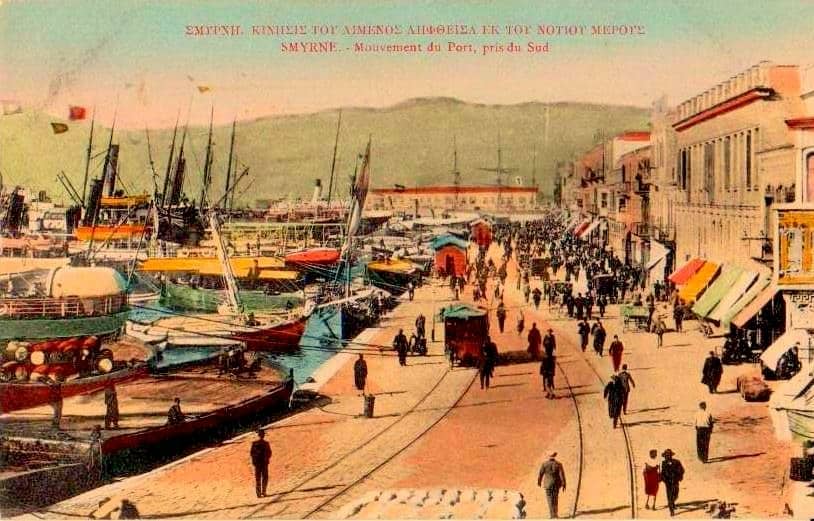
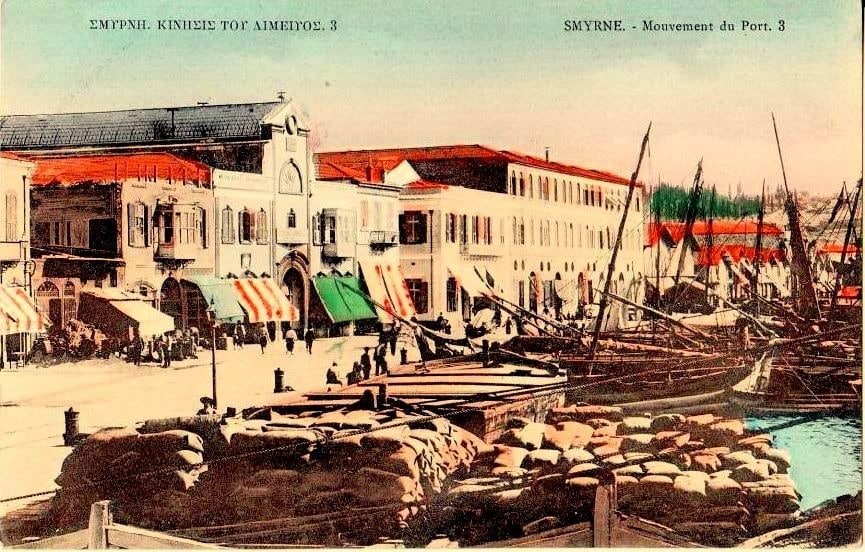
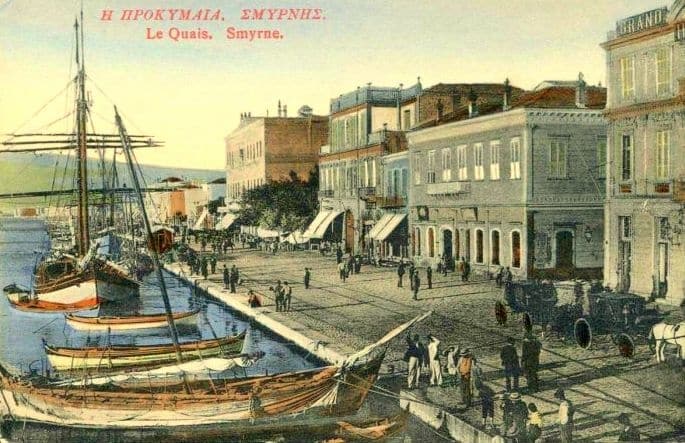
The Kythirian community in Smyrna was large and had three main centers of activity: the waterfront (Quais), where they ran kitchens, wine shops, and coffeehouses; the Megales Tavernes neighborhood, one of the most central areas of the market; and the suburb of Mersimli (Myrcine), east of Smyrna, where a church dedicated to Myrtidiotissa and a four-grade elementary school were built, a site that later developed into a settlement.
In addition, the Vournova Plain had a large concentration of people from Kythira, as did Koukloutzas, Vairakli, Kordelio, and other places. It is noteworthy that Vournova was home to a dependency of the Monastery of Myrtidi, while there were also other churches dedicated to Saint Myrtidiotissa in Kordelio and Axario. In Kordelio, at the port of Gioul-Baxé, a three-day celebration of the feast of Myrtidiotissa took place, attended by Kythirian boatmen from Smyrna. In the cathedral of Agia Fotini, there was an iconostasis of the Virgin Mary, the work of a Kythirian monk. At the Church of St. George in Smyrna, built in 1858, there was a chapel. On the day the icon was found, September 24, an official procession took place through the city, and parts of the market were closed.
were in operation. Of great significance is the presence of Kythirian shipowners who established joint-stock companies and built the first cargo ships at the port, thereby effectively securing a monopoly on transportationuntil 1897. The area in the middle of the harbor was known as TSIRIGOTIKA. One of these companies expanded into passenger transport, initially to the suburbs of the Gulf of Smyrna but later to other Aegean ports as well: ZOLY, Kourmouli, Viktora, and Sa (Joly, Courmouli, Viktora Co.). Viktora was a first-generation Kythirian. Smyrna, then, and Asia Minor more generally, were the primary destinations for Kythirians. At the same time, their migration has taken them not only abroad but also throughout Greece.
Lloyd used the Avlemonas only seasonally, during the summer months. During the winter, the Kapsali was used, as it was more sheltered from the wind and had better facilities. The presence of two agents—Cavallini (Lloyd) and Stefanos Barbarigos (Hellenic Steamship Company)—demonstrates the island’s importance as a port of call. Moreover, in 1905, a shipping company owned by people of Kythirian origin was established, operating the route between the island and Piraeus.
The export of products such as wine took advantage of the steamship connection and contributed to economic development. It is noteworthy that in 1887, goods were being shipped to Central Europe «…the commission of Mr. Kavalinis, agent»… « shipments of quail, from which the residents earned “… ”thousand drachmas…».
Conclusions
The people of Kythira moved around, either permanently or seasonally. The island could not support a large population. Regular transportation, made possible by the elimination of piracy, facilitated the movement of people and goods. Kythira was the right island, in the right place, at the right time. The steamship connection to and from the East sparked both opportunistic commercial travel and migration, which, compounded by the agricultural devastation of the island, ultimately created conditions for an increase in the standard of living of the remaining residents and, consequently, population growth. The Austrian Lloyd utilized Kythira, creating the conditions for the rapid expansion of the Kythirian community in Smyrna. During exactly the same period, Smyrna experienced significant growth, with the development of infrastructure that enabled it to better manage trade with Anatolia. Kythira supplied Smyrna with new residents, and Smyrna, in turn, fostered the Kythirian economy through the influx of money from the immigrants.
English Version:
Kythera – Smyrna: The steamboat connection between the two places in the 19th century and its lesser-known aspects in T. Pylarinos and P. Tzavara (Eds.), Proceedings of the 10th International Conference of the Ionian Islands, vol. 1, Corfu, April 30–March 4, 2014, pp. 249–263.