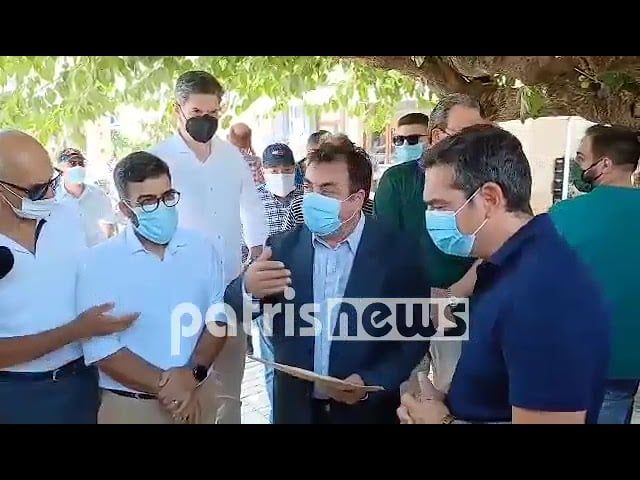
Article by Dimitris Mariolis, lawyer at the Supreme Court, Apof. Dimitri Dimitrios, Professor of History and Ethnology, D.U.Th.
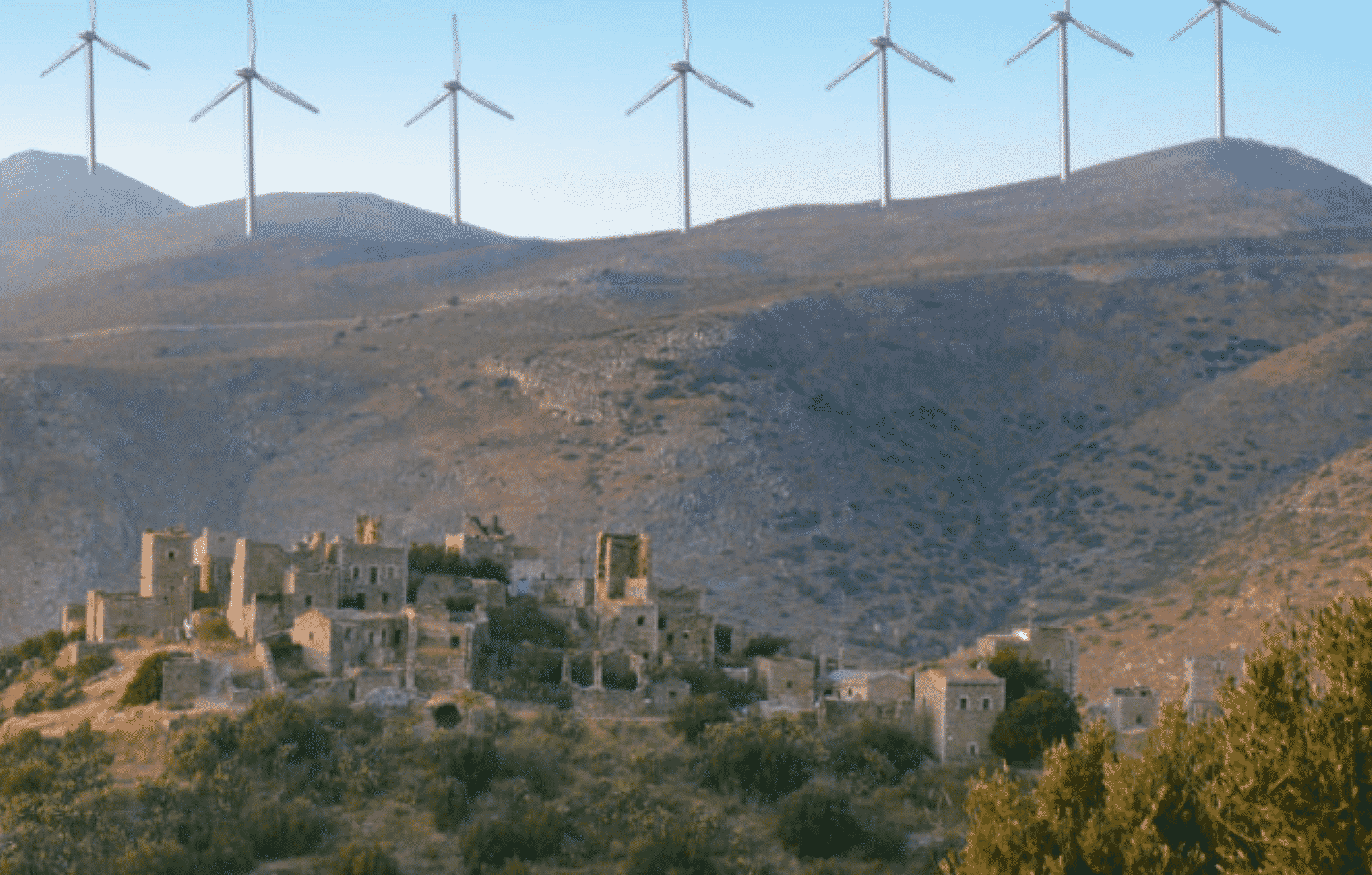
This article comes in the wake of recent serious developments. Where the Greek State intervened in a lawsuit between Mani owners of land in the area of Mesa Mani in favour of wind farm companies.
There he claimed that this is the real owner of the disputed lands and the wider area (28,000 acres of ”araz emirie” forest) as the successor to the Ottoman Empire. And therefore that legally these have been legally granted today as ”public forest” to the companies for the installation of wind turbines.
These claims of the State concerning the property status of Mani, irrespective of any admission by the Court of Justice, we consider that they are completely devoid of any historical and legal basis.
This is because the formation of the property regime of real estate in the individual regions of our country is closely linked to the particular historical conditions that prevailed in these regions, both before the Revolution and during the 1821 Struggle.
For Mani it is known that until the revolution and during the period of Turkish rule, a peculiar legal regime was in force, since it had never been subjugated to the Turks and had maintained its independence with its weapons. In fact, during the period from 1777 to 1821 it was ruled by a Greek ruler (Bey), chosen from the most prominent families of Mani and recognized by the Turks and their Sultan.
The irrefutable witnesses of Mani's independence
Historical data and evidence are the irrefutable witnesses of Mani's independence over the centuries. As early as 1571, the Elders (prelates) of Oitylos, addressing the Doge of Venice, wrote: “...that we have half of Moraine without paga (i.e. payment - paga)
you have blisters and quarrels and we have fled and we have been wiped out and we have eaten and we have eaten bataia with the Turks and the help of God...”.
Later (1806) in the “Hellenic Prefecture we read: “...Do not, however, please do not emulate the all-encompassing example of the admired Maniates. Do not believe that the Ottomans have never been able to subdue them, nor do they dare to approach their borders anymore...”. Even Peter Mavromichalis, the last Bey of Mani and leader of the Mani army in 1821, writes in 1829 to Governor Ioannis Kapodistrias: “...Since Lord I was an independent leader in all of Sparta (Mani) from Trinissa to Agiasos...”, giving us the geographical
determination of the eastern and western borders of Mani with the Ottoman Empire.
But even after the liberation of Greece, in 1835, the Bavarian Dr. Gustav Geib, royal government adviser to the Greek Ministry of Justice, wrote: “...the real power was in the hands of the so-called manatee. He, even if appointed by the Gate, was in fact completely independent of it, and while he was always chosen from among the most illustrious and powerful families of the country, he considered himself an autonomous ruler...’.
In Mani the Ottoman laws did not apply
In Mani, therefore, the Ottoman laws were not in force and there were no real estates (lands) belonging either to the Ottoman State (Sultan) or to Turkish private individuals or pasades. The Mani consisted only of land of pure ownership, ruled in full ownership by the Maniathan lords
their. And they were passed on informally (i.e. by word of mouth) from generation to generation and according to local customs.
On the contrary, in other areas of our Homeland, where until the Revolution of 1821 the Ottoman laws were in force and there were lands that belonged to the Turkish State or to Turkish private individuals, when they were liberated, these lands (which included as a category the public forests of the Ottomans) were declared by the Revolutionary Assemblies as “national lands”, i.e. public, with the right of war.
In fact, the well-known procedural privilege and the presumption of State ownership of the latter, especially of forests, was established by a series of international acts and laws from 1830 to the present day (London Protocols, the Treaty of Constantinople, the b.d. of 17-29 November 1836, article 62 of law 998/1979). Accordingly, it is stipulated that in any kind of dispute or lawsuit between the State and a private person claiming rights to forests and forest land, the latter (private person) must prove his claimed right against the State.
The non-existence of ”national lands” in Mani
On the contrary, the complete absence of “national lands” in Mani, i.e. public lands (as former Turkish lands, which included
as a category and the former Ottoman public forests), is a historical truth. It is documented by a wealth of evidence and should not be
be misrepresented. No forest map today can revise this truth.
In a report by the General of the Revolution and later deputy and senator Nicholas Pierakos Mavromichalis, from 1842
(under Otto), to the Minister of Military Affairs Al. Vlachopoulos, which aimed at the restoration of the Maniathan officers of the ’21 fighters, we read: “...These officers, because there are no National Lands in their homeland, want to receive them in the nearby provinces...”.
Similar type of reports
Many other Maniathan fighters had sent similar reports. For example, Panagiotis Boukouvaleas Troupakis, Lieutenant General of 1821 from Kardamili, who in 1843 wrote to the Ministry of Military Affairs: “...The Royal Secretariat knows that in the Mani where I live there are no national estates...”.
But the (then) Greek State also agreed to the same. As can be seen from relevant reports of the competent bodies where in one of them we read: “....On National Lands. Because in the province of Yytheio in Laconia, in which I am the tax officer, there are no national lands, I cannot give any information...” (Financial Tax Officer of Kakoskaliou Yytheio to the Ministry of Finance, report of 9-8-1852).
The historically necessary and just legislative exception
These were therefore the reasons which, after an organized multifront struggle of our compatriots, made it historically necessary to
and fair the legislative exemption (in 2012) of the Mani region from the aforementioned procedural privilege of the State, as it was formulated in the provision of article 62 of Law No. 998/1979, for forests, woodlands, etc.
In the same vein, i.e. the exemption of Mani from the application of the presumption of State ownership of forest land, the case law of the Greek Courts has also moved in the same direction. Accepting that the above-mentioned peculiar legal regime was in force during the last years of the Turkish occupation.
Therefore, it is accepted to date by the Civil Courts (see AP 929/2015). That in the case of forest land in areas that for historical reasons are not subject to the presumption of State ownership. Such as Mani, Crete, the Ionian Islands, the Cyclades, etc., the mere invocation by the State and, in case of dispute, proof of the “forest form” of the claimed area is not sufficient to establish the State's ownership of the area. But proof of its acquisition in the specific ways defined by the Civil Code or other specific laws is required for the latter to admit such ownership.
It has also been ruled by the Council of State
Moreover, the Council of State has also ruled (see CoE 807/2016) that when it comes to forest areas located in areas that do not fall within the scope of the above presumption in favour of the State, only the administrative act of characterization or determination of the character
of the land as forest (for example through the forest map validation procedure), this is not sufficient for the registration of the State's property right in the Land Registry, without further invoking and proving its ownership with specific evidence.
Nor, of course, are these administrative acts alone sufficient to classify or declare the character of an area as “forest”, as alleged titles of ownership and their concession by the organs of the State (Forestry Department). pFor the benefit of all kinds of third parties, but to the detriment of the real owners
Manatees.
Given the above
Given the above, one would expect the Greek State to comply with the above historical and jurisprudential data. Concerning the ownership of Mani. And not, on the contrary, the constant and unjustified presentation to the Courts of the same baseless claim that: “This particular area of land belonged in principle to the Turkish State. And after independence it came to it, or that it had been abandoned by the Ottomans’ etc.
Thus, in practice, forcing the Maniates, whose land is disputed - and in absentia is granted to them as a “public forest” - to be dragged into lengthy legal disputes with the State and third parties.
Mani, this historic region of our country, regardless of the indifference and abandonment experienced by the state after the war, deserves everyone's respect and attention. As well as the constitutional rights of the Manians to their ancestral land deserve respect!
Sources- Bibliography
-Socrates Kougeas “Mani in the Venetian Archives (1570-1572 and 1692-1699) and the Knight Liberios Gerakaris (1689-1711)”, GAC Library
(Athens 2012).
-Stavros Kapetanakis “Mani in the Second Ottoman Rule (1715-1821)” Editions Slave Mani G.P. Dimakogiannis (2011).
-App. Daskalakis “Mani and the Ottoman Empire 1453-1821”, Athens 1923.
-General State Archives, Othonian Period, Phalangite Endowments Archive and National Estates Archive.
-Evangelos Giannios and Marios Haidarlis “Issues of public forest ownership - Background, analysis, perspectives” per. Land Law (2019).
-Dr. Gustav Geib “Presentation of the State of Law in Greece during the Turkish occupation and up to the arrival of King Otto
A”", Govostis publications.