In a highly symbolic move—the recognition of the massacre of Armenians by the Ottomans during World War I as an act of genocide—is expected to take place today, Saturday (April 24), further straining the already tense relations with Turkey.
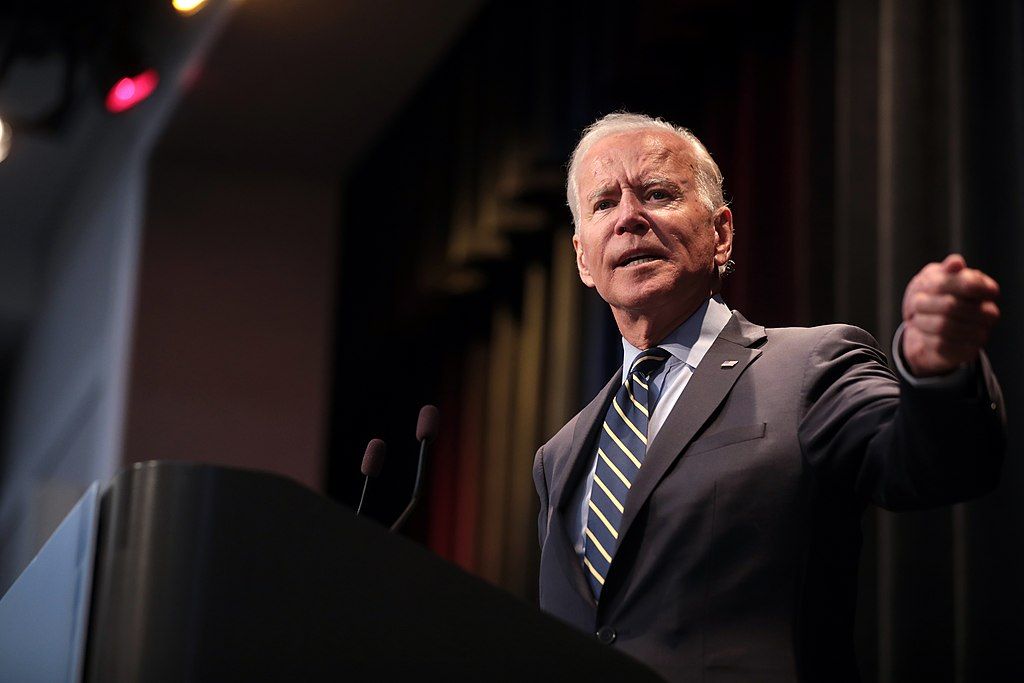
The U.S. president is expected to use the word “genocide” in a statement he will deliver as part of the annual events commemorating the victims. However, according to U.S. media reports, Biden may decide at the last minute not to mention genocide, given the importance of bilateral relations with Turkey.
It is worth noting, however, that a year ago, when he was still a presidential candidate, Biden had stated that he would support efforts to recognize the Armenian massacre as genocide.
Turkey acknowledges that many Armenians living in the Ottoman Empire were killed in clashes with Ottoman forces during World War I, but it disputes the figures and denies that the killings were systematic or constituted genocide.
For decades, efforts to recognize the Armenian genocide have stalled in Congress, and successive U.S. presidents have avoided referring to the mass slaughter as such, out of concern for relations with Turkey and intense pressure from Ankara.
It is worth recalling that in 2019, the U.S. Senate passed a non-binding resolution recognizing the killings as genocide, in a historic move that greatly angered Turkey.
Countries that have officially recognized the genocide
The countries that have officially recognized the Armenian Genocide are as follows:
- Argentina
- Belgium
- Canada
- Chile
- Cyprus
- Greece
- France
- Germany
- Italy
- Lithuania
- Lebanon
- Netherlands
- Poland
- Russia
- Slovakia
- Sweden
- Switzerland
- Uruguay
- Vatican
- Venezuela
- Armenia
- Austria
- Bolivia
- Czech Republic
- Syria
- Brazil
- Bulgaria
- Libya
- Luxembourg
- Paraguay
- Portugal
When the massacre of 1.5 million Armenians was called a “displacement”
The term “Armenian Genocide” refers to the extermination of Armenian civilians in the Ottoman Empire during World War I. Massacres of Armenians had also taken place earlier under Sultan Abdul Hamid, in 1894–96, with the death toll estimated at between 80,000 and 300,000 and the number of orphaned children at 50,000. However, the most widespread massacres of Armenians are attributed to the Young Turk movement (1908–18). April 24, 1915, is symbolically considered the start of the Armenian Genocide, when the leadership of the Armenian community in Constantinople was imprisoned and hundreds of Armenians in the city were hanged. It is considered one of the first modern genocides.
Turkish sources report that the number of Armenians killed ranged from 600,000 to 800,000, while Western and Armenian sources put the number of those massacred at 1,500,000.
Turkey denies that a “genocide” took place and claims that there was no extermination, but rather a displacement of the Armenian population. The official Turkish government maintains that Armenian rebels supported Russian troops during their invasion of the Ottoman Empire. Other deniers argue that there were no actions intended to exterminate the population, and therefore it does not constitute genocide.
In addition to the murder of people, the genocide also included the abduction of women and children, who were forcibly converted to Islam, given new names, and integrated into the households of Muslims (Turks, Kurds, Arabs, etc.) as wives or slaves. According to the customs of local tribes, to prevent escapes, slaves were marked with tattoos on their faces or necks. Cities such as Harput (Western Armenia) and Mezre (Eastern Turkey) had become centers for the trade in Armenian, Greek, and Assyrian slaves. There, “the most sought-after women, especially those from wealthy families, were sought after by local Muslims and examined by doctors for diseases, etc.” After the end of World War I, in the territories of the former Ottoman Empire occupied by the Allies, more than 90,000 Armenian orphans from Turkey, Syria, Cyprus, Egypt, Armenia, and Georgia.