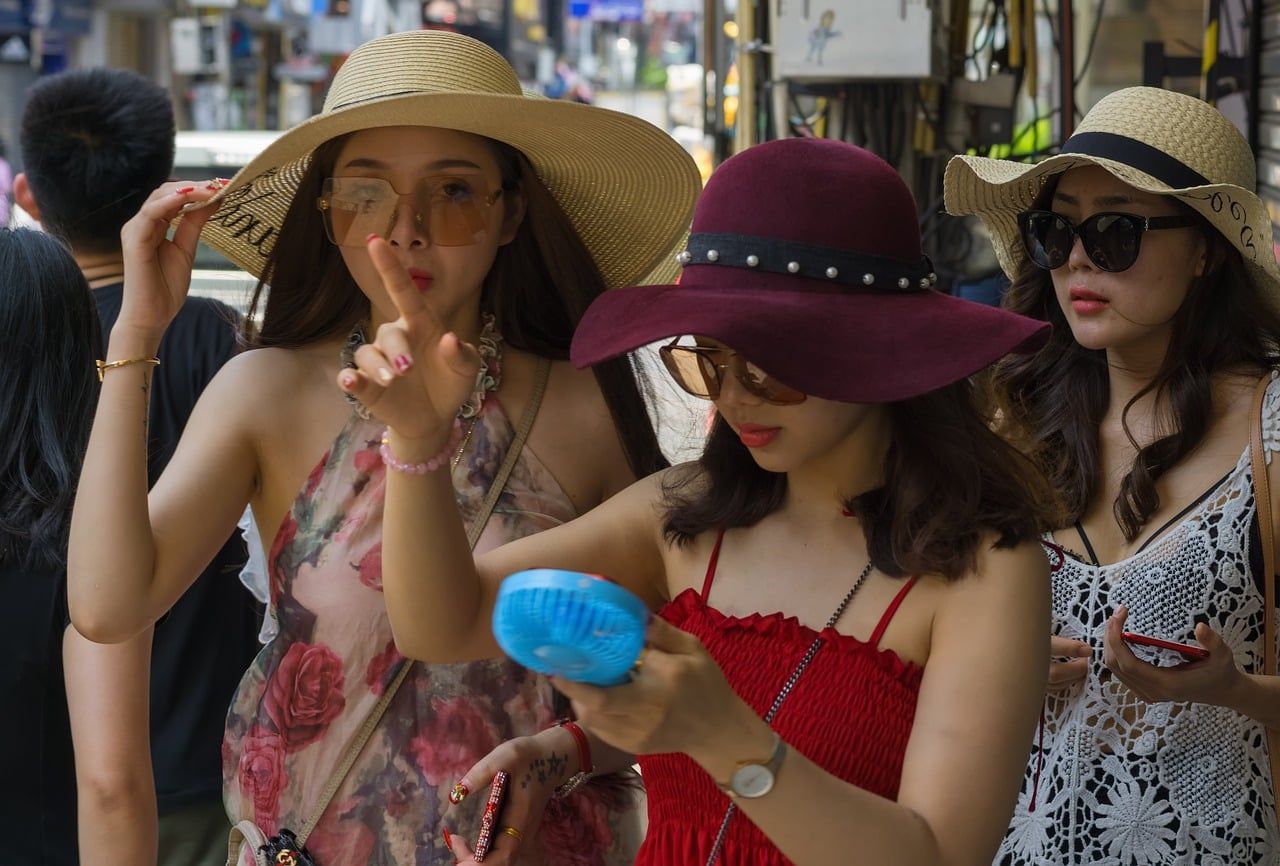
The road to the return of Chinese tourists to Greece, despite its opening this season on May 14. And perhaps in 2019 they visited 140,000 Chinese our country, with the Greek authorities and Tourism Minister Haris Theocharis banking on an improvement in the numbers in the coming years, setting an immediate target of 500,000 arrivals from the Beijing, but they hadn't counted on the… hotel owner. The fear of returning Chinese people Tourists who tested positive for the virus after their vacations abroad, spreading it throughout mainland China, are being «blocked» from leaving the country even though in the Beijing The number of cases reported in recent months has not exceeded 20 per day.
«You don't expect tourists in the Greece from China and it is unknown when they will be able to travel. There is no way they will come. The question is when they will travel again for tourism purposes. There are fears that even that might not happen the summer of ‘22. That will depend on what the pandemic situation is like internationally at that time. They, too, are waiting to see how things will be in the rest of the world. China isn’t going to let people leave and risk bringing cases back with them when they return. Because if the pandemic If it spreads, it will be a major disaster for China. The borders will only be reopened once the pandemic is under control and when the Chinese authorities »feel that they can control it," they emphasized in the ethnos.gr, diplomatic sources.
Passport issuance has been unofficially suspended
As the same sources noted, another telling example is the fact that it has the issuance of passports has been unofficially suspended for tourism purposes, even though there is no law prohibiting it. «Is this tactic, however, being used?». The Chinese authorities issue passports only to those who wish to travel to for business or government reasons. The following continue to enforce a strict policy: Chinese authorities and to those who want to travel to her country Far East. Initially, when the pandemic broke out, flights from abroad were banned. Although they have recently been allowed to resume, strict restrictions remain in place, with the result that most countries do not have flights to China. At the same time, the following have been banned: transit flights and only direct flights are permitted. The next milestone for the Chinese people is the success of the 2022 Olympic Games and whether tourists themselves will be able to accept that situation during that period.
Curbing the Pandemic Through a Mobile App
Its implementation digital fingerprint via a mobile app, the artificial intelligence, the Cameras and the extremely strict contact measures together with the rest of the world, they helped the China to curb the spread of the coronavirus. Among other measures implemented nationwide, one of the most widely enforced was temperature screening, which was required whenever someone entered a building. Access to shops When they raised the blinds again, it could only be done after a temperature check and after you showed the app on your phone proving that you weren’t a suspected case. At no point during the pandemic No such measures were implemented "click away" and "click inside" in the shops.
In all the buildings, there was only one front door to allow for better monitoring, and each one had a unique code. The app records the time you entered and exited a specific building, as it is used to log a citizen’s entry into the premises. At the entrance to each venue, local pandemic management authorities scanned all the information stored in the mobile app (how many tests you've taken, whether you've been vaccinated, whether you've been in quarantine etc.). After screening an individual—even a resident of an apartment building—if they were deemed a suspected case (if they exhibited suspicious symptoms), they could be barred from entering even their own home. Mobile phones were also used to tracking since, thanks to the antennas, it was possible to obtain personal information such as the location of each phone and, therefore, its owner. In restaurants, there was initially the social distancing and filled one out of every four tables. That is no longer the case today, while the mask It remains mandatory even indoors.
How Electronic Payments Helped Track Cases
At the same time, inside the China All payments are made electronically. This way, there is a complete record of what everyone does every day. For example, the fact that you boarded the bus at a specific time is recorded the moment you paid, online, ticket. So if there’s a case on that bus, they’ll know who else was on it. For example, if someone goes to a pharmacy and buys fever reducers, this is recorded in the electronic payment they made. «China is a society that does not have no sense of privacy. What we call in the Western world doesn't exist in China privacy. »And the Chinese used artificial intelligence and cameras to control the pandemic.".
They revoked the residence permits of foreign nationals
After they managed to «clean up» the country of the virus, they banned the entry of citizens from abroad. They canceled all the visas which was in effect and They revoked all residence permits for foreigners. Given that when the pandemic broke out, it was the Chinese New Year– just like Greece’s August 15 – most foreigners and everyone in mixed-nationality families had left and returned to their home countries. So they weren’t allowed to come back, and after several months—because the economy and production needed them—they began gradually allowing entry only to those essential to their factories. On the other hand, the foreigners who happened to be in the country at the time remained. Today, the number of foreigners in the country has decreased significantly. According to international analysts, the Chinese regime was already intent on limiting China’s influence from abroad. And the pandemic gave them the opportunity to accelerate developments in this direction. Very few students have managed to return, taking classes remotely.
Vaccine Diplomacy, Anti-Vaxxers, and Mandatory Vaccination
At the same time, vaccines from the following companies have been released onto the market: the Chinese pharmaceutical companies Sinopharm and Sinovac. «There are skeptics in China as well, but because of the Chinese authorities, they don’t speak out publicly. So you won’t see them in the social media »and reactions online." In the Beijing, according to reports, there is intense debate over whether to make vaccination mandatory. However, production is not sufficient to cover the entire population. «Once vaccine production reaches a level where it can cover the entire population, then it is likely to become mandatory,» the same sources said.
The Chinese vaccine is based on a different technology than the others currently available, as it contains particles of the coronavirus which have been inactivated through chemical treatment. To date, there have been no publications in major journals, nor has a dossier been submitted to the CDC in the United States (U.S. Centers for Disease Control and Prevention) or at the EMA (European Medicines Agency (in Europe) on the effectiveness of vaccines.
By producing its own vaccines, the China It has replaced "mask diplomacy" with "vaccine diplomacy." It is using the vaccine as a foreign policy tool. It approaches countries that cannot afford expensive Western vaccines or lack access to them due to production delays and offers them its own vaccines. Initially, it provides a small number for free and then sells the rest at a low price, as it is doing, for example, in the Balkans. So far, the only European country that has procured Chinese vaccines is Hungary.