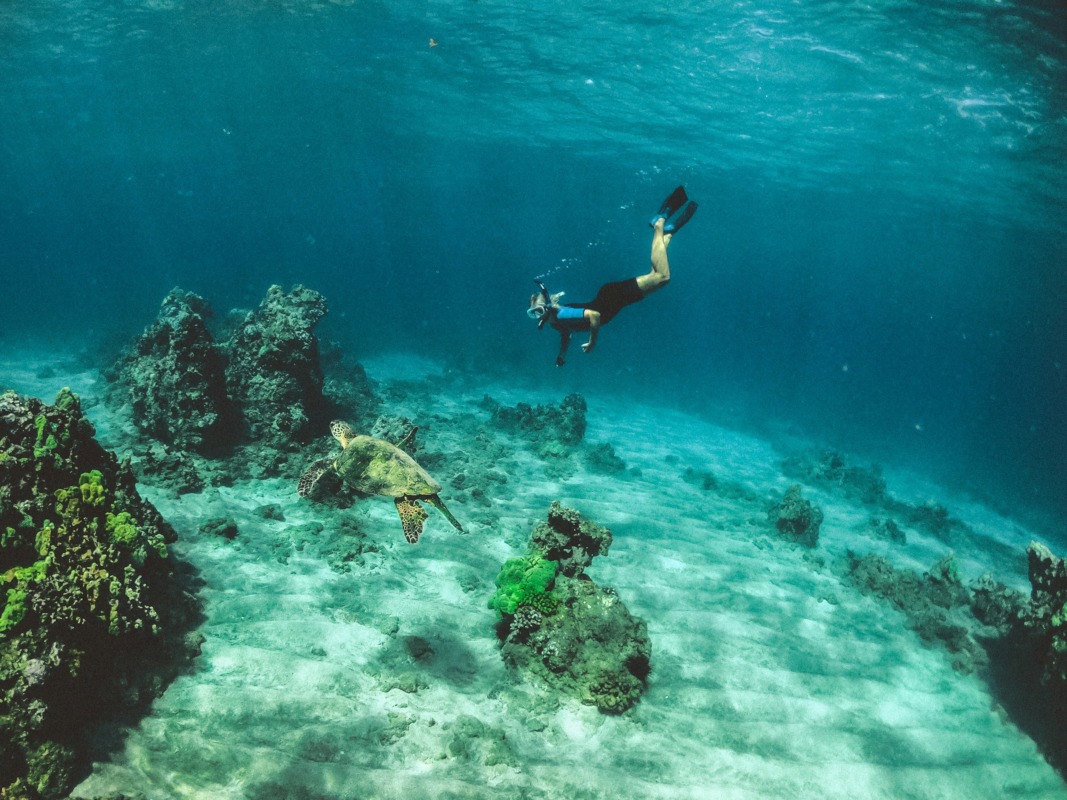
Greece has more than 16,000 kilometers of coastline, thousands of islands, excellent underwater visibility, and a mild climate that allows for diving almost year-round and a unique underwater cultural heritage. In short, it has all the features that could make it a top diving destination in the Mediterranean.
And yet, for decades, it watched as other countries took advantage of this comparative advantage, while it remained trapped in bureaucracy, on overlapping responsibilities and in difficulty making decisions.
In recent years, with the emergence of organized diving parks, it seems that something is changing. The question, however, is whether it is changing fast enough…
Malta has shown what a small country can achieve
If there is one European example worth emulating, it is Malta.
This island nation, with an area of just 316 square kilometers, has become one of the world's top diving destinations. The Malta, the Gozo and the Komino offer more than 120 organized dive sites, including shipwrecks, artificial reefs, caves, and impressive rock formations, all located within short distances of one another.
To understand the difference, it’s worth making a simple comparison.
Crete has an area of approximately 8,336 square kilometers, which means it is more than 26 times larger than the entire island of Malta. The prefecture of Heraklion alone is 6 times larger!
And yet, Malta has spent decades building a comprehensive tourism identity centered on diving, while Crete is only now beginning to develop its first major diving parks.
It is no coincidence that thousands of divers choose Malta every year exclusively for diving vacations, filling hotels and vacation rentals even during the off-season.
It is estimated that approximately 80,000–100,000 tourists—divers—visit Malta each year (depending on the year). The average diver stays for 7–10 nights, significantly longer than the average tourist.
The problem has never been our country’s geographical location—and I’m referring to the argument I often hear that Greece cannot become a top diving destination because it lacks coral reefs and tropical fish. However, this is a myth that is easily debunked.
Malta doesn’t have tropical reefs either. Neither does Croatia. Nor do most of the Mediterranean’s renowned diving destinations. And yet, they have managed to create a strong tourism product based on shipwrecks, caves, underwater rock formations, crystal-clear waters, the unique Mediterranean biodiversity, and their modern infrastructure.
So it is not nature that is holding us back.
It is our inability to make the most of what we already have, our lack of political will, and the slow pace of implementation.
Greece has something that Malta can never have.
- Thousands of islands.
- Hundreds of natural caves.
- Countless shipwrecks.
- Enormous biodiversity.
- Underwater archaeological sites that are unique in the world.
If these factors are combined with modern infrastructure, a clear regulatory framework, and expedited permitting processes, the country could become one of Europe’s leading diving destinations.
The first diving parks are just the beginning
The creation of organized diving parks in various regions of Greece is perhaps the most significant development in recent years for diving tourism.
The key, however, is for them to actually function… and, by extension, not to be isolated exceptions, but rather the beginning of a national strategy for diving tourism.
At the same time, artificial reefs, new diving routes, and infrastructure are being developed that combine the protection of the marine environment with tourism development.
Nevertheless, the total number of fully organized diving parks in Greece remains extremely small compared to the country’s potential.
Greek bureaucracy as a «diving obstacle»
Anyone who has tried to set up an organized diving site in Greece knows that the hardest part isn’t the sea. It’s the land…
Establishing a diving park requires cooperation and approvals from a wide range of agencies and organizations:
- Ministry of Tourism
- Ministry of Environment and Energy
- Ministry of Culture (in areas of archaeological interest)
- Ministry of Shipping
- Port Authorities
- Regions
- Municipalities
- Management Agencies for Protected Areas, where they exist
- Environmental Services and Permitting Procedures
This fragmentation of responsibilities often leads to delays lasting years, discouraging investors, municipalities, and private individuals who wish to invest in marine tourism.
The result? Missed opportunities, lost jobs, and lost income for local communities.
Diving tourism isn't just for divers
Many people think that scuba diving is only for a small group of people, but the reality is quite different. Certified divers travel almost year-round, even outside of peak season; they stay longer at their destination, engage in daily activities, dine at restaurants, rent vehicles, and support the local economy far more than the average visitor on a short beach getaway.
This is a high-value-added visitor who is particularly environmentally conscious and has significant purchasing power.
Greece simply needs to stop putting obstacles in its own way…