The development of mild tourist activities in Natura protected areas is expected to be catalytic for the diversification of the Greek tourism product, as, in addition to the economic impact of €2 billion annually for the Greek economy, it will also be a decisive step in the effort to spread tourist traffic across all regions of Greece.
Speaking to APE-MPE, Dr. Faye Makantasi, Research Director at diaNEOsis, on the occasion of the research carried out by diaNEOsis, in collaboration with OFYPEKA, on the topic of Sustainable Tourism in Natura 2000 areas, emphasized that the development of mild tourist activities across a larger area of the country will diversify the tourism we attract and, in addition, will lead to a greater dispersion of tourists, both spatially and temporally. She added that Natura 2000 Protected Areas are ideal areas for the development of this type of tourism, which will also bring significant side benefits for local communities, slowing down the ongoing trend of urbanisation to a certain extent, as well as for the Greek economy as a whole.
The complex problem of overtourism
However, when asked whether these areas can respond to the phenomena of overtourism in certain areas, Ms. Makantasi stressed that the problem of overtourism is quite complex, interacting with local communities on many levels in different ways and, consequently, requiring a more holistic approach. On the other hand, the tourism that each country attracts depends to a large extent on the tourism model it offers. If our tourism model is geared towards mass, high-intensity tourism in specific areas of our country, it is to be expected that we will face overtourism in these areas, said the research director of diaNEOsis.
With regard to the actions required to develop them so that they have a significant economic impact, the diaNEOsis study, as mentioned by Ms. Makantasi, concludes with a comprehensive and highly detailed framework of policies and actions that could lead to the development of a sustainable tourism model in Greece's Protected Areas. If we were to single out some of its elements, we would first have to mention—once again—the completion of spatial and urban planning. This is an outstanding issue that we encounter very often in all of diaNEOsis's individual studies, he notes.
It is very important to jointly promote PPs as tourist destinations together with their local products, an issue that has been addressed in a separate study by the organization (Tourism and Agri-Food in Greece).
Finally, we should never forget that a top-down approach is doomed to fail if it does not have the agreement and acceptance of local communities. Therefore, according to Ms. Makantasi, a participatory planning model is proposed at the level of the newly established Local Management Committees of OFYPE.
The establishment of OFYPEKA is a significant reform for the development of Protected Areas.
However, Ms. Makantasi considers the establishment of OFYPEKA to be a significant reform for the development of protected areas to date. She explains that in 2020, it took over all the fragmented powers and responsibilities of the previous bodies, thus ensuring better coordination, more effective protection of our country's natural environment, and more efficient use of our always limited resources.
10 Natura areas in Greece that have developed tourist activities
It is noteworthy that approximately 27% of Greece's land area and 20% of its marine area are designated as protected areas, included in the European Natura 2000 network of protected areas. This translates into 446 areas. The Natura 2000 areas are home to thousands of plant and animal species, many of which are rare or endangered. In Greece in particular, these areas include unique ecosystems such as the Prespa wetlands, the Rhodope forests, and the marine ecosystems of the Sporades. Below are 10 areas in Greece where the diaNEOsis study finds that tourism activities have developed to a greater or lesser extent. These are:
Alonnisos
Alonnisos is part of the Northern Sporades Marine Park, home to the Mediterranean monk seal. Visitors can go diving and observe marine life. The policies implemented focus on protecting marine ecosystems and promoting ecotourism through special rules that apply locally, but also through collaborations with environmental organizations.
Helmos-Vouraikos National Park
The park offers hiking trails, such as the E4 trail, and the historic cog railway route. In the park, one can see rare plants and animals, such as wild goats and golden eagles. The Kleitoria Environmental Education Center also operates in the area.
Dadia-Lefkimi-Soufli National Park
This park in northern Greece is known for its birds of prey, such as black vultures and white-tailed eagles, which visitors can observe from special observation points. The park also offers educational programs and collaborates with international organizations for the protection of species.
Elafonisos Island
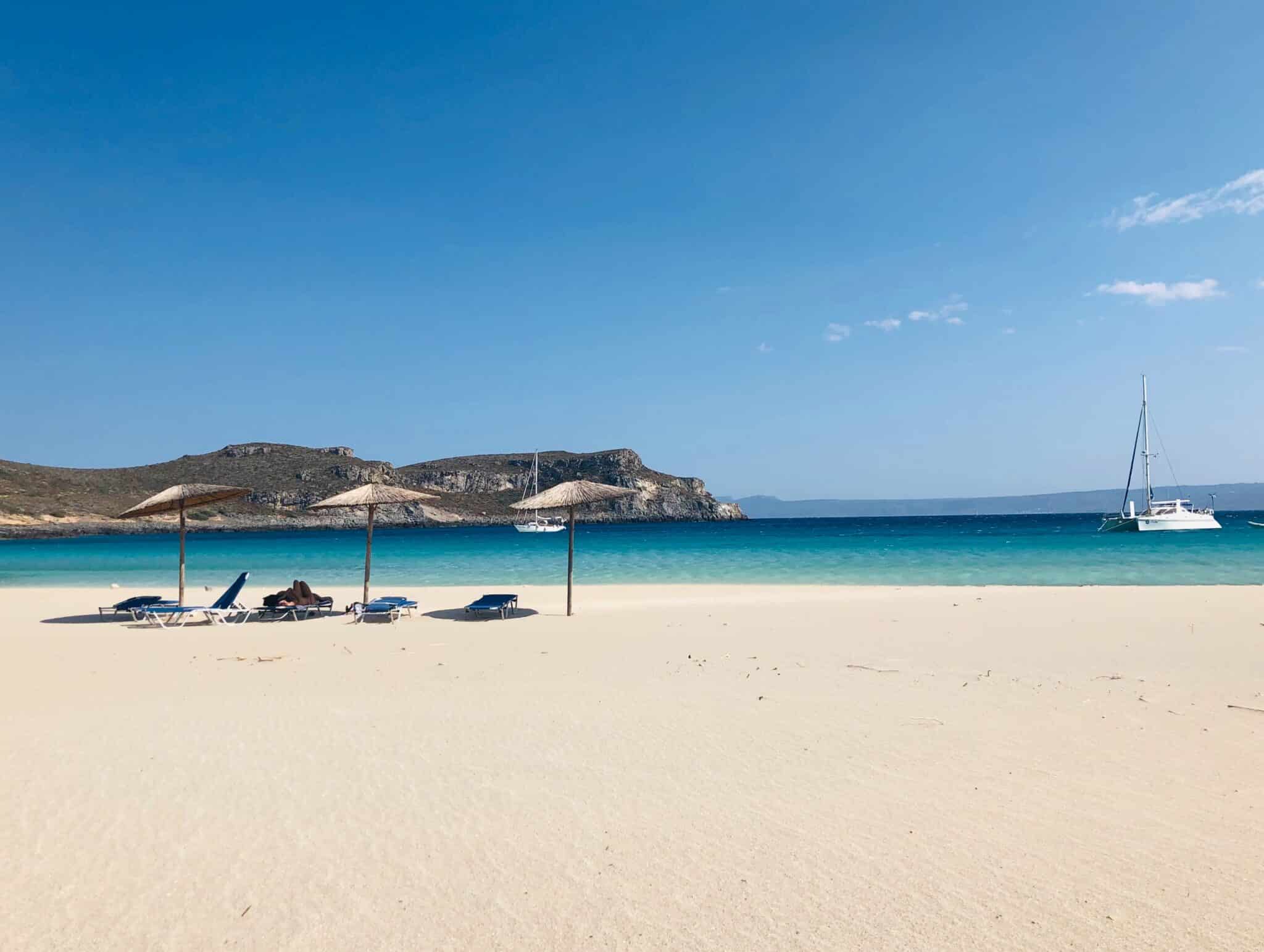
Elafonisos, known for its beaches and protected marine area, is ideal for swimming and diving. However, the area often suffers from uncontrolled tourist development, threatening the sand dunes and Posidonia seagrass beds (the “forests” of the seas). Strict rules apply to tourism in the area, and awareness-raising activities for visitors are carried out sporadically.
Lake Kerkini National Park
Lake Kerkini, 35 kilometers from Serres, is an artificial lake that is an important wetland for many bird species. Visitors can go boating and observe birds in their natural environment. Local policy actions include water monitoring and biodiversity enhancement.
Mesolonghi-Aitoliko Lagoon National Park
This park in western Greece includes lakes, lagoons, and rivers. Visitors can see rare birds and go canoeing there. Water resource management and biodiversity protection are key policy priorities.
Olympus National Park
Mount Olympus, Greece's highest mountain, is an important destination for mountaineering and hiking. The park promotes sustainable tourism with organized trails, shelters for mountaineers, and environmental education activities.
Increased visitor numbers and a longer tourist season: the benefits of developing Natura areas
With regard to the benefits derived from the exploitation of protected areas, it is characteristic that the number of visitors to the Sporades National Park, as well as the revenue generated, have increased exponentially. Specifically, from €1,158 in 2021, it reached €94,094 in 2023. At the same time, boat and visitor arrivals exceeded 7,000 in 2023, up from around 1,000 arrivals in 2021.
Alonnisos has succeeded in extending the tourist season
Meanwhile, speaking to APE-MPE, the Mayor of Alonnisos, Panagiotis Anagnostou, stated that the «Peristera Underwater Museum,» , Greece's first underwater museum, has attracted divers from Greece and abroad outside the peak tourist season of July and August, helping to extend the tourist season with travelers who choose special forms of tourism. «Alonnisos has emerged as a leading international diving destination that combines rich natural beauty with underwater cultural heritage, offering unique diving experiences. The Alonnisos Underwater Museum is a unique and innovative tourist attraction in Greece. Officially known as the «Peristera Underwater Museum,» it is one of the oldest shipwrecks in the world, dating back to the 5th century BC, explains the mayor. The shipwreck contains thousands of amphorae that carried wine and other products and is one of the most important archaeological finds in the area.
K. Chalkiadakis