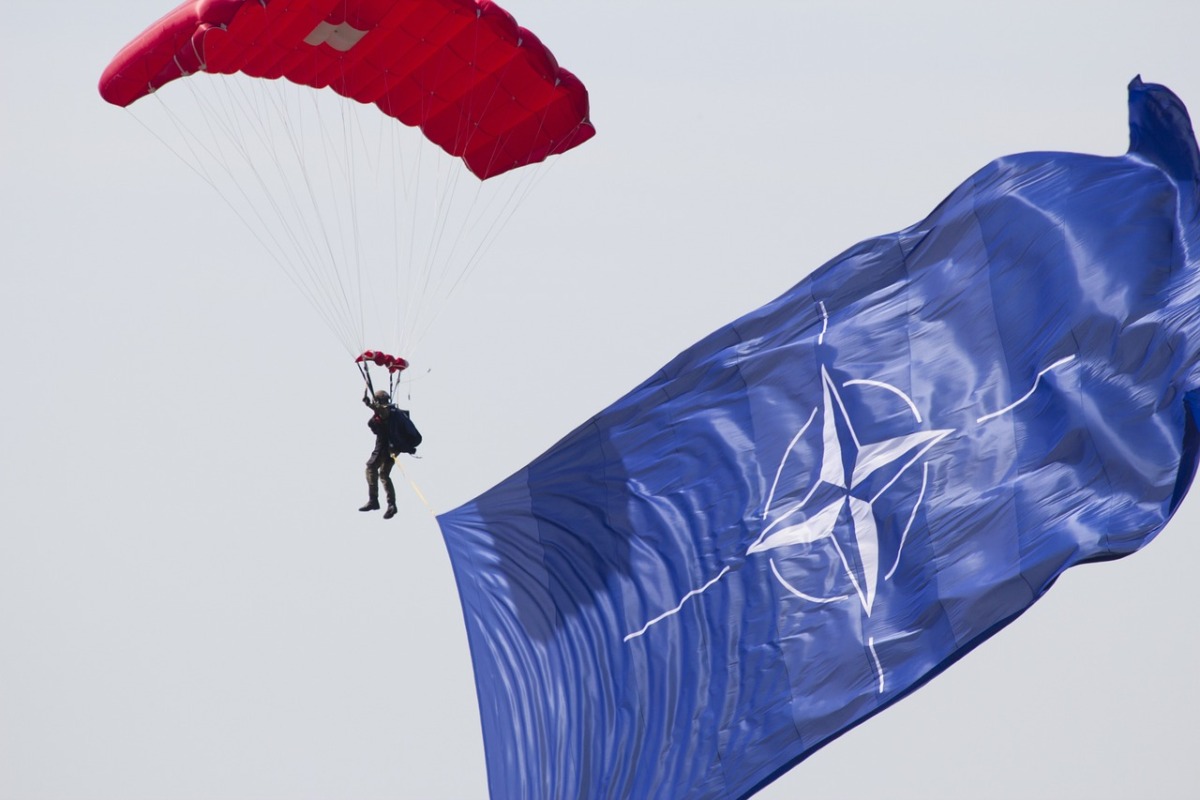
The upcoming NATO Summit, to be held on July 7–8, 2026, in Ankara, is taking place at a time of heightened geopolitical uncertainty and instability.
At a time when the war in Ukraine continues with no end in sight, consultations between the U.S. and Iran on implementing the ceasefire and establishing a framework for a sustainable peace remain fragile, while instability in the Middle East continues to threaten regional security and international rivalries over control of energy resources and maritime trade routes are intensifying.
At the same time, the Allies’ differing approaches to strategic priorities, burden-sharing, defense funding, and NATO’s future role highlight the challenges facing the Alliance.
In this context, NATO is called upon to adapt its strategy to the demands of a new and more uncertain security environment.
Consequently, the Summit’s agenda is dominated by issues such as increasing the Allies’ defense spending, with a focus on achieving the target of annual defense spending of 5% of GDP by 2035, strengthening the Alliance’s defense industry, and continuing support for Ukraine.
In addition, discussions are expected to focus on security challenges originating in the Southern Neighborhood (the Middle East and North Africa), the fight against terrorism, as well as security in the Mediterranean and Black Sea regions.
Consequently, what is truly at stake at the Summit is not the rhetorical grandstanding that will dominate the public sphere, nor the expected bilateral meetings between leaders, but rather the decisions that will shape NATO’s character and strategic direction for the next decade.
These decisions are not a one-off development, but reflect an ongoing process of adapting the Alliance to an environment of protracted strategic competition.
NATO is now called upon to operate in conditions where the concept of deterrence takes on a multidimensional character, combining traditional military power with the resilience of member states, technological superiority, and the industrial capacity to support prolonged operations.
NATO’s character and role are changing; from an organization that focused on deterrence and defense, crisis prevention and management, as well as cooperative security, it is evolving into an Alliance of heightened operational readiness (Alliance of Readiness), ensuring that its forces remain ready to respond to any development and any possible scenario.
This entails increased demands on military forces, ammunition stocks, industrial production capacity, supply chain resilience, command structures, and overall deterrent capability.
In this context, the discussion on the sharing of strategic burdens within the Alliance takes on particular importance.
The pressure to increase defense spending is not merely a fiscal requirement, but reflects the transition to a model of collective security in which operational readiness and the ability to respond immediately are decisive factors in the credibility of allies.
Essentially, this development reflects a profound shift in NATO’s strategic philosophy, as the alliance is now oriented toward an environment of protracted competition among major powers, with high demands for sustained readiness and deterrence capabilities.
At the same time, strengthening NATO’s defense and technology industrial base is emerging as a critical issue for the Alliance’s strategic autonomy.
Experience from the conflicts in Ukraine and the Middle East has shown that maintaining adequate ammunition stocks, combined with securing production capacity and the resilience of supply chains, are deterrent factors just as important as military power itself.
This development reflects the shift from the traditional conception of defense as exclusively operational power toward a more complex view of defense as an integrated productive and industrial system (Defense as an Industrial System), in which the capacity to produce, support, and replenish military capabilities is a critical factor in deterrence.
Particular importance is also attached to the Alliance’s Southern Flank, where challenges from the Middle East and North Africa, instability in critical sea lanes, and the ongoing threat of hybrid security challenges create a complex risk environment for NATO member states.
Furthermore, these challenges highlight the role of the Mediterranean and the Black Sea as regions of strategic importance for the Alliance’s cohesion and operational balance.
Finally, given that Russia poses a major threat to NATO, support for Ukraine is part of a broader strategic choice by the Alliance to maintain deterrence and prevent revisionist fait accomplis on the European continent.
Within this new strategic framework, Greece is called upon to take initiatives that will highlight its geopolitical role and strengthen its position both within the Alliance and in the broader region of the southeastern Mediterranean, by actively participating in shaping NATO’s new strategic direction.
In this light, Greece must make clear to its allies that it is not merely a member state participating in collective defense, but a country of significant geopolitical value on NATO’s Southern Flank and along the maritime lines of communication in the Eastern Mediterranean.
Its geographic location, combined with its role as a stabilizing factor in an increasingly volatile environment, enhances its importance within the Alliance.
The island’s strategic value stems not only from its operational contribution, but also from its potential to serve as a hub for security, energy interconnection, and maritime surveillance in a region where the geopolitical rivalries of the Middle East, North Africa, and the Black Sea, as well as the interests of the major powers.
Greece’s participation in Alliance missions and interoperability arrangements, as well as its contribution to the maintenance and operation of NATO infrastructure, reinforces this aspect, transforming the country into a force multiplier for power and stability.
At the same time, strengthening the deterrence capability and modernizing the Armed Forces are part of the broader burden-sharing within NATO.
In an environment where operational readiness and force availability play a decisive role, Greece is called upon to capitalize on its role as a reliable and operationally consistent ally.
In light of the above, Greece must leverage its participation in the Summit to strengthen its position as a reliable ally and an irreplaceable player in NATO’s Southern Flank, by combining a high level of operational contribution with full commitment to international law.
Greece’s approach must remain strategic rather than reactive, with an emphasis on leveraging its institutional capabilities within the Alliance and strengthening its role as a reliable and operationally effective ally.
In this context, Greece is called upon to systematically highlight its contribution to stability in the Eastern Mediterranean, the importance of integrating European defense with NATO’s southern flank, as well as the need to maintain a deterrent balance against any form of revisionism.
Furthermore, the ability to anticipate possible developments within the Alliance during the Summit is of particular importance for the formulation of an effective national position.
Specifically, in an environment of heightened strategic fluidity, where the Alliance is undergoing transformation and allies are developing divergent approaches to NATO’s future, diplomatic effectiveness depends not only on the articulation of national positions, but also on the advance consideration of alternative scenarios and policy options.
In this light, Greece must adopt a strategic foresight approach that goes beyond the ad hoc management of events and incorporates an assessment of potential developments and their corresponding consequences.
In conclusion, the upcoming NATO Summit in Ankara is not merely another institutional milestone, but a turning point for the Alliance’s strategic direction in the coming years.
The significance of the decisions to be made will not be judged by the rhetoric and grand statements of the participants or of commentators and experts of all kinds, but by the extent to which they will strengthen NATO’s actual deterrent and operational capabilities as a whole.
In this context, Greece is not merely called upon to monitor developments, but to actively position itself as a reliable and operationally effective ally, with a clear geopolitical identity and strategic consistency.
The success of Greece’s participation, therefore, will not depend on the public perception of the Summit, but on the country’s ability to translate its strategic understanding of the international environment into a coherent, forward-looking, multidimensional, and long-term national strategy within the Alliance that safeguards national interests within a broader framework of Euro-Atlantic security.
Author of the article:

Political Scientist – International Relations Specialist
Former Director General - Directorate General
National Defense and International Relations Policy (GDPAAD)
Ministry of National Defense (YPETHA)