The basic framework on which the effort to resolve the major problems that have arisen as a result of the forest maps, was presented by the Deputy Minister of Environment and Energy, George Amiras, today, during his visit to Volos, accompanied by the Secretary General for the Natural Environment and Water, Professor, Konstantinos Aravosi.
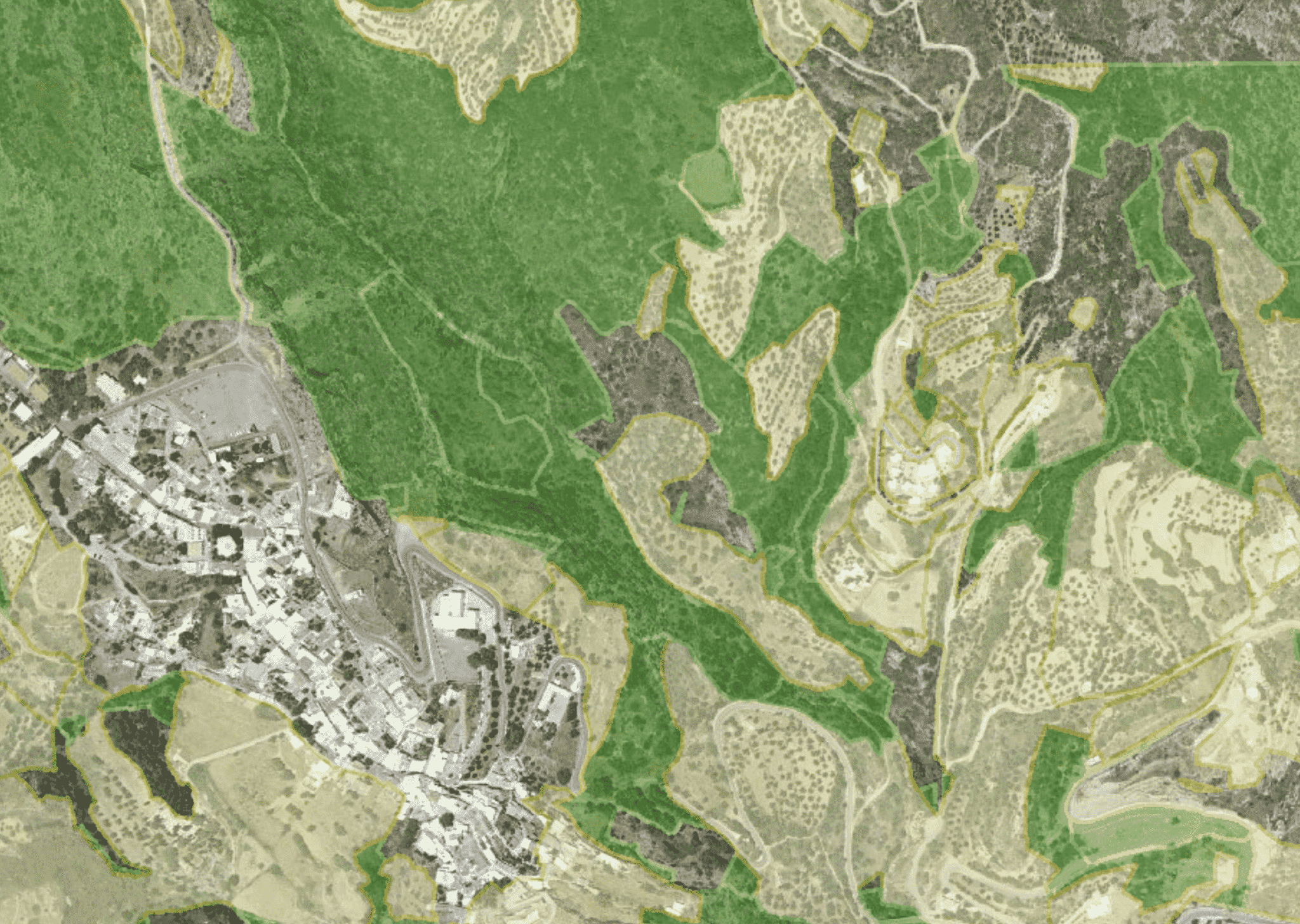
«Our policy and direction are one and the same, since it is well known that the forest maps represent a major reform that Greece had been lacking for many decades,» stressed the Deputy Minister of Environment and Energy in his remarks, adding: «We need these maps so that we know where the forest actually is, in order to protect it, but also where it is not, so that »that people's property be freed up so that they may use it as they see fit and in accordance with the law.".
Mr. Amiras stated that the ministry is ready to implement legislative solutions, across the board, to resolve issues that «have been swept under the rug for far too many years.» «We are determined to change the status quo. Citizens will no longer have to go out of their way to prove they are not elephants. First, the public administration will correct errors internally, and that is how solutions will be provided. Our goal is to provide solutions quickly, immediately, clearly, and easily, without burdening citizens,» he emphasized.
The Deputy Minister made special mention of the decision—which he signed this morning—reducing objection fees by 50%. «We don’t want the cost to citizens to be high, and at the same time, the cost is justified because whatever citizens pay for objections does not go into the state’s “pocket” but is reinvested in the development of the forest maps project,» he emphasized, adding: «With the corrections that the forestry services are already making to the posted maps, we will ultimately see that the number of objections from citizens will be much lower.».
Mr. Amiras stated that a total of more than 175,000 objections have been submitted and added that, while SYRIZA did take a step forward by posting maps covering nearly 50% of the country’s territory, the way it went about it was flawed.
It should be noted that in Magnesia, approximately 21,000 landowners are subject to the forest maps, and the biggest problem is found in the Municipality of Zagora-Mouresi, particularly in areas where chestnut and apple trees are cultivated.