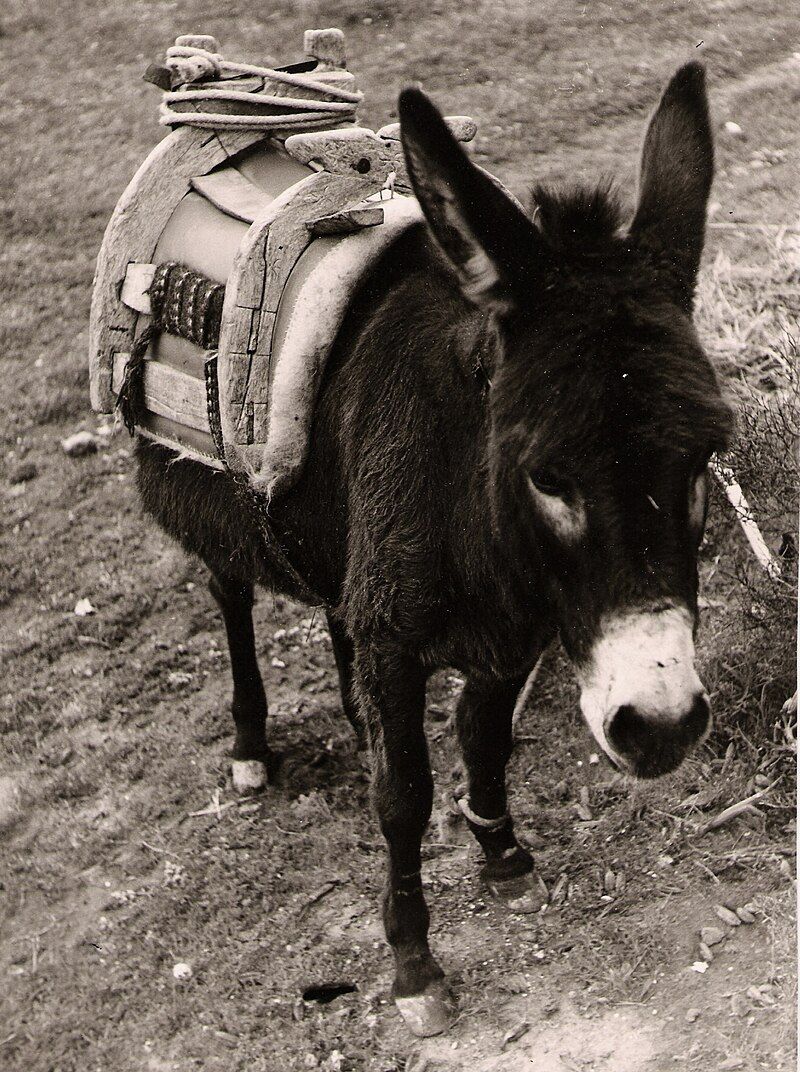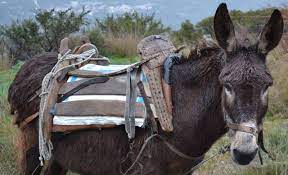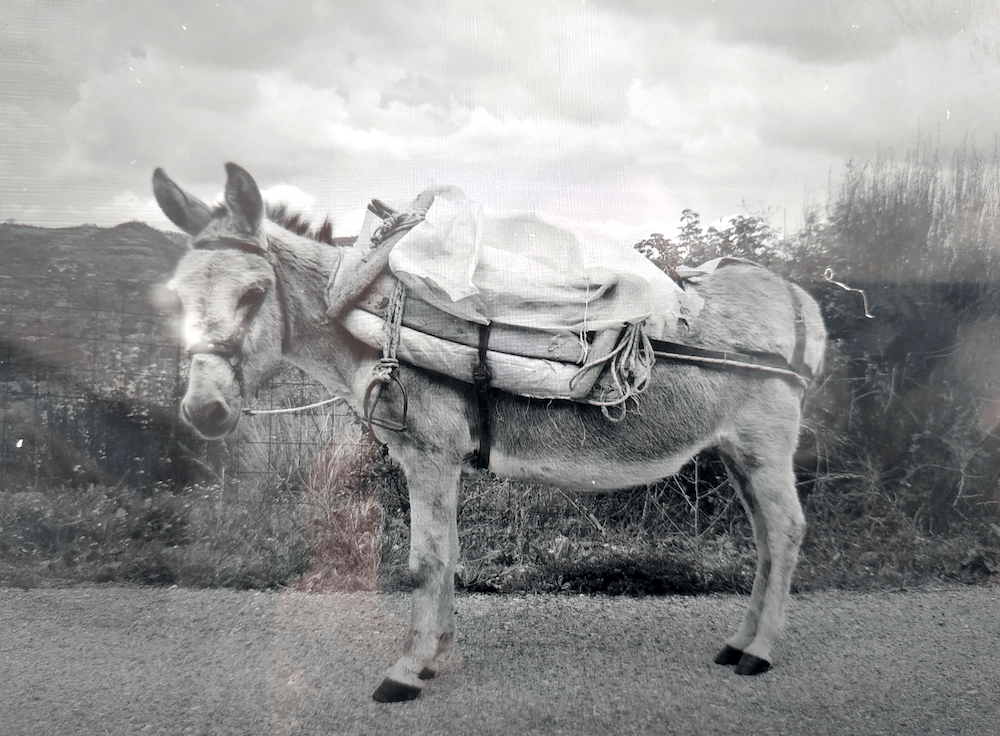
The donkey used to be so useful to Kythirian families! For centuries, it served our island, contributing so much to the local economy and to people’s communication. Throughout the first half of the 20th century, it was used systematically for farm work and as a means of transportation. However, in order for a donkey to be used and function properly, certain essential accessories were needed, which were crafted by specialized artisans known as “samarades.”.
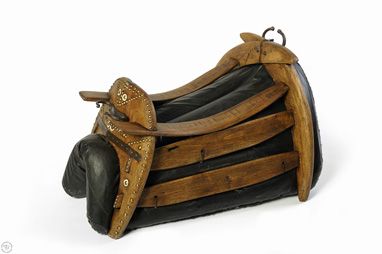
The pack saddle. It was a wooden structure—a seat—that the saddler made and attached to the animal’s back so that the rider could sit on it and various loads could be carried.
The Front Runner. It was the wooden bar at the front of the pack saddle, which the rider was holding.
The beetle. It was the piece of wood on the back of the pack.
The top basket. They were the two wooden planks of the saddle on which the rider was sitting.
The mattress. It was a cushion placed on the pack saddle, under the shoulder straps, to prevent the donkey’s back from getting sore. The pack-saddle maker would make it out of canvas or thick woven fabric (palitsa) and stuff it with rushes.
The Somaropaids. These were the four side planks of the cart, on the right and left. The planks for the cart’s side rails were made of sycamore or mulberry wood and sanded smooth.
The cap. It was the system with the leather straps that went over the head.
The Rope Bridge. It was the rope they tied to the halter and used to lead the donkey.
The front panel. It was the strap that went under the neck.
The back. It was the strap that went under the tail.
The gigla. It was the strap that went under the belly. In Logothetian, it was called a “mesia.”.
The lashing rope. It was the rope they used to tie down and secure the loads on the pack saddle.
The Feeder (loader) was a long, forked pole used during loading to hold the load on one side so that the other side could be loaded without the pack saddle tipping over (unload)
The stone slabs. They were thick planks suspended by ropes on the sides of the pack animal, which were used to carry special loads, such as building materials, stones, bags of cement or lime, or sand