The almost forgotten tragic history of Samothrace concerns us today as the first major massacre in the Aegean and the most forgotten and insignificant in Greek consciousness. Samothrace revolted in May 1821 following intense rumours that the Russians had recaptured Constantinople, which was of course not true. The incitement was probably instigated by the island's elders and clergy, as Samothrace belonged administratively to the Metropolis of Maroneia. In June, the Cretans of Heraklion had staged a similar first uprising, which unfortunately marked a major reversal of the positive climate of the Revolution; this is known as the Great Arpentes.
At that time, there were very few Ottomans on the island of Samothrace and 300 Greek families, or approximately 2,000 Greeks, who lived off agriculture and livestock farming. The edible products were honey, pears, charcoal, cheese, wool, and animal skins. After the massacre on September 1, 1821, about 200 people survived, while others may have survived in the mountains, hiding in caves. It is estimated that 1,500 Greeks were sold into slavery in the bazaars of the East, and this is one aspect of the national uprising that has not yet been studied and may never be addressed by 21st-century historians: the trafficking of people, both men and, above all, women.
The historical text «Les Femmes Grecques aux Dames Françaises – Récit de leurs malheurs» in two editions from Paris in 1826 and Brussels in 1827, both preserve testimonies of Greek women from the war-torn Balkan region. In the third chapter, we read the shocking account of a widow from Samothrace who, after the massacre, is sold into slavery in Smyrna, passes through Cyprus and, after many adventures, ends up free in the Italian city of Spezzia. This text has not been translated in its entirety into Greek, and the testimonies of women from Patras, Samothrace, Souli, Thessaloniki, Smyrna, Psara, Chios, Mesolonghi, Tripoli, and Kalamos mark the boundaries of Hellenism to this day. The Memoirs of Women, translated into French by an anonymous philhellene, record this edition of autobiographical stories in the literature of trauma and orient our research towards new theoretical models.
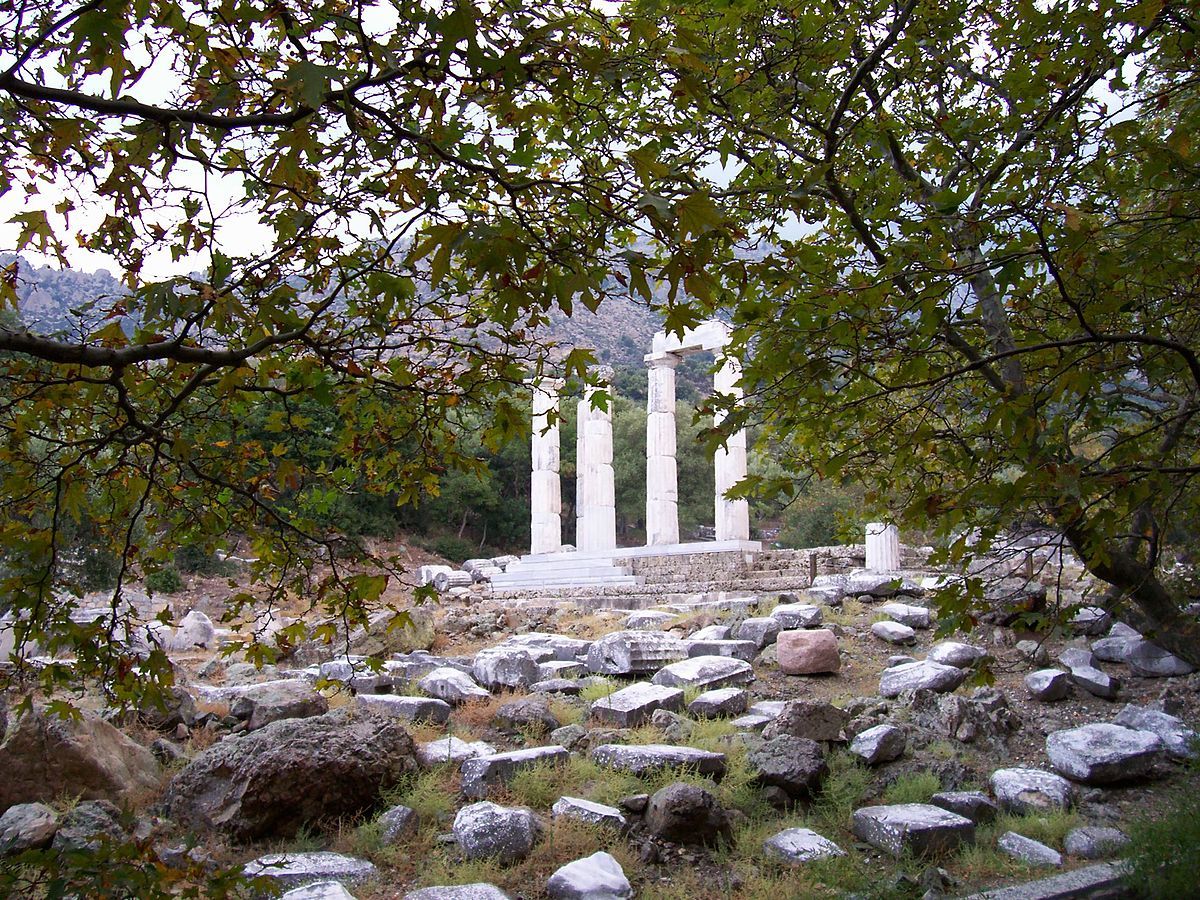
The sacred island of Kaveiros, with its temple of the Great Gods, has been continuously inhabited since the 7th century BC by Ionians and Aeolians, as the inscriptions testify, it became a place of martyrdom with hundreds of people exiled or simply living dead. Refugees have always been a category of captives.
Author of the article:

Georgia Tsatsani is a philologist and comparative literature scholar.