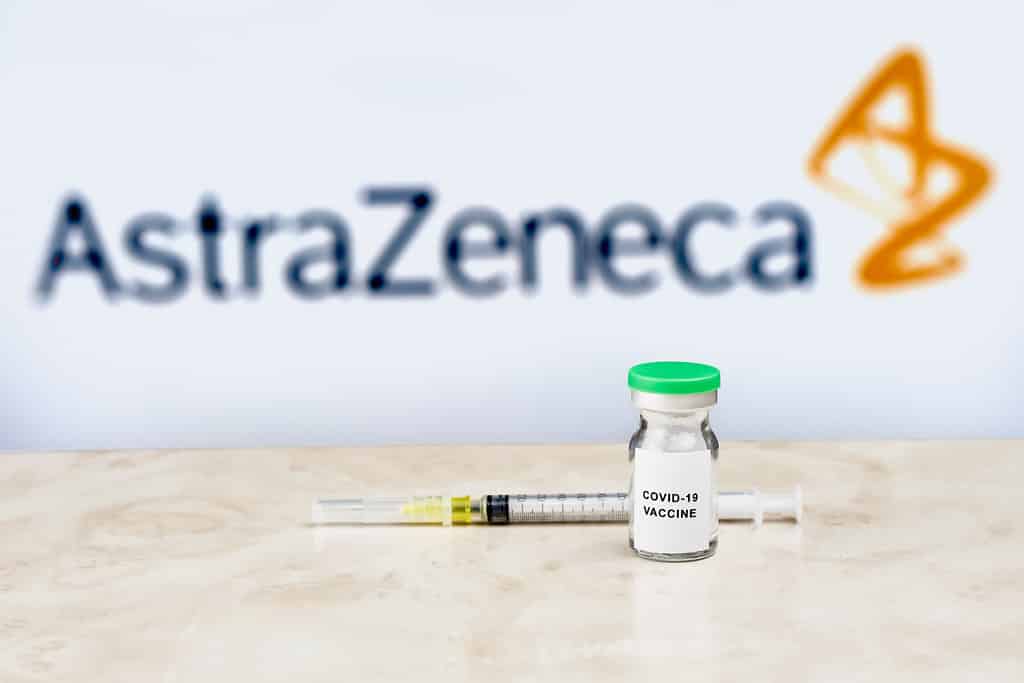
After the first studies linking it to incidents of - rare - thrombosis, especially in the younger population, half of Europe put an age cut-off: Germany, the Netherlands, Spain, Portugal, Portugal, Italy, Ireland and Iceland gave, and still give, the AstraZeneca vaccine only to people aged 60 and over.
Sweden and Finland have set the «cutter» even higher - they have banned it for people under 65. France and Luxembourg set the limit at 55 and over, Estonia at 50 and over, while Denmark, Norway and Slovakia have completely stopped the vaccine from being administered to the whole population.
In Greece, we are a pioneer. We gave AstraZeneca to 30-year-olds. Because, she says, - the president of the National Vaccination Committee, Maria Theodoridou, was saying this on April 12 - we looked at all the scientific data and found that «there is no documented association with a history of thrombosis, as well as with other predisposing factors.» And then we took it a step further: we gave AstraZeneca, as the only option, to those aged 30 to 39. Commonly, 30-year-olds either took AstraZeneca or played Russian roulette with coronavirus. And they were waiting to see if the «Delta» strain or the next batch of Pfizer and Johnson & Johnson would get them first.
At the time, Professor Athena Linou was left alone to say that it was wrong to administer this vaccine to people under 50 years of age, especially women. And somewhere in there, Alexis Tsipras had also said that the platform was opened for ages 30 to 39 with AstraZeneca «to get the word out».
At the time, Alexis Tsipras was a «denier», «irresponsible» and «underminer»: a «denier», according to the government spokeswoman, of «the greatest stake of our time, which is the building of the wall of immunity» and a «conscious underminer of the national effort against the pandemic». Moreover, always according to the government spokeswoman, «he also insulted young people who were already being vaccinated». According to State Minister George Gerapetritis, Tsipras« statement was also »schizophrenic".
Yesterday, when the chair of the National Immunization Committee announced that they were cutting off AstraZeneca for ages 60 and under, it was just Monday. None of the members of the Commission is a denier, even though the scientific evidence has not changed - it has only changed, she says (Mrs Theodoridou always says) the epidemiological burden, which is now less. In other words, because the risk of the disease is lower, we no longer need to take the risk of a controversial vaccine. That is a point of view too, debatable if need be - as long as the scientists had said it clearly two months ago when they were putting the risk, without choice, on 30-year-olds.
No one, neither scientist nor government official, is a subversive. And let confidence in a vaccine be completely undone, and with it all scientific recommendations and decisions, while - theoretically - there is a national campaign to convince everyone to get vaccinated.
And of course, no one is insulting the more or less young people - the... AstraZeneca's... lost generation: the 30s, 40s, 50s who had shown full faith in science and government assurances and had rushed to get vaccinated. They are the 470,000 people who have already had the first dose and are now... picking the daisy to see if they will have the second with the same vaccine or experiment with a cocktail of Astra, Pfizer and a little bit of Moderna.
One more detail, for the history (and credibility) of the national project: A few days before the AstraZeneca ban on under-60s was announced, Greece donated 20,000 of these vaccines to North Macedonia and another 20,000 to Albania. In the end, it seems that we have probably blown it...
By Nicole Livadari