The movies of the week:
The Lost City
(“The Lost City”, Aaron Nee, Adam Nee, 1h52l)

Successful author of romantic adventures is kidnapped by a rich Englishman (Daniel Radcliffe, he's having fun) during a book promotion tour. The reason? She wants to help him find a treasure like the one she describes in her stories. While she tries to explain to him that the fairy tales she writes aren't true, her cover model, along with an outrageous agent, embarks on a mission to rescue her.
Sandra Bullock, always a delightful presence in our mainstream cinema, leads an old-fashioned romantic adventure with humor, style and vigor, like a modern version of Chasing the Green Diamond. Between her and Channing Tatum there is not exactly the same erotic chemistry but both of them are both physically (i.e. as cinematic heroes of an adventure) and comically functioning; it is this totally 2020s kind of chemistry (not exactly passionate, not emotional, but not platonic) and the inversion of traditional dynamics (“I'm sorry, so I'm the damsel in distress??” asks Tatum at one point) that works and carries the film.
Which is very entertaining in parts, with Brad Pitt especially stealing the show by once again delightfully playing with their hands, expressions and his physique to maximum efficiency. The same level of energy is not maintained throughout the film, however, and if there's one thing Diamond really lacks is the sense of heat and sweat that permeates the adventure. And that here has been replaced by that prevalent Netflix aesthetic of dull digital ochre, which doesn't allow the film to develop a character truly its own. Entertaining and enjoyable, however, as much as a true testament to the importance of real movie stars.
Wind of Freedom 1821
(Stelios Charalampopoulos, 1h40l)

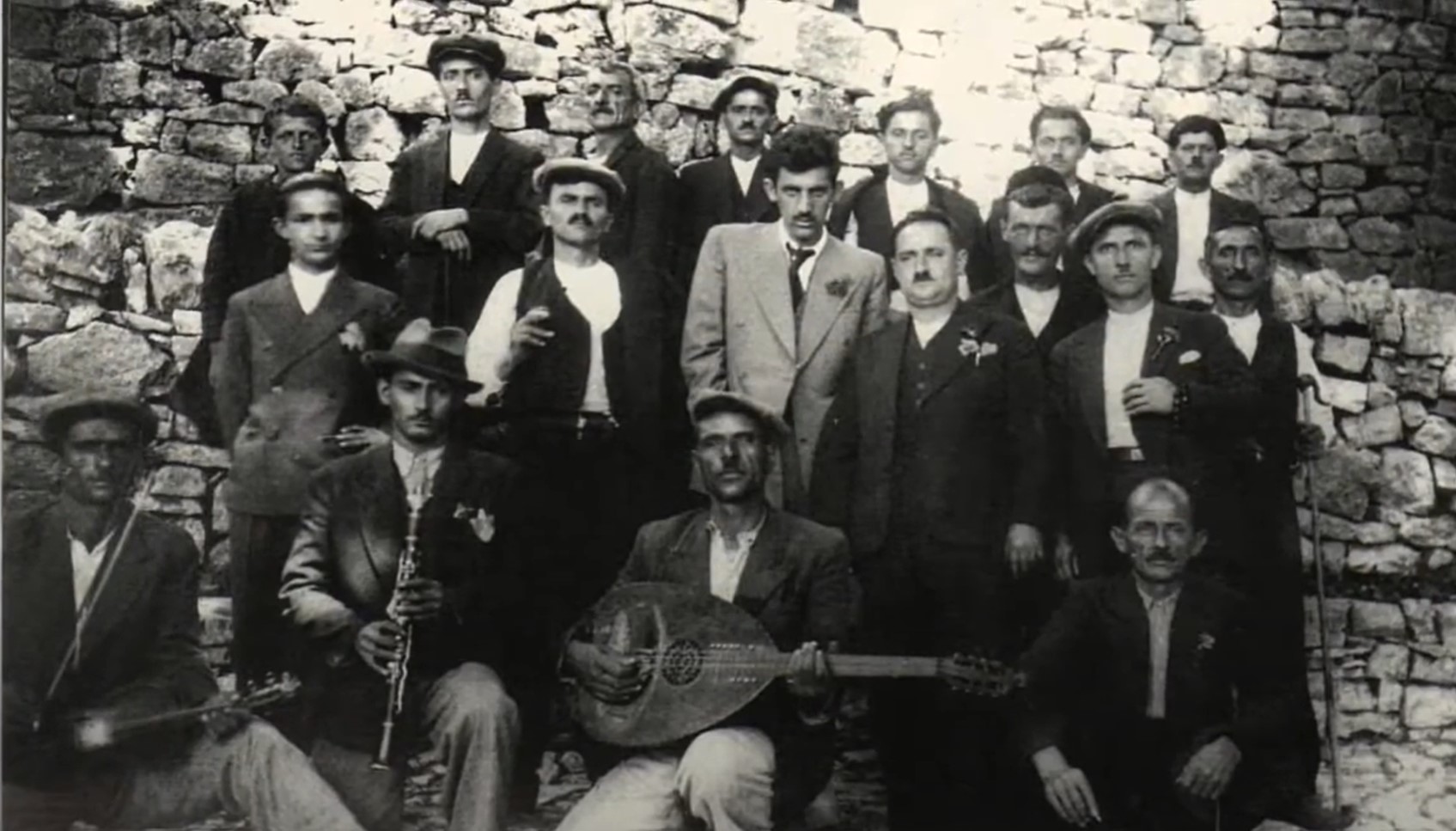
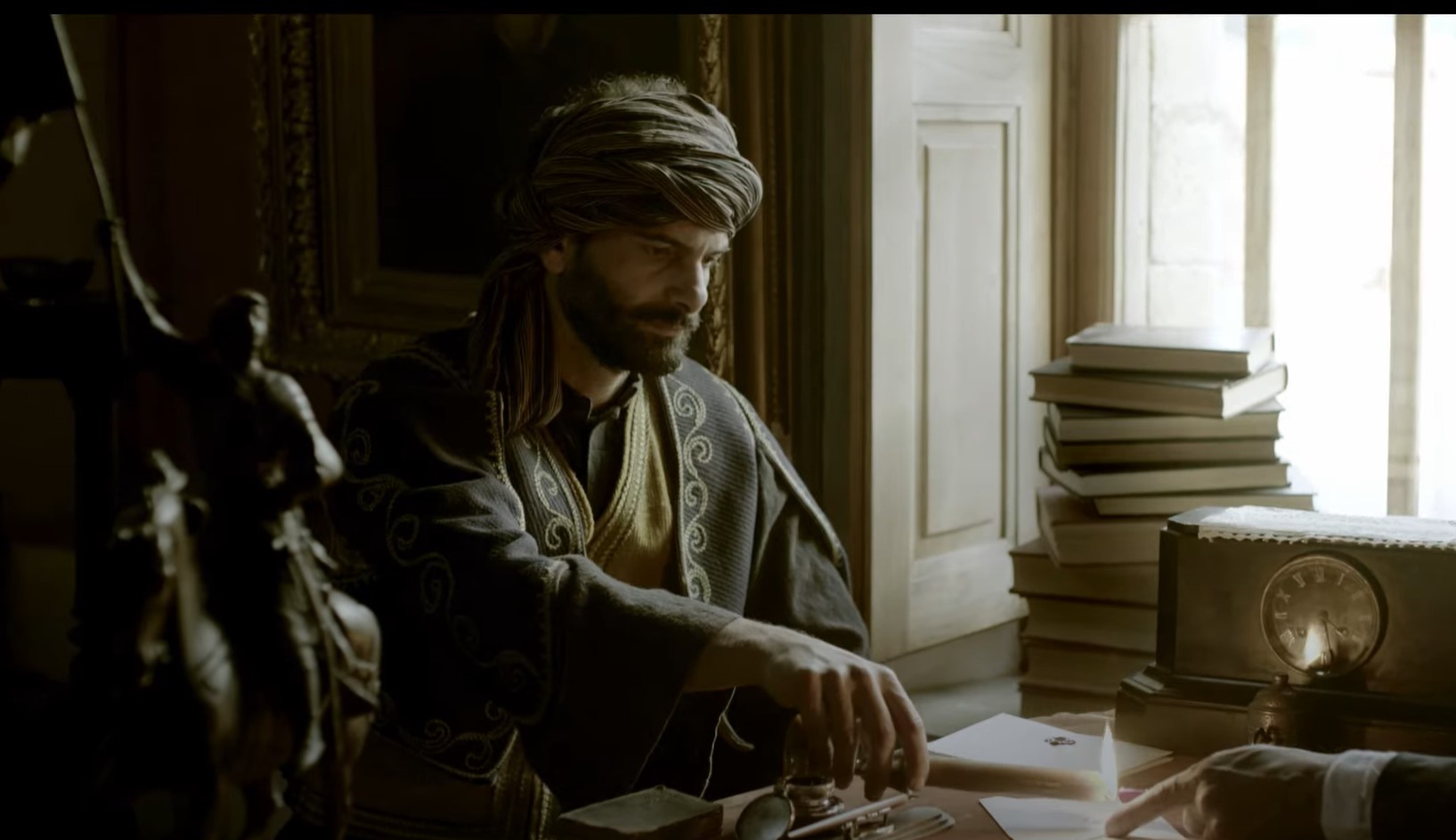
Structurally ambitious, this unique fictional film about the 200 years of the Revolution follows real and invented characters, especially the pre-revolutionary action of Ioannis Philon (fictional character), a merchant who is a senior member of the Society of Friends.
Far from any kind of graphic approach, Stelios Charalampopoulos (“The Night Fernando Pessoa Met Constantine Cavafy”) sets up his script very cleverly, with the story unfolding as an early 20th century folk reading about the heroes of the 21st century, allowing a level of heroic fiction within his narrative web (captured in the framing as well as in the text). But at the same time, as a contemporary discovery by a researcher who analyses this reading, the ‘Wind of Freedom“ of 1900, in conversation with historians who give a cool assessment and offer historical context to what we have since witnessed dramatically.
Without avoiding some basic problems of pacing or rather wooden interpretations, the film ultimately manages to work as a whole, straddling the line between documentation, fiction and its own historical deconstruction.
Last Journey
(Aris Hadjistefanou, 57p)
Aris Hadjistefanou delivers a documentary that is completely unexpected in relation to his familiar style, but no less political. He transfers “Traveling: Japan - China”, narrated by Yannis Angelakas as the voice of Kazantzakis (and later, as the voice of the writer and his wife, Eleni, Olia Lazaridou), juxtaposing the insightfully observational text with images that span the century, reaching up to the present day.
What is often striking in Japan anyway is the way in which Western influences become part of the local culture, so it becomes particularly interesting to see how Kazantzakis observes this fusion, versus what it might look like today - on an aesthetic level but also on a political-social level, with tradition clutched in the tentacles of capitalism. An extremely interesting approach in an unexpected, and welcome, encounter of text and image.
The Queen of the Hive
(“Hive”, Blairta Bazoli, 1h24l)
Fakhriye's husband is one of the missing in action from the war in Kosovo and, along with her grief, her family is facing financial difficulties. In order to cope, Fakhriye opens a small farming business in an attempt to open the eyes of other women in the area - something that is not viewed in a positive light by the deeply conservative, patriarchal small society. A strong first act with Blurta Basoli framing her heroine with almost agitated composure as she captures both her attempts at empowerment and the loss that surrounds her.
Unfortunately, in the unfolding of the drama the film opts for a fairly safe narrative and its political and social x-ray remains slightly incomplete. However, Basolli is a director worth watching in the future after this debut; both for the positive elements of Hive and for her historic success at last year's Sundance Film Festival, where the film won the Film, Director and Audience awards in the World Cinema section.
By Theodore Dimitropoulos